
Best Ryzen AM5 Motherboards for Gaming Performance in 2026
A complete breakdown of AM5 motherboards ranked by value, features, and long-term upgrade flexibility across different price tiers.
Hardware by Shinji Okazaki on Apr 17, 2026
Choosing the right AM5 motherboard could make or break the long-term trade-off between price, speed, and the ability to add on. The platform is very flexible, with entry-level boards with few features and high-end boards with lots of features.
Each is designed for a different type of build and set of goals.
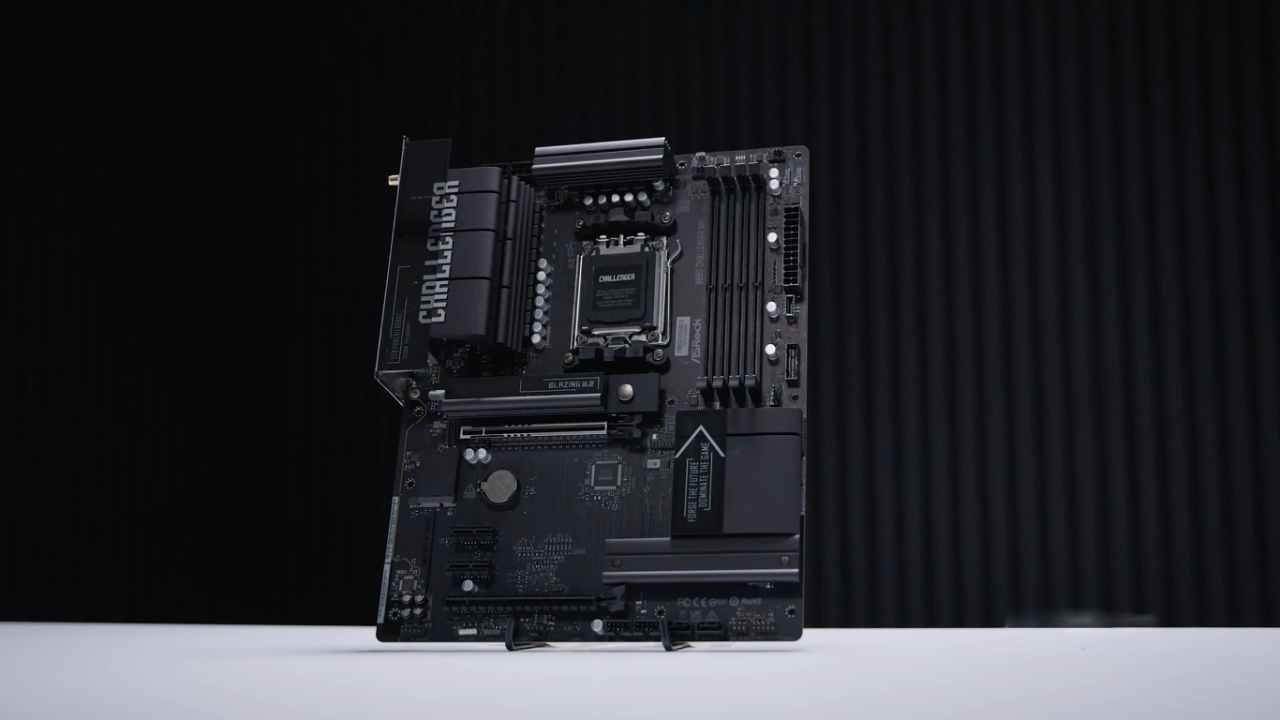
Budget Survival Pick
We begin with the budget saver candidate. It offers the bare minimum to get on AM5 without reducing the platform to bare bones, but among all the options in the list, it is the least. You still have a PCIe 5x16 and PCIe 5 M.2 slot, 2.5 gigabit wired networking, and BIOS flashback. In a cheaper gaming build, being up to date is more important than features added after the budget has been spent.
One can see the limitations around those basics. You have just two memory slots, the power architecture is 6+1+1, the audio is entry-level, and the board is on a micro-ATX layout with less expansion space than ATX options. This complicates future CPU upgrades and more complex builds. You would select this when the aim is to construct as inexpensively as possible and keep the system as small as possible.
Fourth Place Value ATX Alternative
Finally, the board is more like a step up as it is based on a full-size ATX and is more flexible. It is still value-oriented but no longer limited to a small design. It has four memory slots, three M.2 slots, Wi-Fi 6E, and more expansion options to build a mainstream gaming system.
Compromises still exist. The primary graphics slot is PCIe 4.0, the network is wired, and the second M.2 slot attached to the CPU is PCIe 4.0 x2. It offers more space than the former, but it also fails to deliver a high-quality experience. You would choose it when you need a low-cost ATX board with built-in wireless and enhanced expansion capabilities compared to its smaller counterparts.
Third Place TUF Board of Directors
The TUFE board is placed in third place, and the list becomes less challenging to recommend. It is concerned with stability and consistency rather than additional features. You will have 2.5 GB wired networking and a feature set that supports the majority of gaming requirements, as compared to the previous option.
The tradeoffs are kept at their level. It is still a B650 board; Wi-Fi is limited to Wi-Fi 6, there is no USB4 support, and storage is limited to three M.2 slots. It is a good board at a reasonable price, but it cannot compete with more recent X870 boards if more functionality is needed. This would be your selection in a stable ATX gaming system that does not require intense connectivity.
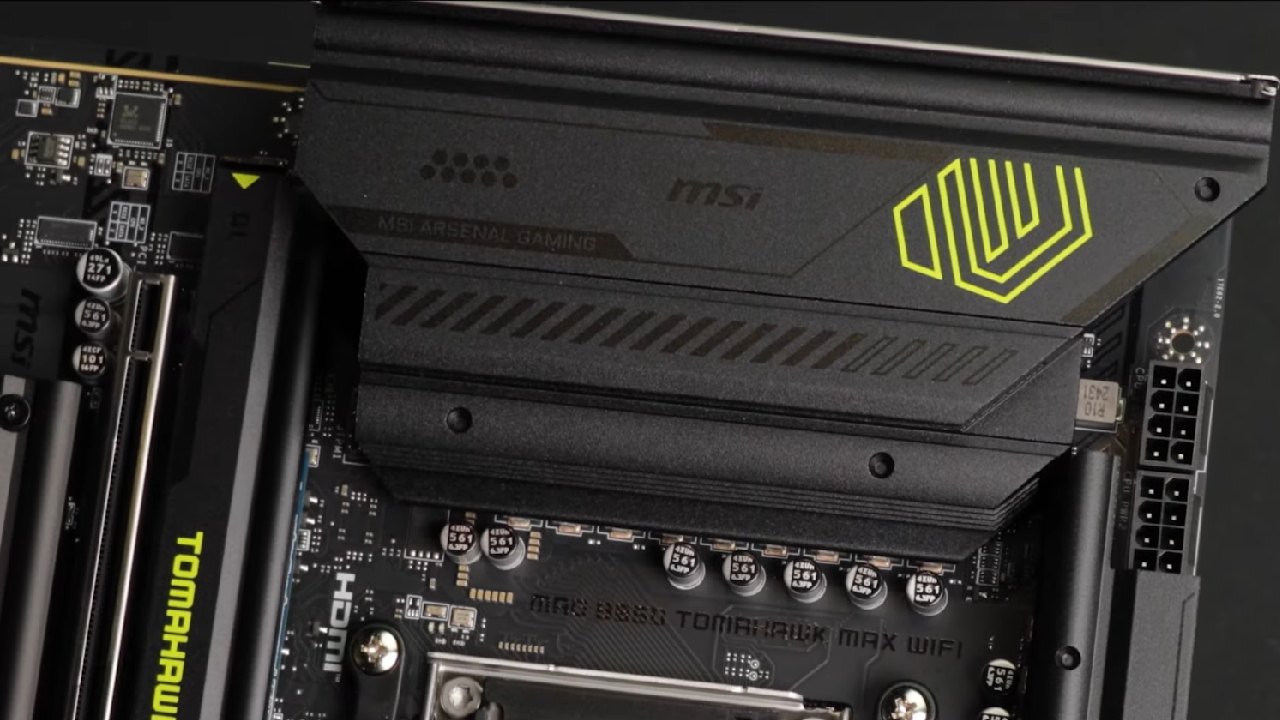
Runner-Up: Tomahawk
The second-best is the Tomahawk, a high-value product in the high-end market. It provides connectivity, which renders older mid-range boards obsolete. The board has four M.2 slots, two rear USB4 ports, Wi-Fi7, 5 Gbps wired networking, and a debug display.
It has one weakness. The back 40 Gbps USB Type-C ports are also shared with a second PCIe 5.0 M.2 slot. The board performs well and functions well, but the design is not optimized. You would choose this because you desire a high-end AM5 board with current I/O and solid networking, but without losing its value.
Final Thoughts
Firstly, the Strix board is the most comprehensive one. It features a 16+2+2 power design, four M.2 slots (two PCIe 5), two USB4 ports, Wi-Fi 7, and builder-friendly features, including tool-free M.2 installation and easy-release components.
Wired networking is slower than the Tomahawk, but the feature set is more consistent and better suited to high-end builds. The only limitation is price because it is higher than most construction costs. You would do so when creating a high-end system, and you would prefer to make fewer trade-offs, particularly when using high-end CPUs.
Also, check our other hardware articles:
- AMD Ryzen 9 9950X3D Review: Setting The Standard For 2025 Gaming CPU
- Amazon Luna 2025 Review: Is Prime Gaming's Cloud Service Your Go-To For Casual Fun?
- AMD RX 9070 XT Review: AMD's RDNA 4 Champion for 1440p Gaming
- GeForce Now Ultimate: Ditching Your Gaming PC For Cloud RTX 4080 Power?
- NVIDIA GeForce RTX 5080 Review (2025): Still A 4K Gaming Powerhouse?
- Intel Core Ultra 9 285K Review And Performance Breakdown (2025)
- AMD Ryzen 7 9800X3D Review: 3D V-Cache Goes God Mode with Stunning Gaming Performance
- Intel Core Ultra 9 285K vs AMD Ryzen 7 9800X3D: In-Depth Gaming Performance and Benchmark Comparison
- NVIDIA GeForce RTX 5080 Super Performance In Cyberpunk 2077: Path Tracing & DLSS 4.0 Tested
- AMD Radeon RX 9070 XT In Cyberpunk 2077: Ray Tracing & FSR 4.0 Tested
- Intel Arc B580 Review: The $250 GPU Revolutionizing 1440p Gaming
- Intel Arc B570 Vs. B580: Value, Specs, And Real-World Gaming Performance
- RTX 5090 Laptop Vs. M4 Max MacBook Pro: Ultimate Raw Performance Vs. Battery Endurance
- Intel Arc b580 Vs. RTX 4060: Game Performance And Value Analysis
- RTX5090 Hell Is Us Demo 4K Ultra Benchmark: DLSS Vs. Native Performance Guide
- NVIDIA RTX 5070 Review: Mid-Range Muscle or Marketing Hype?
- Nintendo Switch 2 Review: Handheld Performance, Features & Value Breakdown
- RTX 5070 Ti Review: Performance, Thermals & Power Efficiency Tested
- Samsung Odyssey OLED G81SF Review 2025: Ultimate 32-Inch QD-OLED Gaming Monitor
- AMD RX 9070 Performance Review: Thermals, Clocks, and Real-World FPS
- AMD Ryzen 5 7600 Review: Best Budget Gaming CPU of 2025?
- AMD Radeon RX 7800 XT Review: RDNA 3 Power For Midrange Gaming
- Asus ROG RTX 5090 Astral OC Vs. Founders Edition: The 4K Gaming Benchmark
Editor, NoobFeed
Gaming Hardware Updates
No Data.