
Sony and Microsoft's Evolving Partnership with AMD for Next-Gen Consoles
Sony leads in deep hardware co-development while Microsoft emphasizes AMD-driven designs optimized for PC compatibility and ecosystem integration.
Hardware by Tanvir Kabbo on Oct 27, 2025
The relationship between Sony, Microsoft, and AMD continues to shape the evolution of console hardware in fascinating ways. While both companies share AMD as a key partner for their next-generation systems, the nature of those relationships appears to differ significantly.
From the outside, it seems Sony's engineers are deeply involved in co-developing the PlayStation 6 hardware. At the same time, Microsoft takes a more AMD-driven approach for Xbox, an approach that may be tied to its vision of a hybrid PC-console future. Yet, as always, the reality behind the scenes is far more complex than public perception might suggest.
.jpg)
Visible and Invisible Layers of Collaboration
From what's publicly known, Microsoft maintains a close partnership with AMD to develop backward-compatible system-on-chips (SOCs) for distribution across multiple device types.
Windows continues to play an increasingly prominent role in this ecosystem, suggesting a future where Xbox hardware becomes even more intertwined with PC architecture.
Sony's approach, meanwhile, seems to go deeper into the hardware. Under Mark Cerny's leadership, the PlayStation engineering team reportedly collaborates directly with AMD on the nuts and bolts of silicon design.
This hands-on involvement likely means that Sony plays a greater role in steering the development of new technologies and their integration into the RDNA 5 GPU design.
Still, we have to assume Microsoft's engineering team isn't simply accepting pre-built AMD silicon without any input. Just as in the last generation, when Microsoft pushed for ray tracing acceleration that became part of both consoles' architecture, there's likely a collaborative feedback loop in which Microsoft influences AMD's priorities, particularly in areas aligned with DirectX and the PC gaming ecosystem.
Lessons from the Previous Generation
Microsoft made specific requirements to AMD during the past console cycle, such as adding ray tracing acceleration to the GPU pipeline. That plan helped Xbox, and it also had an effect on PlayStation's hardware.
It's plausible that a similar pattern persists today, with Microsoft exerting a major influence on AMD's overall roadmap rather than engaging in deep hardware-level co-engineering like Sony.
What we might expect this time is for Xbox to integrate the full RDNA 5 feature set—features that will likely appear alongside a future version of DirectX, perhaps DirectX 13 or an advanced iteration of 12.x. Sony, on the other hand, could again take a slightly leaner approach, removing some lesser-used features to optimize for efficiency and die size, much as they did with PlayStation 5.
Limits of Public Visibility
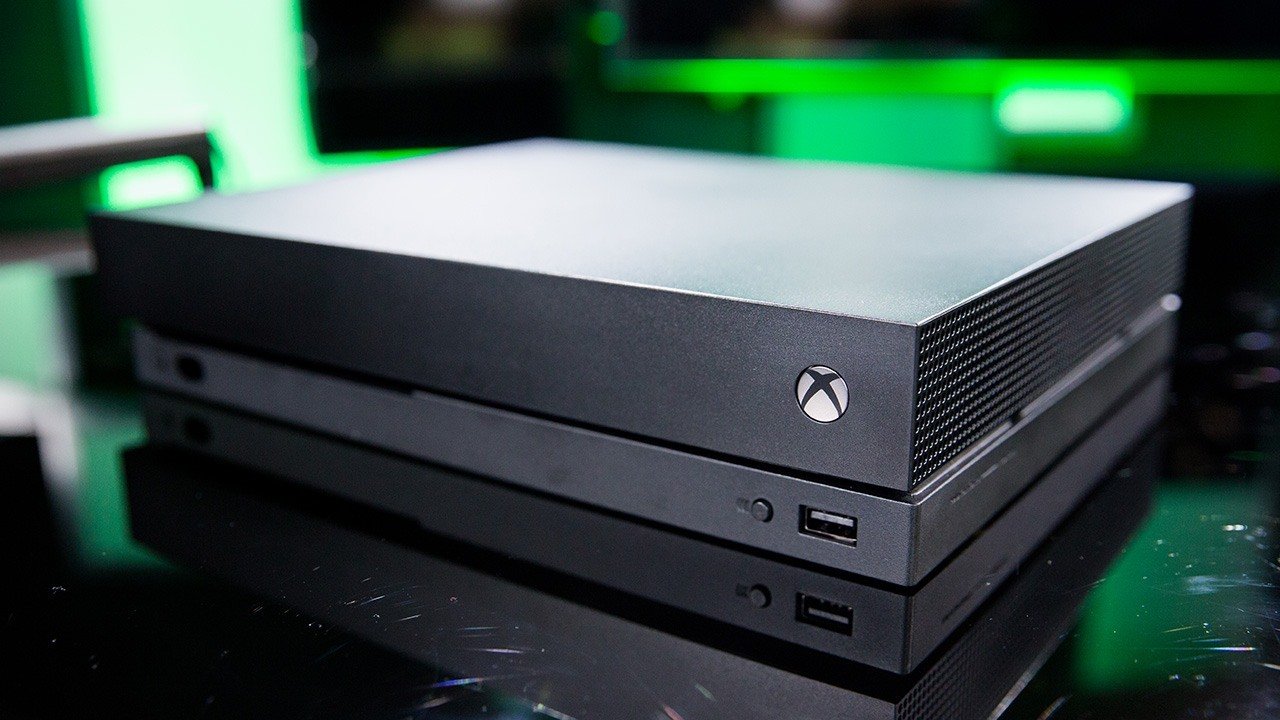
It's important to recognize how little concrete information exists in the public domain. Even with documents like the FTC leaks that hinted at the possibility of a more off-the-shelf AMD SOC for Microsoft, we still lack real insight into the inner workings of these projects.
For instance, the next Xbox could feature a custom CPU die paired with a more standardized GPU die, a design that might be shared with AMD's server or PC platforms.
Developers who work closely with these technologies often stress that public discussions on social media only scratch the surface. In truth, the inner details of console architecture remain far more concealed than fans might imagine, and it's often years before we learn what truly went into these designs.
Wider PC Influence
Any discussion about Sony, Microsoft, and AMD must also consider the PC landscape. The broader PC hardware ecosystem continues to set standards that both console makers inevitably align with. AMD isn't waiting for Sony or Microsoft to dictate the direction of graphics technology—it's pushing forward in line with market demands and technological trends across PCs, servers, and gaming hardware.
As a result, the evolution of console architecture is less about one company leading the charge and more about a convergence of shared goals. AMD develops key technologies like ray tracing, mesh shading, and AI-based upscaling to serve all sectors, and both consoles benefit from those advancements in their own ways.
Similar Destinations, Different Paths
Ultimately, both next-generation consoles are expected to deliver very similar feature sets, even if they arrive at that point through slightly different engineering philosophies. Each system will likely include one or two unique features that the other lacks, small distinctions that have always existed between Xbox and PlayStation.
The so-called "power narrative" between the Xbox Series X and PlayStation 5 didn't mean anything when you look back at the last generation. PlayStation's choice to leave out some elements, such hardware VRS, didn't change how well games worked or how good they were in the real world. What once seemed like key differentiators became minor footnotes in the bigger picture of delivering fast, capable, and efficient gaming experiences on both platforms.
In the end, both Sony and Microsoft want to use AMD's changing technology to power their ecosystems. Sony may be more involved in hardware co-design, while Microsoft may rely more on AMD's engineering base.
Whether through deep co-development or strategic partnership, the synergy between console and PC design ensures that innovation continues to move forward across the entire gaming landscape.
Also, check our other articles below:
- PS5 Pro vs. PS5 Slim: Frame‑Rate, Graphics & Performance
- PS5 Pro vs. Radeon RX 9060 XT vs RTX 5060 Ti: Ultimate $700 Gaming Showdown
- ASUS ROG Ally PS5 Remote Play | How to do Remote play on PS5 Using Sony's Official Remote Play App
- Stream PS5 Games on Steam Deck OLED: Step-by-Step Installation and Configuration
- AI Upscaling on PS5 Pro: Can PSSR Finally Match DLSS?
- PS5 Pro vs. PS5 Slim vs. PS5 — Design, Storage, Specs, and Gaming
- PS5 Pro vs. Xbox Series X: Specs, Price, Storage, Customization, and Gaming
- PS5 Pro vs. PC Gaming: Comparison of Graphics, Frame Rates, and Price
Senior Editor, NoobFeed
Gaming Hardware Updates
No Data.