
Switch 2 Gaming: Lightweight DLSS Model vs Full DLSS for Motion and Anti-Aliasing
Explore how Switch 2 DLSS compares to FSR3 in performance, motion clarity, and artifact reduction across modern games.
Hardware by Tanisha Aria on Dec 02, 2025
A lot of people are talking about the visual reconstruction methods Switch 2 uses, especially the lighter DLSS model, sometimes called "tiny DLSS." Developers can choose from different rendering paths, such as full DLSS2 to FSR2 and FSR3.
Changes in motion quality, antialiasing behavior, reconstruction stability, and GPU cost have become important factors in judging modern workloads.
.jpg)
As developers push the hardware toward 4K outputs, better frame rates, and demanding visual effects, they need to know how these approaches compare in both static and moving scenes.
Core Issue: DLSS Behavior in Motion
One of the main ways we test how strong rebuilding systems are is by moving them around. The main topic of conversation was how tiny DLSS works compared to full DLSS2 and newer FSR versions.
The tests mentioned show that tiny DLSS seems to reduce or eliminate much of the time-consuming rebuilding behavior usually associated with DLSS2. When the object is moving, that rebuilding part decreases significantly, making the result look more like a spatial enhancement with little help from time.
This is especially clear when the camera or object moves quickly, since a full DLSS model doesn't fully stabilize the image then. The main difference between tiny DLSS and normal DLSS2 implementations lies in the trade-off between static sharpness and motion clarity.
Why Developers Should Not Prefer FSR3 Instead
Most of the time, we wouldn't recommend FSR3 over tiny DLSS. The GPU's price is one of the main reasons. Small DLSS is usually smaller than FSR3 and FSR2.
Full DLSS2 and FSR2/3 usually use about the same amount of time on GPUs of the same class. If you run FSR3 on an RTX4070 and then compare it to DLSS3 (non-transformer mode), the CNN part of DLSS is normally a little faster.
But Tiny DLSS goes even further than that. Most of the time, it costs about half as much as a similar temporal upscaler. That decrease immediately leads to more stable frame rates or higher rendering resolutions.
When you're trying to get good performance at 4K or even 1440p on GPUs that aren't very powerful, cutting down on rebuilding overhead becomes a big plus.
Also, tiny DLSS doesn't have some of the problems that FSR does. Particle ghosting happens all the time in FSR, especially in scenes with a lot going on. In these situations, Tiny DLSS resolves more consistently, even though it only covers a small area of antialiasing.
Best performance and picture quality for all kinds of games
Even though tiny DLSS works well for many games, we know it might not perform as well in fast-paced games like shooters or action games.
Temporal restoration methods don't work well in these kinds of settings unless they are very strong. To handle fast movement smoothly at the low input resolutions that coders usually aim for, we would need a much better model.
But for most types of music, tiny DLSS is still the better choice. It works well, stays stable, and is likely to get even better over time.
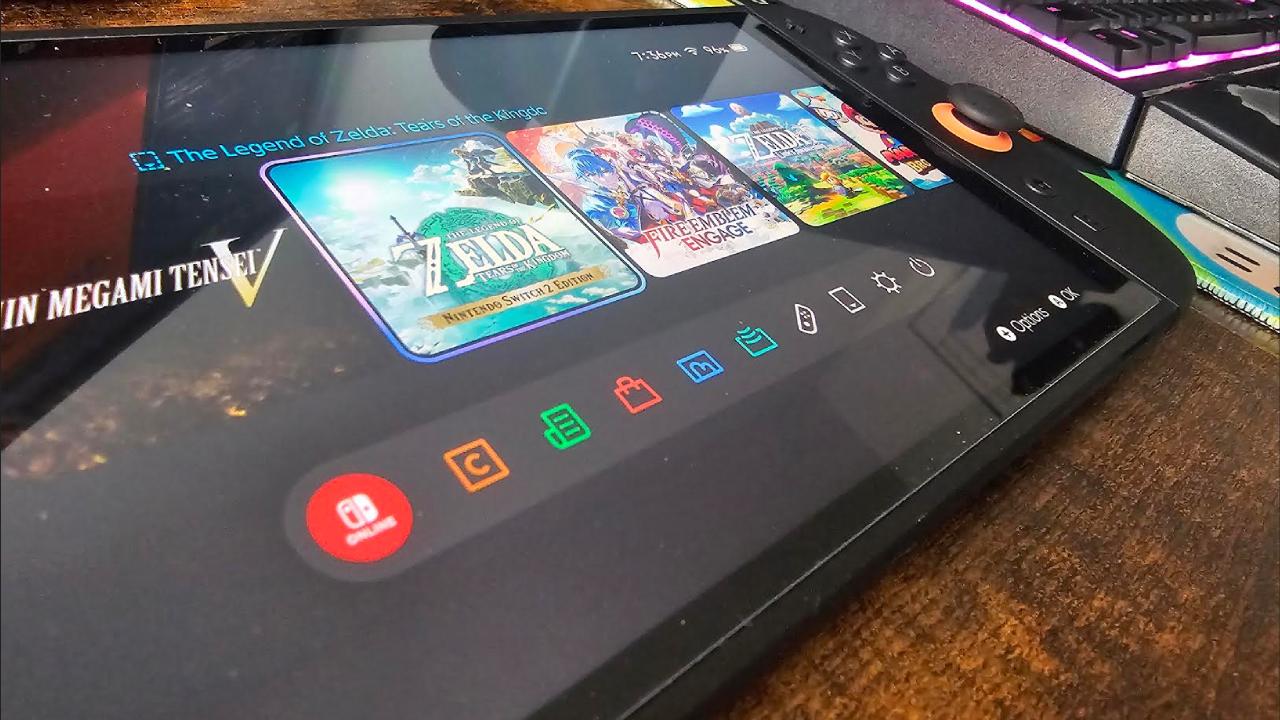
Full DLSS vs. the Lightweight Model
The full DLSS model delivers much better image clarity across both ends of the DLSS spectrum. Games like Cyberpunk make this difference very clear: Full DLSS makes antialiasing stronger, motion more stable, and rebuilding cleaner across frames, even when working from low internal resolutions like 1080p docked or 720p–900p portable.
The picture that comes out of it is usually softer but also more unified. When moving, the steadiness is especially clear. Full DLSS often gives better results for players who value clarity over raw sharpness.
Because it doesn't fully address antialiasing for moving lines, the light model isn't as good as FSR2 or FSR3. Still, it avoids some FSR-specific flaws.
For instance, the fizzle or noise sometimes heard in remote places with FSR doesn't occur as often. Some parts of tiny DLSS may not be antialiased, but it doesn't have the grainy "salt and pepper" look that some FSR implementations do.
Real-World Examples of Tiny DLSS Performance
Several games have done a good job with tiny DLSS. For example, Hogwarts Legacy shows that the method can produce a clean, well-structured image even when the internal resolution drops to very low levels, like 540p. That working range is great, and other temporal upscalers often struggle there.
Resolution adaptability is one of the best things about it. Tiny DLSS can often resolve to 1440p when docked or 1080p in portable mode, keeping the display stable. One of the best things about devices with limited GPU power is that they can match the resolution of a portable panel without overloading the internal rendering system.
Final Thoughts
Tiny DLSS is the best choice for many Switch 2 games when we consider GPU cost, artifact profile, motion speed, and achievable resolutions.
It is small, doesn't suffer from some of the more annoying temporal problems that other methods do, and can achieve better final resolutions even with very low inputs.
Full DLSS is still the best option for pure visual quality because it has smoother movements, stronger antialiasing, and better reconstruction. While FSR2 and FSR3 are useful in some situations, they still cause ghosting and artifacting that tiny DLSS handles more smoothly.
In general, we prefer tiny DLSS in most situations, especially since more improvements are expected. The lightweight DLSS model remains a great choice for players and developers seeking the best balance of clarity, stability, and speed on Switch 2.
Also, check our other Handheld articles :
- ASUS ROG Ally X Handheld Review: Double the Battery, Double the Comfort
- Nintendo Switch 2 Vs. Original Switch 1: A Full Comparison
- How To Connect A Camera And Join Voice Chat With Nintendo Switch 2
- Nintendo Switch 2 Review: Handheld Performance, Features & Value Breakdown
- Lenovo Legion Go S Review: The Ultimate Steam Deck 2 Alternative
- ROG Xbox Ally X Vs. ROG Ally X: Display, Battery & Controls
- MSI Claw 8 AI+ Review: Display, Controls & Gaming
- ASUS ROG Ally X vs. Steam Deck OLED: Display, Battery & Gaming Benchmarks
Contributor, NoobFeed
Gaming Hardware Updates
No Data.