
AMD Radeon RX 7600 Review: Mid-Range GPU Compared to Older AMD and Nvidia Cards
AMD's RX 7600 offers competitive mid-range performance with 8GB VRAM, modest power consumption, and support for modern gaming features.
Hardware by Tanvir Kabbo on Aug 29, 2025
AMD's mid-range graphics card is the Radeon RX 7600. It guarantees high to ultra-high settings and an optimal gaming experience, as it is designed for 1080p gaming.
However, as game requirements continue to rise, concerns are raised regarding its long-term viability, given that it only has 8GB of VRAM. AMD has made inconsistent pricing decisions, changing the price twice before settling on $270.
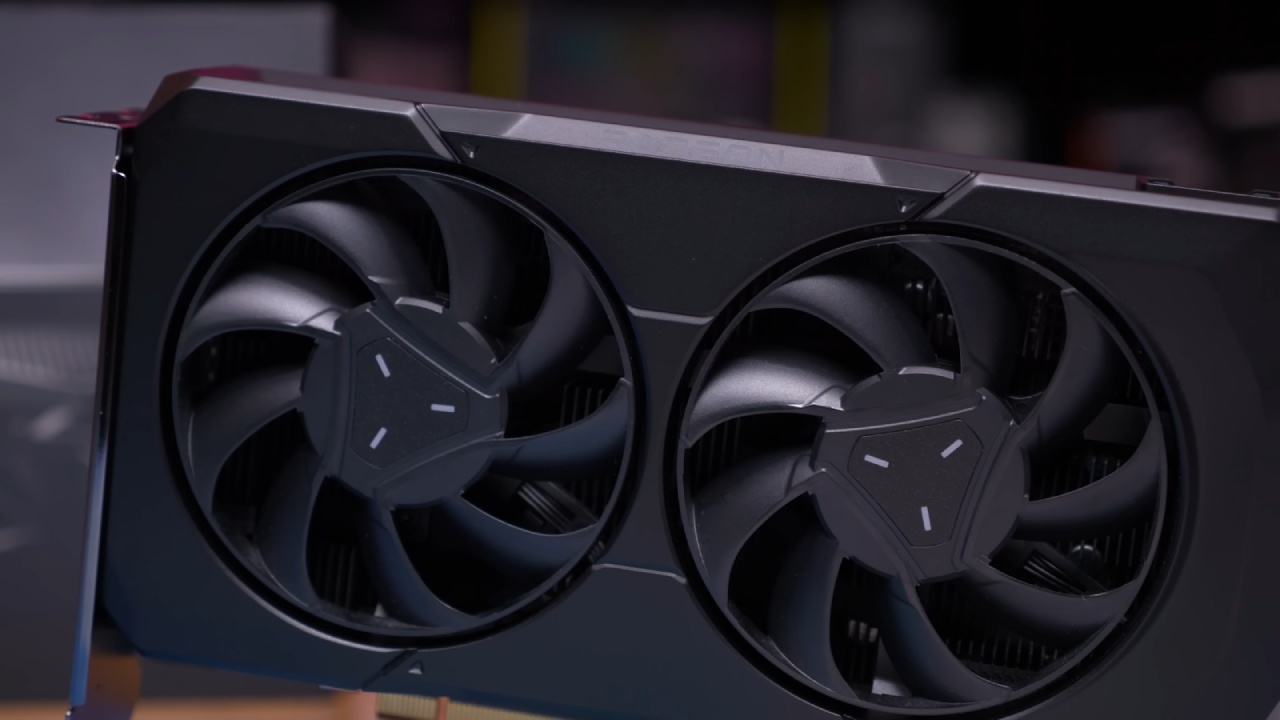
Even while it provides slight performance gains over the RX 6600 series, it still has to contend with fierce competition from older GPUs that are available for comparable or less money.
Overview of RX 7600
RX 7600 is aimed at 1080p gamers seeking a reliable mid-range GPU. Despite AMD's assertions, some contemporary games require more than 8GB of VRAM, and future releases are likely to require even more.
With just modest performance improvements over these previous versions, the RX 7600 is in direct competition with GPUs like the RTX 3060, 6650 XT, and RX 6600.
The key advantages of the 7600 include AV1 encoding support and DisplayPort 2.1, offering a maximum bandwidth of 54bits, a 67% increase compared to previous models.
The card utilizes a 128-bit wide memory bus with 8GB of GDDR6 memory, clocked at 18GB/s, resulting in a 16% increase in theoretical bandwidth after factoring in Infinity Cache.
Gaming Performance
Fortnite
In Fortnite, RX 7600 delivers an average of 90fps at 1080p, placing it in line with RTX 3060, 2060 Super, and 6600 XT. Compared to 6650 XT, it provides just a 5% boost, which is underwhelming given the $270 price point. At 1440p, performance remains modest, closely matching RTX 3060 and 6650 XT.
Resident Evil 4
The RX 7600 struggles in Resident Evil 4, performing slower than the RX 6650 XT and only slightly faster than the RX 6600. At 1440p, it matches the 6600 XT but remains 8% slower than the 6650 XT and 17% slower than the RTX 3060, highlighting its limited performance gains.
A Plague Tale: Requiem
Performance improves in A Plague Tale: Requiem, with RX 7600 showing 3% faster performance than 6650 XT at 1080p and 26% faster than the RTX 3060.
At 1440p, the card delivers 5% higher performance than the 6650 XT and nearly 30% better than the RX 6600, demonstrating its capability in select titles.
F1 22
Ray tracing performance in F1 22 is where the RX 7600 shines. It is 13% faster than the 6650 XT, 21% faster than the RTX 3060, and 35% faster than the RX 6600 at 1080p resolution, although the price difference compared to older cards is notable.
At 1440p, it approaches 6700 XT light performance, delivering roughly 40% higher performance than the RX 6600.
Cyberpunk 2077
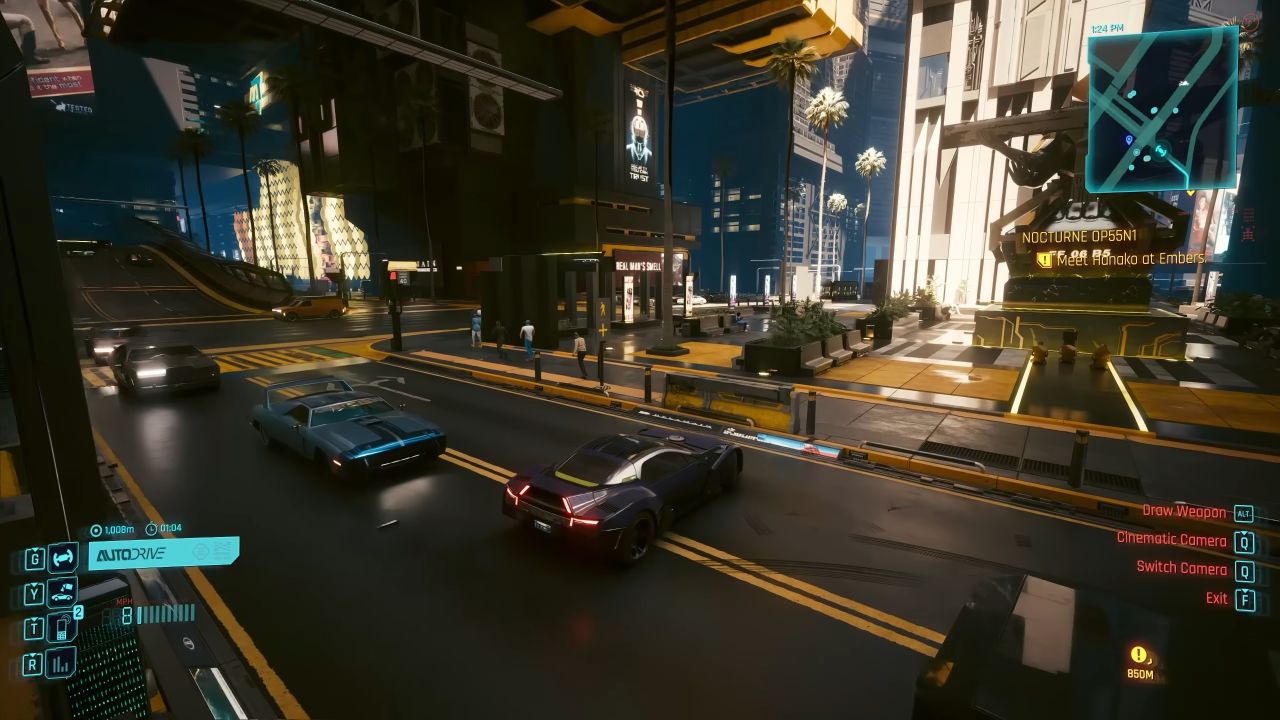
At 1080p, the RX 7600 falls just 7% short of the 6700 XT while outperforming the 6650 XT by 8% and the RX 6600 by 30%. The 1440p data mirrors these results, maintaining a solid performance advantage over previous generations.
Other Titles
Across titles like Dying Light 2, Watch Dogs: Legion, Forza Horizon 5, Total War: Warhammer III, Spider-Man Remastered, Hogwarts Legacy, Halo Infinite, The Last of Us Part I, Call of Duty: Modern Warfare II, and Hitman 3, RX 7600 consistently delivers 6650 XT light performance at 1080p.
At 1440p, margins marginally improve, but in VRAM-intensive games, the 8GB VRAM limit may result in texturing and performance problems.
Heat and Power Consumption
The RX 7600's power consumption is comparable to that of the 6650 XT, providing no appreciable efficiency gains. During a load test with a 90°C hotspot, the reference card's average temperature peaked at 78°C. Fans ran at 1,600 RPM, while the core clock remained around 2,560 MHz, with memory operating at 18 GB/s.

Cost-Per-Frame Analysis
At the current MSRP of $270, the RX 7600 offers the best value GPU release in recent years, reducing the cost per frame by 35% compared to the RX 6600 and lowering costs by 26% relative to the RTX 3060.
However, with older Radeon 6000 series GPUs selling below MSRP, the value proposition is weaker. 6650 XT and 6600 XT can be found at similar prices, offering comparable performance, power efficiency, and VRAM capacity.
Based on MSRP logic, the RTX 4060 TI should not exceed $300, implying that AMD should price the RX 7600 at no higher than $230 to maintain a competitive market stance.
Final Thoughts
RX 7600 operates at 2560MHz with 18GB/s memory and keeps safe thermals, although it offers no significant advantage over 6650 XT. Even with the last-minute price adjustment, the card is overpriced and underwhelming.
If you can spend slightly more, 6700 XT provides better VRAM, higher performance, and comparable Ray tracing results. AV1 encoding support is the main advantage of the 7600, but it may not justify the current price for most users.
Ultimately, the RX 7600 becomes a worthwhile purchase only if priced around $250 or below. 8 GB of VRAM is increasingly insufficient for modern games, and users should expect to manually adjust textures in titles at 1080p to avoid performance bottlenecks. Games in the coming years will demand higher VRAM, making cards with 12GB or more a safer long-term investment.
If you are looking for a mid-range GPU around $300, the RX 6700 XT is a more sensible choice, offering additional VRAM, improved performance, and a better long-term investment. RX 7600 might eventually reach a more competitive price point, but until then, its value remains limited.
Check Our Other AMD articles:
- AMD Ryzen 9 9950X3D Review: Setting The Standard For 2025 Gaming CPU
- AMD Ryzen 7 9800X3D Review: 3D V-Cache Goes God Mode with Stunning Gaming Performance
- AMD RX 9070 Performance Review: Thermals, Clocks, and Real-World FPS
- AMD Ryzen 5 7600 Review: Best Budget Gaming CPU of 2025?
- AMD Radeon RX 7800 XT Review: RDNA 3 Power For Midrange Gaming
- Sapphire NITRO+ AMD Radeon RX 9070 XT Review: The Ultimate 4K Gaming GPU
- AMD Ryzen 7 7800X3D: Delivers Gaming Performance Far Beyond Expectations
- AMD Ryzen 9 7900X Review: Powering the AM5 Era with DDR5 & PCIe 5.0
- ASRock Radeon RX 7800 XT Challenger OC Review: Best Price-to-Performance GPU of 2025
- Intel Core i9‑14900K vs. AMD Ryzen 7 7800X3D: Power Profiles & Gaming Benchmarks
Senior Editor, NoobFeed
Gaming Hardware Updates
No Data.