
AMD RX 9070 GRE Review: 12GB GPU Performance, Benchmarks, Pricing and Gaming Results
Benchmark results show the RX 9070 GRE competing closely with higher-priced graphics cards across major titles.
Hardware by Nahe Yan on Jun 02, 2026
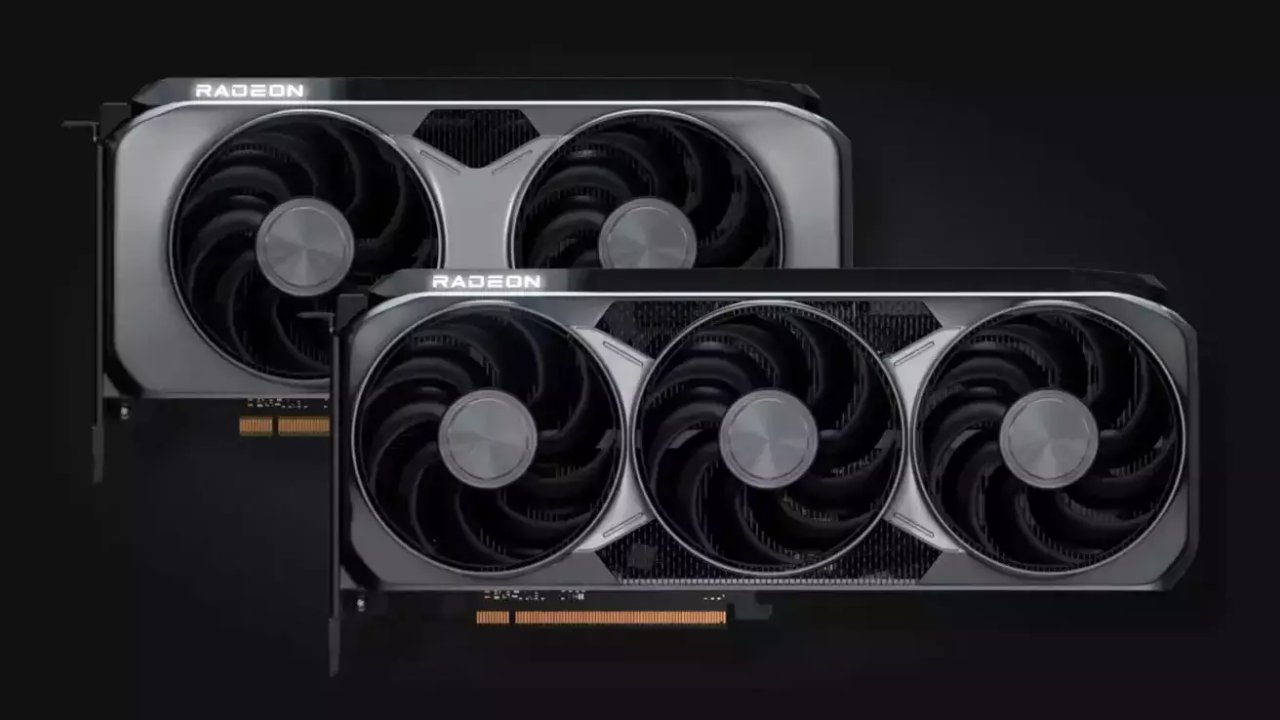
New graphics cards are being released to meet the increasing demand for 1080p and 1440p gaming while balancing performance, cost, power consumption, and memory. RX 9070 GRE comes with a pared-down version of the higher-end models and sits somewhere in the middle of the price-to-performance spectrum, at $549.
Designed for gamers seeking reliable raster graphics performance, ray tracing capabilities, and the advantages of newer architecture without breaking the bank, the card fits that profile. AMD didn't have a 9070 GRE on our bingo card for 2026, but here we are. We benchmarked it, and it will be priced fairly aggressively. Here, the emphasis is on gaming performance, specs, and the card's position in the current GPU lineup.
.jpg)
RX 9070 GRE Follows in a Similar Vein
RX 9070 GRE is built for gaming at 1440p and 1080p. This makes perfect sense, as it's a 12GB card, which is a major factor in memory expectations and gaming performance. It was one of our favorite products to recommend to users on a budget, and the 7900 GRE wouldn't break the bank. It was priced at $549 at launch, and versions were frequently available for less than $549 in US retail stores. The card was made a value option because of its per-dollar performance.
The GRE naming convention denotes a global release version and generally applies to graphics cards with reduced specifications to meet various product needs. Strangely enough, the card is not as powerful as other cards such as the 9070 XT and the 9070, which are already widely available on the market. It calls into question the existence of the GRE model. Maybe GRE has been given a more economical spin regarding GPU placement.
RX 9070 GRE Specifications and Power Draw are Provided
RX 9070 GRE comes with 48 RDNA4 compute units, 48 RT accelerators, and 96 AI accelerators. Also, AMD has a product called 1097TOPS, which is interesting since companies are talking about TOPS rather than teraflops. It's kind of a stretch to see AI measurements even applied to a budget gaming card, but you can tell a lot from that.
The card is equipped with a boost clock of 2.79 GHz, and we hit even higher frequencies in testing. The card could be undervolted to 3.1 GHz with a -90 mV offset. Did not even manually input clock speeds. Lowering the voltage offset allowed the clocks to increase naturally, and when further power limits were imposed, the card was stable.
Another significant factor is the power usage. In the stock configuration, the card consumes 240W, but with overclocking it was about 264W. The performance-to-power ratio is quite good for what it produces. 250W was once the domain of high-end GPUs. It's no surprise now that the lower-tier products have started drawing around 240W, indicating evolving power needs over the years.
The card also features a PCIe 5.0 x16 interface. But the most intriguing is the memory. RX 9070 GRE will come with 12GB of VRAM, whereas the previous-generation 7900 GRE had 16 GB. 12GB is still better than 8GB; however, gamers are increasingly looking for 16GB, particularly for the longevity of the investment.
Avatar: Frontiers of Pandora Performance
In Avatar: Frontiers of Pandora, the RX 9070 GRE achieves an average of 65.1 fps at 1440p and 54.5 fps at 1% lows. It has lower latency of approximately 0.7fps compared to the RTX 5060 Ti, while its lows are a bit better. The card crosses the 60 fps line, though just barely.
In addition to beating cards like the RX 7800 XT, RTX 3070 Ti, and RTX 4060 Ti, the card is also near the RX 6800 XT and RTX 3080. The results are remarkable for Avatar, which relies heavily on Nvidia's power. Performance at 1080p rises to 92.3fps, and 1% lows that are stronger than their neighbors' are noteworthy.
Players at Baldur's Gate Experience the Strength of AMD
That's not the case in Baldur's Gate. We are still updating benchmark suites, so for some titles we are only testing them as we update them, resulting in fewer comparison cards. While the RTX 5070 is much more expensive, the RX 9070 GRE is superior at 1080p resolution. There's a certain AMD preference, and that's why it's important to have different games available for Baldur's Gate. Various titles are used for various architectures.
It can achieve up to 189.6 fps at 1080p Ultra settings. The card boasts 139 fps at 1440p, just 0.1 fps behind the RTX 5070, while 1% lows are slightly lower. At 4K, the performance is even better than expected at 72.9 fps. RTX 5070 delivers around 85.2 fps, leaving a margin of 13 fps. However, the price difference isn't significant enough to affect the results.
Borderlands 3 Highlights Raster Performance
Borderlands 3 is very performance-oriented when it comes to AMD rasterization. At 1080p, the RX 9070 GRE delivers 184 fps, surpassing cards like the RTX 5070, RTX 4070, and RTX 3090. This is important because items such as the RTX 3090 had been much more expensive in the past. We'd love to see technology trends that make hardware faster and cheaper. Over the years, performance has improved, and costs have become easier to justify. Mid-level GPUs can cost as much as high-level GPUs today.
It's extremely high at 1440p, hovering at 130fps and still improving the average frame rate compared to the RTX 3090. The card is still around 70 fps at 4K, and performance is decent when playing games with many rasterized elements. The use of a rasterized character set is still rewarded with F1 24 Continues.
F1 24 Takes Full Advantage of Raster Performance
RX 9070 GRE sits closer to the RTX 5070, with approximately 139.4 fps compared to 141 fps. In the official documents, AMD equates the GRE to the RTX 5060 Ti, but in most tests it settles closer to the RTX 5070. A recurring theme across all the tests is increased 1% lows. Often, the lows of the GRE are superior to those of its competitors, resulting in more consistent frame-time behavior.
At 1440p, the card still runs at ~102 fps. It drops noticeably below 60 fps at 4K and, in this instance, is one of the more obvious cases of 12GB of memory falling behind its 16GB counterparts. The synthetic Benchmarks illustrate RT and Raster Gaps. The synthetic Benchmarks are used to illustrate RT and Raster Gaps.
Speed Way is a benchmark for measuring speed in ray tracing, and the RX 9070 GRE is in the mid-pack. Here, synthetic workloads reveal the architectural strengths of RTX 5070-class hardware compared to AMD products. This is because the RTX 50-series cards offer significantly better ray tracing performance. In the meantime, the GRE is closer to the performance of the RTX 40 series.
In contrast, Steel Nomad, which specializes in rasterization, paints a different picture. It is noted that the RX 9070's score is slightly higher than the RTX 5070, around 5350 vs 5221, respectively, and marginally higher than the RTX 3090 as well. The overall performance is mixed, as with other benchmarks, and this again points to RDNA4's rasterization performance.
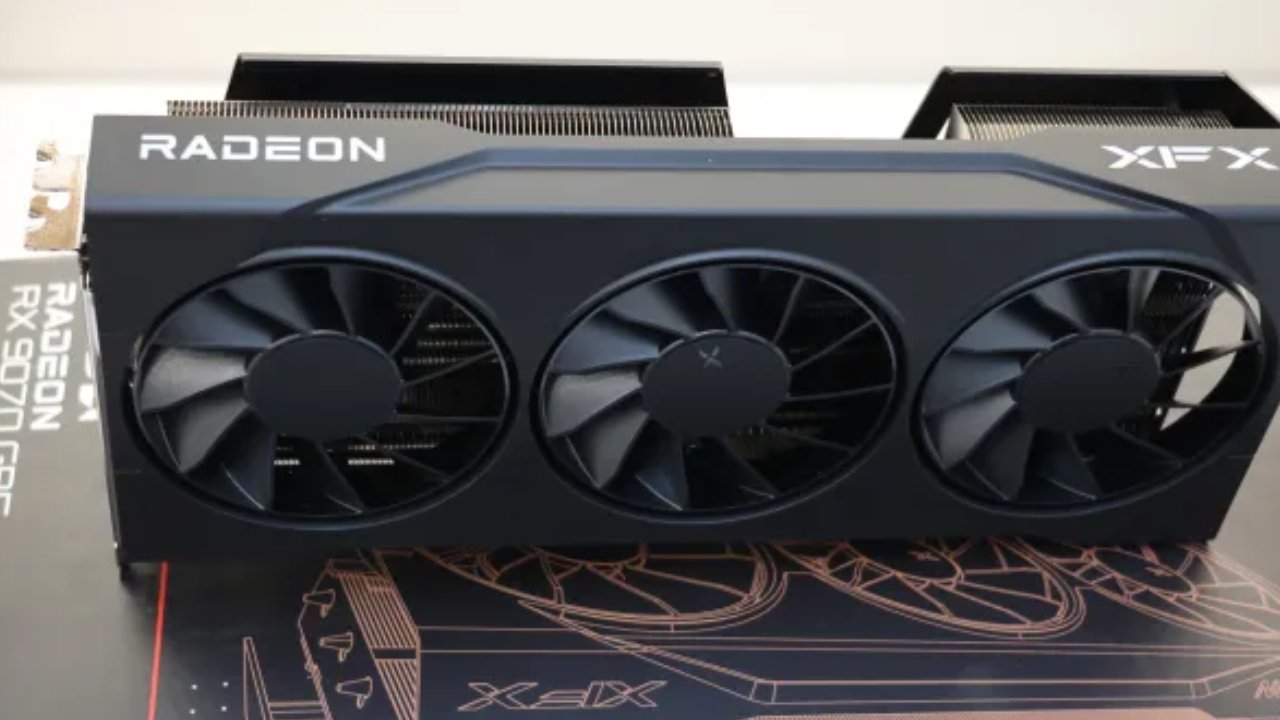
Priced at $15.99, VRAM, and Market Position
The intent of this card isn't really mysterious. The 7900 GRE was released as part of NVIDIA GeForce Experience, with a more reasonable price point than the 7800 but still high enough to maintain good gaming performance. It's not just about the low price tag. If the performance is not up to scratch, then the product is not worth the lower price.
Historically, the GRE line provided close to higher-tier performance at lower cost. The general trend with the RX 9070 GRE has been the same. It performs more like cards above it than just pricing. There is a concern about memory. With the VRAM talk still in session, it begs questions about launching a 12GB GPU.
With the advent of more demanding games for today's higher settings and resolutions, many players thought 16GB would be the standard. The original price of the card is $549, but depending on the board partner variants, cooling systems, and factory tuning, the final price could range from $579 to $599 or even $629.
We're still pleased with RDNA 4, but software decision-making is up for discussion.
AI applications, chat features, and local models are increasingly embedded in driver software packages during driver installation. When setting up, you might see AI assistant-related items in driver suites.
Luckily, you can turn off many of these additions during installation, but if you don't, they usually get installed automatically. This adds extra software load that some gamers might not want. The bigger question is: does the gaming community really want AI chat built into graphics drivers?
These features might provide additional functionality for some users. But for some, they are just another piece of software to deal with. Meanwhile, the downgrade from 16GB to 12GB raises questions, particularly with the growing demands of the gaming world.
There is good performance for the price, but in the end, how much memory is provided and the retail inflation rate will determine the card's attractiveness after its launch. Meanwhile, the RX 9070 GRE seems like another card right next to the top level in performance, but just not quite as expensive as the "flagship" tier, despite the overall trend in the GPU market.
Editor, NoobFeed
Gaming Hardware Updates
No Data.