

Best RTX 5080 Cards Ranked: Performance, Cooling & Value
RTX 5080 positions itself as the ideal high-end choice for gamers seeking performance without the flagship premium.
Hardware by Nakiro on Oct 13, 2025
NVIDIA has officially launched its newest GPU, the RTX 5080, the little brother to the RTX 5090. Designed to deliver 4K-level performance with the latest generation of DLSS at a lower price tag, the RTX 5080 aims to capture users who may find the RTX 5090 excessive for their needs.
The question remains—did Nvidia strike the right balance between performance and affordability, or did it cut back too much compared to the higher-end models? With several partner cards already available, let's take a detailed look at all of them and see how they stack up against the Founders Edition.
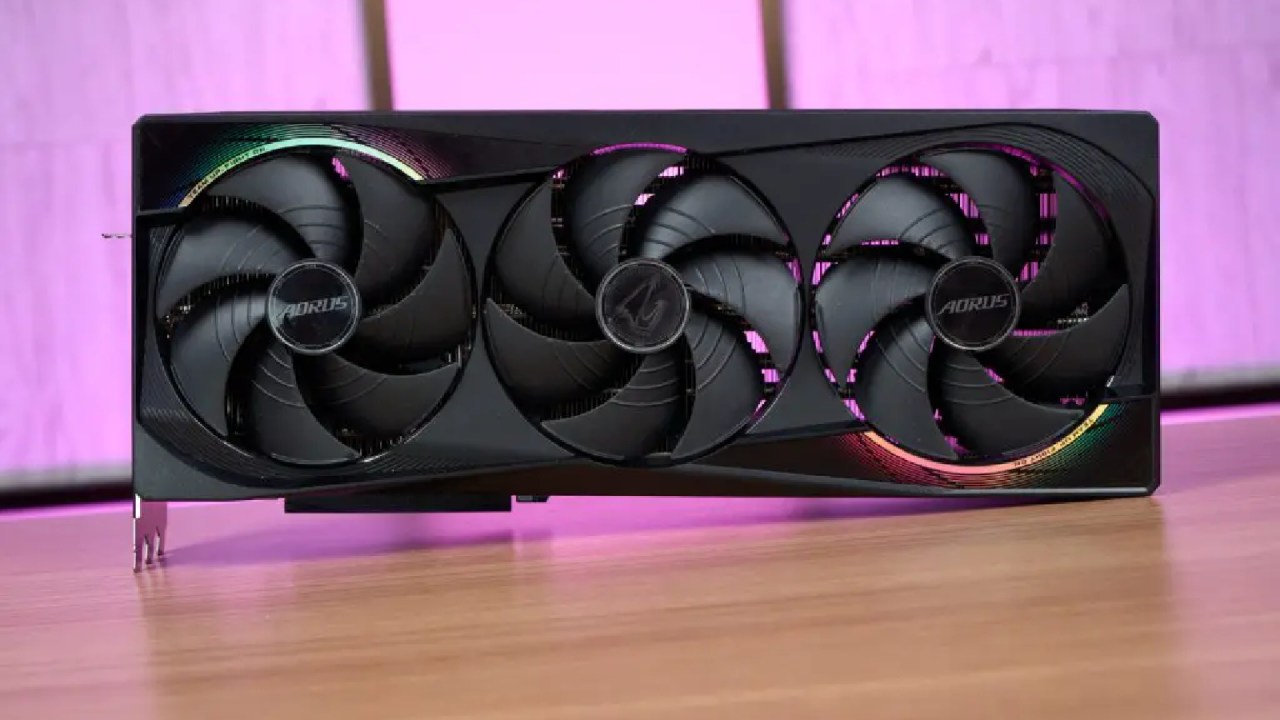
Design and Build Quality
Starting with the RTX 5080 Founders Edition, it's nearly identical to the RTX 5090 apart from the badging. Measuring 30cm long, 13.12cm high, and weighing 1635g, it is the thinnest card in the lineup at only 40mm wide. It lacks RGB lighting but features an illuminated RTX logo, maintaining a clean, industrial design.
The Galax GeForce RTX 5080 One Click OC follows next, measuring 30 x 13.5 cm and weighing 1308g. Though it's 10mm thicker than the Founders Edition, it includes RGB lighting and remains one of the smallest and lightest partner cards.
Moving up, the Colorful GeForce RTX 5080 Vulcan OC is a larger, premium offering at 36x15cm and 2796g. It includes an extra HDMI port, an RGB header, and a more subtle RGB implementation.
The Gigabyte GeForce RTX 5080 Gaming OC measures 34x14cm, weighs 1823g, and is 70mm wide—just over three slots. It offers a dual BIOS switch between performance and quiet modes, with RGB lighting behind the fans and logo.
Next, the Zotac GeForce RTX 5080 AMP Extreme Infinity measures 33cm long, weighs 2161g, and is 70mm wide. It includes a proprietary RGB header, BIOS toggle, and a rounded-edge design that may help it fit smaller cases.
The Palit GeForce RTX 5080 GameRock OC features an iridescent design that changes color based on viewing angle. It measures 33 x 14.2 cm, weighs 2200g, and is 70mm wide, with RGB control and a BIOS switch.
The Gainward GeForce RTX 5080 Phoenix GS is smaller at 33 x 13 cm and 1595g. At 60mm wide, it includes a BIOS toggle and RGB header, though only the Phoenix logo is illuminated.
For MSI, the MSI GeForce RTX 5080 Vanguard S is 36x15cm, weighs 1954g, and is 67mm wide. It includes dual BIOS, RGB in the logo, and strong build quality. The MSI GeForce RTX 5080 Supreme S shares the same dimensions but weighs 2639g, nearly four slots wide, and defaults to silent mode. It includes RGB by the fans and in the logo.
Finally, the Asus GeForce RTX 5080 Astral OC is the largest overall at 35x15cm, 80mm wide, and weighs 2900g. It includes adjustable RGB lighting, fan controllers, and a BIOS toggle. All cards use the same 12-pin power connector.
Test Setup and Performance Overview
We used an MSI X870E Carbon motherboard with an AMD Ryzen 7 9800X3D and 32GB of DDR5-6200 memory to evaluate the RTX 5080 range. We also used Windows 11 Professional and Nvidia's newest drivers.
At 4K, all performance charts are normalized to the RTX 5080 Founders Edition. Compared to the RTX 4080, the RTX 5080 delivers a notable uplift, with the RTX 4080 providing only 87% of the 5080's performance. The AMD RX 7900 XTX delivers roughly 88%.
Among partner cards, the MSI 5080 Supreme shows a 2% boost, Galax One Click OC 3%, MSI Vanguard and Gigabyte Gaming OC 4%. In contrast, the Zotac AMP Extreme, Colorful Vulcan, Gainward Phoenix, and Palit GameRock all show 5% improvements. The Asus Astral leads with 6% higher performance over the Founders Edition.
However, the RTX 4090 still outperforms the RTX 5080 FE by 33%, and the RTX 5090 sits in another category altogether with 52% higher performance.
At 4K, the RTX 5080 averages around 100fps, with the RTX 4090 hitting 109fps and the RTX 5090 soaring to 147fps.

1440p and 1080p Gaming Performance
Dropping to 1440p boosts all RTX 5080 models to over 160fps. Here, the RTX 4080 Super achieves 91% of the 5080's performance, the vanilla 4080 reaches 90%, and the RX 7900 XTX delivers 89%. The Asus Astral remains the fastest partner card, while the RTX 4090 is now only 12% faster than the 5080 FE.
At 1080p, CPU bottlenecks begin to appear, even with the 9800X3D. The RX 7900 XTX offers 90% of the 5080's performance, the 4080 93%, and the 4080 Super 94%. Partner cards maintain similar percentage gaps, with the Asus Astral again leading by 5% over the Founders Edition.
Ray Tracing Performance
Enabling ray tracing increases the gap between Nvidia and AMD cards. The RTX 4080 and 4080 Super rise slightly to 94% and 95% of the 5080's performance, but the RX 7900 XTX drops sharply to just 68%. The RTX 5090 and RTX 4090 show higher relative gains under the heavier GPU load.

Power Consumption and Efficiency
The RTX 5080 Founders Edition consumes 325W—slightly more than the RTX 4080's 304W and the RTX 4080 Super's 302W, but below the RTX 3080's 350W. Interestingly, the MSI 5080 Supreme delivers higher performance while using less power.
MSI Vanguard draws 352W, while most other cards hover around 350–367W. The Zotac AMP Extreme uses 371W, and the Asus Astral tops the chart at 388W.
The Asus Astral is the least efficient at 4.1W per frame, along with the RTX 4070 Super. The Zotac AMP Extreme and Colorful Vulcan are next at 4W per frame. The Gainward Phoenix and Gigabyte 5080 Gaming OC both get 3.9W per frame, whereas the MSI Vanguard and Galax One Click OC get 3.8W.
The Founders Edition and Palit GameRock sit at 3.6W per frame, and the MSI 5080 Supreme takes the crown as the most efficient card at 3.5W per frame.
Thermals and Noise
The loudest card is the Zotac RTX 5080 AMP Extreme at 38.6 dBA, followed closely by the Gigabyte Gaming OC at 38.4 dBA and the Gainward Phoenix at 37.4 dBA. The Founders Edition runs at 36.8 dBA, while the Asus Astral hits 36.3 dBA.
The quietest card, however, is the MSI 5080 Supreme, with an impressive 25.5 dBA in quiet mode. The Asus Astral in quiet BIOS mode follows closely at 25.8 dBA, and the MSI Vanguard also performs quietly.
When all cards are locked at 35dBA and 360W, the MSI Vanguard leads thermals at 58.8°C, followed by the Colorful Vulcan at 59.3°C, and the MSI Supreme at 59.5°C. The Asus Astral sits slightly higher at 61.2°C, with the Founders Edition being the hottest at 72.9°C.

Overclocking and Value
All RTX 5080 cards achieved roughly 10–12% gains from manual overclocking, in some cases nearing RTX 4090 performance.
In terms of value, the Asus RTX 5080 Astral is the most expensive partner card, priced about $500 above the Founders Edition despite being only 6% faster. The Colorful Vulcan, priced around $1300, delivers strong cooling and solid performance. The MSI 5080 Supreme, $50 cheaper, is slightly slower but far more efficient and quieter.
The MSI Vanguard costs $20 less than the Supreme, offers excellent thermals, but produces higher noise at stock settings. The Zotac AMP Extreme and Gigabyte Gaming OC sit around $1250 and $1200, respectively, offering balanced performance and cooling. The Palit GameRock and Gainward Phoenix are slightly cheaper but still perform close to premium models.
At $1100, the RTX 5080 Founders Edition offers solid value, though the Galax RTX 5080 One Click OC, at the same price, outperforms it while running cooler—making it arguably the best value in the lineup.
Check Our Other Articles:
- GeForce RTX 5090 Unleashed: Is NVIDIA's New Flagship the Ultimate 4K Gaming GPU?
- NVIDIA GeForce RTX 5080 Review (2025): Still A 4K Gaming Powerhouse?
- RTX 5090 Performance Testing In GTA 5 – 1080p, 1440p, and 4K Max Settings Benchmark
- NVIDIA RTX 5070 Review: Mid-Range Muscle or Marketing Hype?
- RTX 5070 Ti Review: Performance, Thermals & Power Efficiency Tested
- ASUS ROG Astral RTX 5090 OC Edition Review: 32GB GDDR7 & 4K Gaming Benchmark
- ASUS GeForce RTX 5090 LC Liquid Cooled GPU Review: Unmatched Silence & Speed
- MSI GeForce RTX 5090 32GB SUPRIM SOC Review: Power Efficiency, Cooling, and Gaming Performance
- INNO3D RTX 5060 Ti 16 GB X2 Review: Gaming Benchmarks, Temps, and Power Efficiency
- HP Omen 45L Review: RTX 5090 Performance, Thermals, and Value Analysis
- ASUS TUF Gaming GeForce RTX 5060 Ti Review: DLSS 4, Power Efficiency, and Gaming
- ASUS Prime RTX 5060 Ti OC 16GB Review: DLSS 4, Ray Tracing, & Thermals Tested
- NVIDIA GeForce RTX 5060 Review: Specs, Gaming, and Cost per Frame
- MSI GeForce RTX 5090 GAMING TRIO OC Review: A Monster Power GPU
Editor, NoobFeed
Latest Articles
No Data.