

Nvidia DLSS 4.5 and AMD FSR 4 Compared: 4K Image Quality Breakdown
Comparing modern upscaling technologies highlights how visual reconstruction differs between AMD and Nvidia at native-like 4K clarity
Hardware by Vecna on Jan 29, 2026
The point of this comparison is to examine how Nvidia DLSS 4.5 and AMD FSR 4 differ in terms of basic visual quality. The main goal is to find out how an Nvidia GPU user and an AMD GPU user actually feel when playing the same game at 4K Ultra settings.
This comparison is done on purpose without ray tracing or frame generation. Instead, the upscaler does its own work, using as much image data as possible to fix problems at native resolution and bring out small details.

First impressions and thoughts about what you see
Early differences become clear when we look at reflections and foreground elements. It looks like FSR 4 can fix some problems that occur at native resolution, but it does so at the cost of some fine detail. One problem gets fixed, but another arises at the same time.
When we switch to DLSS 4.5, the picture looks much better. DLSS 4.5 is better than DLSS 4, which was already better than FSR 4. It keeps images better and reconstructs foreground parts more accurately.
Keeping background objects and NPC details
By looking at things like bottles and nearby NPCs, you can see how each model deals with details. NVIDIA's method consistently delivers better picture retention and sharper visual clarity. Things that are small on NPCs are clearer and more stable with DLSS 4.5.
Some small things could be toned down by setting. Still, overall, the presentation is much better than both FSR 4 and native resolution. We can see more details, especially in the characters, which show that Nvidia is better at visual reconstruction.
Cost, Optimization, and Practical User Choices
There is no doubt that FSR 4 requires less computing power, which should be taken into account. But we usually prefer to change the settings by hand rather than let the picture quality go down without a fight.
By improving performance in other areas, you can generally offset the higher price of a more advanced model while still getting better visuals. Using this method usually gives you a better balance between speed and picture quality than using a lighter but less powerful upscaler.
Distance Rendering and Overall Image Stability
At middle and long distances, DLSS4.5 starts to reveal details closer to native resolution than earlier versions. It's still not quite as good as native graphics, but it's a long way off. Even though FSR 4 receives the same information, it has more trouble in these situations and appears worse from a distance.
This is what you would expect from a mixed model, so it's not a surprise. Even so, the improvement is big compared to earlier FSR versions. This shows how far AMD has come since switching from traditional methods to AI-assisted processing.
Lighting, Color Accuracy, and Scene Complexity
Each model behaves differently in complex scenes with many lights, textures, and shadows. There are times when FSR 4 looks closer to the original resolution than DLSS 4.5, especially when the lighting is poor.
DLSS 4.5 tends to make contrast and lighting stand out more, which can be a little different from how things look in native mode. Often, this improvement is pleasing to the eye and, even better, makes the scene easier to read and adds depth.
Color treatment is also different. In some neon-lit environments, earlier versions of DLSS noticeably altered color tones. DLSS 4.5, on the other hand, seems to be more in line with native color output. These differences show how each model reads lighting data and decides which visual features are most important when the scene is very complicated.

Fine Textures, Graffiti, and Surface Clarity
When we look at patterns like graffiti or signs, FSR4 blurs them more than DLSS 4.5 does. Edges and clarity are always clearer and better on Nvidia's model.
DLSS 4 can handle some textures well, but DLSS 4.5 makes them even clearer and reduces artifacts further. You can see these changes more clearly when you zoom in or compare two shots side by side.
Detection at Distance and Information Recovery
The two methods are even more different when it comes to long-distance image recognition. DLSS 4.5 can find details and put them back together faster and more correctly than FSR 4.
Native resolution still has the most raw data, but DLSS 4.5 pulls out and shows more useful information than the mixed model. Even if you don't notice these changes right away on some displays, the difference in reconstruction quality remains.
Motion, Ghosting, and Particle Retention
All upscalers exhibit ghosting in scenes with heavy motion because they don't generate frames. But Nvidia keeps improving at eliminating ghosting with each new version. Ghosting is not as obvious in DLSS 4.5 as it was in DLSS 4, and it's much less in earlier models.
This is where FSR 4 does pretty well, especially when compared to its predecessors, and particle preservation can sometimes be as good as DLSS 4. Even so, DLSS 4.5 keeps the picture cleaner and more stable during fast motion.
HUD Elements and Interface Sharpness
HUD modeling is another small but important area. When we use DLSS 4.5, interface features like health bars and indicators are clearer and more defined.
Because the image retention level is better, UI elements stay clear and sharp even when the camera moves or pans. The general experience is better because of this.
Character Models and Cinematic Presentation
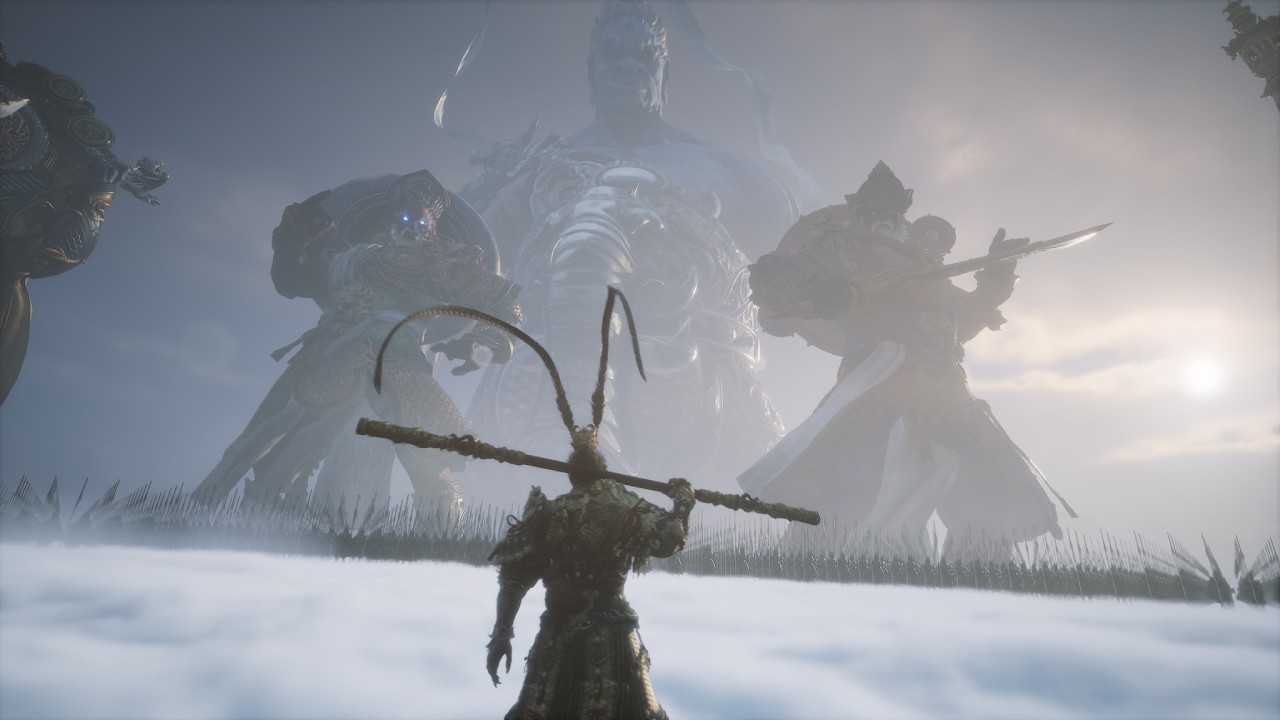
Higher-quality rebuilding is particularly helpful for character models in games with extensive visuals and mythical or epic themes. With DLSS 4.5, armor features, surface materials, and how light affects them all stand out a lot more.
FSR 4 is better than FSR3, but the difference is very clear when you look at them side by side. Because DLSS 4.5 improves clarity and contrast, these scenes look and feel more like they belong in a movie theater.
Beta Limitations and Ongoing Refinement
DLSS 4.5 is still in test and needs to be activated at the driver level. As a trial feature, it has some minor issues, such as briefly turning dark when the camera pans in some situations.
There were no problems with these issues with FSR4 or DLSS 4, but they should be fixed in later versions. Even with these flaws, it's clear that things are generally getting better.
Final Thoughts on User Experience and Future Outlook
When we look at the big picture, FSR 4 is a huge improvement over FSR3 for AMD users. The switch to AI-based processing has significantly improved image quality.
But the current experience with DLSS 4.5 is still much better in terms of lighting, motion stability, clarity, and detail preservation. The visible gap is still pretty big as of today.
Looking ahead, new versions like FSR Redstone might help narrow this gap. At the moment, Nvidia is the best at upscaling quality. We hope that more progress is made so that people with different GPUs can have visual experiences that are more similar, rather than becoming increasingly different.
Also, check our other hardware articles:
- AMD Ryzen 9 9950X3D Review: Setting The Standard For 2025 Gaming CPU
- Amazon Luna 2025 Review: Is Prime Gaming's Cloud Service Your Go-To For Casual Fun?
- AMD RX 9070 XT Review: AMD's RDNA 4 Champion for 1440p Gaming
- GeForce Now Ultimate: Ditching Your Gaming PC For Cloud RTX 4080 Power?
- NVIDIA GeForce RTX 5080 Review (2025): Still A 4K Gaming Powerhouse?
- Intel Core Ultra 9 285K Review And Performance Breakdown (2025)
- AMD Ryzen 7 9800X3D Review: 3D V-Cache Goes God Mode with Stunning Gaming Performance
- Intel Core Ultra 9 285K vs AMD Ryzen 7 9800X3D: In-Depth Gaming Performance and Benchmark Comparison
- NVIDIA GeForce RTX 5080 Super Performance In Cyberpunk 2077: Path Tracing & DLSS 4.0 Tested
- AMD Radeon RX 9070 XT In Cyberpunk 2077: Ray Tracing & FSR 4.0 Tested
- Intel Arc B580 Review: The $250 GPU Revolutionizing 1440p Gaming
- Intel Arc B570 Vs. B580: Value, Specs, And Real-World Gaming Performance
- RTX 5090 Laptop Vs. M4 Max MacBook Pro: Ultimate Raw Performance Vs. Battery Endurance
- Intel Arc b580 Vs. RTX 4060: Game Performance And Value Analysis
- RTX5090 Hell Is Us Demo 4K Ultra Benchmark: DLSS Vs. Native Performance Guide
- NVIDIA RTX 5070 Review: Mid-Range Muscle or Marketing Hype?
- Nintendo Switch 2 Review: Handheld Performance, Features & Value Breakdown
- RTX 5070 Ti Review: Performance, Thermals & Power Efficiency Tested
- Samsung Odyssey OLED G81SF Review 2025: Ultimate 32-Inch QD-OLED Gaming Monitor
- AMD RX 9070 Performance Review: Thermals, Clocks, and Real-World FPS
- AMD Ryzen 5 7600 Review: Best Budget Gaming CPU of 2025?
- AMD Radeon RX 7800 XT Review: RDNA 3 Power For Midrange Gaming
- Asus ROG RTX 5090 Astral OC Vs. Founders Edition: The 4K Gaming Benchmark
Editor, NoobFeed
Latest Articles
No Data.