
Evolution of Game Engines and the Decline of Technical Innovation
Specialised proprietary engines provide stability, next-gen graphics, and performance by tailoring technology to specific games and studio goals.
Hardware by Nahe Yan on Nov 14, 2025
Let's remember the last time video games made incredible advances in visuals. It wasn't that long ago, just 21 years back. The first Far Cry set a new standard for the visual quality of shooters. If you played it for the first time, you probably recall being blown away.
Even now, if you compare a real photo of a tropical island with a screenshot from the game, you might not be able to tell the difference. The first Far Cry was the first game made with the CryEngine.

It was essentially a test project to evaluate the new engine's performance. Its powers were yet mostly unknown. Yet, it generated a game that set a graphics benchmark for years to come.
Lessons from Half-Life 2
On November 19, 2004, when Half-Life 2 was published on Steam, the servers struggled to manage hundreds of thousands of simultaneous activations. For Valve, this was more than a game release; it was a test of their entire technical chain, from engine creation to digital distribution.
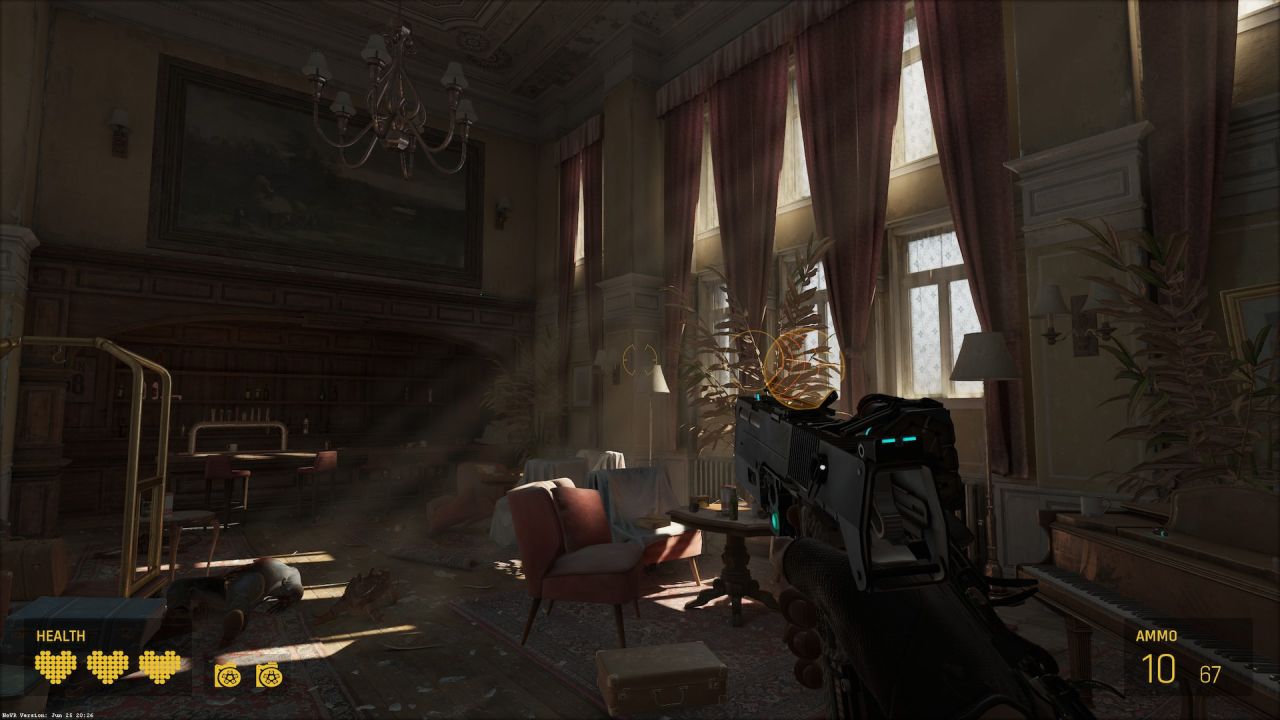
The Source engine looked futuristic at the time. Physics, lighting, and animation functioned as a single process. The Havoc physics engine was integrated into the render, meaning objects behaved according to their real mass and momentum rather than being controlled by scripts.
Dynamic light altered how dust particles appeared, and atmospheric absorption made the sky appear more realistic. It all began with simple elements that made global illumination appear realistic. The engine performed efficiently on low video cards.
It remained flexible enough for Valve to utilize it for 15 years, powering games such as Portal, Left 4 Dead, CS: GO, and even Half-Life 3. Its architecture permitted growth and technical evolution rather than being created primarily for marketing.
CryEngine and the Rise of Open Worlds
A few years after Half-Life 2, Crytek tried a similar breakthrough with the first Far Cry. CryEngine 1 was initially intended to be a demo engine for open areas; however, it performed better than expected. People bought the game to see if their computers could handle it, as the visuals were so beautiful.
Crytek later modified the engine, resulting in the release of CryEngine 2 and Crysis in 2007. CryEngine 2 introduced automatic LOD (Level of Detail) algorithms, allowing you to stream objects and textures and dynamically adjust the degree of detail in real-time.

Players might see tens of thousands of things and still have a steady FPS. Dynamic texture streaming handles memory on the fly. Water, vegetation, and landscapes appeared advanced, although performance was feasible on top-tier PCs of the era.
Meanwhile, Rockstar utilized RenderWare to demonstrate that open environments could be both small and stable. Cities in GTA3, Vice City, and San Andreas were divided into 64x64m sectors. The camera only loaded the parts of the world it could see, allowing you to explore without any issues, using 16GB of VRAM.
This notion had an impact on Ubisoft and Bethesda, laying the groundwork for an open-world architecture that functions seamlessly. RenderWare supports many platforms and generations, generating enduring memories for players. These engines enabled technology to advance and new ways to play to be created, because developers could customize them to meet their needs rather than using generic tools that came with the game.
Modern Engines and Technical Challenges
Fast forward to now, and the industry appears different. Engines that were once tools for advancement now occasionally behave as roadblocks. Unreal Engine 5, for example, is tremendously powerful but highly complex. Studios rely on tools like Nanite for LOD and Lumen for lighting without constructing their own systems.
In theory, the engine manages optimisation automatically. Things break in real life. Real-time shader compilation, Travis CI stutters, unoptimized new systems, and architecture that carries over old code from Unreal Engine 2 create difficulties. UE5 still executes some simulations on a single CPU core. Epic Games CEO Tim Sweeney has acknowledged that firms often initially optimise for top-tier PCs.
Final Thoughts
Some studios still deploy bespoke engines tailored for specific aims, delivering amazing results. Battlefield 6 can deliver huge maps and next-gen graphics while running at 60 frames per second on a 10-year-old graphics card.
Consider reverting to specialised engines, developing new technology, and customising it to your needs, ensuring games move beyond what has already been done rather than just repeating the errors of modern production cycles.
Also, check our other hardware articles:
- AMD Ryzen 9 9950X3D Review: Setting The Standard For 2025 Gaming CPU
- Amazon Luna 2025 Review: Is Prime Gaming's Cloud Service Your Go-To For Casual Fun?
- AMD RX 9070 XT Review: AMD's RDNA 4 Champion for 1440p Gaming
- GeForce Now Ultimate: Ditching Your Gaming PC For Cloud RTX 4080 Power?
- NVIDIA GeForce RTX 5080 Review (2025): Still A 4K Gaming Powerhouse?
- Intel Core Ultra 9 285K Review And Performance Breakdown (2025)
- AMD Ryzen 7 9800X3D Review: 3D V-Cache Goes God Mode with Stunning Gaming Performance
- Intel Core Ultra 9 285K vs AMD Ryzen 7 9800X3D: In-Depth Gaming Performance and Benchmark Comparison
- NVIDIA GeForce RTX 5080 Super Performance In Cyberpunk 2077: Path Tracing & DLSS 4.0 Tested
- RTX 5090 Performance Testing In GTA 5 – 1080p, 1440p, and 4K Max Settings Benchmark
- AMD Radeon RX 9070 XT In Cyberpunk 2077: Ray Tracing & FSR 4.0 Tested
- Intel Arc B580 Review: The $250 GPU Revolutionizing 1440p Gaming
- Intel Arc B570 Vs. B580: Value, Specs, And Real-World Gaming Performance
- Intel Arc B570 Review: Efficient Xe2 Performance At An Affordable Price
- RTX 5090 Laptop Vs. M4 Max MacBook Pro: Ultimate Raw Performance Vs. Battery Endurance
- Intel Arc b580 Vs. RTX 4060: Game Performance And Value Analysis
- RTX5090 Hell Is Us Demo 4K Ultra Benchmark: DLSS Vs. Native Performance Guide
- NVIDIA RTX 5070 Review: Mid-Range Muscle or Marketing Hype?
- Nintendo Switch 2 Review: Handheld Performance, Features & Value Breakdown
- RTX 5070 Ti Review: Performance, Thermals & Power Efficiency Tested
- Samsung Odyssey OLED G81SF Review 2025: Ultimate 32-Inch QD-OLED Gaming Monitor
- AMD RX 9070 Performance Review: Thermals, Clocks, and Real-World FPS
- AMD Ryzen 5 7600 Review: Best Budget Gaming CPU of 2025?
- AMD Radeon RX 7800 XT Review: RDNA 3 Power For Midrange Gaming
- Asus ROG RTX 5090 Astral OC Vs. Founders Edition: The 4K Gaming Benchmark
- ASUS ROG Astral RTX 5090 OC Edition Review: 32GB GDDR7 & 4K Gaming Benchmark
- Intel Core i5-13400F Gaming Performance: Still Worth It in 2025?
- ASUS GeForce RTX 5090 LC Liquid Cooled GPU Review: Unmatched Silence & Speed
- ASUS ROG Ally X Handheld Review: Double the Battery, Double the Comfort
- Lenovo Legion Go S Review: The Ultimate Steam Deck 2 Alternative
- Sapphire NITRO+ AMD Radeon RX 9070 XT Review: The Ultimate 4K Gaming GPU
- Alienware 16 Area 51 Review: The Ultimate 2025 Gaming Laptop
- Alienware Area-51 Review: Unmatched 4K, Thermal, and Acoustic Performance
- AMD Ryzen 7 7800X3D: Delivers Gaming Performance Far Beyond Expectations
- AMD Ryzen 9 7900X Review: Powering the AM5 Era with DDR5 & PCIe 5.0
- Intel Core i9‑14900K vs. AMD Ryzen 7 7800X3D: Power Profiles & Gaming Benchmarks
- Intel Core i9 14900K: Specs, Benchmarks, and Competitor Comparison
- ASRock Radeon RX 7800 XT Challenger OC Review: Best Price-to-Performance GPU of 2025
Editor, NoobFeed
Gaming Hardware Updates
No Data.