

Next-Gen Console Timeline Uncertain as PS6 Faces Possible 2029 Release
Hardware price increases and supply constraints reshape next-generation console timelines across the gaming industry
Hardware by Katmin on Mar 01, 2026
Bloomberg says that the present "Ramageddon" crisis could push back the release of the next generation of consoles. The article claims insiders who know how Sony thinks strategically and says that the corporation is currently thinking about delaying the release of its next PlayStation console until 2028 or 2029.
It also says that Nintendo is thinking about hiking the price of the Switch 2 later this year. The RAM shortage, according to the same report, is not expected to be resolved anytime soon, and that is not particularly great news for the industry.
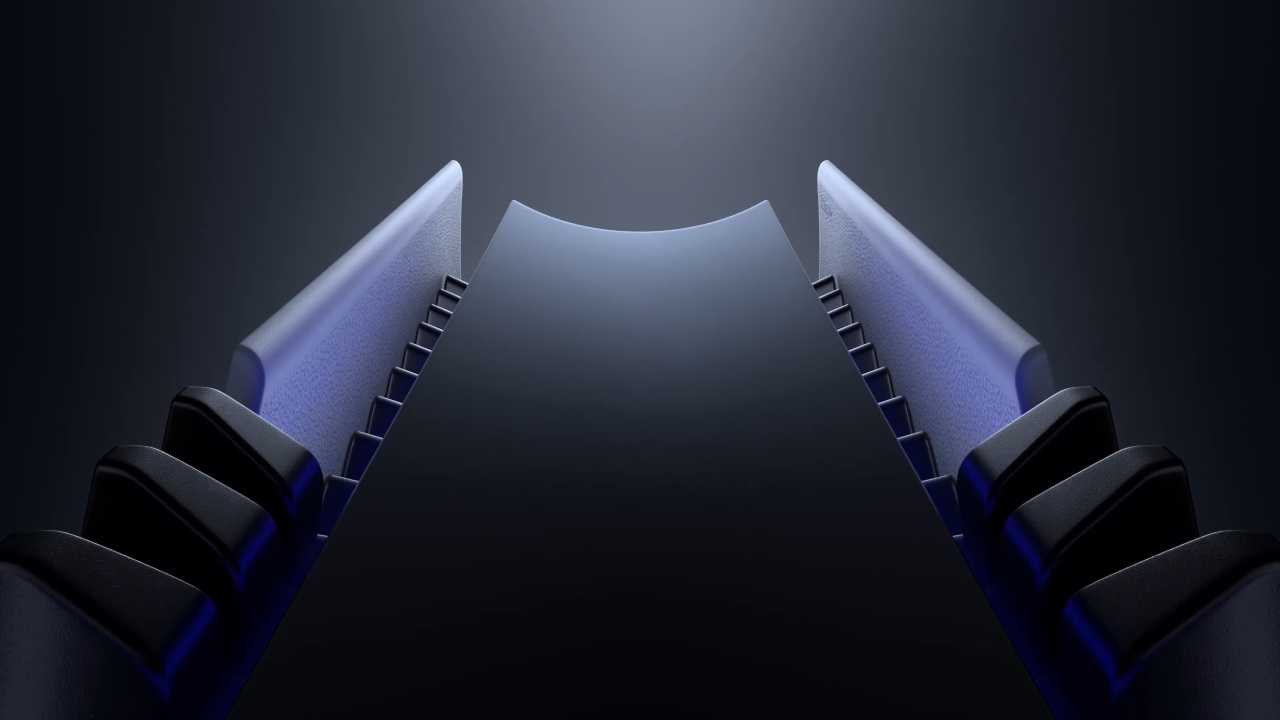
A Potential PS6 Delay to 2028 or 2029
What do we make of the concept of a PlayStation that was originally conceivably going to arrive in 2027 slipping to 2028 or 2029? From a technical perspective, given the current amount of compute stagnation and RAM stagnation in gaming, a delay might not change much.
We have been saying 16GB to 32GB of system memory for years. We have also been saying at least 12GB to 16GB of GPU VRAM for years.
It might not change anything about the PS6's technological position at launch if it comes out in 2028 or 2029 with the same specs as it would have had a year earlier, but at a lower price. It would still be compared to the newest Nvidia halo product or the newest X3D processor, but in terms of how well it works as a console, the difference might not be that big.
The games being developed would likely be the same titles that were already in production, simply with more time to reach the market. In that sense, the delay does not automatically look like a negative.
At the same time, we can clearly see areas where additional power could alleviate current generation issues, particularly in image quality when using demanding features in Unreal Engine 5.
A PS6 could address those limitations effectively. It is always appealing to have new hardware, but in the present climate, a delay does not necessarily change the bigger picture.
Broader Hardware and Development Challenges
Beyond the PS6 itself, there are wider implications. What other projects could be impacted? There has been ongoing discussion about a potential PlayStation handheld. If costs and supply chain constraints continue, could such a device simply never materialize? What happens to other hardware initiatives, such as Steam Machine concepts or similar platforms?
It is not just RAM causing problems. Other components are also increasing in price. Storage costs are rising, and the cost per transistor at advanced process nodes is static or even climbing. It is not a great time to manufacture consoles. Development cycles are also becoming longer and slower, with studios struggling to secure consistent success.
At the same time, it is crucial to ship games on as many platforms as possible. The Nintendo Switch 2 represents a major and growing platform, and it must remain a viable target for developers. Introducing another next-generation console too soon could widen the performance gap, creating additional challenges for studios that already need to scale games across handhelds, current consoles, and high-end PCs.
Does PS6 Even Move the Needle?
There is also the question of differentiation. How do you meaningfully define a PlayStation 6 as a full generational leap right now? Arguably, the PS5 was a noticeable jump, especially in performance, but it still felt like a continuation of the previous generation. It performed well commercially, even under challenging circumstances, but the broader sense of generational transformation felt muted.
Right now, it is difficult to see how a PS6 would dramatically move the needle. The concept of traditional console generations feels less clear-cut given everything happening in hardware manufacturing, development timelines, and cross-platform requirements.
.jpg)
Questioning the Source and Market Share Concerns
Some observers question the credibility of the report itself. The same reporter previously claimed that PS5 SoCs had less than 50% yields in 2020 and that production was cut by 4 million units in 2021 due to a lack of demand. Neither claim proved accurate. There were also reports heavily promoting a Switch Pro that never materialized in the expected form, appearing instead as a blend of the Switch OLED and what later became Switch 2.
Some people say that if Microsoft confirmed a 2027 launch for a new Xbox system, Sony wouldn't risk delaying the PS6 and losing market share. Console sales are predicted to stay strong until 2030 thanks to big games like Grand Theft Auto VI and The Witcher 4. Critics say that a lesser PS6 coming out in 2029 might have a hard time making up for lost territory.
However, the idea that Sony would automatically lose significant market share to Xbox may not hold. Any next-generation Xbox, particularly a high-end device, would likely exist at a very different price tier. The audience for such premium hardware is niche, and many early adopters would likely own multiple systems rather than trade one for another.
Locked-In Design and “2025 Technology” in 2029
A key concern raised is whether a 2029 launch would mean shipping a console built on circa 2025-level technology. If the design is already fairly locked in, would that hold back gaming overall?
The challenge is nuanced. Based on expectations around RDNA 5 and Zen 6, these machines should enable features that current hardware cannot handle effectively. Machine learning capabilities and ray tracing performance would be significantly ramped up compared to the current generation. At the same time, fully leveraging those features requires extensive development time.
Studios will need to scale games across a broad spectrum, from handheld devices to PlayStation 5, PlayStation 6, and high-end PCs. The gear may show technology that has been around since 2027 instead of 2029, but it still gives developers new tools. The main problem might not be the sheer silicon power, but the fact that games have to work on more platforms than ever before.
In the end, it may not matter what year is put on the box for the PS6. What matters more are the bigger trends in the business, like increased costs, longer development cycles, and cross-platform scaling.
Also, check our other hardware articles:
- AMD Ryzen 9 9950X3D Review: Setting The Standard For 2025 Gaming CPU
- Amazon Luna 2025 Review: Is Prime Gaming's Cloud Service Your Go-To For Casual Fun?
- AMD RX 9070 XT Review: AMD's RDNA 4 Champion for 1440p Gaming
- GeForce Now Ultimate: Ditching Your Gaming PC For Cloud RTX 4080 Power?
- NVIDIA GeForce RTX 5080 Review (2025): Still A 4K Gaming Powerhouse?
- Intel Core Ultra 9 285K Review And Performance Breakdown (2025)
- AMD Ryzen 7 9800X3D Review: 3D V-Cache Goes God Mode with Stunning Gaming Performance
- Intel Core Ultra 9 285K vs AMD Ryzen 7 9800X3D: In-Depth Gaming Performance and Benchmark Comparison
- NVIDIA GeForce RTX 5080 Super Performance In Cyberpunk 2077: Path Tracing & DLSS 4.0 Tested
- AMD Radeon RX 9070 XT In Cyberpunk 2077: Ray Tracing & FSR 4.0 Tested
- Intel Arc B580 Review: The $250 GPU Revolutionizing 1440p Gaming
- Intel Arc B570 Vs. B580: Value, Specs, And Real-World Gaming Performance
- RTX 5090 Laptop Vs. M4 Max MacBook Pro: Ultimate Raw Performance Vs. Battery Endurance
- Intel Arc b580 Vs. RTX 4060: Game Performance And Value Analysis
- RTX5090 Hell Is Us Demo 4K Ultra Benchmark: DLSS Vs. Native Performance Guide
- NVIDIA RTX 5070 Review: Mid-Range Muscle or Marketing Hype?
- Nintendo Switch 2 Review: Handheld Performance, Features & Value Breakdown
- RTX 5070 Ti Review: Performance, Thermals & Power Efficiency Tested
- Samsung Odyssey OLED G81SF Review 2025: Ultimate 32-Inch QD-OLED Gaming Monitor
- AMD RX 9070 Performance Review: Thermals, Clocks, and Real-World FPS
- AMD Ryzen 5 7600 Review: Best Budget Gaming CPU of 2025?
- AMD Radeon RX 7800 XT Review: RDNA 3 Power For Midrange Gaming
- Asus ROG RTX 5090 Astral OC Vs. Founders Edition: The 4K Gaming Benchmark
Senior Editor, NoobFeed
Latest Articles
No Data.