
PC Hardware Shortage Deepens as AI Demand Strains DRAM and SSD Supply
AI data center demand intensifies DRAM and SSD shortages across consumer and enterprise hardware markets.
Hardware by Nahe Yan on Feb 22, 2026
There are still personal computers. People are still buying PC parts, and the entire supply chain hasn't fully collapsed yet. But fewer PCs and parts are being sold. People are paying more for the gear they buy, and the supply chain keeps changing. Some manufacturers say they are selling even more hardware to AI data centers. In contrast, others say they are building up capacity but that shortages will last until at least 2028.
We can choose to overlook the big picture and focus on small changes, such as the decrease in some RAM costs over the last month. We can also use delay as a strategy. Delay brings the dawn, and even delayed launches can be seen as good things when the timing is better. No, PC gaming has not stopped because of the high prices of RAM and storage. We are waiting for things to get better. Used and refurbished PC hardware is still available to help computers last longer, and older Steam games can run on less powerful PCs.
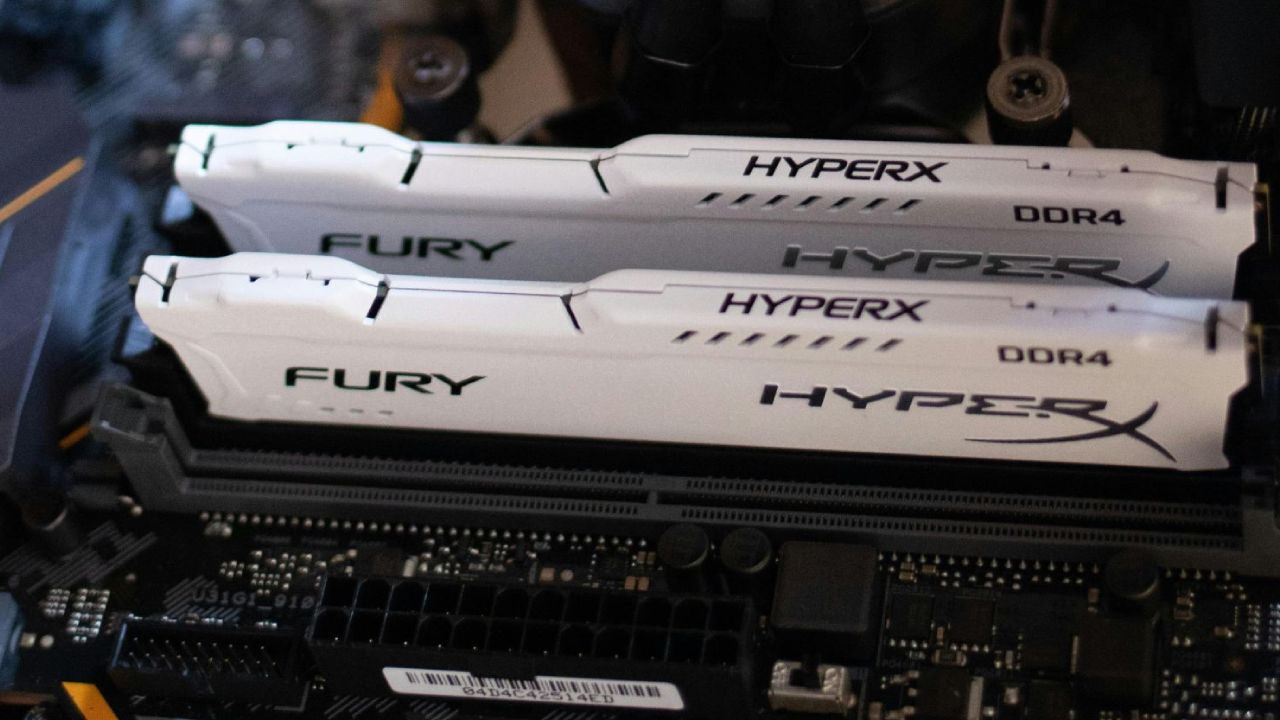
More and more DRAM and Storage Shortages
The shortage of PC hardware is worsening, and the lack of DRAM and storage is harming more than just PCs. Smartphone manufacturing is likely to decline in 2026, while costs rise and consumer options narrow. Manufacturers are focusing on high-end and premium devices because they want to make money. Prices for entry-level products may increase as the year goes on. Devices that do come out are less likely to have more memory and storage space.
Set-top boxes, internet gateways, and routers are also vulnerable. In the past, memory made up 3% of a router's bill of materials cost. Now, that number has grown to 20%. Telecom companies may charge customers more for monthly rentals, less for installation, or more upfront fees to cover these costs.
Western Digital said in a recent earnings call that it is effectively sold out for calendar 2026, meaning all of its scheduled hard drive production has already been allocated. As a result, just 5% of sales come from regular customers. The rest come from businesses and data centers.
Even gaming technology that fits in your hand has been affected. The $399 256GB Steam Deck model will no longer be available after the end of 2025, and the $550 OLED version is no longer available. The $650 1TB variant is likewise sold out. Valve said the problems are caused by insufficient memory and storage.
Warnings from the Industry and Demand for AI
Industry leaders say the scarcity will have a bigger impact than the effects we've seen so far. The CEO of a storage company said that by the end of 2026, many system manufacturers may go out of business or stop making products because they don't have enough memory. The number of mobile phones made could drop to 200-250 million, and the number of PCs and TVs could drop significantly.
This perspective is connected to the need for AI infrastructure. NVIDIA wants to make tens of millions of Vera Rubin AI systems, and each one will need 20TB of SSD storage. Memory makers want three years' worth of payment up front to hold their stock, which smaller manufacturers may not be able to do. Companies that can't get supplies or money may have to leave the market.
A Small Change in the Price of RAM
There are only a few signals of change, even though the trend is more general. In Germany, data showed that the average price of DDR5 RAM kits decreased from January to February. Prices were up 314% from before the crisis, down from 344% in January. The direction changed downward, even though it was still high. At the end of the PCPartPicker RAM charts, there is also a tiny downward tendency. It could mean people are buying less in a panic, but any price changes in early 2026 are important.
Olympic Ridge and Zen 6
If the market were different, reports of AMD's impending Zen 6-based CPUs might have more weight. The code name for desktop Zen 6 CPUs is Olympic Ridge. According to leaker HXL, the new Zen 6 CCD raises the number of cores per CCD from 8 to 12.
A single CCD setup could have 6, 8, 10, or 12 cores. For a top-of-the-line Ryzen 10950X or equivalent model, dual CCD processors have 8+8 for 16 cores, 10+10 for 20 cores, or 12+12 for 24 cores. This would put AMD up against Intel's next-generation Nova Lake CPUs, which are said to support up to 52 cores.
But if the prices of DDR5 memory and SSDs remain higher than those of processors, not many people may buy them. More sources say that Zen 6, which was initially expected to launch in late 2026, might not arrive until 2027. A delay can align the launch time with when parts are cheaper. There is still a chance that the product will be available in a restricted way in the fourth quarter of 2021 and more widely in 2027.
Intel ARC and GPU Development
At first, Intel's ARC GPUs were seen as a third choice next to Nvidia and AMD. The arrival of the B580 was a step forward, but the lack of the rumored B770 and price differences have slowed things down. Intel's roadmap shows that work on GPU architecture will continue. XEnext is the name of the next architecture after XE3P. Recent news has mostly focused on AI workloads and data centers, but ARC development is still underway.
Very High GPU Power and Overclocking
At the top end, NVIDIA's RTX 5090 has given board partners more options. MSI made an RTX 5090 Lightning with two 12v2x6 ports. It has Extreme OCV BIOSes for 800W, 1000W, and 2500W. A leaked 2500W BIOS is said to have killed at least one RTX 5090 die due to heat shock. There is also a 2000W BIOS for the Asus Astral RTX 5090 circulating in the extreme overclocking community.
For most people looking to buy a GPU, the $3,000 to $5,000 price range remains out of reach due to the high cost of DDR5 and SSDs. The risk of hardware tinkering becoming limited to a small group with enough resources is that others will only be able to watch from a distance.
.jpg)
Changes to the Platform, Privacy, and Data Verification
After Discord added new age verification methods, people are more worried about their privacy. Users in some areas must agree to Persona's verification process, which includes 269 checks, such as those for terrorism and spying. The deal made people worried about data harvesting, especially when Persona is linked to investors.
Final Thoughts
Phil Spencer is retiring, and Asha Sharma will take over as head of Microsoft Gaming, which covers Xbox and its businesses, such as Activision Blizzard. Matt Booty, who previously served as head of Xbox Game Studios, is now the chief content officer.
Sharma said that her top goals are to make games, fix Xbox, and shape the future of gaming. People started to wonder how AI would work across different gaming assets because of her past job at Microsoft's Core AI division. She openly addressed these concerns, saying that famous teams, characters, and worlds will not be treated as static IP to make money from, and that the ecosystem will not be overwhelmed by AI-generated content.
The larger technology landscape is still changing. We may keep an eye on price changes, change our expectations, and, if possible, extend the life of our hardware. If you still care about PC technology and gaming, the next several years will test your patience and ability to change.
Also, check our other NVIDIA articles below:
- NVIDIA GeForce RTX 5080 Review (2025): Still A 4K Gaming Powerhouse?
- NVIDIA RTX 5070 Review: Mid-Range Muscle or Marketing Hype?
- RTX 5070 Ti Review: Performance, Thermals & Power Efficiency Tested
- ASUS GeForce RTX 5090 LC Liquid Cooled GPU Review: Unmatched Silence & Speed
- MSI GeForce RTX 5090 32GB SUPRIM SOC Review: Power Efficiency, Cooling, and Gaming Performance
- INNO3D RTX 5060 Ti 16 GB X2 Review: Gaming Benchmarks, Temps, and Power Efficiency
- HP Omen 45L Review: RTX 5090 Performance, Thermals, and Value Analysis
- ASUS TUF Gaming GeForce RTX 5060 Ti Review: DLSS 4, Power Efficiency, and Gaming
- ASUS Prime RTX 5060 Ti OC 16GB Review: DLSS 4, Ray Tracing, & Thermals Tested
- NVIDIA GeForce RTX 5060 Review: Specs, Gaming, and Cost per Frame
- MSI GeForce RTX 5090 GAMING TRIO OC Review: A Monster Power GPU
Editor, NoobFeed
Gaming Hardware Updates
No Data.