
VR Headsets vs. XR Glasses: Which is Better for Flat-Screen Gaming?
VR headsets and XR glasses offer distinct experiences for entertainment, portability, comfort, and immersive digital content consumption.
Hardware by Masaru Hoshino on Jul 14, 2026
Deciding between a VR headset and XR glasses isn't as easy as it seems. Both will give you a huge virtual screen for viewing movies or playing games, but they do it in quite different ways. VR is all about immersion in a virtual environment, while XR glasses are more like portable external displays that connect to another device.
The perfect decision really comes down to what is most important to you, whether it's convenience of use, comfort, picture quality, battery life, mobility, or pricing.
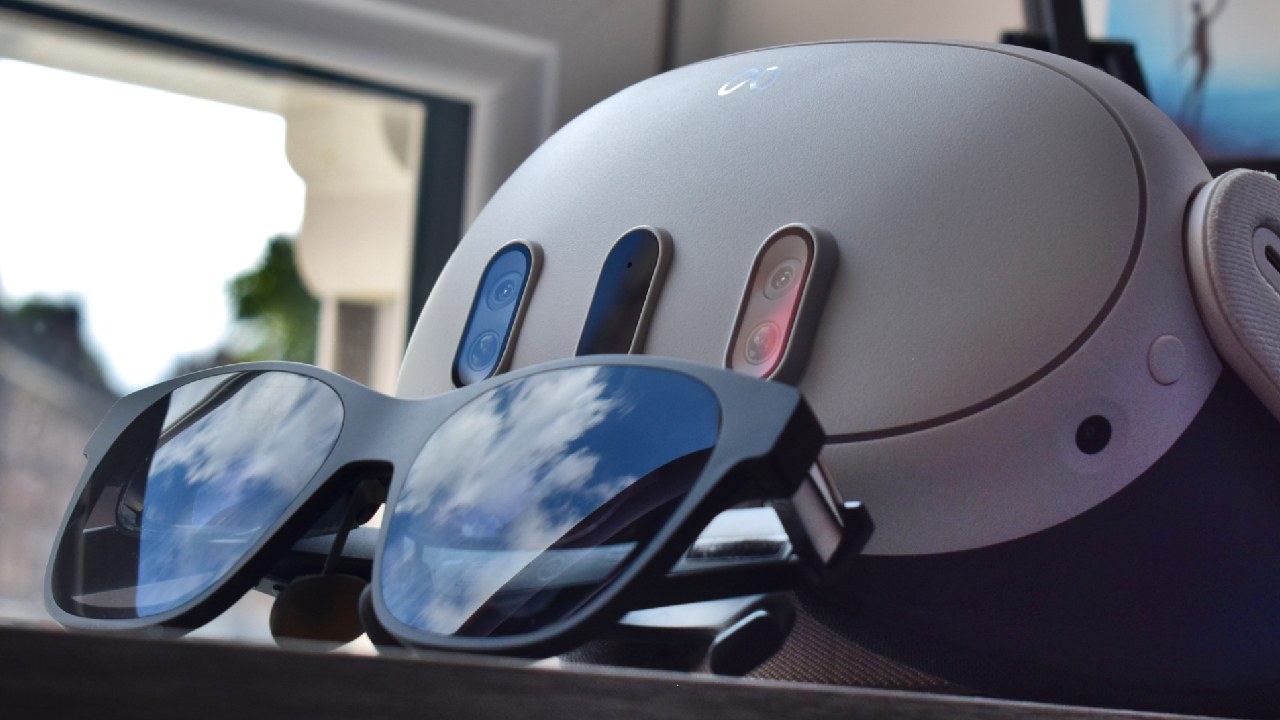
VR vs. XR Glasses
VR basically puts you into a virtual world. You are in the game, physically manipulating objects in your environment with motion controllers. You can also watch movies in VR or connect the headset to a gaming PC to play flat-screen games using apps like Virtual Desktop.
If immersive VR gaming is your priority, then a VR headset is probably the better option. For this comparison, though, the focus is specifically on watching movies and playing traditional 2D games. XR glasses are essentially an extended display.
They don't do anything on their own; plug them into an iPhone, laptop, Steam Deck, Nintendo Switch, or any other compatible device, and they create a large virtual screen for movies and games. Today, the Viture Beast and the XR1 Pro are among the most popular choices available.
Ease of Use
If you merely want to relax with a movie or game, setup is important. With XR glasses, you simply plug them into your device and start watching or playing within seconds. Some features require dedicated software on phones or laptops, but that software also enables features like 3D and spatial movie playback on supported devices.
VR headsets require more steps. You have to power on the headset, wait for it to boot, occasionally install firmware updates, and if you're streaming PC games, both the headset and gaming PC must be running compatible software. Devices like the Meta Quest can stream Xbox games directly through the Xbox app with a compatible controller, Game Pass subscription, and a reliable internet connection.
However, setup still depends heavily on your hardware and network. The upcoming Steam Frame is expected to let you play your Steam library directly on the headset without a gaming PC, though it likely won't run every game, since it's essentially a Steam Deck built into a headset.
Overall, if you want the simplest plug-and-play experience, XR glasses are the winner.
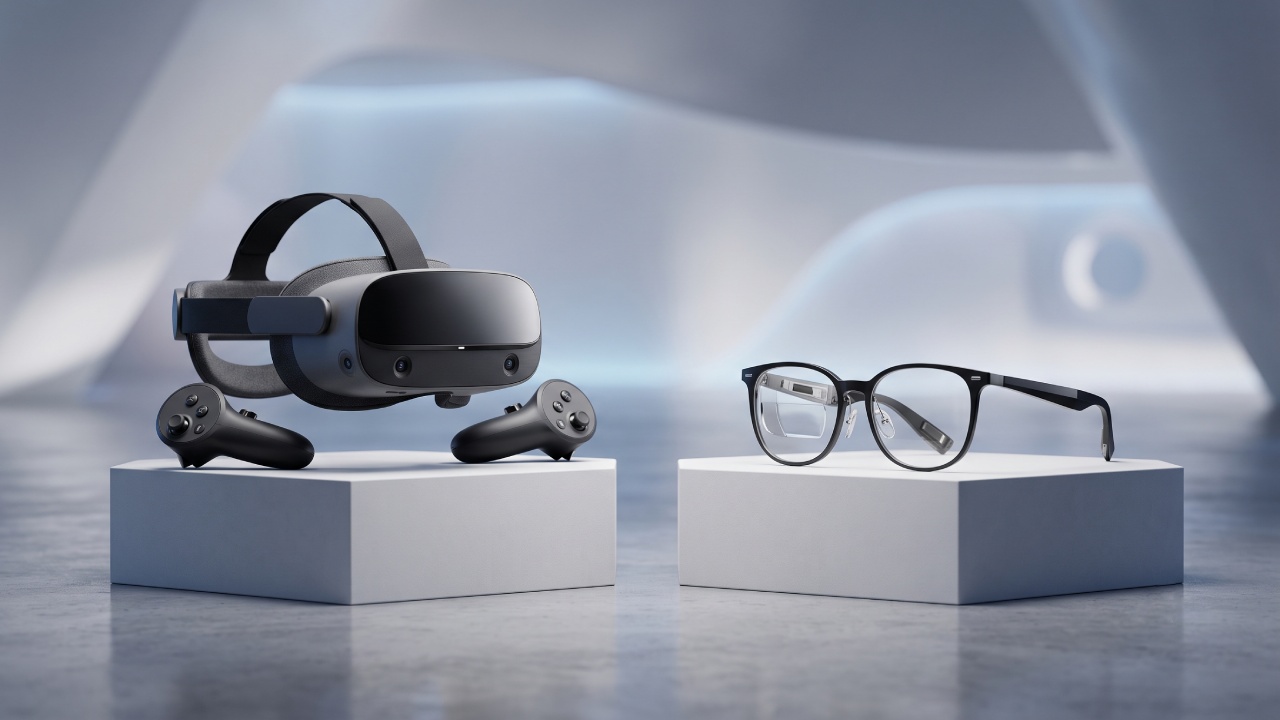
Comfort for Long Sessions
Comfort is one of the biggest differences between these two categories. XR glasses weigh around 88 g and feel extremely light. They don't seal against your face, so there's very little heat or sweat, and you can still see your surroundings while using them.
VR headsets are much heavier, with the Meta Quest weighing around 550g and the Steam Frame expected to weigh roughly 440g. You definitely notice that extra weight during long gaming or movie sessions. VR also seals against your face, creating more heat while blocking out the outside world, which is great for immersion but less ideal for casual entertainment.
VR headsets are wireless and standalone, while XR glasses remain connected to another device by cable. However, when you're already holding a Steam Deck or another handheld, that cable usually isn't a major drawback. For comfort alone, XR glasses are very difficult to beat.
Picture Quality
Picture quality is where things become much closer. For movies and traditional VR games, XR glasses look fantastic. Their Micro-OLED displays produce sharp images, deep blacks, crisp text, and a virtual screen that feels roughly 174-inch in size. There's no noticeable screen-door effect, and built-in lens dimming helps make the image stand out even more.
VR headsets display the same content inside a virtual environment. The image is slightly softer, but the virtual screen can be much larger. More importantly, VR supports true 3D movies,180° immersive videos, and virtual cinema apps where you can watch content with friends. XR glasses are only a display; they can't replicate those immersive experiences.
Viewing pass-through is also different. XR glasses can see the real world as it is, but VR headsets use external cameras to create a digital image of your environment, which is not as sharp as reality. Both devices do well in different areas; therefore, the picture quality ends in a tie.
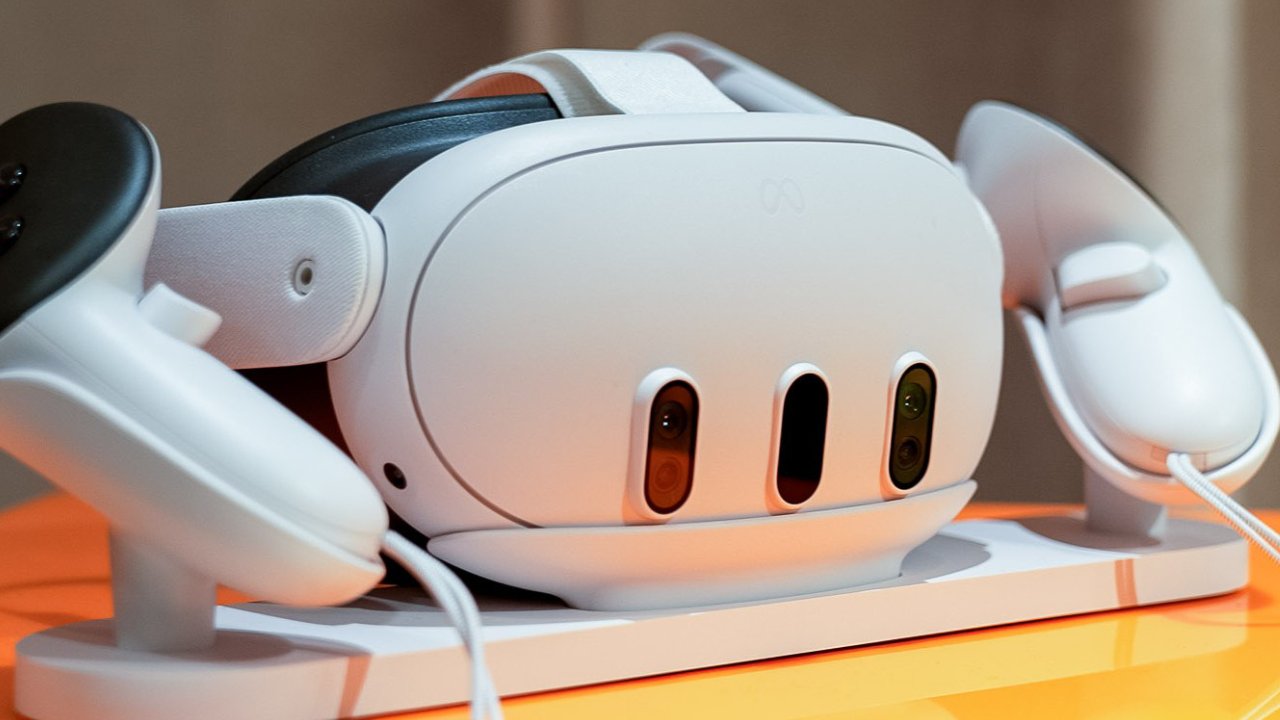
Battery Life & Portability
VR headsets often last 2 to 2.5 hours on a single charge before needing an external power source or an extra battery pack. XR glasses don't have a built-in battery. Rather, they use your phone, laptop, or handheld gaming device to power themselves. While this drains the connected device faster, you can continue using the glasses indefinitely if that device is connected to power.
Portability is another major advantage for XR glasses. They fold into a case about the size of a regular glasses case and fit easily into a bag. Combined with a phone or Steam Deck, they create a portable private cinema almost anywhere.
VR headsets require a much larger carrying case, additional space for controllers, and special settings when traveling because movement can interfere with their gyroscope. They're portable, but they require a much bigger commitment.
Glasses Compatibility and Price
Many XR glasses include built-in focus adjustment for nearsighted users, while both XR glasses and VR headsets support optional prescription lens inserts. VR headsets can usually fit over regular glasses with the included spacers, although that isn't always the most comfortable option.
Pricing is surprisingly close. The Viture Beast costs $549, the XR1 Pro costs $599, and the Meta Quest 3 also costs $599. The Quest 3S starts at $349 with lower-quality lenses, while the upcoming Steam Frame is expected to cost around $1,000.
Editor, NoobFeed
Gaming Hardware Updates
No Data.