
Octopath Traveler Nintendo Switch 2 Ports Skip Save Data Transfer
Square Enix delivers sharper visuals and smoother performance, yet leaves longtime fans without a way to carry their progress forward.
News by Adeela Tas on Jul 14, 2026
If you've been waiting for Octopath Traveler Switch 2 news, it's finally here, and the timing couldn't be more bittersweet. Square Enix and developer Acquire have released native Switch 2 versions of both Octopath Traveler and Octopath Traveler II through the Nintendo eShop in Japan, priced at 5,478 yen each, with a bundle option running 6,820 yen.
In the West, you'll be able to grab each Octopath Traveler Switch 2 release digitally or physically as standalone titles for $59.99, and there's also a digital-only bundle arriving October 1st. Japan gets a little something extra, too, a physical Game-Key Card bundle that launches on the same October 1st date as the Western rollout, letting you pick up both games together on one card.
.jpg)
Before diving into the frustrating part, it helps to remember how far this franchise has come.
The original Octopath Traveler debuted on Switch back on July 13, 2018, before making its way to PC through Steam in mid-2019, then Stadia in 2020 (a platform that no longer exists), followed by XBOX One and the Microsoft Store version in early 2021, and eventually PlayStation 5 and PlayStation 4 in the summer of 2024.
The sequel followed a similarly drawn-out release schedule across platforms. So this Octopath Traveler Switch 2 upgrade has genuinely been years in the making for a lot of players. This is where everything gets complicated. The thing is that both Switch 2 versions offer better performance in terms of resolution and frame rate than their Switch 1 counterparts.
However, the issue is that neither version supports saving data for these games from the original versions. This means that there is absolutely no way to upgrade your saved game and continue playing using the Switch 2 version. So, if you spent dozens of hours developing one of these games on your old Switch, you are just unlucky.
That's a rough situation considering how long these RPGs actually are. A lot of players who wanted improved visuals or smoother performance likely already started their journey on Switch 1 while holding out hope for exactly this kind of upgrade.
Now that it's arrived, you're being told to start from scratch if you want the improved version.
For anyone who already bought Octopath Traveler II on PlayStation 5 and then again on the original Switch while waiting for this exact release, only to discover there's still no way to bring that save file along, it's a genuinely disappointing outcome.
This isn't an isolated case either. Square Enix has a track record of handling save data transfers inconsistently when it comes to Switch 2. Dragon Quest III got an update that allowed for smoother movement between versions, but that seems to be more the exception than the rule.
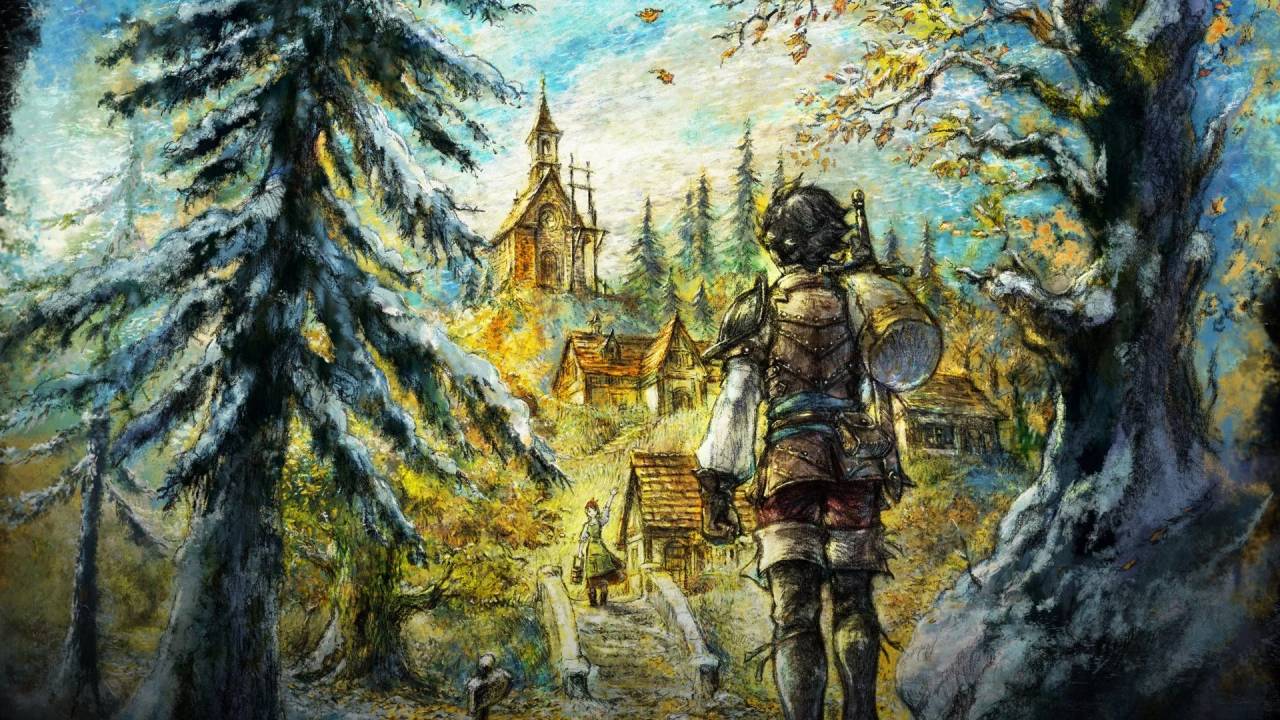
Dragon Quest XI S is also heading to Switch 2 without any save transfer or upgrade path, which mirrors exactly what's happening with the Octopath Traveler Switch 2 launch. What makes this sting even more is the history behind the HD-2D art style itself.
That visual approach essentially took off because of the original Switch and the millions of players who bought in early, some spending well over $100 on special editions. Those players funded the momentum that turned HD-2D into the recognizable style it is today, and Nintendo fans continue to be some of the biggest buyers of these types of RPGs.
This is exactly why it's worth separating the frustration from the actual quality on offer.
Not offering a full cartridge release, combined with the missing save transfer and upgrade options, feels like a letdown for the community that helped build this franchise's audience in the first place. To be clear, Octopath Traveler remains a fantastic series, and there's plenty of respect for what Square Enix has accomplished with it.
The publisher has also generally been one of the stronger supporters of Switch 2 as a platform overall, releasing plenty of content and showing real investment in the console. Business realities matter here, too. Physical cartridges are far more expensive to produce than Game-Key Cards, and a niche turn-based RPG isn't going to move units at the scale of a blockbuster franchise.
That trade-off is understandable to a degree. Still, save data transfer and an upgrade path shouldn't be considered optional extras. Those are reasonable baseline features, especially for lengthy RPGs that people have already invested serious time into. A Game-Key Card release is tolerable on its own; it's still a physical product that isn't locked to an account and one that can be resold, lent out, or traded like a normal game.
That part is fine, even if a full cartridge would have been preferable. But skipping save transfer feels like something Square Enix could have planned for and simply chose not to prioritize. Regardless of this whole frustration, however, the games themselves are absolutely great.
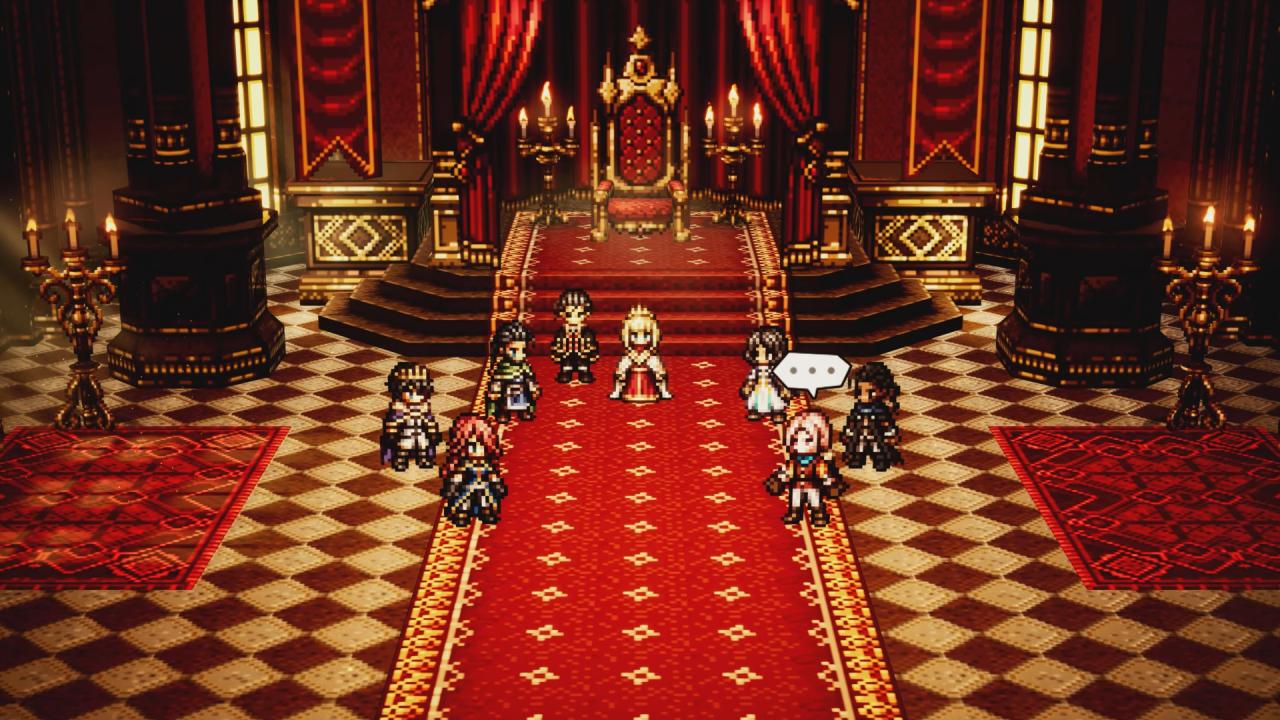
With that performance boost in mind, though, it's worth asking what you're actually getting for the upgrade price.
Should you be new to the franchise or have not tried both games at all, then both games are definitely among the best classic-style RPGs out there, which are also quite deep and fun. Bravely Default fans will feel right at home with these two games, albeit in that characteristic HD-2D guise. Performance-wise, expect both Octopath Traveler Switch 2 versions to run at 60 frames per second.
Likely at 1080p or higher, though the exact resolution details haven't been fully confirmed. For comparison, the original Switch versions are available as a physical double-pack cartridge that remains playable on Switch 2 through backward compatibility, but that version is capped at 30 FPS with whatever the standard docked resolution happens to be.
Since these are turn-based RPGs, 30 FPS isn't a dealbreaker by any means, but a 60 FPS mode would have made sense even on the original Switch, given how lightweight sprite-based HD-2D visuals tend to be. That optional mode never materialized on Switch 1.
Nonetheless, there is some charm in the possibility of a cartridge version that would provide consistency via its backward compatibility feature. However, if you consider high-resolution and fast frames to be important aspects, then the native Octopath Traveler Switch 2 game would definitely be a better choice. In all, this release has become a classic example of how a typical modern remaster and upgrade tends to be.
Technical advancements combined with choices that undermine precisely the people who kept the franchise alive until now. Octopath Traveler and Octopath Traveler II should definitely be played, and their Switch 2 versions seem to be the optimal option for doing so. But unfortunately, to reach that point, one will have to forget about his/her old save file.
Editor, NoobFeed
Related News
No Data.