
PlayStation's All-Digital Future Sparks Backlash as Lawsuits and Player Protests Intensify
Sony wants to do away with physical discs by 2028. That’s causing petitions, lawsuits, subscription cancellations, and a renewed focus on game ownership, pricing, and digital control.
News by Tahmid Mahi on Jul 14, 2026
The controversy about PlayStation’s decision to kill off physical game discs in January 2028 is still raging on, and it doesn’t look like the anger is going to subside anytime soon. What many thought was going to disappear in a few days has become one of the biggest gaming conversations of the year.
The increasing resistance stems from concerns that have been long-standing. For many players, it’s a decision that can be traced back to Ubisoft’s decision to shut down The Crew, a move that helped fuel the Stop Killing Games movement and reignited conversations about digital ownership.
Since revealing that physical media support would end in 2028, Sony has found itself under constant criticism online.
Reports claim the original announcement accumulated well over 175 million views, while the response from players has remained overwhelmingly negative. Rather than moving on after the initial reaction, the gaming community has continued bringing the issue up whenever PlayStation posts anything new.
Many players have praised the gaming community for not letting the issue die down. There were early concerns that excitement surrounding GTA 6 would overshadow the controversy, especially with Rockstar's upcoming blockbuster leading PlayStation's next generation of releases.
One of Sony's original posts reportedly attracted more than 105,000 comments, an unusually high number even for a company of its size. Some commentators have even described the decision as Sony's biggest gaming scandal in decades. Community Notes have repeatedly appeared on several PlayStation posts, and while some have reportedly been removed, new ones continue replacing them.
The replies themselves have become part of the story. One widely shared joke compared Sony's decision to a pizza chain deciding to sell digital pizzas instead of real ones. Other players focused on what they believe is the larger issue, arguing that if physical manufacturing, shipping, and retail costs disappear, digital games should cost less rather than remaining at full retail price.
After facing days of criticism following the July announcement, Sony appeared to go quiet for a short period before returning to social media with promotional posts for new hardware. Instead of addressing player concerns, the company resumed marketing products like the FlexStrike controller, something many players viewed as poorly timed.
Almost every PlayStation post since then has received similar treatment.
Promotional tweets for PlayStation Plus monthly games, game announcements, and even simple reposts have all attracted Community Notes and comment sections dominated by criticism over physical media. Some players have adopted the phrase “No disc, no buy,” while others have used creative memes based on digital game cases to express their anger.

And so games not involved in the controversy have caught the crossfire. Posts promoting titles like The Blood of Dawnwalker, Mortal Shell 2, Palworld, and crossover events involving Apex Legends have all reportedly received thousands of critical replies simply because they appeared on PlayStation's account.
For players hoping to send a message, many believe the strongest response is to stop spending money within PlayStation's ecosystem altogether. That is much easier said than done, however. If PlayStation remains the only platform where you can play certain exclusives or highly anticipated releases, choosing not to buy anything becomes a difficult decision.
Despite the constant criticism, Sony has not publicly changed course. Instead, attention has shifted toward something the company may care about more than social media comments: subscription revenue. As reports of PlayStation Plus cancellations began spreading, players started noticing personalized discounts designed to encourage them to return.
At roughly the same time, a Save Physical Games petition on Change.org continued gaining momentum, approaching 300,000 signatures. Alongside that campaign came growing reports of PlayStation Plus subscribers canceling their memberships in protest. Not long afterward, some users claimed Sony began offering discounts of up to 50% for three months in an effort to bring canceled subscribers back.
Not everyone received the same offer.
Some players reported seeing 25% discounts, while others received 30% or even larger incentives. Some accepted the offers because they were hard to turn down, while others rejected them outright, saying nothing had changed at the core. The promotions also started another conversation about Sony’s pricing strategy.
According to sources, Sony uses dynamic pricing in certain regions, changing prices depending on factors like location and purchase history. Analysts believe some form of the system has existed since late 2025, although Sony has not publicly explained how it works. The reported system affects more than 150 games across dozens of territories throughout Europe, the Middle East, Africa, and Latin America.
Dynamic pricing itself is not necessarily viewed as the problem. Regional pricing has existed for years on platforms like Steam, where lower prices often reflect differences in local economies and purchasing power. Many gamers are worried that individual buying habits might affect the prices different users see for the exact same games or services.
The controversy has now expanded beyond player complaints into politics and legal action. In Brazil, federal deputy Erika Hilton has requested an investigation into Sony Interactive Entertainment's digital strategy. Another federal deputy, Jean Fagali, has introduced legislation inspired by the Stop Killing Games movement that would require publishers to clearly inform buyers when games depend on online servers before completing a purchase.
The proposed Brazilian legislation would also require publishers to support games for at least two years after launch within the country and provide at least 180 days' notice before shutting down online services. Companies would need to communicate these changes to players through the game itself, official social media channels, and other avenues.
One of the more significant proposals in the bill lays out three possible scenarios as an online game comes to the end of its life. Publishers could offer an offline version, tools for the community to keep the game alive, or some sort of reimbursement depending on how long they played the title.
Brazil is not the only country taking action.
A Dutch consumer organization has filed a lawsuit worth approximately $457 million on behalf of around 1.7 million PlayStation users. The complaint argues that Sony's 30% PlayStation Store commission artificially inflates digital prices and that eliminating physical discs removes the competitive alternatives that currently help keep prices lower.
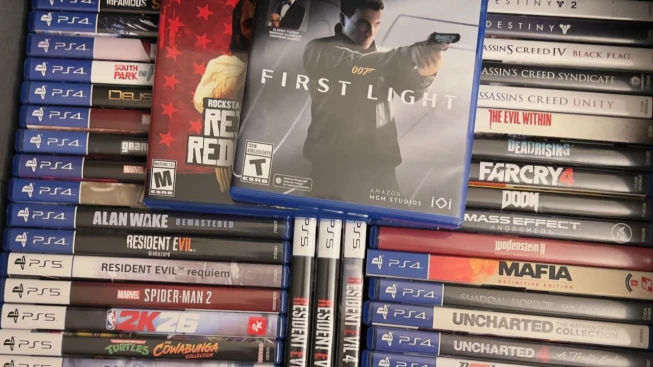
Examples frequently cited by critics highlight just how large those price differences can become. Dragon Ball: Sparking! Physical copies of games such as Zero, Lost Soul Aside, Metal Gear Solid Delta: Snake Eater, NBA 2K24, and Dark Souls III have been sold at much cheaper prices by retailers compared to the digital PlayStation Store versions, according to reports.
Critics say that once physical retailers and secondhand markets disappear, Sony will have much more control over pricing in its own storefront. Analysts also point out that Sony has defended itself in the past over monopoly concerns by saying that consumers can still buy games elsewhere.
The Dutch lawsuit reportedly argues that ending physical media removes the last truly competitive marketplace for PlayStation games. Without used copies or competing retailers, Sony would effectively determine both the selling price and, in some cases, how long customers retain access to their purchases.
For many players, the larger concern goes beyond game discs. The fear is that a fully digital future could eventually lead to higher prices, subscription requirements for games that were once permanent purchases, or the complete removal of titles from digital libraries. Those possibilities have become central arguments for people who believe physical ownership remains essential.
Longtime PlayStation fans have also pointed to what they see as a major shift in Sony's philosophy.
Years ago, the company promoted physical game sharing as a key advantage over Xbox during the previous console generation. Today, critics argue that PlayStation appears far more focused on maximizing digital revenue under its current leadership than preserving consumer ownership.
Sony's announcement also arrives alongside reports claiming that GTA 6's physical edition may contain little more than a download code inside the box. If that approach becomes standard across the industry, many publishers could benefit from selling games entirely through their own digital storefronts without competing against physical retailers.
As things stand, Sony's move toward an all-digital future has become about much more than game discs. It’s become a wider conversation on ownership, pricing, preservation, and consumer rights across the whole gaming industry.
Editor, NoobFeed
Related News
No Data.