
Steam Machine Review: Valve’s Living Room Gaming PC Faces Performance Challenges
SteamOS combines console-style convenience with PC flexibility through fast resume functionality and broad game compatibility.
Hardware by Nahe Yan on Jun 24, 2026
Valve is trying to make PC games more flexible while also making mobile games easier to use. Steam Machine is another step in that direction. It is based on SteamOS and is made for gaming in the living room. It focuses on being open, simple to use, and compatible with home theater systems. The app has some good points, but there are still concerns about how well it works for games and how much it costs compared to other options.
Steam Machine comes with SteamOS pre-installed, Valve’s Linux-based operating system that has been refined for gaming over more than a decade. Thanks to Proton, most Windows games run surprisingly well on SteamOS without requiring command-line workarounds or driver troubleshooting. You can simply launch a game and start playing.
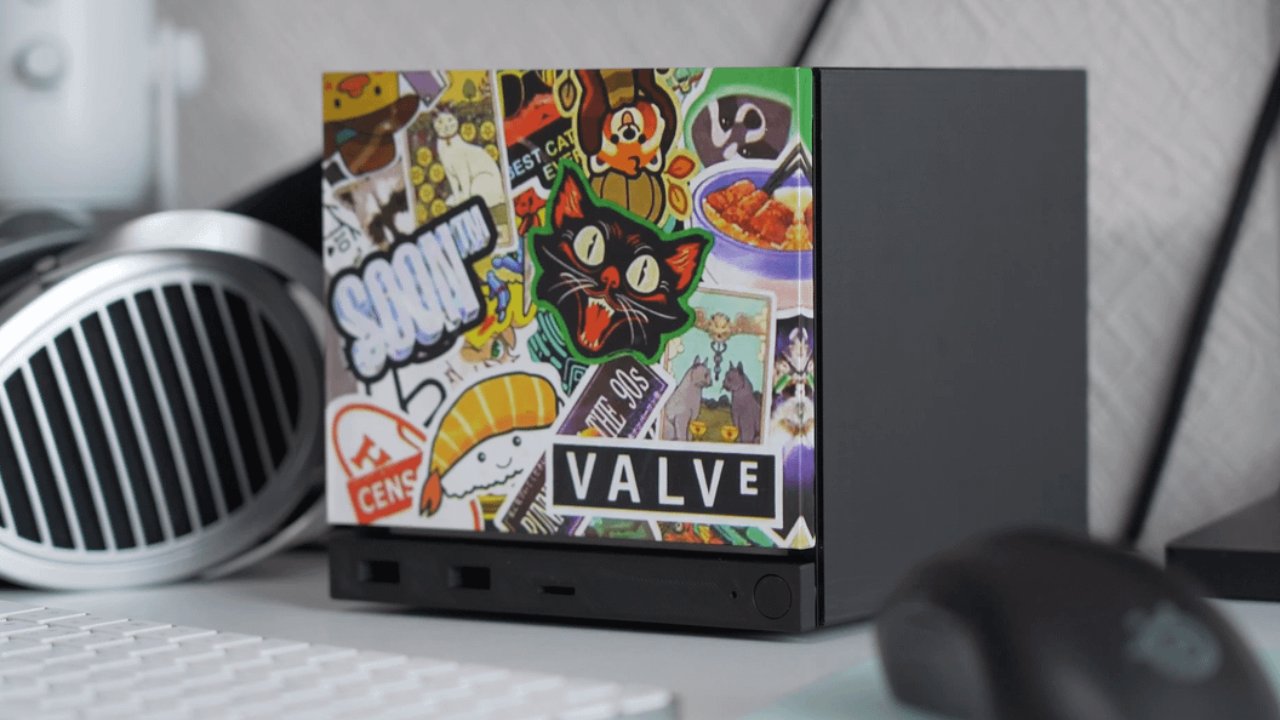
SteamOS Delivers a Console-Like Experience
If you prefer another operating system, Valve lets you install it. However, doing so means giving up some of SteamOS’s strongest features. One of the most useful is the ability to suspend a game and resume it with the press of a button, much like a traditional console. In most cases, games resumed in about 5 seconds, faster than starting up a typical gaming PC and launching a game from scratch.
During testing, the SteamOS interface became sluggish when a game was suspended, but these issues appeared to be tied to pre-release software rather than hardware limitations. One standout feature is HDMI CEC support. CEC allows connected devices to communicate through HDMI, enabling synchronized power functions and input switching.
Living Room Integration Works Well
Valve developed custom hardware and software to support the feature, ensuring it works smoothly. When you press the Steam Controller button, the system powers on connected devices, selects the correct inputs, and returns you to your game. The process feels seamless and removes many of the complications typically associated with using a PC in a living room.
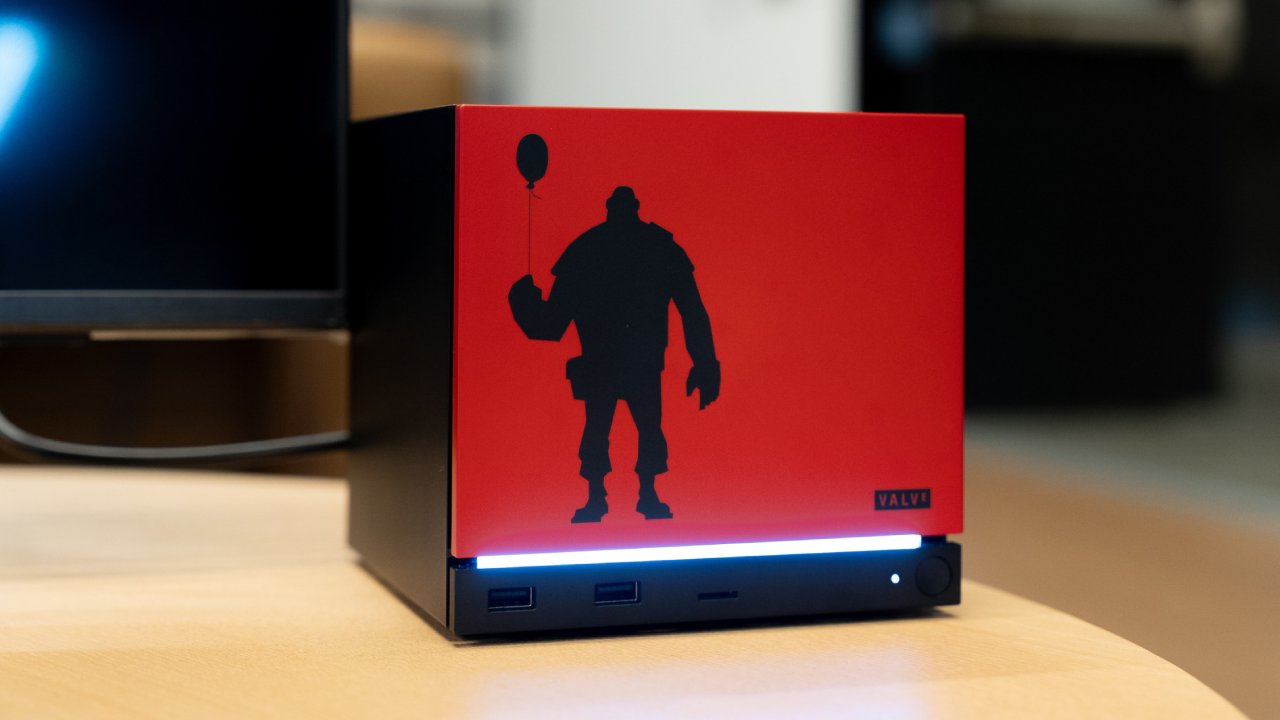
The Steam Machine uses a semi-custom 6-core Zen 4 CPU, 16GB of DDR5 memory running at 5600 MT/s, and a semi-custom GPU with 8GB of VRAM. According to Valve, the Steam Machine should outperform roughly 70% of gaming PCs currently in use.
However, the specifications resemble laptop hardware from 2023 more than cutting-edge gaming components. While developers may optimize for the platform over time, expectations should remain realistic.
4K Gaming Claims Face Challenges
Valve promoted the Steam Machine as a 4K gaming device capable of 60 fps, but testing yielded mixed results. Shadow of the Tomb Raider exceeded expectations, running at more than 120fps at 4K. However, it is also an older title. Most newer games averaged between 40 and 50 fps.
Some games benefited from reduced settings, but others were already running near their lowest presets. In several cases, achieving 60fps required aggressive FSR upscaling from a base resolution as low as 720p to 4K. While frame rates improved, image quality suffered noticeably. All five tested games averaged over 60 fps with these settings, but visual quality became hard to ignore.
Ray tracing performance presents another challenge. Even with 28 ray tracing cores, demanding games struggled. Cyberpunk averaged around 15fps at 1080p Ultra with ray tracing enabled. Games that require ray tracing support, including Indiana Jones and Doom: The Dark Ages, also pushed the hardware beyond comfortable limits.
Comparison With the PS5
The Steam Machine is often compared to the PlayStation 5. In God of War Ragnarok, the standard PS5 delivered approximately 75fps to 78fps while upscaling from 1440p to 4K. Under similar conditions, the Steam Machine ran at 60-63 fps, mostly at medium settings and in FSR Quality mode.
At native 1440p, performance improved and exceeded 70fps, but the result still did not clearly surpass Sony’s console. The experience remains playable, especially when paired with variable-refresh-rate displays, but it is important to keep expectations aligned with the hardware.
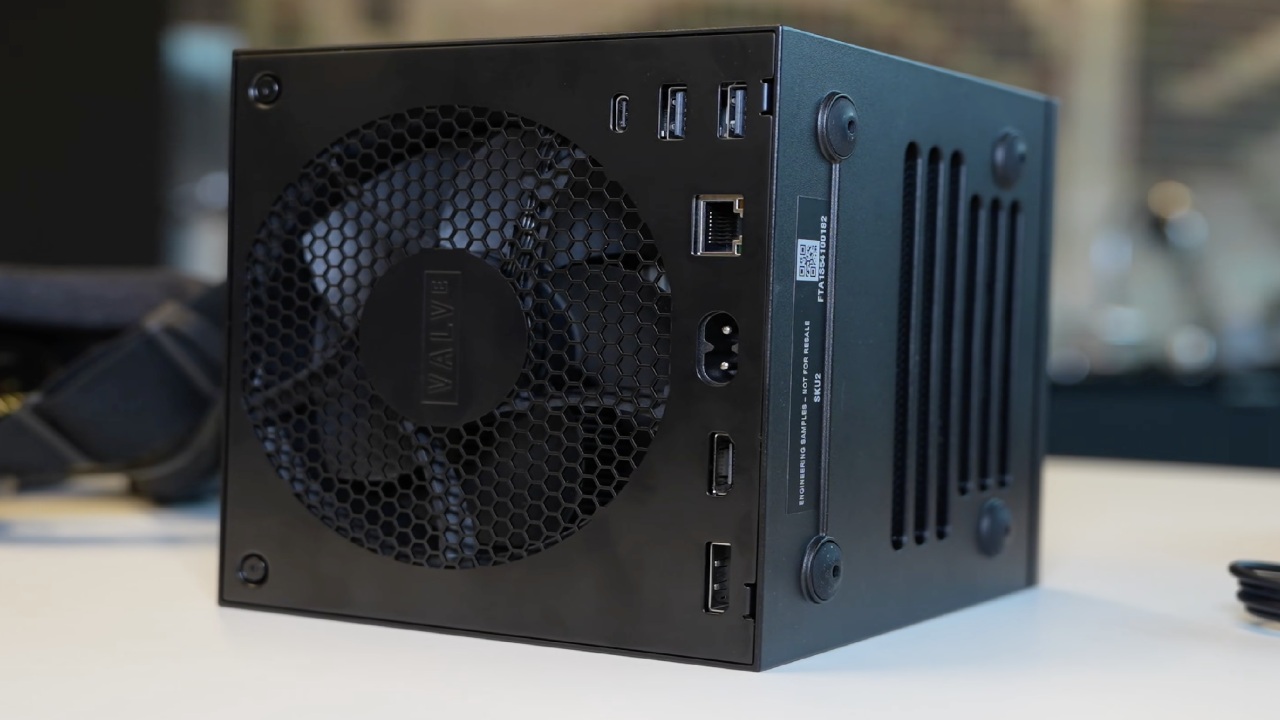
Steam Machine works well in several useful situations. With a wired link, download speeds were close to full gigabit, but over Wi-Fi 6E, they were only about half that fast.
During heavy game loads, power consumption averaged around 175W, and during lighter loads, around 66W. Temperatures remained within acceptable limits, averaging 68°C on the CPU and 66°C on the GPU.
Noise levels were comparable to the PS5, resulting in a quiet gaming experience. Valve also focused heavily on repairability. You can easily open the system, upgrade the RAM and SSD, and access replacement parts through Valve’s partnership with iFixit.
Open Peripheral Support Adds Flexibility
Unlike many traditional consoles, the Steam Machine works with a wide range of peripherals. During testing, it supported various keyboards, mice, headsets, and Bluetooth accessories without major issues.
Some audio devices operated at lower volume levels than expected, but this appeared to be a software issue rather than a hardware limitation. The platform’s openness remains one of its strongest advantages.
Steam Machine launches at $1,050 US for the 512GB model and $1,350 US for the 2TB version. The pricing reflects current hardware costs, but it places the system in direct competition with alternatives that often offer stronger gaming performance.
A standard PS5 costs significantly less, while a PS5 Pro remains cheaper and delivers more graphical power. Steam Machine offers benefits such as free online multiplayer, wider accessory compatibility, desktop functionality, and a more open environment.
The price, on the other hand, makes it more of a product for serious gamers than a device for everyone.
The Steam Machine solves a lot of the problems that come with playing PC games in the living room. The SteamOS is well-polished, the HDMI CEC integration works as it should, the repairability is great, and the open platform design gives you more freedom than with traditional systems.
But the game's performance doesn't always live up to its 4K 60fps claims, and the high launch price makes it hard to recommend to many people. The Steam Machine is a great experience if you like openness, flexibility, and the Steam community. But for many gamers, price and speed will still be the most important factors.
Editor, NoobFeed
Gaming Hardware Updates
No Data.