
XBOX Project Helix May Challenge NVIDIA With RDNA 5
XBOX Project Helix Could Combine RDNA 5, Neural Rendering, and AI Acceleration to Challenge High-End PC Gaming Hardware.
XBOX by Shinji Okazaki on Oct 05, 2026
XBOX Project Helix is getting closer to a reveal, with the full release, according to Insiders, set for November 2027. The hardware specs, features, and power suggest a PC-like gaming machine that could compete with NVIDIA on price and performance. XBOX Project Helix is a PC console hybrid that looks to power next-generation games with high-quality rasterization.
AMD's new graphics architecture powers it all. For the first time, the XBOX Project Helix will usher in a console with the latest technology, launching alongside top-grade gaming GPUs on PC. Right now, AMD leads NVIDIA in the GPU market across data centers, consumer compute, and gaming hardware.

AMD RDNA 5 Powers Project Helix
Better and more powerful GPU architecture could arrive as NVIDIA delays its next-generation cards to 2028. In 2027, this will be possible thanks to RDNA 5, the latest graphics architecture built from unified DNA, with a redesign centered on AI acceleration for frame rates.
RDNA 5 is built on the 3nm process, and AMD is working closely with Microsoft and Xbox's hardware team to create a custom system-on-chip GPU design paired with a neural rendering chip. RDNA 5 is a unified architecture designed for workstation GPUs and enterprise systems.
The goal is to bring games to true 4K presentation with high frame rates without compromising high-end PC features like high-quality ray tracing. AMD now claims it can overtake Nvidia and close the gap in ray tracing performance, machine learning-based game clarity, and real-world efficiency, all thanks to RDNA 5.
This means the XBOX Project Helix will have the latest stream processors. This means developers can use less brute force and more intelligent rendering. This leaves optimization to the latest stage of development without slowing down performance targets. This is all done through AI-driven reconstruction, denoising, and frame generation.
Neural Arrays Could Change Game Rendering
AI-driven reconstruction, denoising, and frame generation leave more overhead for more NPCs on screen, more interactions, and physics-based simulations in games, something that has been compromised on console hardware for decades. XBOX Project Helix's RDNA 5 structure uses neural arrays.
This is new to Xbox hardware and will combine compute units into a single, cohesive performance task. This means games can run faster and more efficiently, while world-building in game development improves. Games have become massive, with huge interactive open worlds and thousands of interlocking systems.
These neural arrays in RDNA 5 will let games use combined performance to bring worlds to life. Since RDNA 5 is built on the 3nm process, this hardware chip will also run at lower power than older architectures at that size. The low power draw allows for higher performance and lower thermal thresholds.
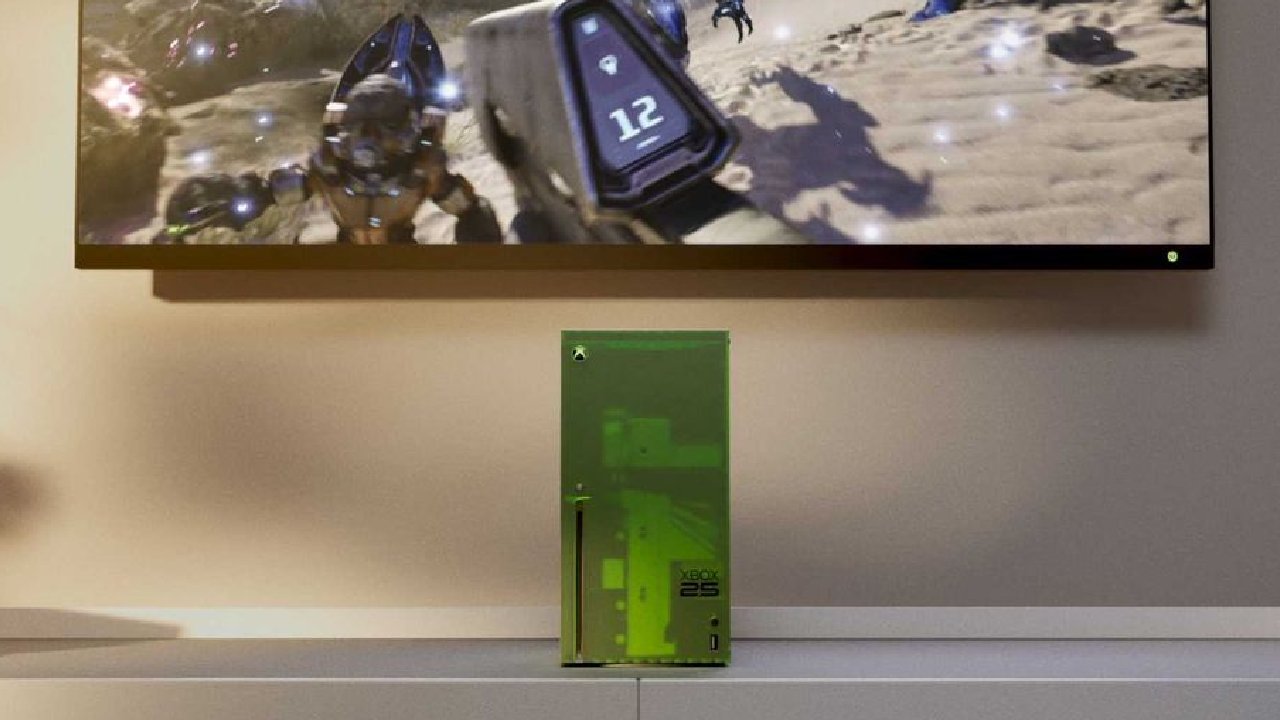
This means the Xbox will run faster, do more, and use less power.
Drawing hundreds of fewer watts out of the box could make this the most efficient console ever made. The other secret weapon thanks to RDNA 5 is the new proprietary XBOX FSR Diamond. This is a successor to FSR4, which was 2025 technology.
This machine-learning-first rendering design adds another layer of pixel accuracy and stability, purpose-built for the new XBOX hardware. FSR Diamond uses machine learning to predict future frames accurately, meaning that in motion, the game will look like true 4K and leave rendering-pipeline headroom for true path tracing and even games running at up to 120fps.
This is all being built directly into the XBOX Helix. Games will no longer rely on sub-HD pixel counts just to maintain high frame rates. This has essentially eliminated any bottleneck in the hardware pipeline.RDNA 5 is a game changer for XBOX Project Helix. These are the improvements that matter for real-world gaming, not just for developers.
Editor, NoobFeed
Latest Articles
No Data.