
Xbox Series X FSR 4.1 Support Coming for RDNA 2
AMD FSR 4.1 support for RDNA 2 could bring machine learning-based upscaling to Xbox Series X next year.
XBOX by Shinji Okazaki on Oct 06, 2026
As developers continue to push hardware, upscaling technology remains a key factor in modern console game output, especially for visual quality, with higher targets and more intensive rendering. FSR 4.1 is expected to be available on RDNA2 and RDNA3 hardware, leaving users wondering whether they'll be able to run the update on the Series consoles and why developers would bother with it at this point in the console cycle.
Much of this conversation has already been addressed, but questions remain about whether Xbox Series consoles might benefit from FSR 4.1, given its support for RDNA2 and RDNA3 hardware. As we know, Xbox Series consoles may have a better upscaling solution to come in the future.
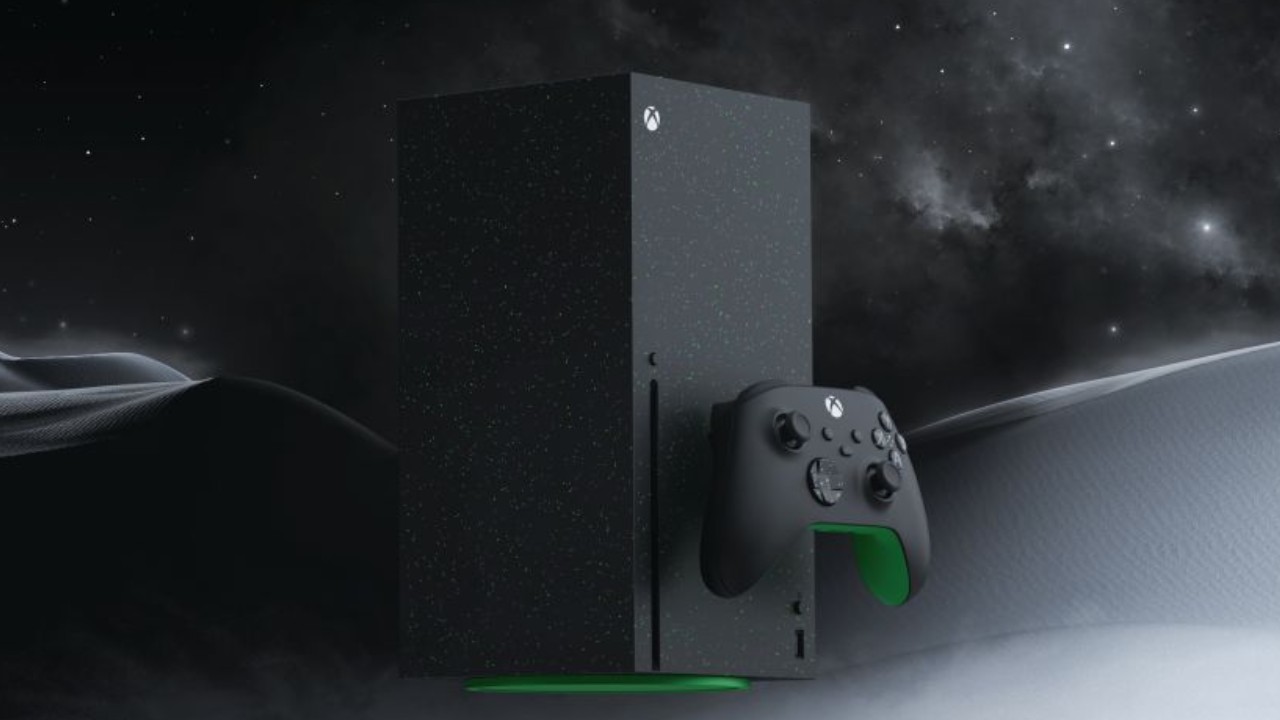
Xbox Series Consoles' FSR 4.1 is Technically Feasible
You can compare the hardware details there and realize why it's here. The PlayStation, on the other hand, a lighter version of PSSR, doesn't seem practical, as the base hardware doesn't appear to have dedicated INT8 acceleration. The system would have to brute-force workloads using FP16 processing through shaders.
The difference becomes clear when you compare the numbers. In this regard, the PlayStation 5 is closer to the 20 TOPS mark. In comparison, the PlayStation 5 Pro is just about 300 TOPS, suggesting that more sophisticated reconstruction techniques would be less feasible to implement in real time on base hardware.
Xbox Series X seems to be a different case. It can be assumed to be based on full RDNA2 architecture, thereby potentially supporting INT8 acceleration, which would make advanced upscaling workloads more feasible from a hardware standpoint. But that doesn't mean developers will implement it, even if the hardware can.
Development Priorities: Create More Questions
Technical feasibility can only be part of the answer. Developer interest, engineering effort, and platform support are also required. Uncertainty remains about whether and how AMD would bring FSR 4.1 into development environments used for Xbox games, and whether studios would invest in making it happen.
Cross-platform programming is also important. Many games coming out for Xbox Series systems are also optimized for PlayStation 5. This includes some games made by Microsoft itself. There is less reason to improve a different FSR 4.1 implementation for Xbox, since developers are already working on FSR 3 for PS5.
If AMD does work directly with developers on integration, studios would still have to balance performance, frame-time budgets, and the platform's image quality. The question you might be asking yourself is: is it worth investing engineering time in FSR 4.1 for one console platform while another platform remains on FSR 3?
Resolution Scaling May Already Be Reaching Limits
There's also a real-world issue with the internal rendering resolution. One point is that FSR 4, with a lower internal resolution, might achieve better image quality than FSR 3, which uses a higher internal resolution. In theory, that sounds like a viable solution.
But in reality, many games are already very high resolution, sometimes up to 4 K. We already have examples of how much technology can be used to reconstruct an image, and I think we're going to see cases where this is a major part of the equation, meaning people can't really reduce their resolution targets further.
Modern Rendering Features are also Mounted on Console Hardware.
There are also concerns about the rendering decisions. Pushing new and challenging visuals, especially sophisticated lighting systems, ray-tracing, and complex rendering pipelines. It's not necessarily a technology problem; it's whether the current console hardware can handle it.
While you might want to raise the visual targets, console equipment still has its limits. Some implementations work because of the tighter performance discipline that ray tracing and visual systems are built around – some are fast enough, some are slow enough, but no large performance trade-offs.
Other projects seem to demand more from hardware than anticipated, and they have to rely more heavily on extreme upscaling techniques. From this point of view, one concern is that developers may already be aiming for visual goals they don't feel current consoles can maintain throughout the game.
One potential factor may improve FSR 4.1's odds of making it to Xbox Series consoles.
If Xbox is headed down the path of a more unified development environment for future hardware projects and existing Xbox systems, newer FSR technologies might be easier to support within that environment. Future upscaling technologies from hardware designed for Xbox may also be offered on Xbox Series systems through shared development frameworks. But the same issue comes up when you factor in cross-platform priorities.
Even if PlayStation 5 used a faster, lower-quality upscaling engine, developers would still have to make choices about their computational limits. You would have to decide whether to rebalance workloads for a denser scaler on Xbox, lower the internal rendering resolution, or maintain parity between Xbox and PC.
That's technically possible, especially on Xbox Series X, thanks to the RDNA2 hardware features that enable INT8 acceleration. But it's not just about hardware. Platform support, developer adoption, workload balancing, and meaningful performance metrics are still to be seen. A better upscaler may enhance picture quality, but it's not easy to decide given lower rendering resolutions, development focus, and platform uniformity.
Editor, NoobFeed
Latest Articles
No Data.