
3D V-Cache in Consoles: Why AMD’s Gaming Boost Tech isn’t Console Ready Yet
AMD’s 3D V-cache delivers strong gaming gains but faces major cost, thermal, and scalability challenges in console hardware design.
Hardware by Masaru Hoshino on Apr 07, 2026
The discussion around whether consoles should adopt 3D V-cache has gained traction, especially as CPU limitations tend to surface faster than GPU constraints in a console generation. With ML-based upscalers becoming first-party console features, the question becomes even more relevant.
Why 3D V-Cache Seems Like a No-Brainer
Adding 3D V-cache to consoles seems like a clear victory at first glance. It greatly improves gaming performance by reducing cache misses and making data access easier. You can see how well CPUs like the 5800X3D have held up over time, even as newer hardware comes out.
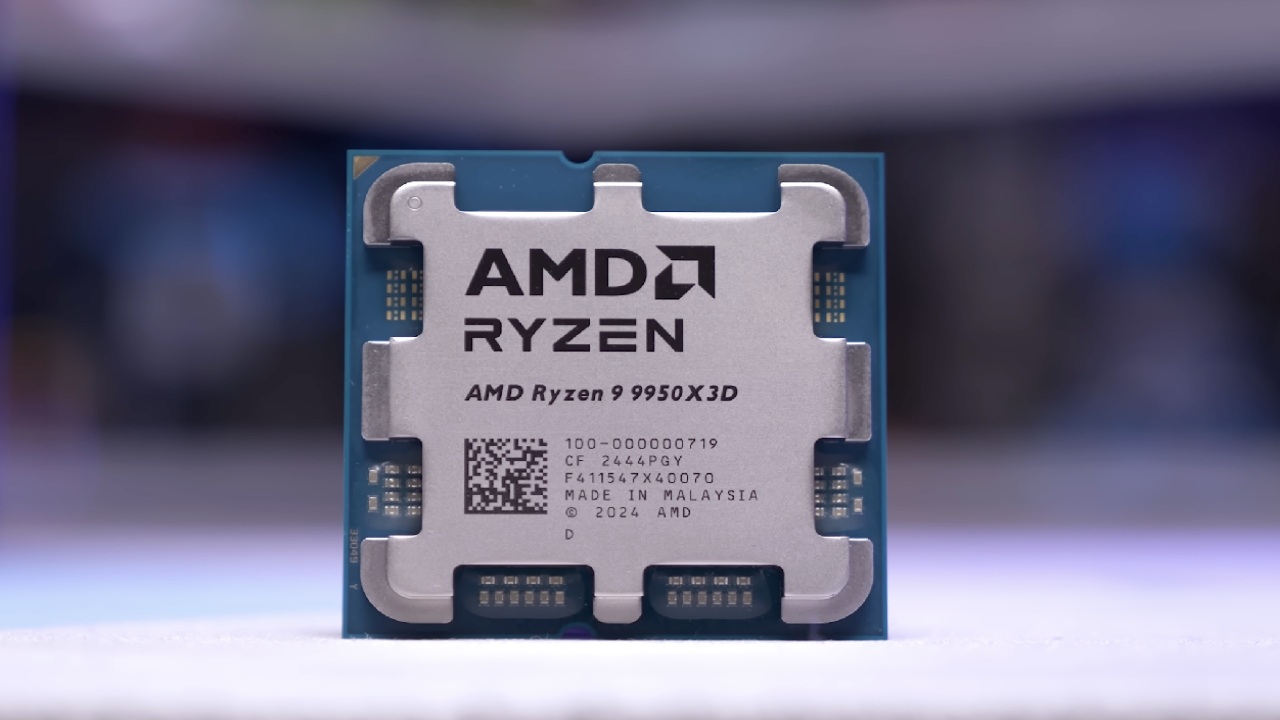
They still perform well in games. From that perspective, adding a large slab of cache could extend CPU longevity and delay bottlenecks in future titles.
We can also consider how modern workloads are evolving. As ML-based upscaling becomes more common, CPU demands may increase in ways that traditional cache hierarchies struggle to handle. You might expect that expanding the cache would help mitigate these issues and provide smoother long-term performance.
The Core Issue: Cost and Scalability
The main challenge with 3D V-cache in consoles is cost. Adding a large number of vertically stacked caches significantly increases silicon complexity and manufacturing costs. Consoles are designed around delivering the best possible performance per dollar, and this kind of feature is viewed as a luxury rather than a necessity.
When you think about production scale, the issue becomes even clearer. To make millions of consoles every year, you need methods that are very efficient and can grow. The specific packaging that 3D V-cache needs might not be able to keep up with the demand of 10 to 20 million units each year. Even if it were technically possible, the costs for a whole generation may be hundreds of millions of dollars more in manufacturing costs.
Developer Optimization vs. Hardware Brute Force
Another key argument is that developers are already optimizing well within existing hardware limits. Instead of relying on expanded cache, best practices from platform holders encourage developers to design around the available cache hierarchy.
We can see that current consoles are generally capable of achieving stable 60fps performance in most titles. You might notice that developers tend to adapt their engines and workloads to fit the hardware rather than demand fundamentally new architectural features. From this angle, adding 3D V-cache could be seen as compensating for inefficiencies rather than solving a core problem.
Thermal and Design Constraints
Thermals also play a significant role. 3D stacking introduces additional heat density, which can complicate cooling solutions. In a compact console APU design, maintaining predictable thermals is critical.
You have to consider that consoles aim for a small form factor with consistent performance under load. Adding more heat to the equation makes it harder to keep temperatures stable without increasing size, noise, or cost. These limits make it even harder to add 3D V-cache.
The Reality: A PC Luxury, Not a Console Standard
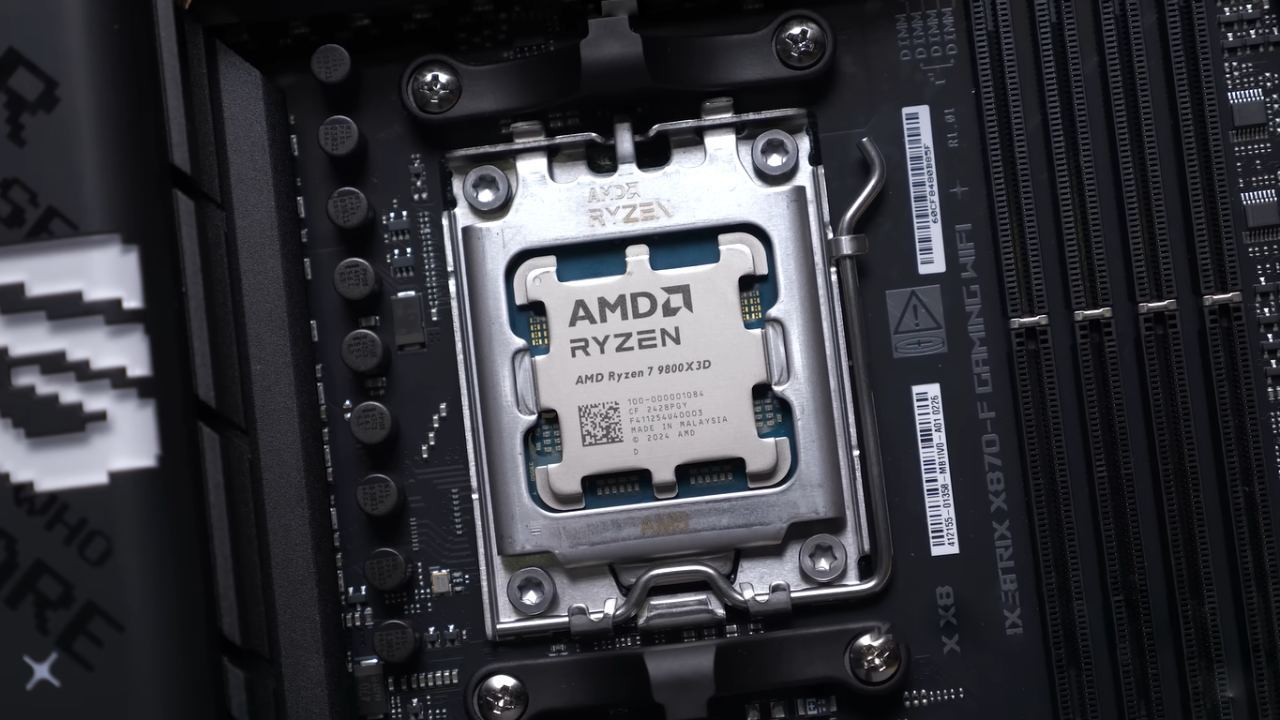
The 3D V-cache is best for high-end PCs right now, when people are ready to spend more for a 20% speed boost in certain situations. On the other hand, consoles have strict pricing limits, usually set below $1000.
We can view it as a feature that makes sense when budgets are flexible, but becomes impractical in a mass-market device. Even for a potential "Pro" console variant, the combination of cost, yield, and thermal challenges makes it unlikely in the near future.
Looking Ahead: Possible Alternatives
There are ongoing improvements in cache design, such as bottom-mounted cache configurations, that could enhance efficiency and thermal performance. These innovations might eventually make such technology more viable for APUs.
At the same time, you might see exploration of alternative architectures. ARM-based designs could be an interesting approach for future consoles because they have enabled other devices to perform better. But given the current trend, x86 architectures are likely to remain on top.
Final Thoughts
3D V-cache offers apparent performance advantages, especially in games. Still, its high cost, limited scalability, and heat issues make it hard to use on consoles. PCs are built to last longer and work better, while consoles are built to be cheap and easy to make in large numbers.
For the present, the technique is better suited to enthusiast systems than to widely available gaming gear.
Also, check our other hardware articles:
- AMD Ryzen 9 9950X3D Review: Setting The Standard For 2025 Gaming CPU
- Amazon Luna 2025 Review: Is Prime Gaming's Cloud Service Your Go-To For Casual Fun?
- AMD RX 9070 XT Review: AMD's RDNA 4 Champion for 1440p Gaming
- GeForce Now Ultimate: Ditching Your Gaming PC For Cloud RTX 4080 Power?
- NVIDIA GeForce RTX 5080 Review (2025): Still A 4K Gaming Powerhouse?
- Intel Core Ultra 9 285K Review And Performance Breakdown (2025)
- AMD Ryzen 7 9800X3D Review: 3D V-Cache Goes God Mode with Stunning Gaming Performance
- Intel Core Ultra 9 285K vs AMD Ryzen 7 9800X3D: In-Depth Gaming Performance and Benchmark Comparison
- NVIDIA GeForce RTX 5080 Super Performance In Cyberpunk 2077: Path Tracing & DLSS 4.0 Tested
- AMD Radeon RX 9070 XT In Cyberpunk 2077: Ray Tracing & FSR 4.0 Tested
- Intel Arc B580 Review: The $250 GPU Revolutionizing 1440p Gaming
- Intel Arc B570 Vs. B580: Value, Specs, And Real-World Gaming Performance
- RTX 5090 Laptop Vs. M4 Max MacBook Pro: Ultimate Raw Performance Vs. Battery Endurance
- Intel Arc b580 Vs. RTX 4060: Game Performance And Value Analysis
- RTX5090 Hell Is Us Demo 4K Ultra Benchmark: DLSS Vs. Native Performance Guide
- NVIDIA RTX 5070 Review: Mid-Range Muscle or Marketing Hype?
- Nintendo Switch 2 Review: Handheld Performance, Features & Value Breakdown
- RTX 5070 Ti Review: Performance, Thermals & Power Efficiency Tested
- Samsung Odyssey OLED G81SF Review 2025: Ultimate 32-Inch QD-OLED Gaming Monitor
- AMD RX 9070 Performance Review: Thermals, Clocks, and Real-World FPS
- AMD Ryzen 5 7600 Review: Best Budget Gaming CPU of 2025?
- AMD Radeon RX 7800 XT Review: RDNA 3 Power For Midrange Gaming
- Asus ROG RTX 5090 Astral OC Vs. Founders Edition: The 4K Gaming Benchmark
Editor, NoobFeed
Gaming Hardware Updates
No Data.