
AMD Extends FSR 4.1 Support to Radeon RX 7000 and RX 6000 GPUs
AMD expands FSR 4.1 support to older Radeon GPUs, extending the lifespan of existing gaming hardware.
Hardware by Shinji Okazaki on Jun 11, 2026
One of the most important changes AMD announced today is based on FidelityFX Super Resolution (FSR) 4. The update is not only for the latest Radeon graphics cards; it will also introduce new upscaling features to older generations. In addition to FSR updates, AMD also rolled out some changes to its AM4 and AM5 platforms, new X3D processors, and improved EXPO memory technology.
AMD is definitely taking steps in the right direction for many users by supporting FSR 4 on older AMD graphics cards. There were also several announcements following Computex, most of which were hardware-related. But the biggest news was about FSR 4. Some FSR 4 users have complained that the technology is not supported on their RDNA 2 or RDNA 3 GPUs. AMD has now announced that support for RDNA 4 hardware is coming too.
AMD Introduces FSR 4.1 Support to older Radeon GPUs
According to reports, AMD FSR Upscaling 4.1 is officially coming to Radeon RX 7000 GPUs in July and Radeon RX 6000 GPUs in early 2027. After months and even years of speculation, AMD has announced support for FSR 4 on RDNA 3 and RDNA 2 graphics cards.
AMD is continuing to work on FSR Upscaling 4.1 for RDNA 4 GPUs. RDNA 3 owners will be supported in July, allowing Radeon RX 7000 series owners to use AMD's newer machine-learning-based upscaling path without needing Radeon RX 9000 graphics cards. More than 300 games will support the update at launch, and Radeon RX 7000 users will be able to enjoy it without a developer patch.
The FSR 4 version optimized for the RX 7000 series has been optimized for first-generation AI accelerators with INT8 instructions. The differences between the two lie in the number of AI accelerators and the FP8 support. The hardware for RDNA 4 is based on FP8 and second-generation AI accelerators; for RDNA 3, the approach is different.
AMD has not released the exact July release date, driver version, or the list of supported titles. One such aspect of interest is just how much faster the official FSR 4.1 release will be than the leaked version from 2025. The leaked build featured FSR 4.0 code, whereas FSR 4.1 offers quality improvements, such as sharper post-machine learning upscaling and enhancements to Ultra Performance and DRS modes.
For RDNA 2 and RDNA 3 Owners, What does FSR 4.1 Entail?
With FSR 4, our own model has already shown a significant improvement over AMD's older FSR 3. With that in mind, this update should be worthwhile for owners of both RDNA 2 and RDNA 3 GPUs. We will not have the same level of detail as RDNA 4 hardware, though. However, the variations among AI accelerators (and between FP8 and INT8 processing) are significant.
It will be interesting to see how FSR 4.1 performs on a graphics card like the Radeon RX 7800 XT. There have also been reports that AMD will prevent FSR 4.1 from being ported to the Radeon 600M/700M/800M integrated graphics. But AMD's Frank Azor replied to those claims, saying no such decision has been made and they are "not ready to talk about future product plans.
AMD claims it's still gathering customer feedback, but there's no word yet on RDNA 3.5 integrated graphics support. Whether those products will get FSR 4.1 will be determined by time. The other news from AMD is that the Ryzen 7 5800X3D is once again available for the AM4 platform. The news of the announcement has been confusing. Ryzen 7 5800X3D itself is NOT 10 years old. The AM4 is ten years old; the processor is just 4 years old.
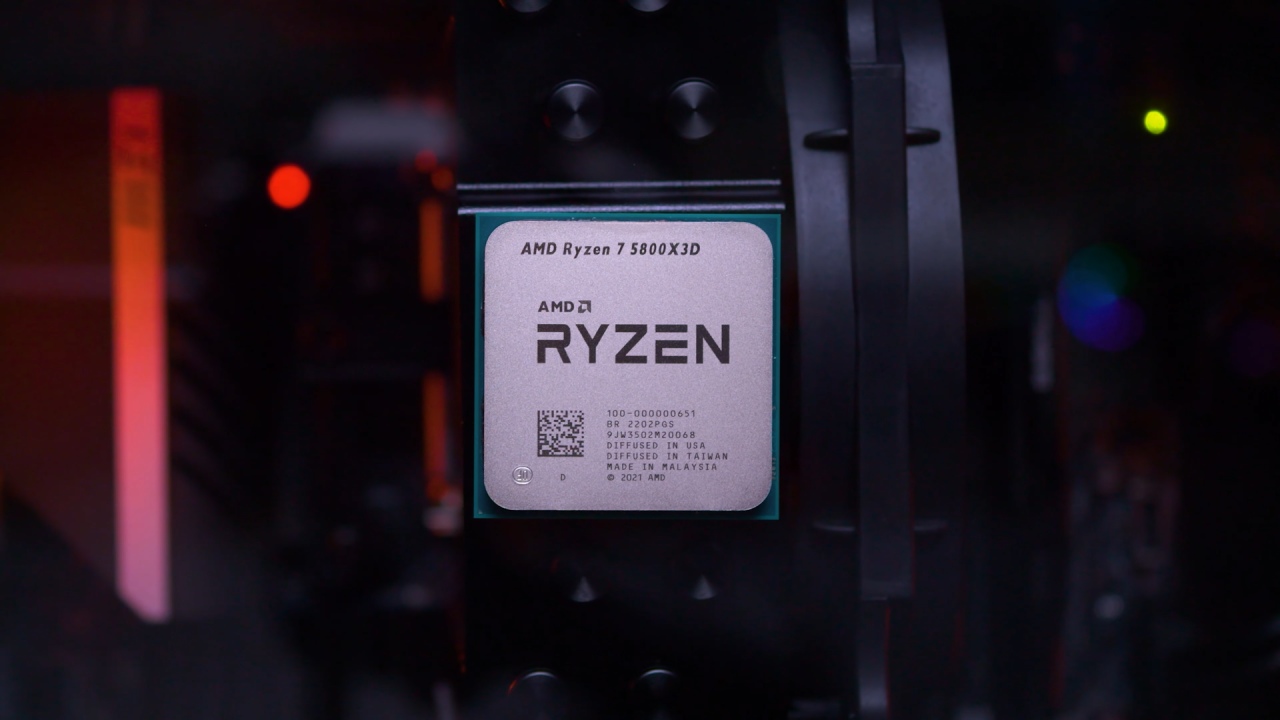
The 5800X3D has received positive feedback from several users. The transition to a DDR5 platform may be costly, especially given the current high cost of hardware. Upgrading to AM5 involves using DDR5 memory, and memory remains problematic. Storage costs have likewise gone up. AM4 users can easily upgrade to the 5800X3D. Rather than replacing several parts and building a new system, just install the processor and get more power from the existing system.
But the price has caused controversy. The initial 5800X3D was offered for $450 MSRP. It's being reintroduced by AMD at $350. The processor would often be found for less than $300 at the end of production. Therefore, the re-release price is perceived as too high by some users.
AMD also unveiled the Ryzen 7 7700X3D for AM5, featuring 8 cores and 16 threads.
AMD is now providing new X3D processors for AM4 and AM5 users. The only problem is that the Ryzen 7 7800X3D is still available. It also has 8 cores and 16 threads, with marginally improved performance for the comparatively small price increase. For this reason, some analysts believe that AMD is overcrowding its own product line with too many similar products.
As far as we have seen, the 7700X3D hasn't garnered quite as much attention as some of AMD's other announcements. AMD's emphasis in all its recent announcements has been on maximizing the usefulness of old machines. These upgrades address the needs of gamers and enthusiasts seeking performance enhancements without the hassle of an all-round upgrade.
They are all designed to benefit those looking for extra performance without upgrading all their components. The boost in FSR 4.1 support could have the highest reach, as it brings the cutting-edge upscaling feature to millions of Radeon owners and prolongs the benefits of older RDNA 2 and RDNA 3 GPUs.
Editor, NoobFeed
Gaming Hardware Updates
No Data.