
RDNA 5 Delay Explained: What AMD's Next GPU Generation Means for Buyers Right Now
Board partners expect AMD's next RDNA 5 graphics card generation to arrive as late as early 2028.
Hardware by Shinji Okazaki on Jul 27, 2026
The graphics card market is about to go through a period in which the typical two-year upgrade cycle has been disrupted, and the choice of what to buy today is based as much on what's not available as on what is. The conflicting reports of a postponed next-generation Radeon graphics card release, Nvidia's shift in graphics card marketing approach, and the unexpected revival of older graphics cards all refer to the same thing: a clash between waiting and buying now.
According to reports from board partners, the next generation of gaming chips, namely RDNA 5, could be available only towards the end of 2027 or even in early 2028. The timeline would result in AMD having RDNA 4 much longer than expected, and that length of time matters for buyers waiting for a new Radeon generation, who might be stuck with it for over a year beyond the typical cycle.
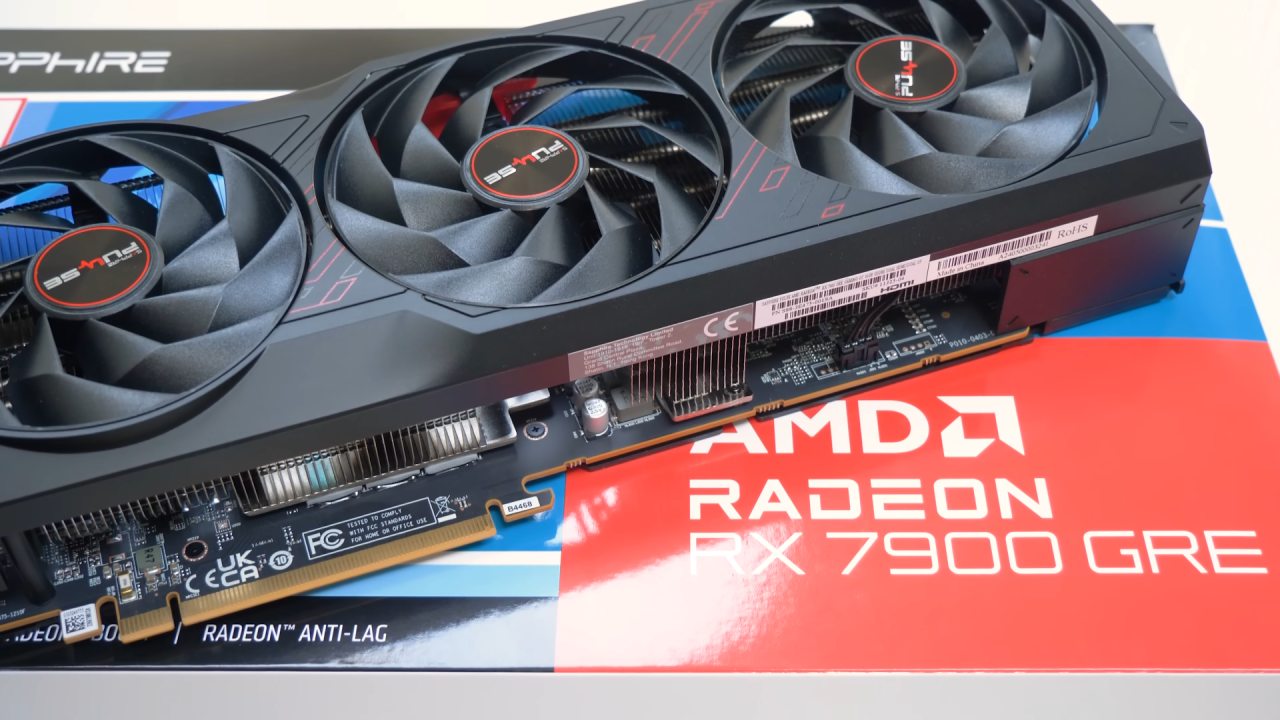
AMD's Next Generation Delay
RX 9070 GRE is already available in more regions than originally advertised; it has 12GB of GDDR6 and is rated at 220W of board power. It's positioned above RX 9070 but still in the realm of high-end 1440p gaming. The latest tests indicate it is near 120 fps at 1080p and near 87 fps at 1440p in "rasterized" games.
The output is solid on paper, but in many games, ray tracing also gives Nvidia an advantage, while in 4K gaming, frames have to be upscaled to ensure smooth play. Below that, a report suggests there is also a budget card option with 8GB of storage, which is another reason AMD needs something to rely on until RDNA 5 arrives.
Nvidia’s Possible VRAM Response
AMD might keep the existing generation alive, but Nvidia is reportedly working on super versions of its RTX 50 series, and the most significant upgrade might not be clock speed; it could be memory capacity. A potential 12GB version of the RTX 5060, along with 8GB and 24GB versions of the RTX 5070 Super and an RTX 5080 Super, have been reported.
Those cards would add to one of the biggest gripes against recent GPU generations: high-priced cards with limited memory, which is a concern for gamers, creators, and local AI users. At the moment, those models could arrive between the end of 2026 and CES 2027, which would leave shoppers with a tough choice if they're looking to upgrade their GPUs now.
The next-generation battle is not the only one between AMD and Nvidia. One manufacturer has gone even further by reintroducing a graphics card that supports 12GB of VRAM, DLSS, ray tracing, and CUDA. Its memory capacity can also be more valuable than other newer 8GB cards for creators or those using local AI, though it requires a 550W power supply. The problem is that the chip was originally designed 5 years ago.
5-year-old GPU Comes Back to the Market
The card in question is the GeForce RTX 3060 12GB. It has been resurrected by Palit as the RTX 3060 Infinity 2 OC, and is now getting a 2021 GPU's re-release in 2026. There have been no significant changes to its basic specifications: 3584 CUDA cores, 12GB of GDDR6 memory on a 192bit bus, a boost clock of nearly 1.8 GHz, and approximately 170W of power consumption.
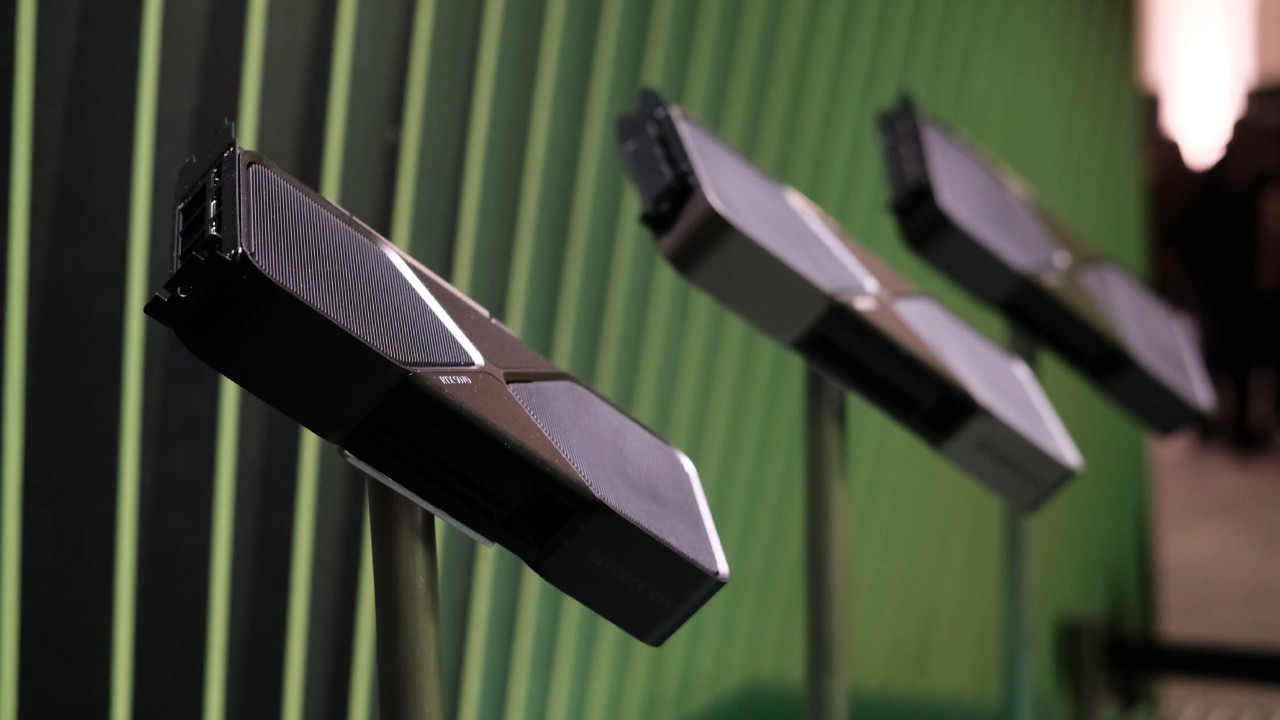
In addition to the familiar internals, Palit's new cooler includes a compact dual-fan cooler, a zero-RPM fan mode, and a top-mounted backplate. RTX 3060 is today around 62 fps on ultra at 1080p and around 42 fps on ultra at 1440p. In those same tests, the RTX 4050 reaches about 69 and 45, respectively, and the RTX 4060 reaches about 89 and 60, respectively.
While the RTX 3060 is playable for 1080p gaming, the RTX 4060 offers the same amount of memory but delivers outmoded performance and should be viewed as a 1080p gaming chip that has been given an upgrade. The additional memory comes into play in particular ways. 12GB can prevent texture and stutter issues caused by memory limitations when the 8GB card is full, and can also be used for larger video projects, 3D scenes, and local AI models.
The amount of VRAM doesn't necessarily equate to raw power, and a lower GPU speed doesn't mean it's fast just because of the amount of memory. More importantly, the RTX 3060 lacks newer features from the Blackwell era, such as multi-frame generation, and it consumes more power than the RTX 5060, all of which point back to the ultimate determinant of success: price.
RTX 3060 is an interesting option for budget-conscious creators, CUDA users, and gamers.
The comeback doesn't really make limited sense for gaming, as the RTX 5060 is much faster and has newer features; however, official pricing hasn't been announced, though it's expected to be around $330. Intel's Arc B580 also offers 12GB of memory, but AMD's newer cards deliver more powerful rasterized performance at similar prices.
There is some reason for optimism, as AMD might wait for the next big generation, Nvidia may counter with new VRAM super cards, and the return of the RTX 3060 is due to memory capacity still driving sales even on older graphics cards.
But the basic rule remains: VRAM isn't the best indicator of which graphics card to buy. Comparing them based on price, features, power consumption, and performance will provide the most accurate way to compare any build to these options.
Editor, NoobFeed
Gaming Hardware Updates
No Data.