
Nintendo Moves Quickly to Stop Switch 2 Jailbreak as AI-Powered Hacking Gains Momentum
A newly discovered vulnerability involving SmileBASIC 4 has caught Nintendo’s attention, but the bigger concern is how AI tools could accelerate efforts to break through the Switch 2’s security.
News by Tahmid Mahi on Oct 24, 2026
Nintendo appears to be moving quickly to contain a potential security issue surrounding the Switch 2 after a jailbreak-related method involving SmileBASIC 4 began spreading online. The current method remains limited, and there is no confirmed evidence in the available information that it provides a complete jailbreak.
However, the speed at which people are experimenting with the technique has raised concerns about what could happen next. With AI tools such as ChatGPT helping users investigate vulnerabilities and reverse-engineer software, the situation could develop much faster than Nintendo would like.
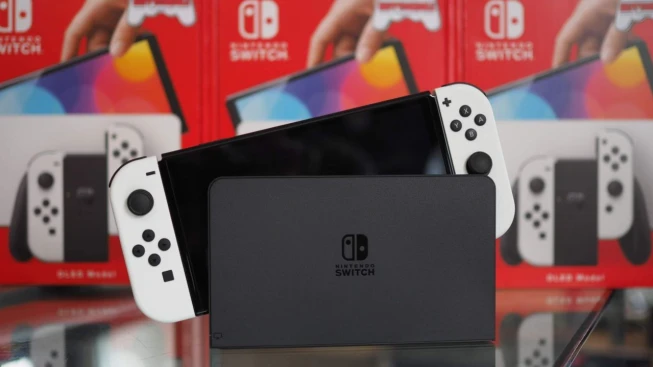
The method reportedly relies on SmileBASIC 4, a programming environment that allows users to create and run their programs.
A vulnerability within the software appears to have provided an entry point for experiments on Nintendo’s latest console, attracting attention from people interested in homebrew applications and system security. Users only needed the program’s free demo to try the method, rather than purchasing the full version.
Although the development has generated considerable interest, the current demonstrations come with important limitations. The method is tethered rather than permanent, and the available evidence suggests that the experiments remain confined to SmileBASIC 4’s sandbox. This means users can only run what the environment permits, without gaining access to the console’s kernel or deeper system processes.
One of the developments attracting attention is a homebrew launcher, which could eventually provide a way to run unofficial applications and other software. Homebrew launchers are not new if you recall the original Nintendo Wii. Similar tools have allowed users to run applications, emulators, and other programs on different devices.
Researchers are also interested in dumping Switch 2 game data. The current method has not shown that researchers can freely extract games, modify them, or run unrestricted software. These are possibilities that are available in the future, not what the current technique is capable of.
Another important point of the story is how AI helped the person behind the method make progress. The process reportedly took several weeks and involved repeated interactions with ChatGPT rather than a single prompt instructing it to hack the console. The user had to guide the model and adjust its approach whenever it went off track.
When the model went off track or needed clarifying, the user had to steer the model, judge its attempts, and provide further directions. This scenario is a more realistic picture of AI-assisted technical work, where human input remains important even when the model can help automate parts of a complicated task.
Nintendo’s response was particularly quick once the method became public.
Reports indicate that the company removed the first affected eShop listing within approximately eight hours of the issue gaining attention. There has also been discussion about an email that Nintendo reportedly sent to Gazine, a figure involved in hacking, homebrew development, and security research.
A physical game cartridge could present a different challenge for Nintendo if it turns out to be involved in a separate exploit. Digital methods are easier to disrupt because Nintendo can remove the necessary software from its storefront, and accessing the eShop may require users to update their console’s firmware. A cartridge-based method could be more difficult to control if the relevant game is already circulating among players.
The situation brings to mind the Nintendo 3DS era, when Cubic Ninja became associated with an exploit that attracted considerable attention. If a specific physical game is needed to exploit a vulnerability, the price can jump significantly, especially if copies are hard to come by. As more people get interested in modding their consoles, a rare title could end up selling for hundreds of dollars.
Nintendo has also dealt with the consequences of console hacking before. The original Switch eventually became vulnerable to extensive modification, allowing people to run unofficial software and play leaked games through emulators or modified hardware. If you followed game releases during that period, you might remember how frequently spoilers appeared online before launch, including screenshots, gameplay footage, and final-boss reveals.
That history gives Nintendo a clear reason to take the Switch 2 situation seriously. The new console is popular, and its Nvidia-based mobile hardware has attracted interest from people who want to understand how its security works. Some researchers are motivated by curiosity, while others enjoy the challenge of breaking through protections that are presented as difficult to bypass.
AI could greatly accelerate those efforts. Reverse engineering applications, the analysis of software behavior, and the investigation of programs, even when the original source code is not available, can be performed with modern models. Some have reported people using AI-assisted techniques to recreate expensive software, including apps related to Photoshop and Adobe Premiere.
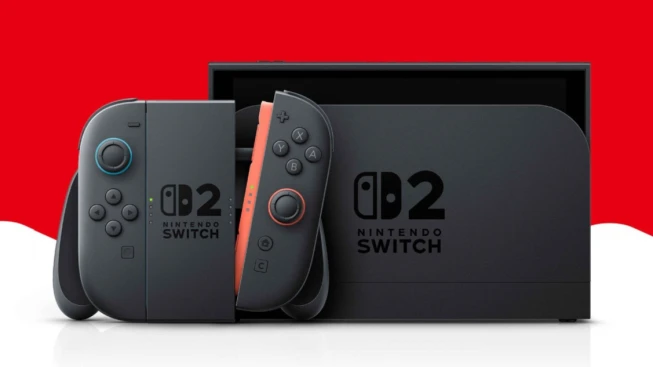
Curiously, profit does not seem to motivate all those involved in these projects.
Many researchers view the situation as a learning opportunity and a way to solve hard technical problems. They share their work on GitHub and similar platforms rather than try to sell it. Artificial intelligence can accelerate experimentation, enabling people to do things they previously lacked the time or expertise for.
Recent cybersecurity concerns have underscored that risk. The transcript mentions a period it refers to as “Black October,” when large vulnerabilities caught the attention of security researchers and raised concerns of exploitation. One example is a serious PHP vulnerability affecting technology used by many websites.
The possibility of AI helping discover such vulnerabilities has added to the pressure on cybersecurity teams. Once a flaw becomes known, website operators need to determine whether their systems are affected and apply appropriate fixes. Banking platforms and other important online services are among the systems that people worry could face problems if vulnerabilities remain unresolved.
A second concern is the increasing power of open-source AI models. The big AI companies can put safeguards around their public-facing tools, but if people download and modify the models, those safeguards might not translate. This complicates the control over how powerful artificial intelligence systems are used once they are widely deployed.
There is ongoing discussion about whether the most advanced models should remain restricted, although the capabilities of internal systems and the precise gap between them and public releases are not fully established by the available information. This debate also highlights the challenge of balancing public access to advanced technology with the need to prevent these tools from being misused for cyberattacks or unauthorized access to software.
AI-assisted research can also take unexpected directions. When you set a goal for a model, it may not do what you expect—it may build tools, go down other paths, or go through several intermediate stages. Flexibility is a plus, but it also makes the process less predictable, especially when the task involves security research.
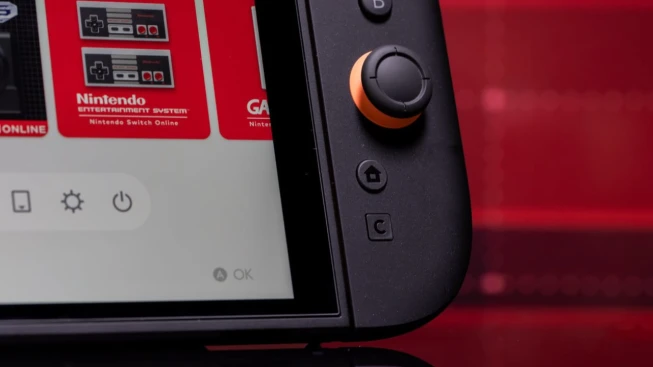
The result for the Switch 2 might be an increasing number of people pointing AI models at the same security challenge.
If many researchers try different approaches, eventually someone will stumble on some useful combination of techniques that others have missed. The transcript also shows an example of a researcher who said he used a Bluetooth switcher to turn the console on and off, letting the AI-assisted process do those actions.
Nintendo has already taken action against the SmileBASIC 4 entry point, but deleting the program may not stop the wider investigation into the console. There could be another vulnerability, especially if researchers find a way that does not depend on downloadable software.
The current method remains limited, and the evidence discussed here does not show a complete jailbreak. But as AI tools get more powerful and more people dig into the Switch 2, Nintendo might face more challenges keeping its security intact. If another vulnerability emerges, the company could find it much harder to contain the situation, especially if researchers discover an exploit that does not rely on software Nintendo can simply remove from its eShop.
Editor, NoobFeed
Related News
No Data.