
Nintendo Switch 2 Revision Focuses on Swappable Battery
The updated Nintendo Switch 2 adds a user-replaceable battery but skips the display upgrade many players hoped for.
News by Adeela Tas on Oct 21, 2026
The new Nintendo Switch 2 revision has officially arrived, and if you were hoping for a sharper screen or a larger battery, you'll be disappointed. The version many people pictured as the ideal handheld is only a small step forward, with a couple of improvements and possibly a few downgrades.
The one feature that stands out is the user-replaceable battery, and beyond that, there isn't much else to talk about. That gap between expectation and reality is what makes this release feel flat. Many people assumed an update like this would fix the obvious hardware complaints, particularly the display and battery life. Instead, the update mostly covers a compliance requirement.

Of everything on offer, only one addition is real, and Nintendo chose it for its own reasons.
It also helps to know where this change came from. The swappable battery isn't a redesign Nintendo was eager to show off. It's closer to a requirement pushed by the European Union (EU), so the company made the change because it had to, not because it wanted to.
Alongside it, you get a battery that's about 1% worse than before on a console whose battery life was already weak, which comes out to roughly five minutes less playtime. So the single real change in this revision arrives with a small step backward attached to it.
The jump from the first Switch to its second version looked very different. That update was a big one, with a better screen, about 33% longer battery life, and a handful of other changes. One of the main reasons Nintendo went ahead with it was to patch the glitch that made it easy to boot into recovery mode, which let people modify the system in ways the company never intended.
Nintendo closed that door, and buyers got a noticeably better device. This latest update doesn't come close to that level of improvement. Earlier this year, a recent patent and a separate confirmation made it clear that the Nintendo Switch 2 screen isn't as good as many people believed. The display delay is significant.
A typical monitor has a delay of around 6.3 milliseconds.
The original Switch, the IPS model and not the OLED one, measures 21.3 milliseconds. The Nintendo Switch 2 sits at 33.3 milliseconds, roughly 50% more delay than the first console. Other kinds of displays help put those numbers in perspective. A CRT television has no input delay, though its refresh rate adds about 8 milliseconds. An OLED panel is at just 0.3 milliseconds.
A standard TV lands at around 9 milliseconds, and a regular monitor sits at about 6. When you line the Switch and Switch 2 up against those figures, the difference is clear. That screen delay is the hardware's weak spot, and you can actually notice it while playing.
It's not just cherry-picking one bad number. Compared with every display listed above, the console's screen comes last, and the gap from a normal monitor is wide enough to notice. A typical monitor is more than five times faster, and an OLED panel is on another level entirely.
How much it bothers you depends on how closely you look. If you focus on it, you'll see it. Run into an enemy in a game, and the picture can start tearing and blurring a little, because the screen isn't rendering quite in time. Someone who picks up the console and plays casually probably won't spot anything. But if you move from an OLED display to this one, something will feel off right away.
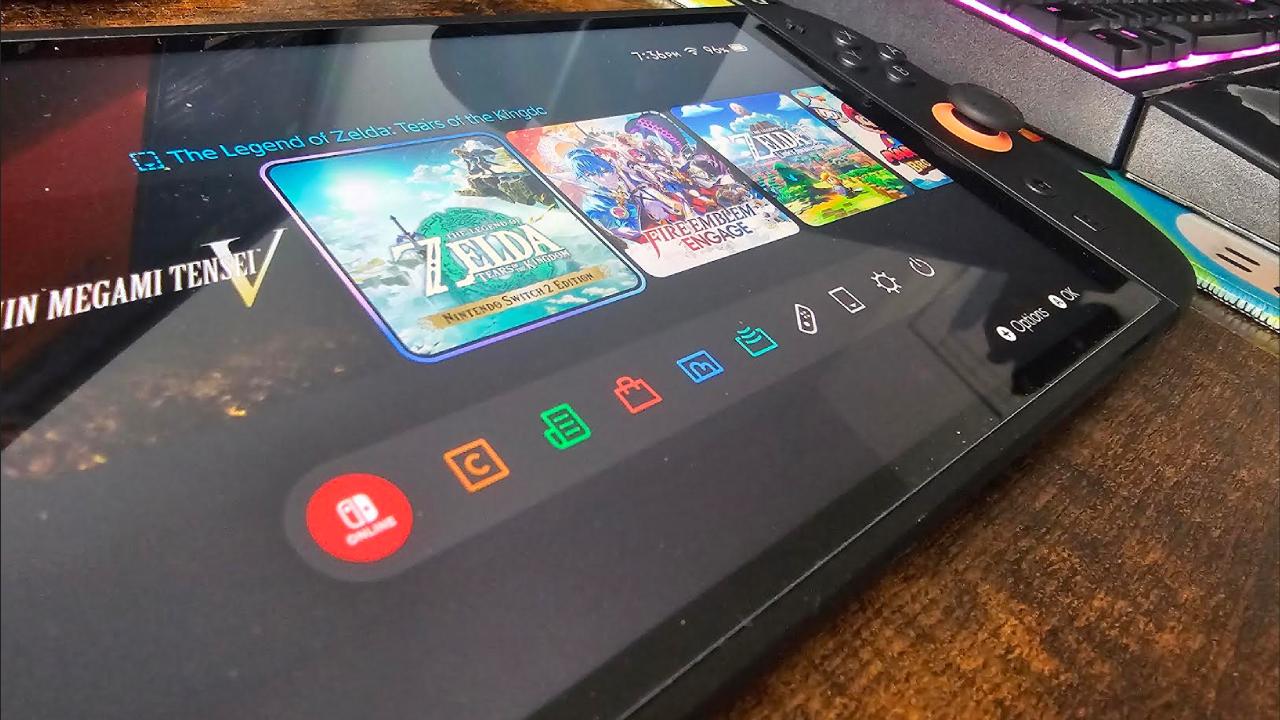
It's a bit like trying a 240 Hz display for the first time and then having to go back to 30.
You feel the difference immediately, and the same goes for this kind of screen delay. With all that in mind, you would expect Nintendo to have addressed it in this revision, but it didn't. A few explanations are possible, and cost is the most obvious. Tech has been getting more expensive for a while, and right now there's a shortage of CPUs, GPUs, and RAM. The RAM shortage in particular is projected to last through late 2027.
Adding a pricier screen during a period like that is risky, since costs could rise even further after the decision is made. There's a manufacturing side to it as well. Bringing in a new screen would mean halting factory production, which would delay output and reduce the number of units built before the shortage ends.
That's not a great position to be in. And if Nintendo did go ahead, it would almost certainly pass the extra cost on to you. You'd end up with a $600 Nintendo Switch 2 just for a slightly better display, and it's hard to see how that price could be justified.
From Nintendo's side, the logic holds up even if it frustrates you. A console is already expensive to make in this climate, and any change that complicates supply could leave stores short of stock for longer. Keeping the screen as is lets the company keep production moving and prices stable, even though it means the display lags behind competitors.
A more sensible path would be for Nintendo to hold off and release an OLED model later.
That plan makes the most sense, because it hands current Nintendo Switch 2 owners a clear reason to upgrade: faster response times. It could even double as marketing. Nothing suggests Nintendo slowed the screen down on purpose, but the result is that people begin to realize they don't have the best display available.
The Nintendo Switch 2 currently has the slowest response time of any modern handheld, putting the company in an interesting spot and potentially driving demand for a new hardware release. It's also worth separating this from any suggestion that the delay is a deliberate trick. A more realistic reading is that Nintendo is working within cost limits, and an OLED model happens to be the natural place to fix the problem.
When that day comes, you'd get a faster-responding display, and owners of the current hardware would have an easy reason to switch. If you were planning to buy the Zelda 40th Anniversary Nintendo Switch 2, or you already own a standard unit and were hoping for a better display based on what you read online, it's a letdown that the upgrade isn't included.

As mentioned, though, an OLED model or a Nintendo Switch Lite with an improved screen is likely coming at some point. The Zelda 40th Anniversary edition includes some physical changes, with the user-replaceable battery as the main one. The first batch has already shipped to early pre-orders, and the second production run is expected to carry the swappable battery more broadly.
This hardware change is unlikely to stay limited to Europe, either.
Reports suggest the revised battery design on the Zelda edition will ship worldwide in later shipments. In that sense, waiting may work in your favor, since your Nintendo Switch 2 would arrive with the updated, user-serviceable battery design already in place.
For now, the picture is fairly simple. The Nintendo Switch 2 gets a user-replaceable battery, a slightly weaker battery overall, and the same slow display it had before. Whether you see that as a letdown or an early step toward a longer plan that ends with an OLED model is up to you, but the screen delay won't go away until Nintendo addresses it.
Until then, a console with a faster response time will likely be limited to a future release. If you're set on buying now, keep an eye on the Zelda 40th Anniversary edition, especially once later production runs hit stores with the new battery design.
Editor, NoobFeed
Related News
No Data.