
NVIDIA DLSS Preset C vs. Preset B: Performance and Image Quality
NVIDIA's latest DLSS Frame Generation update delivers higher frame rates while introducing noticeable compromises in interpolation quality.
Hardware by Tanvir Kabbo on Oct 23, 2026
NVIDIA has introduced a new DLSS Frame Generation preset through the NVIDIA app, offering an alternative to Preset B. Called Preset C, the new option prioritizes performance by reducing the processing cost of generated frames, which may improve frame rates and reduce latency.
On the flip side, DLSS 5 is also making encouraging optimization progress, which raises questions about its initial performance needs and how quickly the innovation could become viable across supported games.
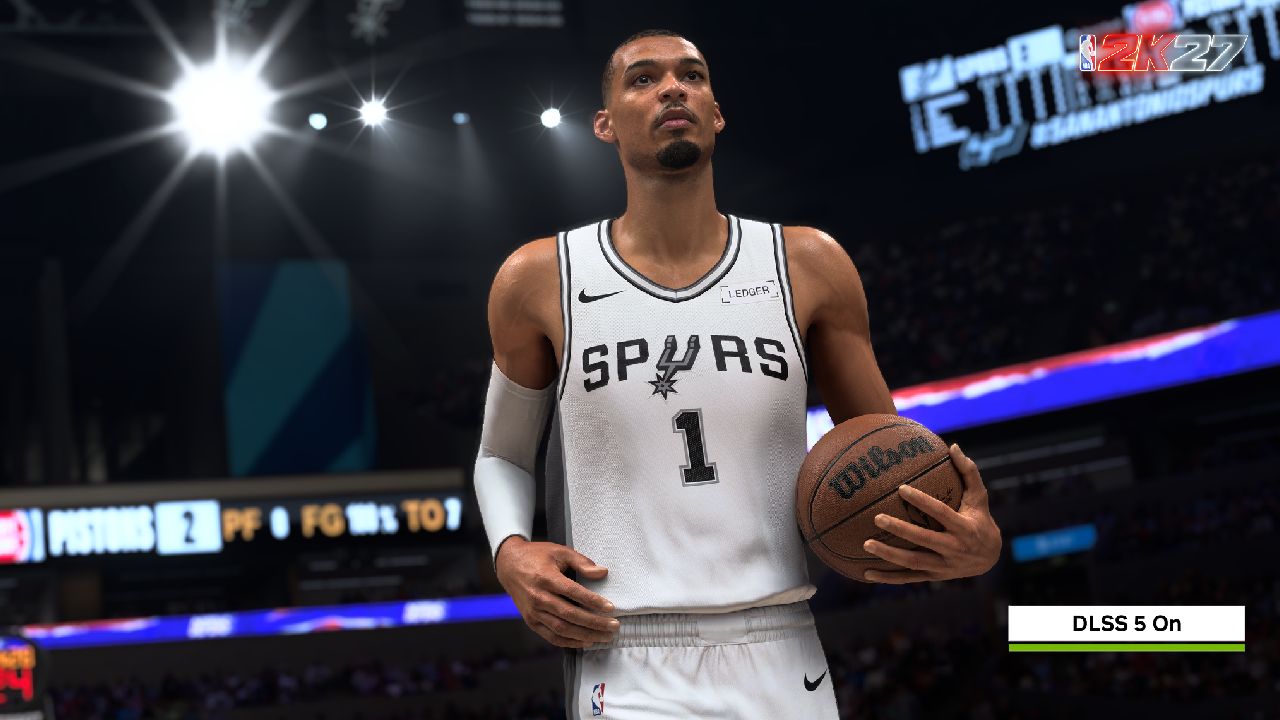
DLSS 5 Optimization Raises Questions About Its Initial Launch
DLSS 5 is rumored to require significant processing power, with the first implementation needing around 13ms on an RTX 5080. That's a big overhead, especially when you have about 16.67ms per frame at a target 60fps. Performance needs do change with resolution, but the processing cost became a serious issue after NBA 2K27 introduced it.
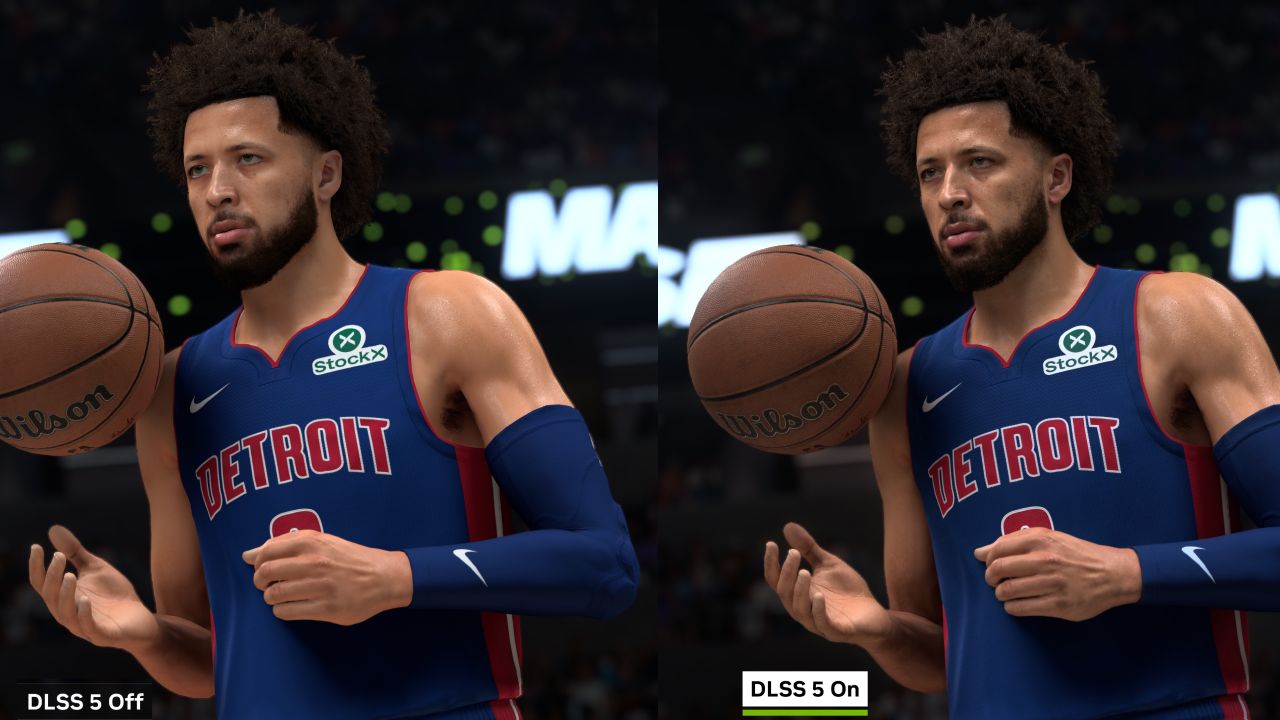
But the critique wasn't only about the AI-generated visuals, which looked rather well in NBA 2K27. Instead, performance overhead and limited game support raised concerns. However, NVIDIA reportedly achieved a fivefold improvement in processing speed compared with the implementation demonstrated in March.
Further optimization could reduce the cost to approximately 4ms for a 4K DLSS 5 pass, making the technology considerably more practical. Another challenge is game compatibility, as creators must carefully integrate DLSS 5 into their existing engines. Nevertheless, more game support could eventually make the technology more accessible.
DLSS Frame Generation Preset C Delivers Higher Frame Rates
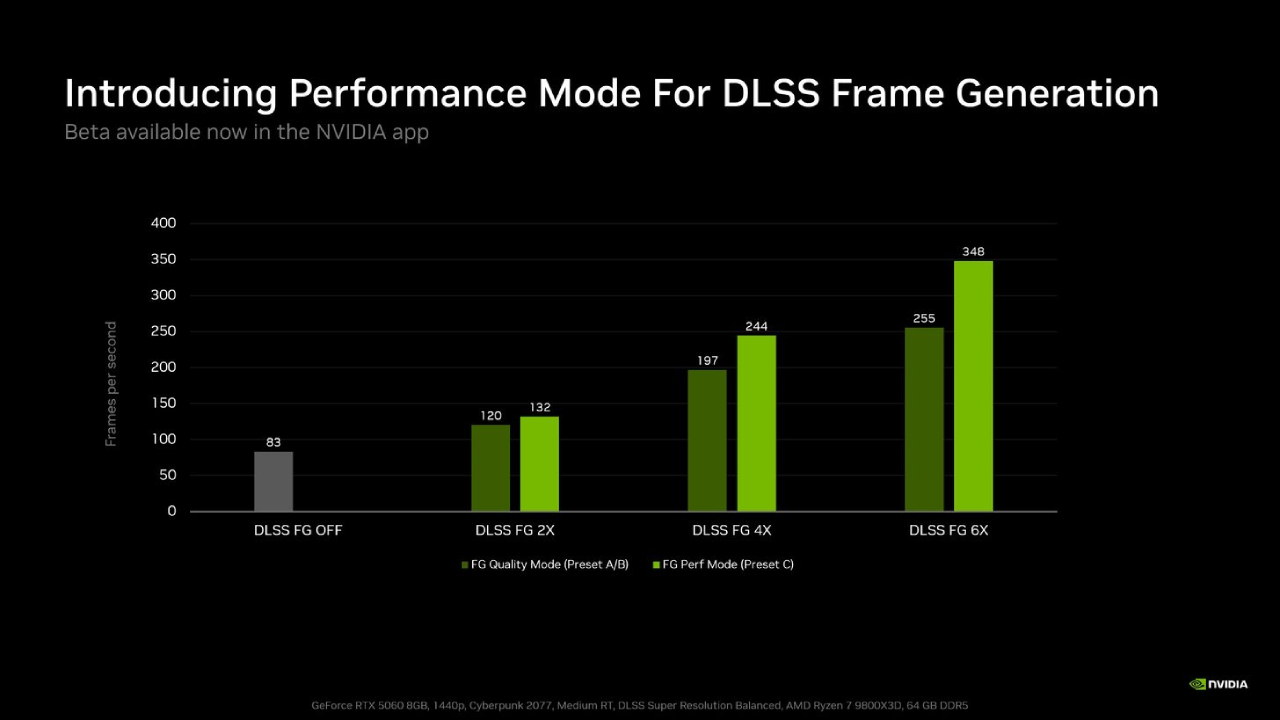
The latest DLSS Frame Generation update also improves performance by reducing the processing cost of generated frames. Testing in Crimson Desert showed about a 12% performance improvement in one configuration, though results depend on the GPU, settings, and Frame Generation multiplier.
Frame Generation remains useful when targeting high refresh rates at demanding resolutions. Even powerful graphics cards can struggle to render every frame natively at 5K resolution. Generated frames help bridge that gap, though displayed frame rates don't necessarily match the responsiveness of equivalent native rendering.
In 007 First Light, path tracing produces more detailed lighting and environmental depth than rasterization. Native performance reportedly reaches about 50–60fps in the tested configuration, while Frame Generation can raise the displayed output to around 160fps.
However, two-dimensional interface elements remain problematic. Waypoint markers and other graphics can appear less smooth because generated frames must account for elements that behave differently from three-dimensional objects.
Preset B vs. Preset C Performance in Crimson Desert
We tested an RTX 5080 with Preset B versus Preset C in Crimson Desert at 4K using DLSS 4.5 Performance mode and Ray Reconstruction. At 2x Frame Generation, Preset C delivered about 5% better framerates, with only a minor difference in average latency.
At 4x Frame Generation, the performance lead climbed to about 9.5%. Latency metrics kept jumping around, so it was hard to reliably tell what the practical difference was. Still, the higher frame rate shows the gains you can get by minimizing the cost of processing generated frames.
The biggest gain came with 6x Frame Generation, where Preset C delivered about 18% higher frame rates. With Preset B, the output was roughly 250 fps, while Preset C was around 300 fps, providing a more consistent latency benefit.
But more isn't always better, at least not for responsiveness. At 250 fps, each frame is ~4 ms vs. ~3.33 ms at 300fps. For a 4K 240Hz QD-OLED panel, it may be better to keep latency acceptable rather than generate the highest frame rate possible.
Preset B Maintains Better Interpolation Quality
But performance is only one part of the comparison. Testing Crimson Desert's entrance cinematics at 4K and 120fps showed how each setting created intermediate frames differently. The baseline locked the rendering rate at 60fps, with 2x Frame Generation inserting an interpolated frame between traditionally displayed frames.
Preset B handled shifting subtitles well, keeping the text as the dialog changed. Preset C used a simpler frame-blending effect, and the effects were less convincing when there was movement.
The distinction became starker when you looked at a tree falling surrounded by fire. Both models struggled with the large visual differences between adjacent frames, but Preset B still produced more consistent results, while Preset C struggled with the complex motion.
The fire particles showed comparable limitations. Both settings lost some information, but Preset B generally represented intermediate particle positions more realistically. Preset C showed more degradation, similar to simpler frame-blending approaches used in previous Frame Generation systems.
NVIDIA's Performance Trade-Off Depends on Individual Priorities
Preset C delivers higher frame rates and potentially lower latency, especially with strong Frame Generation multipliers, but with some degradation in interpolation quality. The new option may appeal to players who want maximum on-screen performance; however, players who prefer better subtitles, particle effects, and smooth animation may favor Preset B.
Choosing the best preset depends on what matters most to you, what your display can handle, and how well the underlying rendering engine is implemented. Testing has been conducted on only one game and hardware combination; therefore, more comparisons across games and GPUs are needed to see if Preset C consistently delivers the claimed performance benefits.
Senior Editor, NoobFeed
Gaming Hardware Updates
No Data.