
AMD HIP-RT 3.2.0 Reveals RDNA 4m and RDNA 3.5 for Medusa APUs
AMD’s latest HIP-RT update reveals early details about Medusa APUs and their mixed integrated graphics architecture.
Hardware by Tanvir Kabbo on Oct 22, 2026
AMD's latest software update is providing an early glimpse into its next-generation processor plans. The release of HIP-RT 3.2.0, the company's HIP Ray Tracing library, reportedly adds support for the upcoming Zen 6 Medusa APUs, with three newly listed graphics IP identifiers suggesting a mix of newer and existing integrated GPU architectures.
For developers and hardware enthusiasts, this is an important clue about how AMD could structure its future APU lineup. HIP-RT enables hardware-accelerated ray tracing in supported programs, particularly creative workloads like Blender. Other highlights of version 3.2.0 include performance changes and support for CUDA 13.

The claimed Medusa support is interesting nonetheless, as software libraries can expose future hardware configurations before official product announcements. This update doesn't reveal launch dates or exact specs, but it suggests AMD is preparing its software ecosystem for its next-generation chips.
Medusa APUs Point to Multiple IGPU Architectures
According to reports from Phoronix, the HIP-RT 3.2.0 release notes refer to three graphics IP versions for Medusa: GFX1170, GFX1171, and GFX115E. The identifiers supposedly refer to a combo of RDNA 4m and RDNA 3.5 graphics tech for the forthcoming APU series.
This means not all Medusa processors may move to the same AMD graphics architecture. Instead, different implementations might meet varied performance and power needs, letting the corporation distinguish products without having to re-implement its entire integrated graphics portfolio at once.
That method makes sense for APUs, which must balance CPU performance, graphics capability, thermal limits, and manufacturing costs in a compact design. "Every laptop that's mainstream is designed to be efficient, and gaming laptops have to have more graphics power and more processing power.
However, the identifiers alone do not conclusively establish which architecture belongs to each retail model. Compute-unit counts, clock speeds, and final configurations remain unconfirmed.
Medusa Point and Medusa Halo Could Serve Different Markets
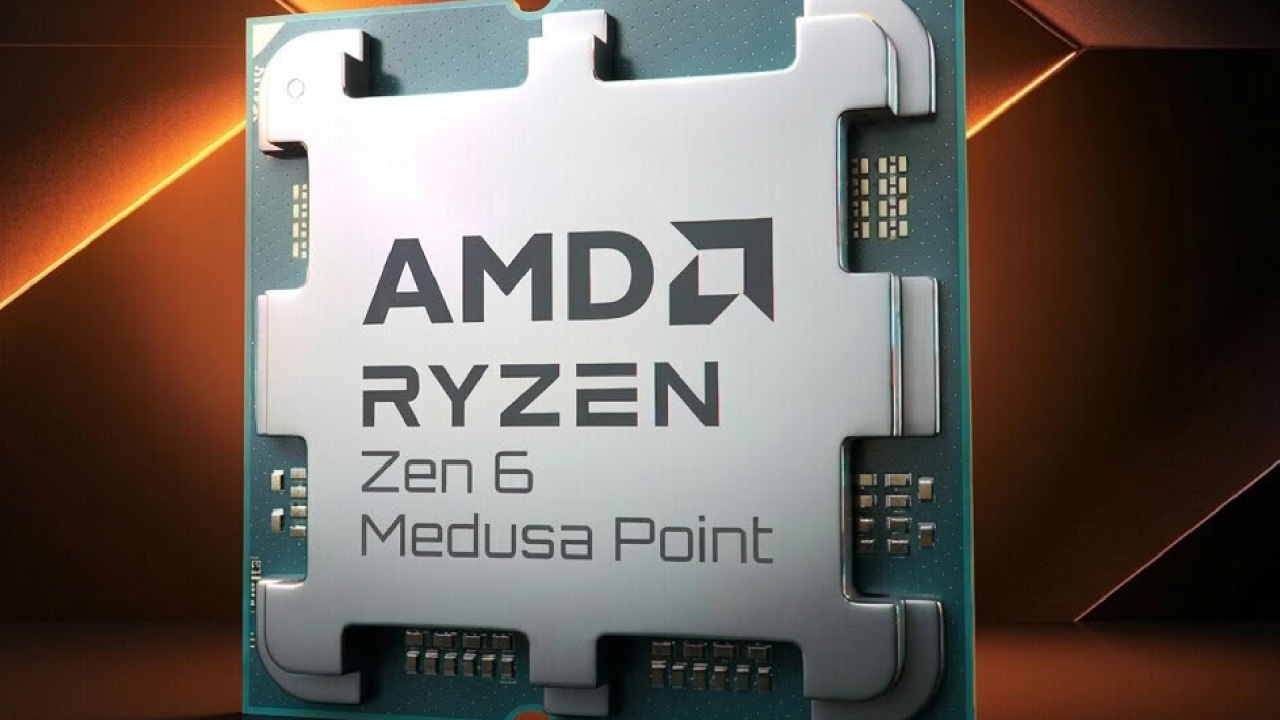
The reported graphics support is particularly interesting alongside rumors of a 10-core Medusa Point APU. While its final specifications remain unconfirmed, the rumored processor could represent part of AMD's broader effort to expand the capabilities of its upcoming Zen 6 mobile platform.
A hybrid graphics approach would let AMD add technologies in parts while keeping RDNA 3.5 for products where cost and efficiency still rule. The more premium Medusa Halo meanwhile has been rumored to get a heftier graphical bump potentially with RDNA 5. This firmware upgrade doesn't confirm the possibility; it just leaves it open to speculation.
Why RDNA 4m Matters for Low-Power Graphics
RDNA 4m might have one advantage over its predecessor: it is rumored to support FP8 AI instructions, which could enable newer AI-assisted graphics technologies, notably FSR 4, on compatible integrated GPUs.
AI-based upscaling takes lower-resolution renders and reconstructs higher-resolution images from them. This can improve gaming performance without needing drastically better graphics processing power. This could help balance frame rates, battery life, and cooling requirements for tiny laptops and mobile gaming devices.
Nevertheless, FP8 support alone does not guarantee that every RDNA 4m product will support all FSR 4 features. Actual compatibility will depend on hardware implementation and AMD's software support. Keeping RDNA 3.5 in the lineup would also allow AMD to offer different capability levels across price segments, rather than requiring every product to adopt the newest graphics technology immediately.
HIP-RT Support Prepares Developers for Medusa
Developers and designers can adopt HIP-RT 3.2.0 early, which will help mitigate software compatibility issues later when Medusa processors inevitably arrive. Accelerated ray tracing needs the right hardware, drivers, and software backends to work in applications such as Blender.
Developers can use this to confirm compatibility across a range of graphics settings, preparing for both RDNA 3.5 and RDNA 4m. But actual rendering performance will depend on available computational capabilities, memory bandwidth, battery restrictions, and application optimization. It may enable hardware ray tracing, but that doesn't mean it will perform like a discrete GPU.
Senior Editor, NoobFeed
Gaming Hardware Updates
No Data.