
Zen 6 Medusa Point Benchmark Leak: What the Numbers Mean for Laptop CPUs?
A leaked Zen 6 mobile engineering sample scored well above AMD's current flagship laptop processor on Geekbench benchmarks.
Hardware by Shinji Okazaki on Jul 29, 2026
A leaked benchmark of the next generation of AMD's mobile processors has been released. It is getting attention for outperforming its best mobile processor in the laptop market before the new chip is even finished. This leak is bigger than the typical rumors you see ahead of a launch, and it needs a good number of caveats.
The next mobile platform from AMD, codenamed Medusa Point and based on the Zen 6 architecture, was spotted on Geekbench as AMD Plum MDSI. The chip's single-core score was 3329, and its multi-core score was 16555 on Geekbench 6. Zen 6 sample is faster than AMD's current mobile flagship, the 12-core Ryzen AI 9 HX 370, at 2605 points on the single-core metric and 13397 points on the multi-core metric, but with fewer cores.
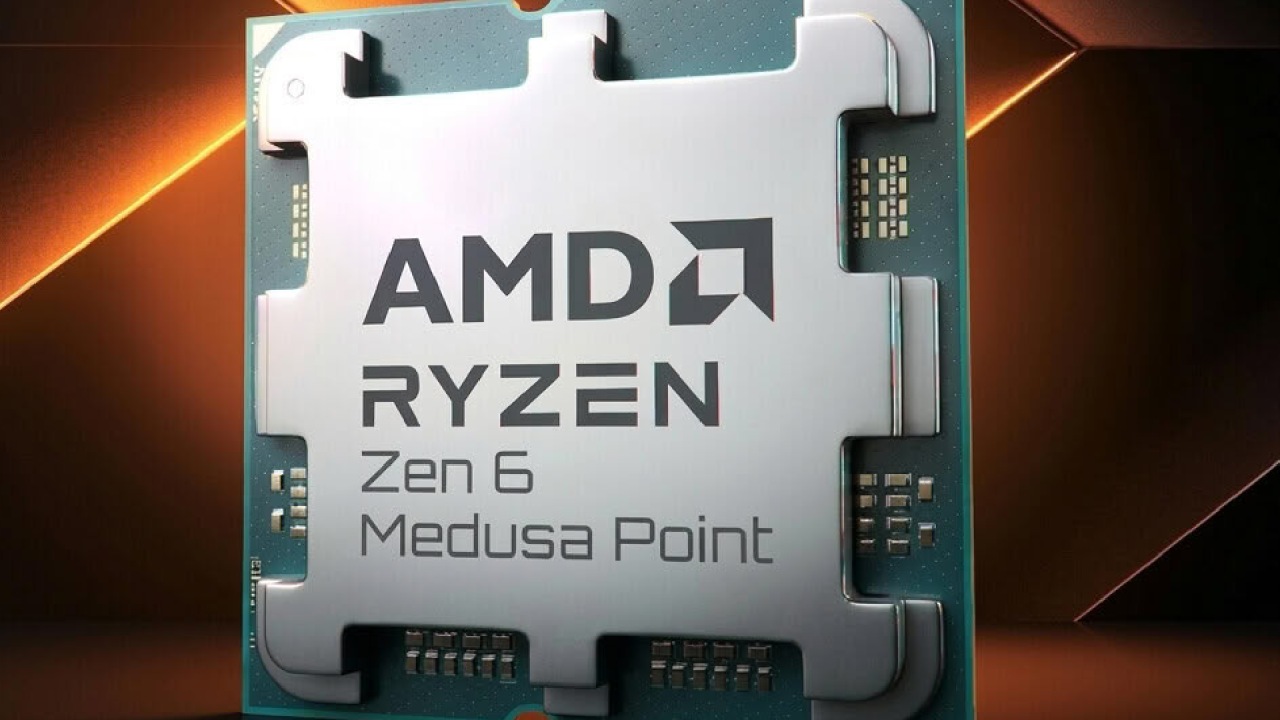
A Sample That's STILL Improving
This is not the first time that this specific engineering sample has been on the list. The same chip boosted single-core scores by about 5% and multi-core scores by nearly 10% over a version tested just a few days ago, suggesting there's still room to unlock more performance via platform and firmware tweaks before the chip is released.
The interesting feature of the outcome is, in particular, the clock speed. The single-core performance was achieved at an average clock rate of 4.46 GHz during the test run, with a peak clock rate of around 5.37 GHz. The Strix Point chips it beat ran at higher average clocks to get lower scores, suggesting a higher IPC (instructions per cycle) than a higher number of cycles or power.
The base 10-core chiplet is likely to run on TSMC's N3P process and will include dedicated chiplets for I/O and GPU. Some higher-end configurations are said to include an additional 12-core compute die, based on the newer N2P node, which could bring the mobile core count to a maximum of 22. The sample also has 10MB of L2 cache and 32MB of L3 cache, both larger than those on current-generation Strix Point chips.
Higher-end Zen 6 mobile configurations are expected to add a second compute die.
Medusa Point is one of AMD's mobile offerings, and desktop versions of Zen 6 are expected to be clocked at significantly higher frequencies, with some leaks suggesting they reach the 7GHz mark, using an even more advanced TSMC node and additional cores and cache. If the mobile version is already this much better than AMD's flagship, the desktop versions certainly have room to improve when they hit the bench.
This boost in performance, from an unfinished mobile chip, sets the standard for the next generation of processors in general. In this kind of competition, no matter what the other chipmakers are doing on their own next-generation designs, they will all have to push for better products, and that's good news for anyone looking for a new laptop or desktop when these chips hit the market.
Editor, NoobFeed
Gaming Hardware Updates
No Data.