
AMD FSR 4 Could Extend Steam Deck’s Lifespan in 2026
AMD FSR 4 Could Extend the Steam Deck’s Lifespan by Delivering Better Upscaling With Lower Performance Overhead.
Handheld by Tanvir Kabbo on Oct 15, 2026
AMD also aims to offer a lighter version of FSR 4 for handheld gaming devices by the end of 2026, which could improve image quality and extend the useful lifespan of hardware like the Steam Deck. The development follows Sony's work on bringing newer upscaling technology to its consoles, highlighting how improvements across the gaming hardware ecosystem can benefit devices with limited processing power.
AMD FSR 4 Is Coming to Handheld Gaming Devices
AMD FSR 4 is already appearing on SteamOS-powered hardware, including the Steam Machine, though it currently requires Proton Experimental. Enthusiasts have also found ways to bring FSR 4 to the Steam Deck with extra steps, but native support would make the technology much easier to use.
Sony's PlayStation 5 Pro introduced PSSR 2.0, which incorporates technology derived from FSR 4. More recently, Sony announced QSSR for the standard PS5, bringing a lighter upscaling approach to hardware with more limited capabilities. These developments suggested AMD was working to make its latest upscaling technology available across a broader range of devices.
AMD has now stated that a lighter version of FSR 4 is coming to handhelds, including the Steam Deck, before the end of 2026. The aim is to reduce the technology's performance overhead while maintaining its image-quality benefits.
Lighter FSR 4 Could Improve Steam Deck Performance
The biggest problem with FSR 4 on handhelds is the added processing cost. For example, Resident Evil Requiem can run on the Steam Deck with FSR 3, but switching to FSR 4 may require dropping the upscaling setting to Performance mode to stay playable.
A lighter implementation based on the work behind Sony's QSSR could allow handhelds to use higher-quality upscaling settings without sacrificing as much performance. This would be particularly valuable for demanding games that already push the Steam Deck's hardware to its limits.
The benefits could extend beyond Valve's handheld. This could also improve upscaling compatibility on devices powered by newer AMD CPUs, such as the ROG Ally X and Xbox Ally X. These systems sometimes have to downscale game rendering to lower resolutions to maintain consistent frame rates, which can make text, UI elements, and distant objects look fuzzy.
Look at games like RuneScape: Dragonwilds and Grounded 2 to see how bad optimized defaults for handhelds can ruin image quality. Sometimes devs turn visuals down to the lowest setting, set performance to 30fps, and turn on FSR Ultra Performance instead of balancing visual quality and performance. Better upscaling can alleviate some of those sacrifices, but developers still need to find ways to improve their games accordingly.
Better Upscaling Highlights Xbox's Missing Opportunity
Microsoft has previously promoted Automatic Super Resolution to improve gaming performance, particularly on Windows-powered handhelds. But its results haven't always matched what more advanced upscaling technologies can do.
FSR 4 could offer a more substantial improvement for devices such as the Xbox Ally X, where higher rendering resolutions can quickly become expensive. The technology could also benefit the Xbox Series X, which uses AMD hardware.
The question is why Xbox consoles haven't received comparable support. Sony's work on QSSR shows how console manufacturers can adapt advanced upscaling technology to existing hardware instead of requiring entirely new systems. Broader access to AMD's improvements could help Xbox hardware stay competitive, especially in demanding games.
Frame Generation Remains a Different Debate
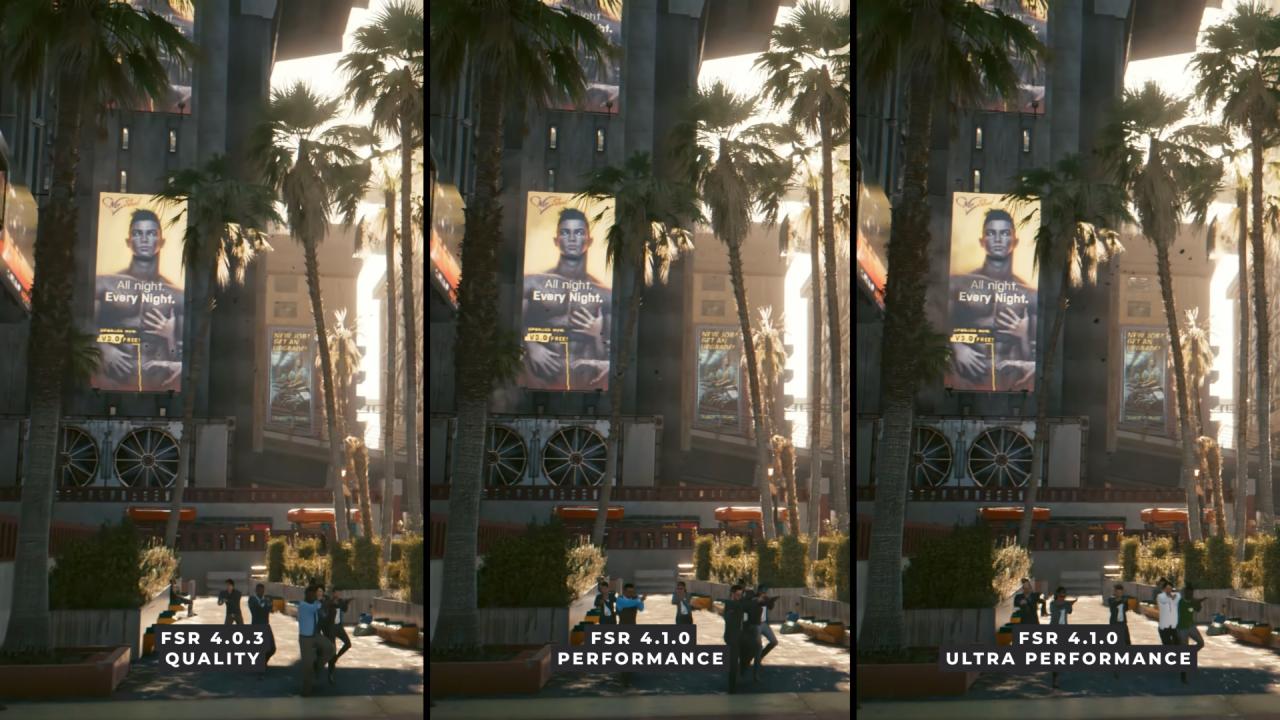
FSR 4 brings several good enhancements, but frame generation is more controversial. Frame generation isn't upscaling, which uses a lower-quality render to recreate a higher-resolution image. This can boost the frame rate you see, but it is not as responsive as producing those frames immediately. Like, jumping from 30fps to 60fps with frame generation doesn't give the same input-latency improvements as native 60fps.
The technology can help when a game is already running at a relatively high frame rate and you want smoother visuals. However, relying on it to compensate for performance around 20fps or 30fps can introduce noticeable latency and make controls feel less responsive.
FSR 4 Could Give the Steam Deck More Time
AMD's lighter FSR 4 implementation could be a major upgrade for handheld gaming, especially as newer releases demand increasingly powerful hardware. Silent Hill 2 illustrates the performance challenge: FSR 4 can impose a substantial cost compared with FSR 3, even at Performance settings.
Reducing that overhead while retaining improved image reconstruction would make the technology far more practical for handhelds. Native integration would also eliminate the need to download files, manually inject them, or configure additional plugins.
That could mean clearer images and more flexibility for Steam Deck customers who want to hold off on hardware upgrades. AMD's upcoming handheld-focused FSR 4 release may therefore help extend the Steam Deck's lifespan while improving the experience across the wider handheld gaming market.
Senior Editor, NoobFeed
Latest Articles
No Data.