
NVIDIA RTX 6090 Concept Explores DLSS 5 and Neural Rendering
NVIDIA RTX 6090 targets native 8K rendering with neural graphics, expanded memory bandwidth, and a redesigned computing architecture.
Hardware by Shinji Okazaki on Oct 13, 2026
Graphics processing is moving toward a rendering approach that combines hardware computing with AI-based simulation. While 4K resolution and spatial upscaling have been central to consumer graphics, the next target is native 8K resolution with global illumination running simultaneously.
Achieving this level of rendering requires changes to the traditional graphics pipeline, memory bandwidth, and the software used to calculate light and geometry. The target has now moved past 4K. The new standard requires native 8K resolution paired with full global illumination running simultaneously. Breaking the current visual plateau requires moving away from traditional rasterization.
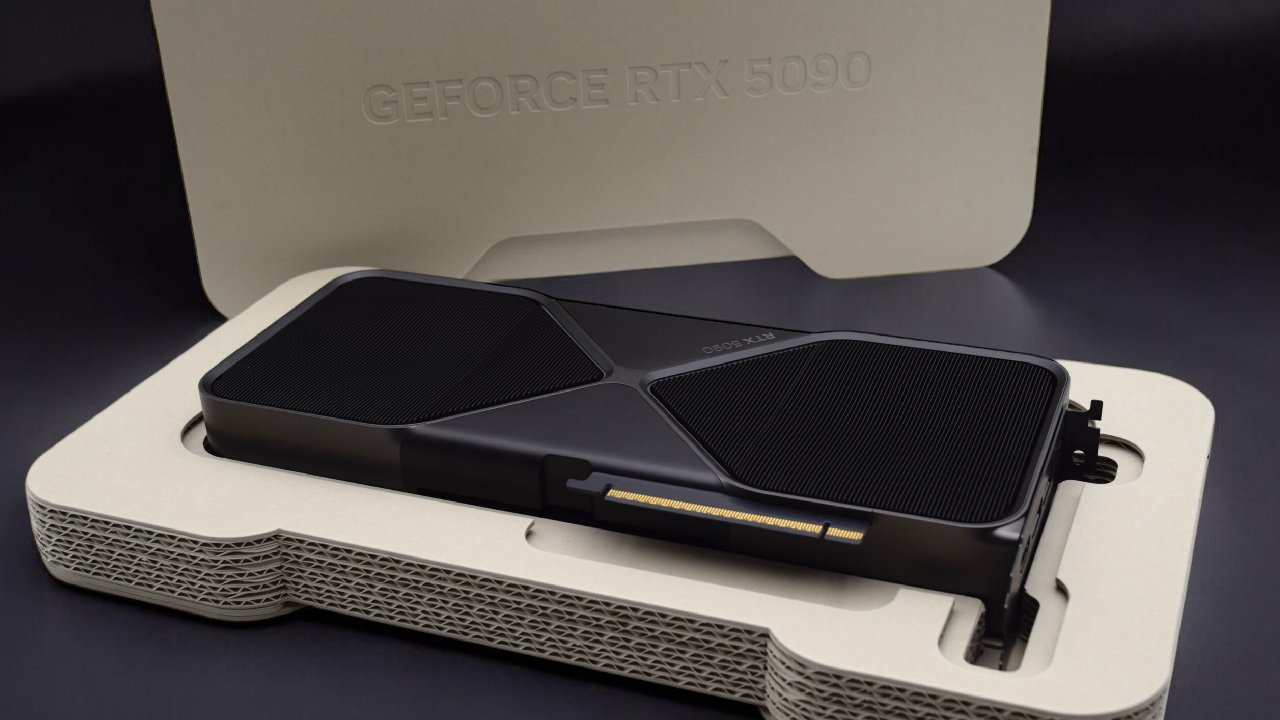
NVIDIA RTX 6090 and the Move Beyond Traditional Rendering
Delivering this level of fidelity requires replacing the traditional geometric rendering pipeline with real-time physical simulation. NVIDIA RTX 6090, powered by the Blackwell Ultra architecture, is the hardware built to cross this threshold. The central engineering challenge is raw physics.
Generating localized computing power at this scale pushes against a standard workstation's thermal limits. To understand how this system works, we have to look at the microscopic silicon process, memory bandwidth, neural rendering software, and the thermal consequences of running them together.
The previous-generation RTX 4090 eventually hit a physical ceiling on memory bandwidth, leaving its processors without enough data during peak loads. The RTX 6090 responds by rebuilding the pipeline from the ground up. It represents a structural redesign of how a computer calculates light and form.
The foundation begins at the microscopic level with a custom 2nm process node. At this scale, logic gates pack closely together, reducing the distance electrons must travel and enabling more operations to run simultaneously. That density translates directly into mathematical throughput.
32GB GDDR7 Memory and a 512-Bit Bus
The memory subsystem is designed to keep the processor supplied with data. The modules surrounding the processor hold 32GB of next-generation GDDR7 memory. Native 8K rendering requires large textures, and moving these assets can quickly overwhelm standard memory capacities.
The proposed solution is a 512-bit memory bus connecting the VRAM directly to the processor. By doubling the physical data pathway width, the architecture aims to ensure all 28,000 CUDA cores receive a continuous flow of texture data under maximum load. As the processor calculates geometry, the GDDR7 memory supplies the high-resolution surface data needed to map textures onto those shapes.
In this proposed pipeline, generative AI introduces physical properties such as global illumination directly into the rendering engine, bypassing some traditional deterministic calculations. Instead of calculating the mathematical bounce of every light ray, the system processes pixels through an AI prediction model to achieve full path tracing.
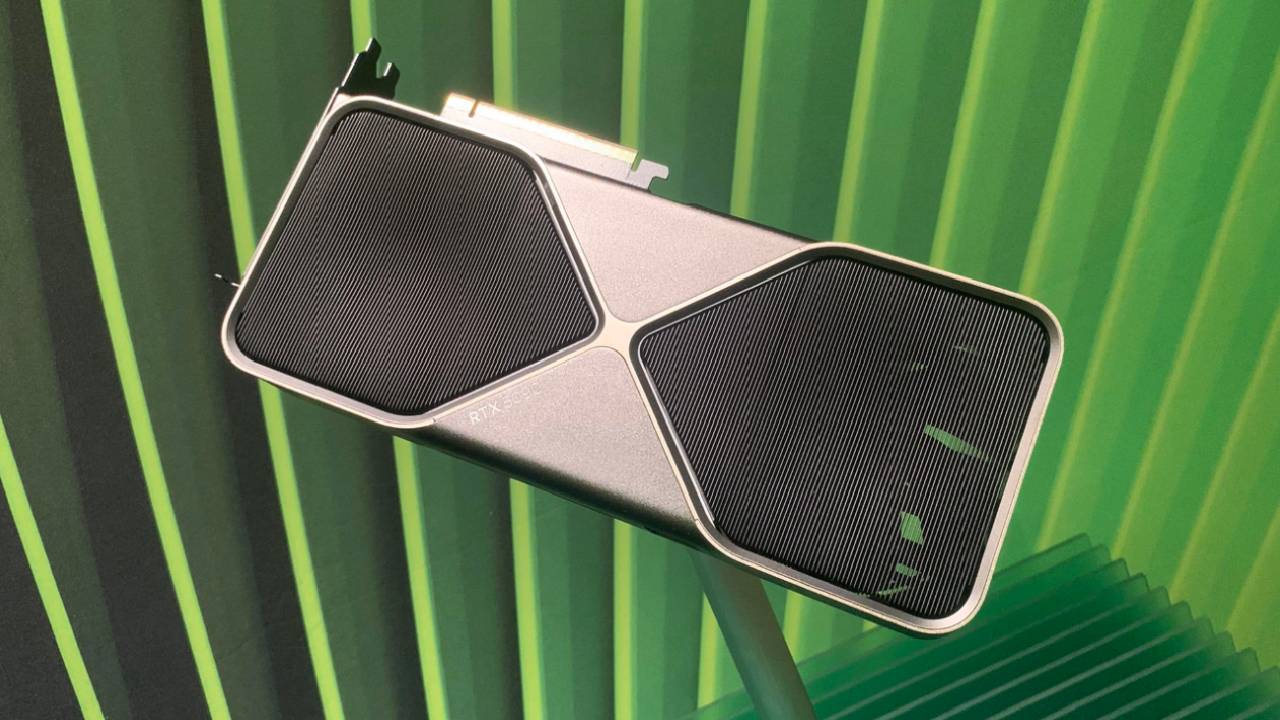
Generating simulated reality at this scale comes with thermal consequences.
To understand the thermal output, we have to examine the total design power, or TDP. The proposed thermodynamic model indicates that the GPU die and memory modules could generate substantial heat, with power consumption reaching 550–600W under maximum load. Dissipating 600W of concentrated heat within a desktop environment presents a mechanical engineering challenge.
The proposed response is a quad-slot cooler designed to pull heat away from the silicon. Its size would affect the rest of the system, requiring changes to desktop form factors and internal layouts. The chassis would need to be built around the graphics card, with enough room for the cooler and adequate airflow.
Pushing computational performance beyond the limits of traditional rendering would require accepting cooling constraints closer to those found in server hardware, even within a consumer desktop. When the silicon, memory, and software operate simultaneously under maximum load, the overall system becomes clearer.
Editor, NoobFeed
Gaming Hardware Updates
No Data.