
Future GPUs Could Get 24GB VRAM With 6GB GDDR7 Chips
VRAM capacity, memory bandwidth, cache, and rendering efficiency are becoming key factors in determining modern GPU performance.
Hardware by Nahe Yan on Oct 05, 2026
VRAM on a graphics card can directly affect gaming performance, but memory capacity is only one part of the overall configuration. Differences in memory bandwidth, cache, and GPU configuration can create large performance gaps between graphics cards that share the same model name. At the same time, newer memory technologies and rendering techniques are changing how future GPUs may handle VRAM requirements.
A 4GB graphics card just proved why VRAM numbers still matter in 2026. AMD's RX 9050 comes in both 4GB and 8GB versions. But it is not just a capacity difference. The 8GB model also has a wider 128-bit memory bus, double the bandwidth, and more Infinity Cache.
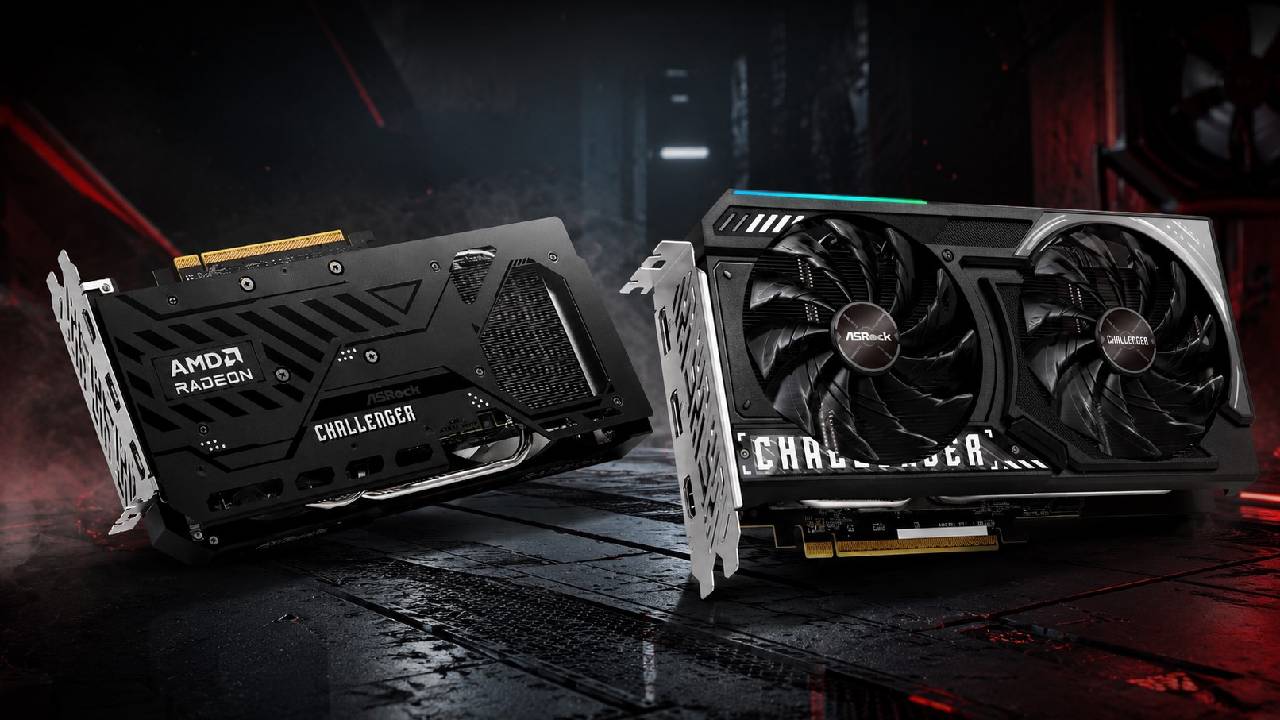
RX 9050 4GB vs. 8GB Shows Why VRAM Matters
In testing across 18 games at 1080p low settings, the 8GB card averaged around 107fps, while the 4GB version managed about 78fps. That is a huge gap for two cards carrying the same GPU name. So, if you are shopping for a budget pre-built, this is the first lesson. Never assume the model number tells you the full story.
But this gets more interesting because future graphics cards may be heading in the opposite direction. A new report claims 4GB and 6GB GDDR7 memory chips could arrive over the next couple of years. AMD, NVIDIA, Samsung, Micron, and SK Hynix have not confirmed this. So, treat the timing as a leak.
Still, the possibility matters. With 4GB chips, a GPU using only four memory packages could reach 16GB. With 6GB chips, that same four-chip layout could theoretically reach 24GB on a 128-bit bus. That could make larger VRAM configurations easier to build without needing a much wider memory interface.
And we are already moving in that direction. Samsung has officially listed GDDR7 chips up to 24GB, which equals 3GB per package. So, memory density is clearly increasing. But here is the catch. More VRAM does not automatically make a graphics card faster. A weak GPU with 24GB is still a weak GPU.
That is why AMD's latest ray tracing research is worth watching.
AMD recently demonstrated a technique designed to reduce the memory needed for complex ray-traced scenes. Its test scene used roughly 25,000 animated plants representing billions of triangles at full detail. Instead of rebuilding huge ray tracing data structures for every moving leaf, AMD uses simplified tetrahedral cages around the geometry.
The result is dramatic. AMD says a conventional approach could need as much as 80GB of GPU memory for those acceleration structures. Its new method cuts that figure to around 1.7GB while also massively reducing update time. This is not a gaming feature you can switch on today. It is research, and developers would need to integrate it.
But the idea is important. Future games may not solve VRAM pressure by adding more memory alone. Smarter rendering techniques could reduce how much memory is needed in the first place. NVIDIA’s RTX Spark N1X platform shows where memory requirements are going for local AI.
Editor, NoobFeed
Gaming Hardware Updates
No Data.