
Castlevania: Belmont's Curse Review
PlayStation 5 Pro
Evil Empire and Konami deliver an enjoyable action platformer with challenging bosses, satisfying exploration, and flexible combat.
Reviewed by Azfar Rayan on Oct 13, 2026
Reviving a beloved gaming franchise after years of waiting is never easy. You have to walk a tightrope: preserve what made the original games special while adding enough new ideas to make the experience feel worthwhile. This is absolutely true for Castlevania, a series famous for its gothic atmosphere, music, combat, and interconnected levels that reward exploration.
Konami's more prominent return to game development, along with the franchise's wider audience through its collections and animated Netflix series, made a new entry feel like a natural next move. The question was: could the right studio bring Castlevania back without losing what made it, well, Castlevania? Evil Empire, the team behind Dead Cells and The Rogue Prince of Persia, is taking on that responsibility in partnership with Konami.
The partnership is already connected to the franchise through Dead Cells: Return to Castlevania, the 2023 expansion that brought the series' characters, weapons, and enemies into the roguelike action game. With Castlevania: Belmont's Curse, Evil Empire takes a more direct approach to the series' familiar side-scrolling action. The final product is a Metroidvania that combines fast-paced combat, platforming, weapon variety, an interconnected world, and a few modern conveniences.
You can try out different builds, discover secrets, and battle bosses that require you to learn their attack patterns instead of just rushing in. The devs definitely know how to make an action platformer feel good after a bit of play. The movement feels fun, the combat invites experimentation, and the exploration gives you enough reason to return to old zones. But the experience is not without its problems.
Some mechanics feel inconsistent, backtracking can be tedious, and the presentation lacks the atmosphere you'd expect from Castlevania. It's a fun return, but not quite the series revival its longtime fans might have hoped for. Castlevania: Belmont's Curse takes place in the year 1499, 23 years after the events of Castlevania III: Dracula's Curse. Trevor Belmont has beaten Dracula before, but supernatural forces still pose a threat.
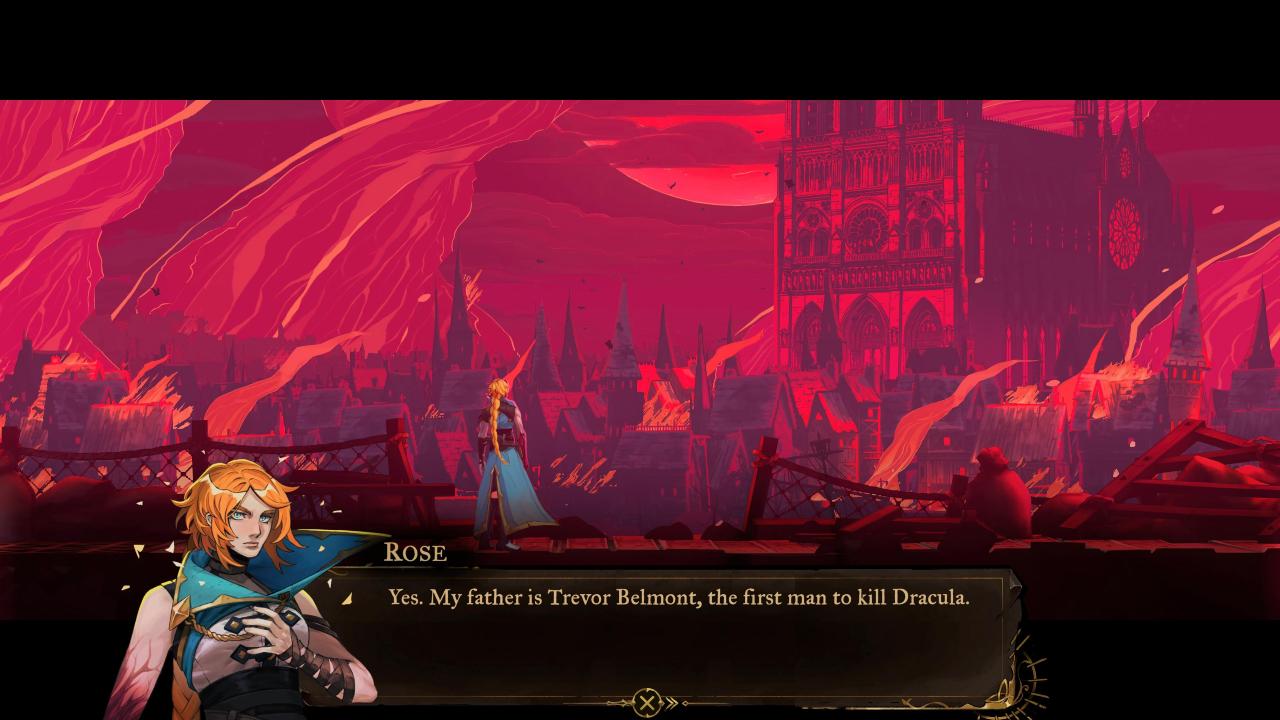
This time, the bishop of Paris summons Trevor, and he goes with his daughter, Rose Belmont.
Paris has become a mess. Monsters roam the streets of Paris, stealing the souls of its citizens. When they get there, Rose and Trevor split up. Trevor leaves to find the bishop, and Rose begins her own investigation into the creatures. Before they split up, Trevor gives her a deck of tarot cards that belonged to her deceased mother.
He also warns her to keep her curse under control, a mysterious affliction that visibly spreads along one of her arms. Rose soon discovers the cards connect to the monsters terrorizing Paris. After defeating a creature tied to the Fallen card, she captures its soul in the corresponding card. This lets her communicate telepathically with the Fallen, no longer under dark magic's influence, and use some of its powers.
That discovery becomes a significant part of the adventure. You explore the streets, underground passages, and catacombs as Rose meets more creatures, adds more captured souls to her collection, and learns about the forces that brought the city down. As with a Castlevania game, Dracula eventually gets involved in the larger conflict.
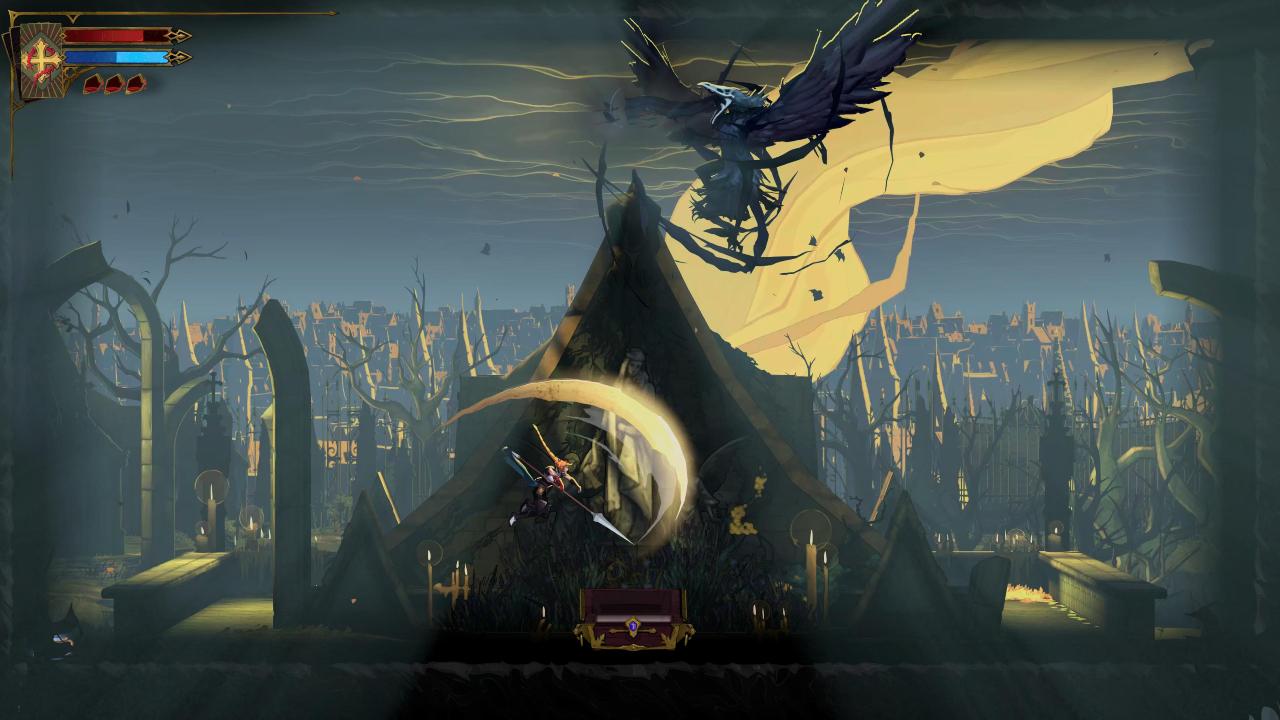
The story is familiar territory, but Rose gives it a different slant. Instead of going on yet another vampire-hunting adventure with Trevor, you control his daughter as she learns to cope with her own curse and develops her own skills. She's an engaging protagonist overall, especially when her determination and occasional recklessness shine through. Her connection to the curse also gives the story something personal to work with rather than the usual fight against supernatural evil.
The biggest problem is how often the characters stop the action to explain what's going on. Rose's captured friends will often chime in during conversations and during story sequences. The constant commentary can be distracting, but it does help to establish the personalities of the creatures you encounter.
Scenes that might let the atmosphere or events speak for themselves become long exchanges that say more than they need to.
The writing also leans more toward an anime-inspired presentation than the darker gothic storytelling many players associate with Castlevania. That's not necessarily a bad thing, but it does change the tone. If you want a lower-key story where the world and the characters carry the mystery, you might have to get used to the amount of dialogue.
But the story has enough motivation to go on. The curse of Rose, the mystery of Paris, and Dracula's return give the adventure clear direction. The story doesn't always land as well as it could, but it does its job without often getting in the way of the larger experience.
At its heart, Castlevania: Belmont's Curse is a side-scrolling Metroidvania that focuses on exploration, combat, and slowly increasing your abilities. You travel through a large, interconnected map, defeat enemies, discover secret routes, and collect equipment that lets you access areas you couldn't previously reach.
As you progress, the world opens up, and you return to places to find paths you couldn't take before.
Exploration is one of the game's strongest elements. Paris has its fair share of varied locations, from its streets to its deep underground sewers, tight catacombs, and sprawling Dracula's Castle. Each location has different environmental hazards and platforming challenges, so pay attention to your surroundings instead of just running to the next objective.
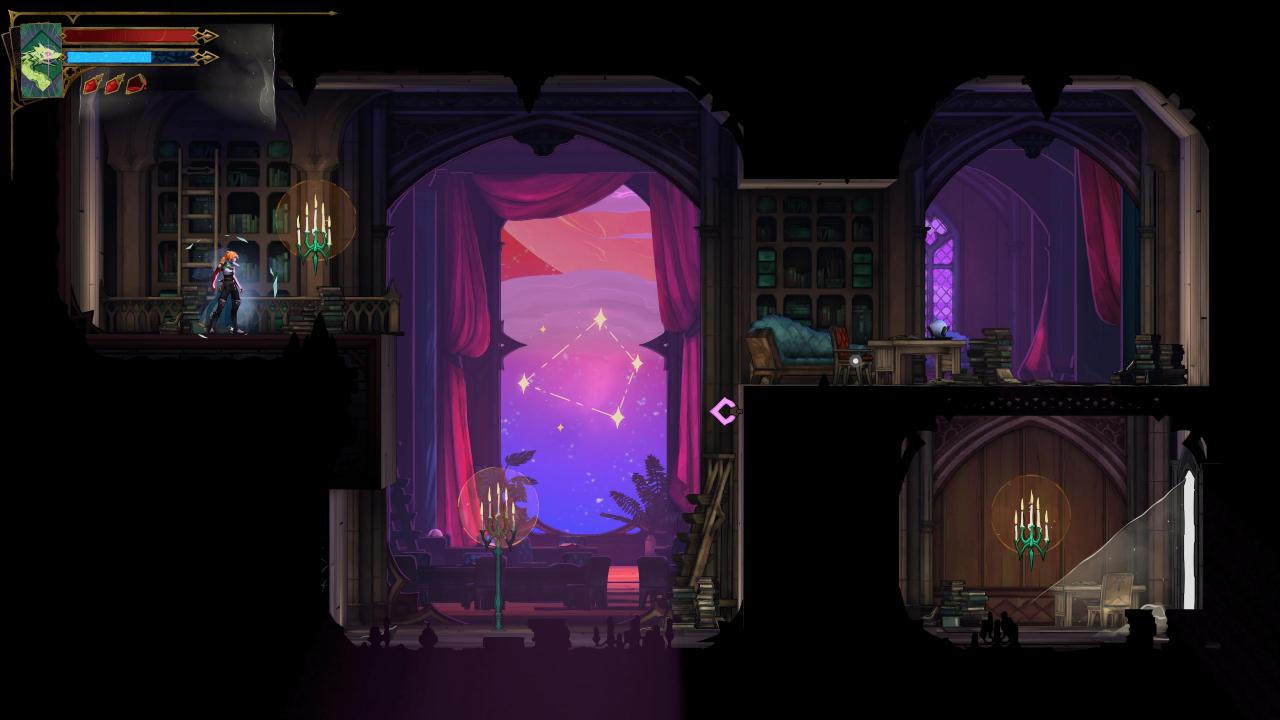
Dracula's Castle does this especially well. The library has constellation puzzles, and the clock tower has moving gears and crushing blocks to test your timing. Even the main hall has its own gimmicks, including portraits that can propel you in different directions. These mechanics help individual sections stand out, and the castle generally uses environmental obstacles better than the earlier areas.
The game is also fairly hands-off with navigation.
You aren't always given a clear indication of where to go next, so you may spend time traveling between map sections in search of a route forward. This encourages exploration, but it can also become frustrating when you've already visited an area several times and still haven't found what you're looking for.
Thankfully, the map is full of hidden chests, equipment, and shortcuts. Even when you're retracing your steps to progress, you have a reasonable chance of finding something you missed earlier. However, fast travel doesn't completely solve the problem. The dedicated travel rooms are often positioned far apart, and you can't simply teleport between every save room. As a result, revisiting older areas can take longer than necessary.
Rose gains more and more abilities, making movement more interesting.
One of her most important tools is her Arcane Whip, which lets her grapple onto anchor points and swing across gaps. You can also use it in combat to pull yourself toward enemies and follow up with attacks. What starts as a simple traversal tool slowly becomes a more complex movement system.
Platforming sections get more precise as you get new abilities. You'll need to combine wall jumps, grappling, and other movement options to traverse hazards and reach far platforms. Some sequences require you to time your actions around blocks you can pass through with a special ability, creating moments where you have to think about both your position and how the environment behaves.
When everything clicks, traversal feels satisfying.
It really does feel like progress to get through a series of skills to get past a hard spot. But be warned: the game can be unforgiving if your timing is even slightly off, with some challenges requiring precise execution. It's easy to make a fun platforming section into a chore when you have to repeat it over and over because of a small mistake.
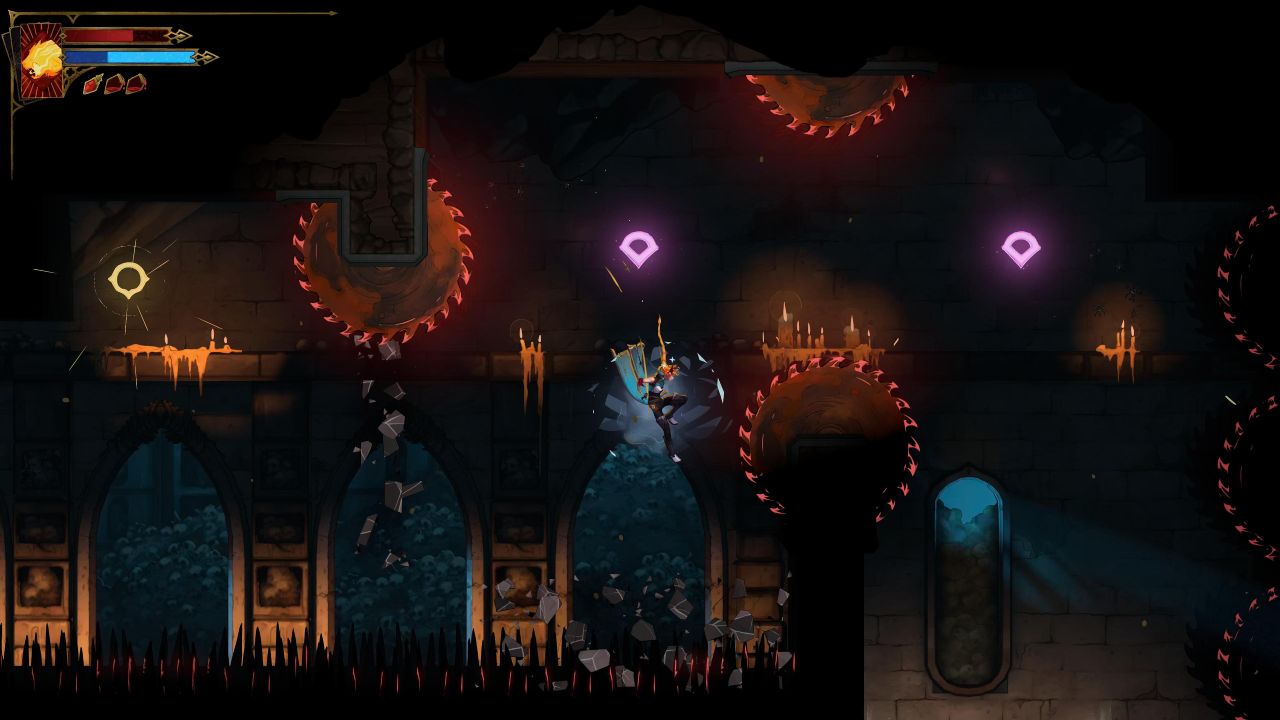
Another useful, but inconsistent, movement option is Rose's slide. It can let you get behind enemies and avoid certain attacks, but it doesn't always behave reliably. Some enemies let you slide through them, some block your path, and the invincibility frames don't always feel consistent. The cooldown can also feel long in the heat of battle.
The whip introduces another issue. Pulling yourself toward an enemy can help with traversal and attacks, but the follow-up animation sometimes carries you farther than intended. You might grapple onto a target near a platform, only for the resulting attack to send you beyond the ledge. That can be particularly frustrating when the game encourages you to use the move in the first place.
Progression outside exploration is straightforward.
Defeating enemies earns XP, allowing Rose to level up and improve her basic stats. These increases affect your damage output and how well you withstand attacks, but leveling up doesn't directly increase your maximum health. Instead, you have to find specific heart pickups to increase your health and magic capacity.
This means exploration matters, even if you are not seeking a new route. Useful items can greatly increase your chances of survival and combat. Temporary potions can help in tough encounters too, but their effects disappear when you enter a save room, so they are less useful for longer stretches.
The weapon system adds another layer of progression. It has 7 main weapon types, each with its own moveset and advantages. You'll find weapons relatively quickly, and it's worth experimenting, since some options work better against certain enemies or in certain environments. A heavy two-handed sword can do solid damage, but a lighter weapon or cestus can be more practical when you need more control over your movement.
The problem is that the game slowly rolls out upgraded weapons, not always considering your play style.
Getting a more powerful version of a weapon is good, but it can feel like the game is pushing you into an option you don't like just because it does more damage. The distribution of these upgrades can also be strange, with some requiring difficult platforming challenges while stronger alternatives are found in much simpler locations.
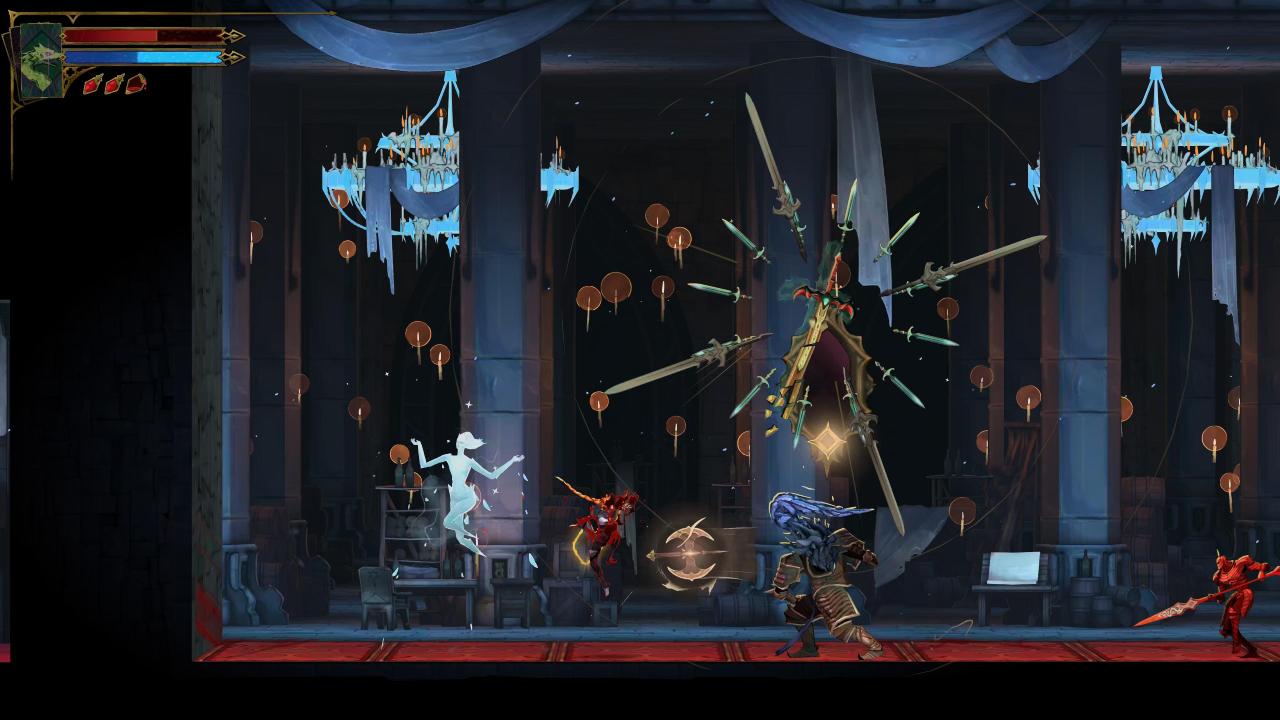
Arcana, meanwhile, gives Rose additional magical powers. You learn these skills by defeating bosses, and you can upgrade each one by completing specific challenges. These goals usually involve defeating enemies or completing specific tasks. You get tokens that let you improve the spell they are tied to.
This system works well as it gives you reasons to experiment with your abilities instead of just relying on the same attack throughout the game. Some spells send fire out in two opposite directions; some create spikes that deal bleed damage.
You can customize your playstyle by upgrading spells to increase damage, lower magic cost, or change how they work.
Relics add passive bonuses, and you can equip up to three at a time. They can improve healing potions or provide other benefits, such as a bat companion. Since these items are scattered throughout the map, finding them gives you another reason to explore suspicious rooms and take optional paths.
While some of the upgrades and traversal abilities might feel familiar, the overall progression system gives you plenty of tools to work with. The major issue is consistency. The game can feel smooth and rewarding one moment, then frustrating the next because of awkward movement, lengthy backtracking, or poorly placed upgrades.
Combat is where Castlevania: Belmont's Curse makes its strongest impression.
Rose starts with a long sword and a fireball spell, but you soon get a wider selection of weapons and magical powers. Each weapon has its own moveset, so switching between them can change how you approach an encounter, not just how much damage you can do.
Swapping weapons and spells from the pause menu is especially handy. You can adapt to the situation without being stuck in one build for long. If a boss has predictable openings, you might want a heavy weapon, but if you're up against enemies who don't give you much room for long attacks, a faster option can help.
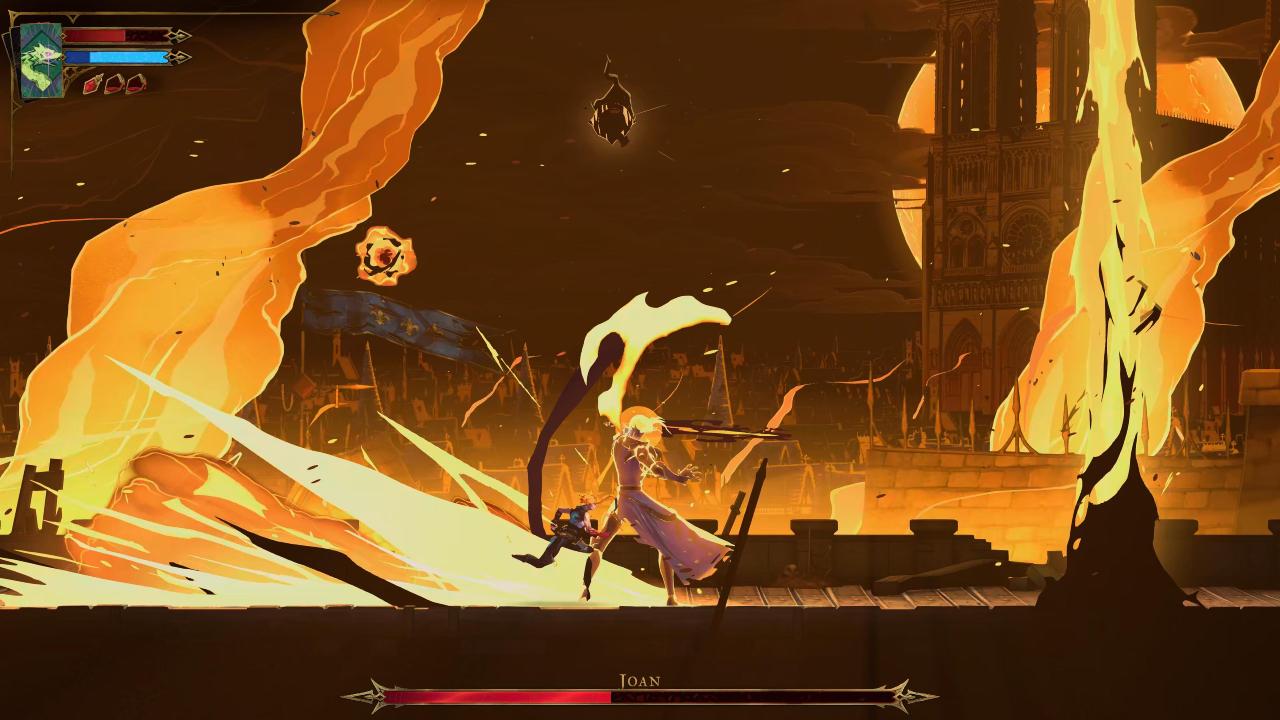
The Arcane Whip also adds a distinctive movement element to the combat. You can grapple enemies, pull yourself in toward them, and follow up with an attack. Combine this with sliding and jumping to let you approach encounters from different angles. Another option is to parry, which lets you counter certain attacks if you time it right.
The boss battles are among the highlights. Each has different attack patterns and demands attention to positioning, movement, and openings. The encounters generally offer a learning curve, so instead of feeling impossible to newcomers, you can identify patterns and improve with every try.
But the game doesn't balance out encounters very well.
Some fight rooms throw too many enemies and projectiles at you at once, leaving little room to use your movement abilities effectively. Environmental hooks and other hazards can break grappling, and the parry cooldown means you can't just block one projectile and expect to dodge the next.
In some cases, Arcana can be a little unreliable. Sometimes an ability starts its animation and drains your magic, but an enemy attack interrupts it before the spell casts. That can leave you vulnerable while also wasting a resource you intended to use. These issues don't ruin combat, but they make some encounters feel less controlled than they should.
Enemy variety is another concern. The game includes familiar Castlevania creatures alongside new additions, but stronger recolored versions of existing enemies appear relatively early. Although these variants provide a tougher challenge, they don't always introduce enough new behavior to keep encounters interesting.
With such a long history of monsters to draw from, the game has room for greater variety.
Still, the combat remains enjoyable because the weapons and spells give you enough freedom to experiment. You can focus on heavy attacks, use mobility to outmaneuver enemies, or combine magic with melee weapons to handle different threats. The system works best when the game gives you space to use those options, rather than overwhelming you with projectiles and environmental interference.
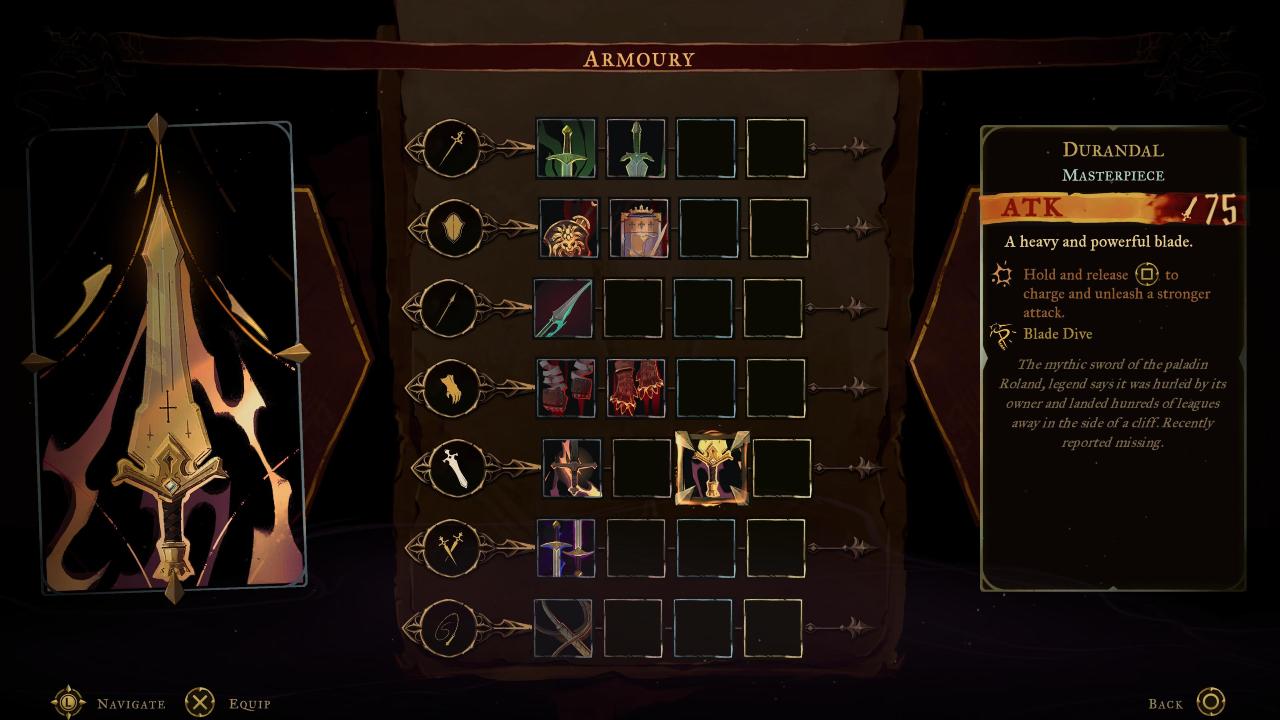
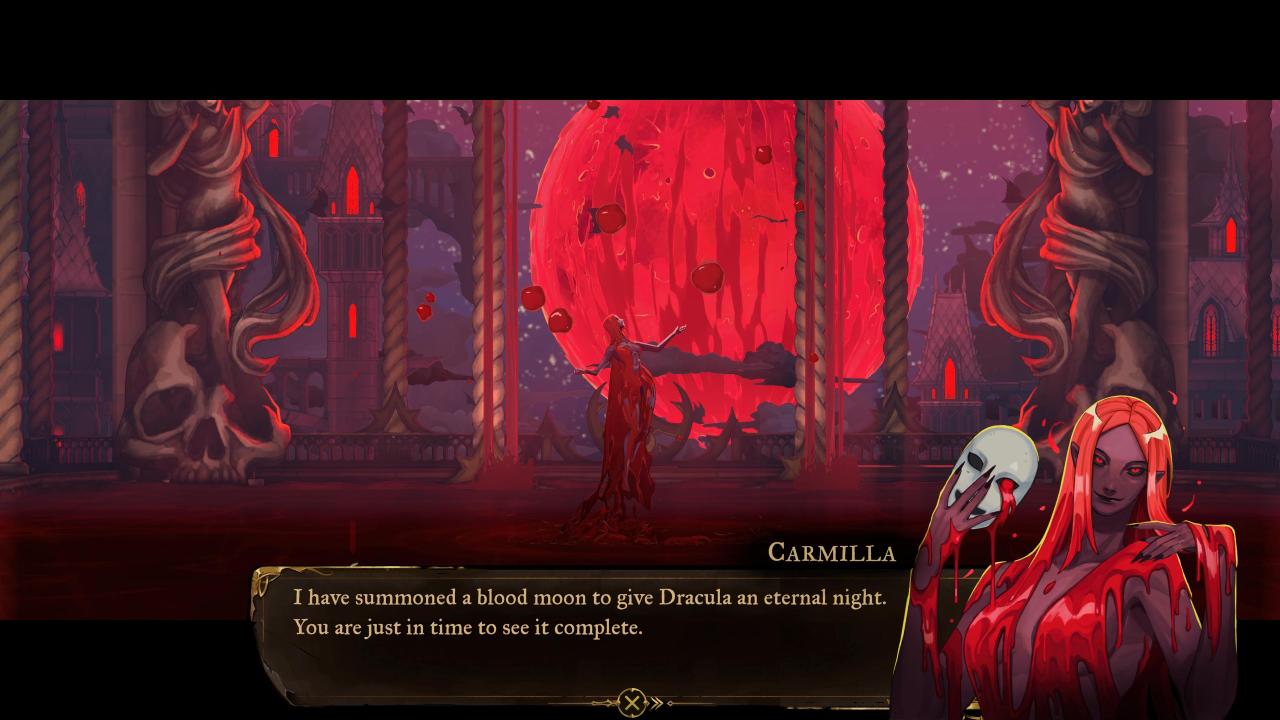
The visual presentation takes a different approach from the darker gothic aesthetic traditionally associated with Castlevania. Environments use layered 2D backgrounds with 3D character models with a painted look. The style may not suit everyone at first, but the longer you spend exploring the world, the easier it is to get on board.
Paris has a run-down feel that suits the supernatural invasion, and its streets and underground areas offer unique visual settings. The catacombs are claustrophobic and ominous; Dracula's Castle relies more on environmental detail and complex machinery. These differences make the world feel connected without looking the same.
Another plus is decent character animation.
Rose's movement through the environment is smooth, and the way her animations move from running to jumping to sliding to grappling makes traversal fun to watch. These animations help the action to feel connected rather than a series of separate movements when you're flying through a platforming section.
But the presentation doesn't always convey the gothic identity many longtime fans associate with the franchise. The more stylized character designs and brighter visual elements can make the experience feel more like a modern animated action game than a traditional Castlevania adventure.
That's largely a matter of preference, but the game could have done more to establish its own visual identity while retaining the series' darker atmosphere.
Performance also occasionally stutters when scrolling around the map. The good thing is that the frame rate is generally solid throughout normal gameplay, including crazy fights and encounters with bigger bosses. There are issues, but they don't always interfere with the experience.
The game does have one failing: the soundtrack. Castlevania has a long tradition of memorable musical themes, and its soundtracks have played a large role in setting the atmosphere of its worlds. That's a big hurdle for any new players.
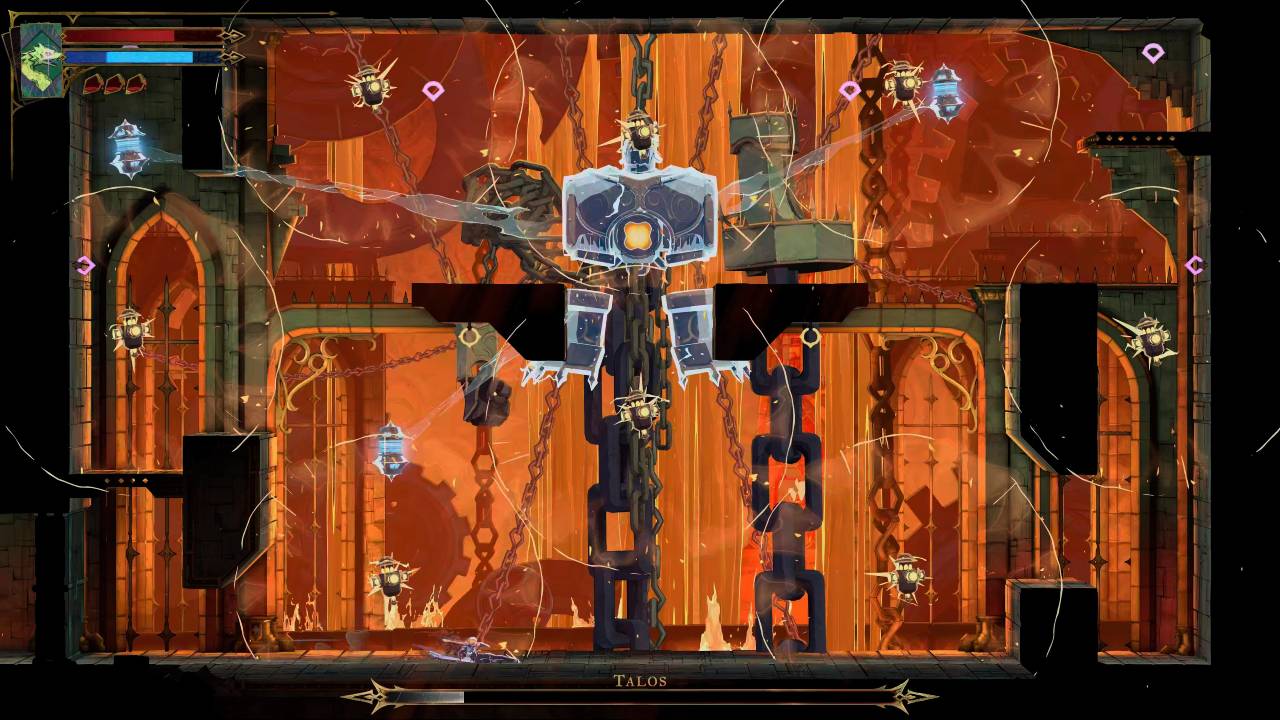
Sadly, much of the music in Castlevania: Belmont's Curse just fades into the background. The tracks aren't bad, but they rarely leave an impression. Sometimes the soundtrack doesn't quite convey the tension or momentum that could have made exploration and combat moments feel more memorable.
The new version of "Bloody Tears" is particularly disappointing. It feels like a missed opportunity to offer a fresh take while keeping the original's energy. It's too important a track to the franchise.
The voice acting and character dialogue add to the game's more conversational tone, but the constant back-and-forth can get tiring. The characters have personalities, and their interactions sometimes add useful context to the story. However, the constant commentary can undermine the atmosphere, especially when several companions chime in during moments that would benefit from a little silence.
The audio isn't bad overall, but it lacks the consistency needed to feel like a proper return to one of gaming's most recognizable gothic franchises.
Castlevania: Belmont's Curse gets a lot right. The combat lets you play with weapons and spells, the world is connected and encourages exploration, and the boss fights are a fun challenge without demanding perfection right away. With Rose's ever-expanding arsenal, you always feel like you're making progress, and the tarot-based spell system and relics make you want to try different combos.
When everything works, the movement system is fun, and the game does a good job of slowly introducing harder platforming challenges. But inconsistent grappling, awkward sliding mechanics, and long backtracking can kill that momentum. Some of the combat encounters can also feel unnecessarily frustrating, with too many projectiles and environmental hazards limiting your options.
The story and its presentation are more likely to spark disagreement.
Rose is a solid protagonist, but her companions' constant dialogue can make the story feel a bit over-explained. You will get used to the art style, but it never quite captures the gothic atmosphere many fans expect. The soundtrack never quite hits the highs of the previous games.
Ultimately, the biggest issue is that Castlevania: Belmont's Curse often feels like a solid modern Metroidvania with Castlevania elements slapped on, rather than a game that embraces what makes the series special. Its core gameplay stays consistently enjoyable, but its familiar traversal and limited enemy variety leave room to grow.
That doesn't make it a bad game. Accessible combat, simple progression, and rewarding exploration make it a good starting point for newcomers. Overall, the presentation doesn't quite meet returning fans' expectations, but there's still plenty to enjoy, especially the boss fights and weapon variety.
Evil Empire and Konami have set the stage for future installments. The next game could build on these strengths and deliver something that feels more uniquely Castlevania, with more distinct abilities, greater enemy variety, a stronger soundtrack, and a more restrained approach to storytelling.
Senior Editor, NoobFeed
Verdict
Castlevania: Belmont's Curse provides satisfying combat and rewarding exploration but is marred by inconsistent movement, repetitive enemies, and a forgettable soundtrack, keeping this enjoyable return from reaching the heights of its predecessors.
90
Related News
No Data.