
Order of the Sinking Star Review
PC
Over 1,000 handcrafted puzzles, four strange worlds, and a game that trusts you to figure things out without holding your hand.
Reviewed by Adeela Tas on Oct 08, 2026
Order of the Sinking Star comes from Thekla, Inc., a studio led by game designer Jonathan Blow, best known for titles like Braid and The Witness. Both games teach you through observation and experimentation rather than explanation, and puzzle fans have talked about them for years.
If you spent part of your childhood fiddling with Rubik's Cubes and sliding block puzzles, last year's Game Awards reveal probably pulled you right back to that feeling. Once you sit down with it, you'll see the pull was justified, and the title goes much deeper than the first trailer suggests. Some background helps here.
Since Braid, Blow's games have used puzzles to tell stories and to teach, and none of it relies on explanations. Order of the Sinking Star keeps that approach, and you can feel roughly a decade of work behind it, mostly in the form of more than 1,000 handcrafted puzzles. It's also built unusually.
It's an anthology of four worlds adapted from freeware puzzle games, mostly small browser titles and short Windows puzzlers.
Thekla stretched each of them into a much longer section, then tied all four together. The setup is simple. A brief tutorial covers the controls and the basic idea of pushing things around, then you take control of a queen who wakes up in what looks like an ancient building that once housed an entire civilization.
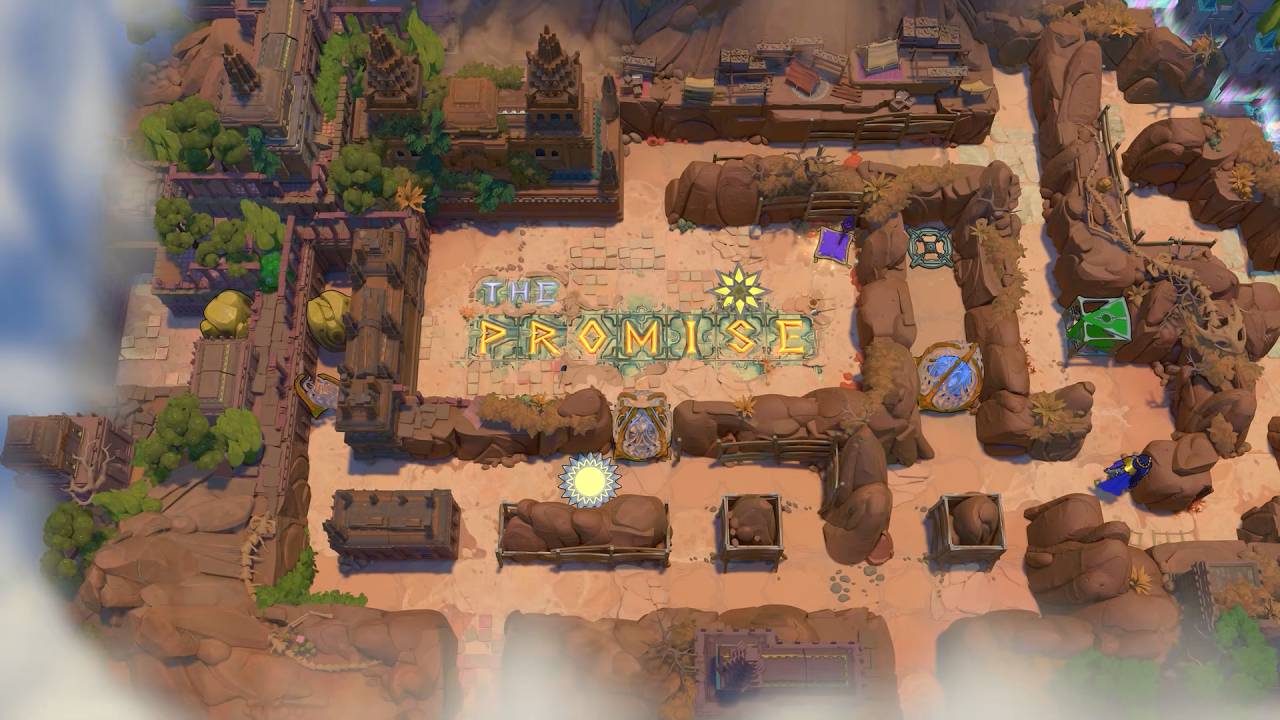
Nobody tells you where she is or where she's headed, and the desperation in her voice matches how hectic those first rooms feel. You're as disoriented as she is. When you step outside, you land at a four-way crossroads with very little to go on, just a voice on a recorder and strange markings on the floor. This hub connects four separate universes, and the game leaves the direction up to you.
Compared with The Witness, finding your way around is a bit more approachable, since a few general tips show up early. After that, you're on your own. The story sits right behind the exploring. Each milestone brings a short line of dialogue from the queen or an audio log, and you find recordings from other people stranded in this land trying to work out its secrets.
Each of the four worlds has its own evolving story, plus a main one running through the overworld. Eventually, you learn that the Order of the Sinking Star pulled these universes together, and the further you go, the more the walls between them start to break down. Characters, mechanics, and story beats collide. It's a bit all over the place, which seems to be the point, and by the first of the three endgames you're still piecing it together.
That first ending isn't really an ending anyway.
It opens the way to more game. Moment to moment, nearly everything you do comes down to pushing, pulling, swapping, and stepping. You enter a level from the overworld, control one or more characters you can swap between, and head for a specially marked exit portal.
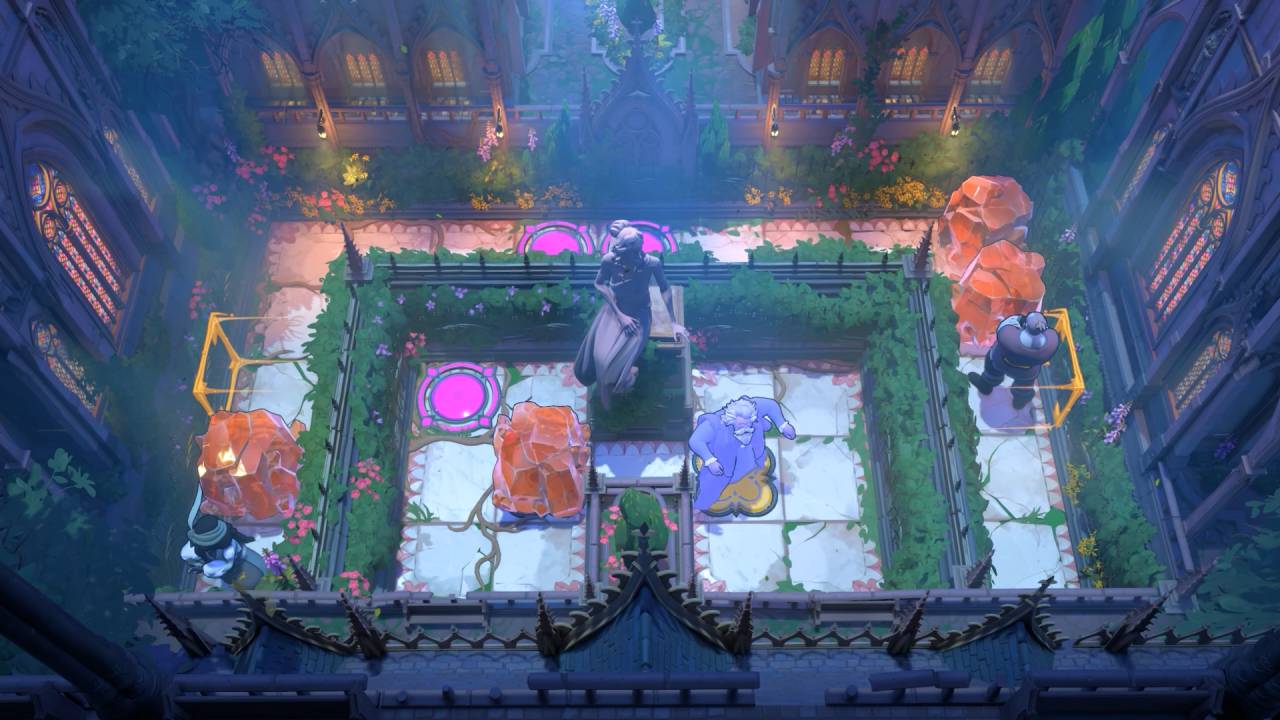
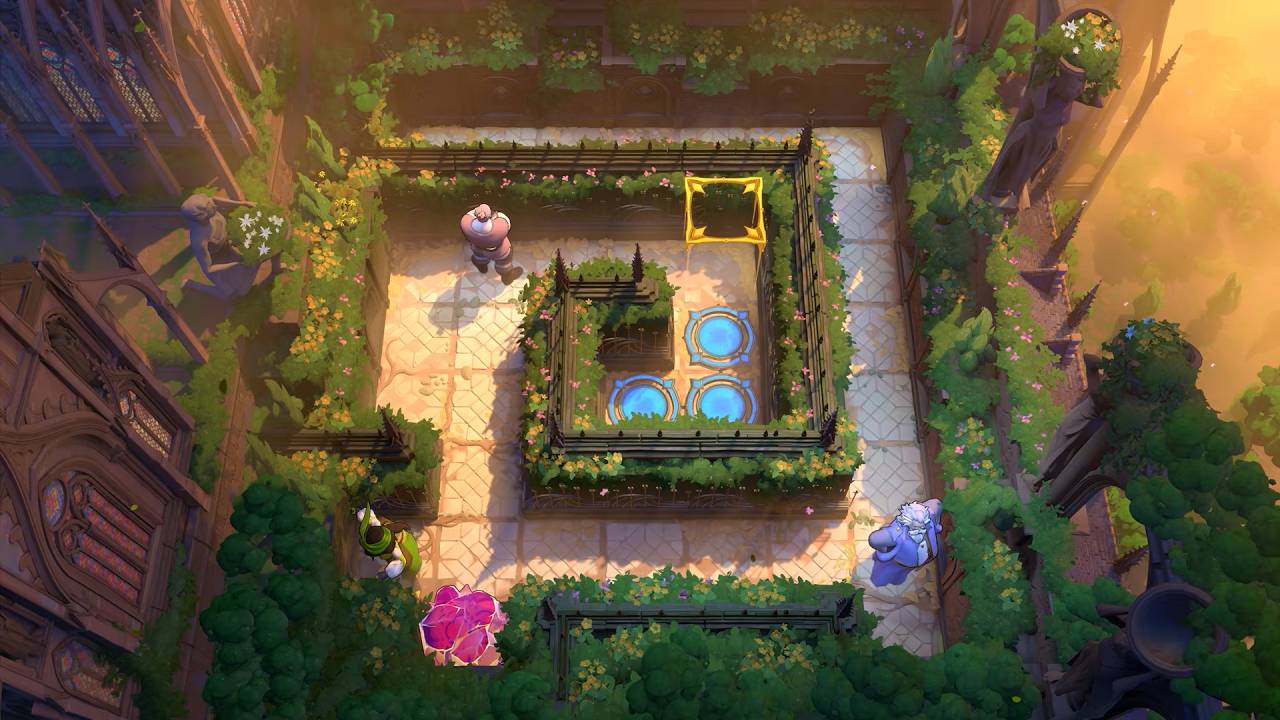
The exit is usually within walking distance, but something is in the way: enemies, magic walls that vanish when a crystal sits on a pressure plate, or pits and pools of water you fill by shoving an object into them. You rarely wonder where to go. The real problem is getting there. The camera sits at a slant above the grid, and a button press zooms out to a top-down view, which helps you size up a room.
The north is the Hearty Heroes of Hauling, based on Jonah Ostroff's Heroes of Sokoban, and it's the direction the game nudges you toward first. You follow a group of fantasy heroes who run a moving company, and over time you control six of them: a warrior, a thief, a wizard, a bard, a cleric, and a druid.
Each handles the environment differently, so you stop asking how to solve a puzzle and start asking what this particular character can do about one part of it. The warrior pushes as many blocks as you like in a straight line. The thief can't push, but she drags things in the direction she walks.
The wizard swaps places with whatever he's facing, whether you meant it or not.
Later, the bard enchants things to follow her, the druid turns things to stone, and the cleric can't be killed by monsters, which are just stone variations that can kill your characters or each other. The combinations are where it gets interesting. The warrior can shove something into a corner, and the thief can pull it back out.
Sometimes your characters are separated, and sometimes they meet up, and you have to use their abilities together, which can get fiddly. About half an hour in, you already see how many possibilities there are. That's a lot of rules squeezed into a few simple moves, and Order of the Sinking Star pulls it off without ever solving anything for you.
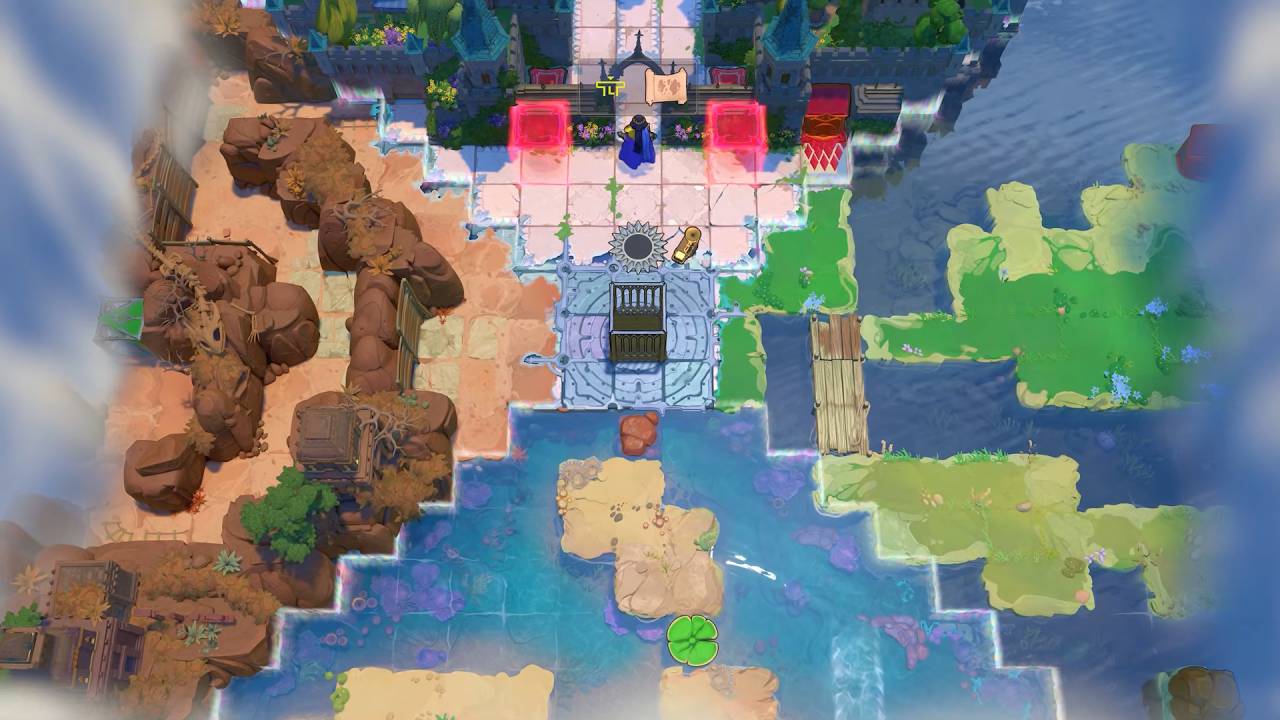
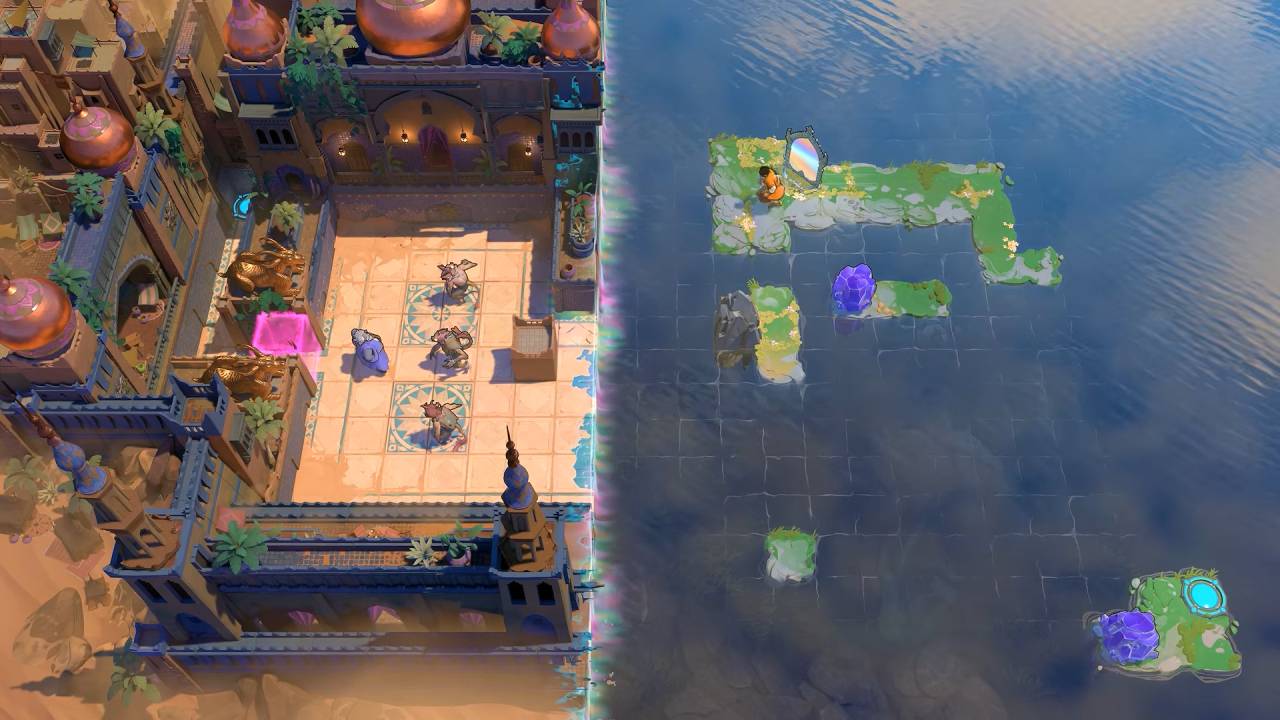
Heading east takes you to the Mirror Isles, based on a game by Alan Hazelden, where levels become small islands split by water. You play as a mysterious Trader who pushes mirrors around, and standing in the right spot swaps you with your reflection. Before long, you're placing multiple mirrors, pushing rocks into the water to extend your reach, and reflecting a reflection to create a clone.
Clones can step on pressure plates, and they can also die. Spawn too many, and you won't finish the room. South is Skipping Stones to Lonely Homes, also by Alan Hazelden, which presents itself as a relaxing tropical getaway while quietly being a headache. You push large stones off an edge and skip them across the water to create new platforms; they can also ripple against leaves and lily pads, or block and redirect the current.
If a lily pad floats past, you can step on and ride it.
This is the weakest set of the four. It leaves you unsure whether to carry stones from one area to the next, and you can easily end up staring at the same skipping stones for ten minutes with no energy left to try another approach. This is also where the voice acting slips, with a sentient ship and its captain trading stiff dialogue about guild secrets.
The west holds the Vault of the Beamcasters, based on Sean Barrett's games, and it has less to do with pushing objects. You play a miner who gathers gems, above and below ground, to power beam generators. Green beams let you phase through walls, purple beams teleport you past obstacles, and others grant super strength, break boulders, or dispel energy blocks.
Each crystal you unlock lets you go deeper into the mine, and you have to work out the best path across a looping grid. The opening is a rough early brain check, with an elaborate setup and no checkpoint in sight. Even so, it's the kind of world that scratches your brain just right, and when you finally see how obvious the answer was, the annoyance fades.
What keeps all of this from turning miserable is the toolkit. You can undo single moves, restart a room, slow down or speed up time, and pull back to different views. A single button resets a puzzle to its checkpoint, another steps you back one move, and holding the buttons plays the last few minutes in reverse. You make a move, see what happens, undo it, and try something else.
Failure becomes information rather than punishment, and even a botched attempt tells you how an object or ability behaves.
No hints and no difficulty sliders. The game gradually raises the difficulty and changes the mechanics to give you a new challenge, much like The Witness. Every movable object, mirror, and floor gap feels intentional, so there are no red herrings or puzzles that are merely bigger versions of older ones.
Order of the Sinking Star rarely repeats a lesson, and that care extends to the overworld, which has its own puzzles you solve to reach even more puzzles. You're also never tested on reaction time. Nothing here involves grinding or leveling up, and only your understanding of the rules grows.
Each world could stand as its own game, but the real surprise comes after you finish its opening campaigns. Mysterious gold platforms appear in the overworld, marking where the worlds overlap. The wizard looks into a mirror. A skipping stone passes through a purple teleport beam.
Mirrors reflect beams so their effects combine. Abilities you spent hours learning suddenly have other uses, and a limit you accepted in one world must be reconsidered when another world's mechanics enter the picture. Just when you think Order of the Sinking Star must be out of ideas, another interaction gives you something new to chew on.
The details are best left for you to discover.
Order of the Sinking Star's structure makes the difficulty bearable. When you hit a wall, you can back out to the overworld, use the fast-travel map that shrinks the whole world into a miniature, and head somewhere else. The wall will still be waiting, but each area saves your progress exactly where you left it. Because each world's mechanics are so different, a break from one feels like a palate cleanser.
When you return to an old roadblock with a clear head, you push through like a Sokoban master, and the game usually humbles you again quickly. None of this removes the frustration in Order of the Sinking Star. Undo removes the cost of a bad move, but it can't give you a better idea, and the friendly look doesn't promise a relaxing time.
With no way to summon help, losing to a puzzle can sting, and the map's size can feel intimidating even deep into the adventure. Sometimes you can see exactly how to beat a puzzle but can't pull it off. You wander off, breeze through something else, and return cocky, only to get beaten again.
The characters add to that push-and-pull. Each has a compulsion driving their behavior, whether that's skipping stones, dragging objects, collecting gems, or playing music that entrances everything nearby. You catch yourself wondering why a character is so limited when one obvious action would fix everything, and then a different character fits your plan perfectly.
The one who drove you crazy becomes exactly who you need. Their limits create the problem, and they also make the solutions possible. Order of the Sinking Star is addictively good. There's a constant one-more-puzzle quality to it. You solve something, feel good, and want to see what's around the next corner, so expect to lose some sleep.
With potentially hundreds of hours on the table, you can see yourself chipping away for a long time, and the credits don't mean you're done.
Order of the Sinking Star looks good and, more importantly, stays readable. The settings are colorful and stylized, appealing without stealing the show. Each world has its own palette and landscaping, so the four feel like separate games, while shared motifs keep them connected. The detail doesn't reach The Witness's level, but in a puzzle game, seeing exactly what you're working with matters more.
The sound in Order of the Sinking Star fits well. The music is subtle and atmospheric, so even when you stare at a puzzle for a long stretch, you're not hammered with the same track. The sound effects are lovely too, and the little thump of the rewind stands out.
The voice acting is generally top-tier, with a distinct tone for each character, and aside from that one stiff island world, the delivery holds up in the narration, the audio logs, and the conversations between characters. Who this is for is fairly clear.
With more than 1,000 puzzles, Order of the Sinking Star targets people who enjoy stopping, thinking, and experimenting. If you prefer a balance of puzzles with a strong story or other gameplay, it may feel too singular, and the story, which trickles out at the pace of your puzzle solving, is hard to follow. Casual puzzle fans may find it tricky with no difficulty options.
Where Order of the Sinking Star leaves its mark is in how much it trusts you.
Many modern games seem afraid you might be confused for five seconds, while Order of the Sinking Star is comfortable letting you sit in confusion. It sets its rules, gives you the tools, and gets out of the way. You come away remembering how those puzzles taught you to think, not the count.
At $30, the value is hard to argue with. You get a huge amount of content, strong voice acting, and puzzle design with no filler, and the only real complaints are a clumsy southern world, a murky story, and no help when you're stumped. Puzzle enthusiasts will find this game a must-play.
Editor, NoobFeed
Verdict
A brilliant, rewarding puzzler with over 1,000 handcrafted puzzles, four worlds that come together into something special, and wonderful voice acting. It won't give you any hints, and the story stays a bit hazy, but it's easy to recommend.
90
Related News
No Data.