
Fatal Claw Review
PC
A resurrected cat, a buried kingdom, and a claw sharp enough to carry the whole adventure.
Reviewed by Maisie Scott on Aug 27, 2026
You go into Fatal Claw without much fanfare, and that's kind of fitting, because the game itself doesn't waste time on one either. It started life in early access, quietly building a devoted following before finally launching in its full 1.0 form on August 26, 2026. The project reportedly began with a Kickstarter campaign, which makes the polish on display even more impressive.
You're playing as Kisha, a black cat brought back from death by his ancestors and dropped into a decaying underground world that's been cut off from the surface for who knows how long. It's part crumbling ancient ruin, part rusted-out industrial leftover, and somehow both halves fit together without feeling mismatched.
.jpg)
Survival kicks in fast, and the larger plague story follows.
Before you've even had a chance to get your bearings, you're already fighting for your life, and that opening stretch does a great job of telling you exactly what kind of game Fatal Claw wants to be. You wake up hurt, barely able to stand, and the game teaches you the basics fast: how to claw at things in front of you, how to hold a button to slowly heal, how to bounce off certain surfaces to reach new areas.
You're not given much time to breathe before you run into an old coworker who was bitten during whatever happened down here, and you watch him turn into something else entirely right in front of you. That moment sets the tone for everything that follows.
There's a plague running through this underground world, and it's turning people into monsters. You'll receive directions through the radio about a village inhabited by survivors, and as soon as you reach there, you'll begin to unravel the truth.
You'll be informed about the need to fix the broken stone to keep the disease from spreading, and this is where you get to know about Fatal Claw and its much wider scope about ancient races, the Origin Corporation, sealed spires, and the king that might be dead or alive.
The mystery deepens fast, building toward two very different endings.
As you dig deeper, the plot keeps escalating in ways you don't see coming. You meet villagers who all seem to have their own history with this place, guardians who've apparently been sleeping for ten thousand years, and enemies who used to be ordinary people before the infection got to them. Fatal Claw doesn't leave you guessing by the end, either. Every major thread gets tied off.
You learn who you are, why the plague exists, what Origin was really doing down here, and what happened to the kingdom before you arrived. There's no vague, open-ended lore dump left for you to puzzle over on forums. The game answers its own questions, which is honestly refreshing.
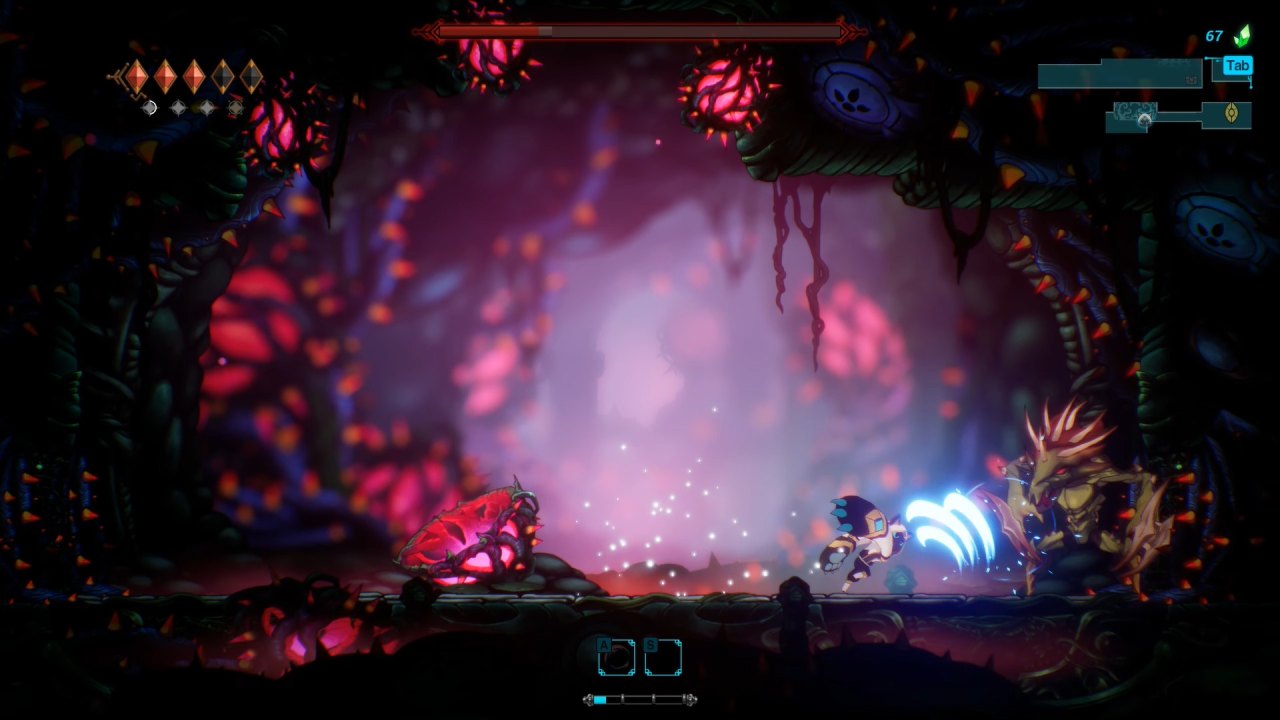
That said, the true ending still leaves you with a cliffhanger, and once you unlock the hidden ending, you find out that Kisha has actually been resetting this same timeline over and over, thirty-five times in total, trying to find a way to save everyone.
The hidden ending goes even further and suggests Kisha might be tied to another character entirely, opening up a full-blown time paradox. It's a genuinely wild twist for a game that otherwise plays its story pretty straight, and it leaves you with the sense that a sequel is very much on the table, especially once you catch a final glimpse of a shadowy figure sipping wine somewhere up on the surface.
Combat opens the game's toolkit, anchored by a signature teleport move.
Mechanically, Fatal Claw throws a lot at you, but it never feels overwhelming once you get moving. You'll spend most of your time exploring interconnected rooms, fighting off infected creatures, collecting currency and crafting materials, and slowly unlocking new routes as you gain new abilities. You start out simple, just clawing at enemies and hopping across platforms, but the toolkit grows fast.
You'll pick up directional attacks, ranged options, and eventually a signature teleport move that lets you dash behind an enemy in an instant. That teleport ends up being the backbone of everything Fatal Claw does well. It doesn't require perfect timing like a parry would.
As long as you've got a sliver of the purple energy that fuels it, you can pop behind an enemy whenever you want, even in the middle of a combo, and later on you'll unlock a follow-up move that chains lightning between every enemy you've tagged with it. Landing that combo on a room full of enemies is one of the best feelings the game offers.
Your basic attacks are a three-hit combo on the ground and in the air, which can eventually be extended to five hits as you invest in upgrades. Movement feels light and responsive most of the time, though there's an odd wrinkle where your downward air attack drops you like a stone, which throws off your rhythm if you're used to floatier pogo mechanics from other Metroidvanias. It's a small quirk, but it's noticeable, especially early on.
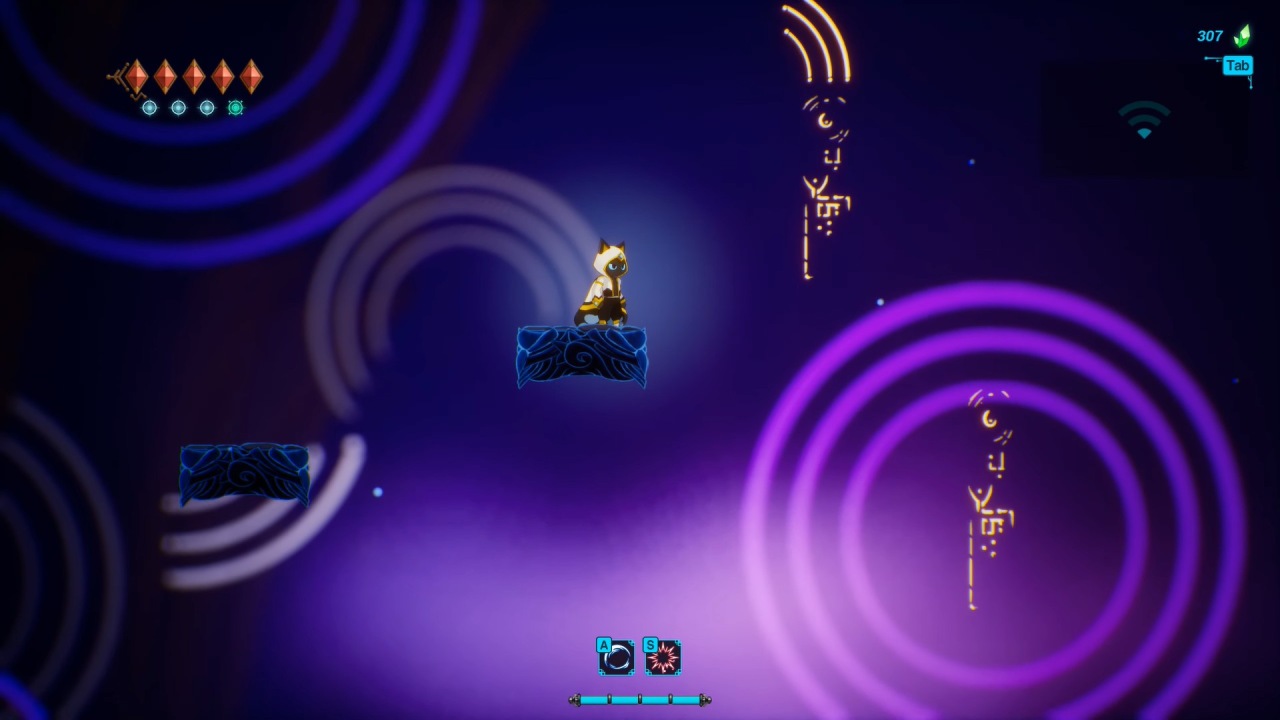
Movement and healing add layers beneath that flashy teleport combo.
You also get a dash and an air dash, though neither grants you invincibility frames right away, so you'll need to actually respect enemy attack windows instead of dashing through everything carelessly. Healing works a little differently than you might expect, too.
Instead of topping off at save points, you refill your heal charges by landing hits in combat or by drinking tea you've bought, which keeps you honest during exploration since you can't just rest your way back to full health. Combat against regular enemies is fast and satisfying, but the boss fights are where Fatal Claw really shows off.
Early bosses ease you in with simple, readable patterns, but things ramp up quickly, and by the midgame you're dealing with multi-phase fights that genuinely test whether you've learned the moveset. You'll want to manage your special attacks carefully here, since they cost a separate mana resource that only refills as you land regular hits.
You can equip two of these special attacks at a time, chosen from a pool of ten base moves that can be fused together into entirely new ones if you're willing to dig into that system. On top of that, you'll eventually recruit a wolf spirit companion who fights alongside you, sleeps politely while NPCs are talking, and shrinks down into a puppy to catch up with you if you wander off.
Growth comes through exploration, not experience points or gear.
He becomes an easy favorite the moment you unlock him. None of the bosses in Fatal Claw reach the brutal difficulty ceiling of something like Nine Sols, but they're far from pushovers, and there are accessibility options available if a particular fight is giving you trouble.
Progression in Fatal Claw skips traditional experience points entirely. Your gear is purely cosmetic, and instead you grow stronger by spending a resource called Canium, which you find sitting on cat statues scattered around the map. Spending Canium unlocks nodes on a skill tree. Your overall level simply reflects how much Canium you've already put in.
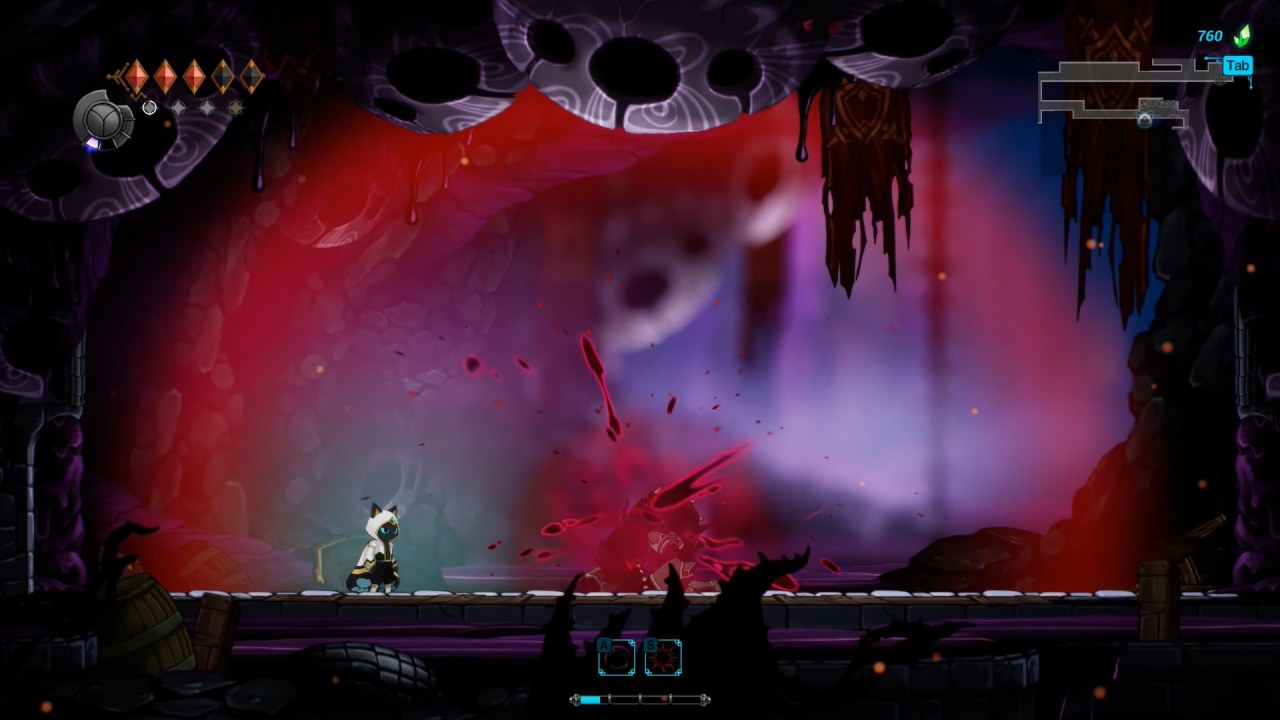
Tracking down these statues becomes a natural part of exploring, rather than a separate grind. Those nodes give you things like extra combo hits, more energy for your teleport attack, and brand-new moves entirely. Alongside that, you'll collect badge-like trinkets that plug into a limited pool of memory, which you can expand by finding memory upgrades scattered through the world.
These trinkets add small but meaningful effects, like healing while clinging to a wall or recovering your resources faster after a hit. Between the skill tree, the trinkets, and the special attack fusions, you end up with a surprising amount of freedom to shape how Kisha plays, all without ever touching a stat sheet.
Currency and side quests tie directly into exploring this connected world.
Money in Fatal Claw comes in the form of green crystals dropped by enemies and hidden in chests, and you'll use them for everything from buying tea to unlocking new fusion formulas at shops. Thankfully, resting and saving your progress costs nothing, so you're never punished for taking a break to restock.
Side content is plentiful too, ranging from quick fetch tasks to more involved quests that actually shift how the story wraps up, and there's a log to keep everything organized so you're not left wondering what you were supposed to be doing three biomes ago.
Exploring the underground world is genuinely one of the best parts of Fatal Claw. The opening stretch is fairly linear, guiding you from a cave system into a village of survivors, but once that early hour or two wraps up, the map opens up dramatically, and you're largely free to chart your own path.
You'll run into gates that clearly need a specific ability to open, walls that only break from one direction, and the occasional puzzle involving a hidden passcode or a fusion formula tucked into an environmental note. The in-game map supports all this well.
Clear navigation lets the game's hand-drawn world truly shine.
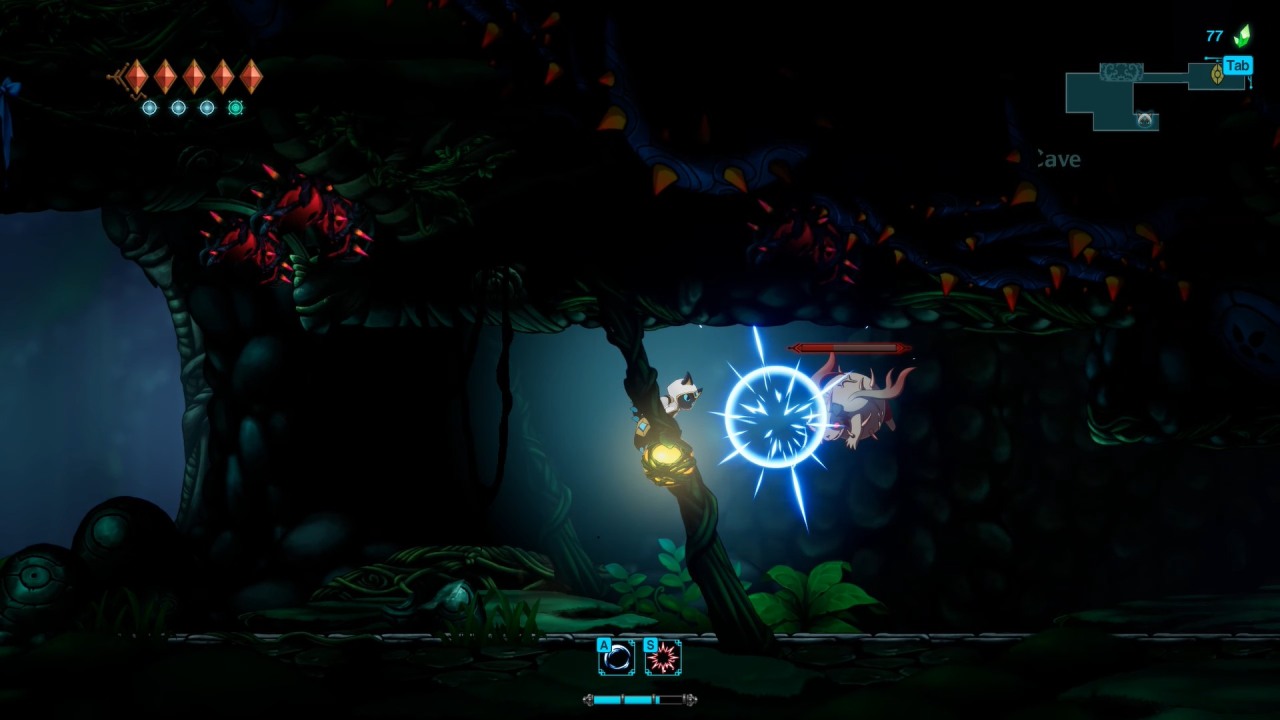
Rooms are drawn accurately, biomes are color-coded, and points of interest like save points and cat statues get labeled automatically, so you're rarely left squinting at an empty section of the screen wondering where to go next. Fast travel takes a little getting used to.
It starts as a simple point-to-point system between biome entrances. It only expands to cover every save point once you track down a specific unlock item for that biome. But once it's up and running, it makes backtracking painless. Visually, Fatal Claw is stunning.
Everything is hand-drawn, from Kisha himself down to the smallest background detail, and the art style manages to be both bright and unsettling depending on where you are. You'll go from a cramped, dripping cave system to a bustling village, then into a sprawling high-tech mining operation, an ash-covered ruin, and a gilded castle that somehow still looks untouched by time.
Every new area in Fatal Claw feels like a deliberate shift in tone, and the layered backgrounds give the whole underground world a sense of scale that a lot of side-scrollers struggle to pull off. The sound design keeps pace with the visuals.
Post-game content carries the same care into what happens after the credits roll.
Each biome carries its own musical identity, drifting between calm and genuinely eerie depending on what's happening around you, and the score does a lot of quiet work pulling you deeper into the mystery without ever feeling intrusive.
By the time the credits roll on Fatal Claw, you're given the option to keep going, and the post-game content gets stranger than you'd expect from how grounded the main story felt. A whole system is built around resetting the timeline to save different infected characters, tracked through a set of story nodes that create small variations in how the ending plays out.
Collecting the currency needed to unlock hints for these nodes is fairly tedious, and honestly not something you need to bother with unless you're chasing full completion, but the underlying idea, that you've been quietly rewinding this same story dozens of times, adds a strange new layer to everything you just experienced.

Fatal Claw isn't flawless. The pogo mechanic takes some adjusting to, a couple of platforming sections lean on that same heavy drop in ways that feel unnecessary, and the post-game content asks for more grinding than it probably needed to.
These flaws stay minor next to everything Fatal Claw does right.
None of that comes close to outweighing what Fatal Claw gets right, though. The combat is fast and expressive, the world is dense with things worth finding, the progression system respects your time, and the story actually commits to answering its own mysteries instead of leaving you hanging.
Fatal Claw is available on PC and every major console, runs smoothly on Steam Deck, and launched at a reasonable $20 price point. If you've been looking for a Metroidvania with real personality behind its claws, the title earns its spot near the top of the genre.
Editor, NoobFeed
Verdict
Fatal Claw delivers sharp combat, a gorgeous hand-drawn world, and a satisfying mystery. It's one of the best Metroidvanias around.
85
Related News
No Data.