
Kyoto Xanadu Review
PC
Falcom revives the Xanadu franchise with an ambitious blend of school-life simulation, Metroidvania exploration, and fast-paced action RPG combat.
Reviewed by Wasbir Sadat on Jul 19, 2026
Nihon Falcom has been a popular Japanese RPG developer for decades. The studio is primarily known for its long-running Ys and The Legend of Heroes: Trails franchises, but it has also developed Xanadu. The 1980s series helped define action RPGs before they were popular. Tokyo Xanadu, launched in 2015, combined urban fantasy, high school life, and action-fighting into a Persona-inspired trip unlike anything Falcom had done before.
In Kyoto Xanadu, Falcom returns to that universe eleven years later. Instead of continuing Tokyo Xanadu, the developer has chosen a safer and arguably better path. Kyoto Xanadu features a new protagonist, cast, and interpretation of the mysterious Eclipse phenomenon in a unique plot. Veterans will know the concepts and language, while beginners can start straight away.

In an alternate Japan, Kyoto remains the capital instead of Tokyo. Hidden beneath its streets are magical secrets and old architecture with contemporary technologies. The environment stands out in Tokyo Xanadu while retaining its urban-fantasy elements. Falcom's blatant change to gameplay may be the biggest surprise.
Kyoto Xanadu is one of the studio's most experimental RPGs, adding 2D Metroidvania-style exploration and full 3D action fighting.
A bold design choice that initially raises eyebrows but helps the game establish its voice. Ray Kamiya, 17, is on the run after stealing a lot of money from Kyoto's criminal underworld for unknown reasons. Ray is pulled into another world by violent criminals and attacked by terrible monsters without notice. While trapped and sentenced to die, an undiscovered force within him shows as two luminous swords, saving him.
Ray faints and wakes up in a strange place where a masked woman offers him a strange deal. She transfers him to Hiasaka Academy, an exclusive school for magically gifted kids who explore the vast Xanadu Labyrinth beneath the campus, rather than turn him over to the authorities.
The game then settles into a familiar pattern of classroom life and dangerous labyrinth explorations. The premise resembles Persona and Tokyo Xanadu, but Kyoto Xanadu quickly establishes its own alternate history and mythos. The game's ability to answer Eclipse questions while introducing new ones is one of its greatest strengths.
Why is Kyoto Japan's capital? What is the academy's Great Labyrinth? Why can only teens enter safely? What part does Ray play in these unearthly events? Although the opening hours do not directly address these themes, they invite players to slowly piece together the world's past through exploration, dialogue, and story progression.
However, Falcom storytelling has one caveat. Kyoto Xanadu starts with a lot of jargon, like many of the developers' games. In the first few hours, you learn about Eclipses, Greeds, Soul Vice, Soul Devices, Guardians, Illusion Elements, and more organizations.

Fortunately, the developers anticipated this issue and included a detailed dictionary in the game so you may rapidly review all essential words.
Character writing is also good.
Characters like the rebellious protagonist, the quiet honor student, the protecting delinquent, the cheerful sister, and the weird child start as anime cliches, but they develop through conversations and interactions. Ray himself is terrific fun. He jokes with classmates before getting serious when danger approaches, unlike many JRPG heroes.
His engaging personality lightens the story without reducing its emotion. Finding out more about the supporting characters outside of combat makes the academy feel more like a community than a choice between dungeons. Kyoto Xanadu has two gameplay loops that work nicely together.
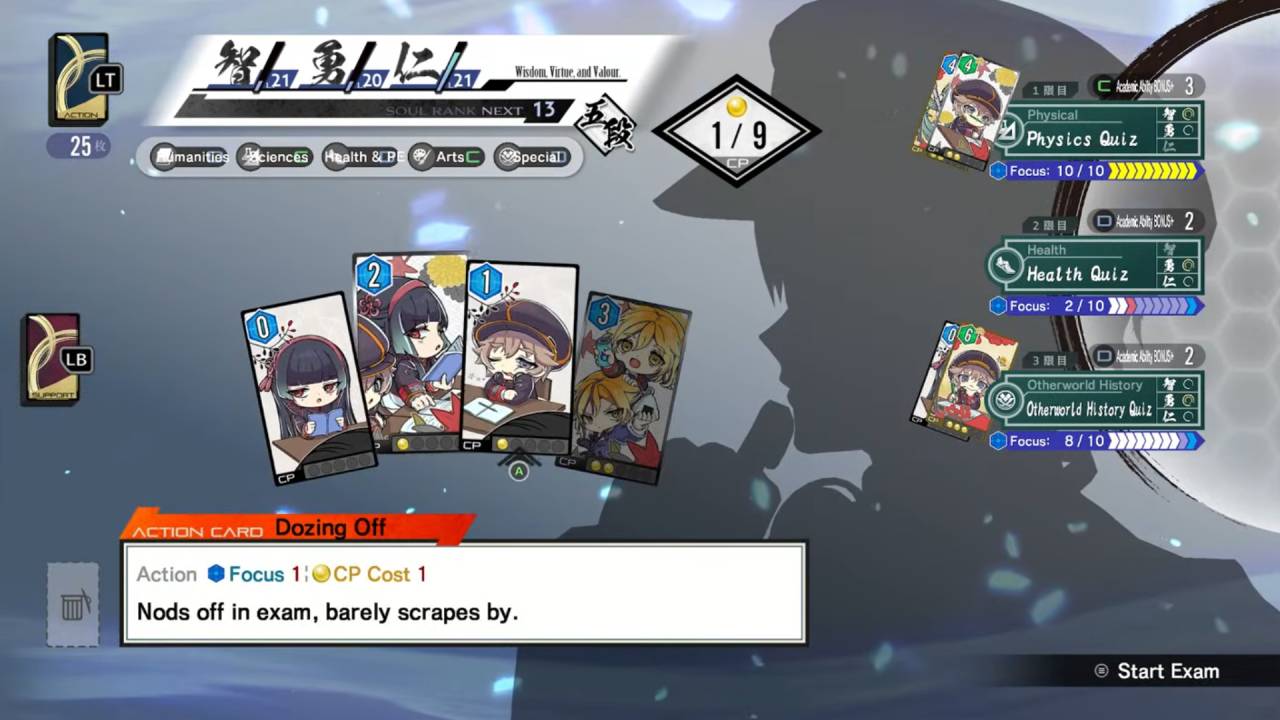
You attend classes at Hiasaka Academy, explore Kyoto's shopping districts and neighborhoods, make friends, buy equipment, take on side activities, and prepare for vacations during the day.
Time management is important since daily habits shape character and relationships. Persona inspired the school-life setup, yet it never feels identical. Classes improve stats, chats trigger character-specific events, and extra activities help in battle. Always encouraging gamers to mix socializing with actual preparation before going underground.
Kyoto is also great to visit. The city grows as more land becomes accessible. Eating in restaurants, convenience stores, retail districts, and tourist attractions makes the world feel alive and improves gameplay.
Dungeon crawls take unexpected turns elsewhere. Instead of 3D environments, the maze is traversed via well-designed 2D side-scrolling sections that resemble Metroidvanias.

You can jump across platforms, gain traversal powers, solve environmental puzzles, find hidden passages, and gather valuable resources in each area. Fans anticipating a full 3D action RPG like Tokyo Xanadu may be surprised by this design.
The hybrid structure clicks with the game after a few hours. This focused platforming lets Falcom create layouts more complicated than old-school 3D dungeons, but the pace is faster, so exploration never seems slow.
The Guardian system is also wonderful.
Every party member has powerful elemental powers that alter traversal. Characters can blow through barriers using fire. Wind speeds them up. Ice allows them to freeze water into new pathways. They can explore new locations with various powers. These methods improve Metroidvania without being complicated.
The advancement system goes beyond exploration. Characters level up organically by defeating monsters, and labyrinth materials upgrade equipment and unlock battle skills. Because of the different skill trees for fighting and exploration, each dungeon run advances character growth. Kyoto Xanadu isn't a grindy early RPG.
Story objectives, extra encounters, and hidden locations will provide you enough experience to handle future challenges. This means gradual, rewarding progress, not grinding repetition. Kyoto stands out from Tokyo Xanadu and Falcom's other action RPGs in combat. Veteran fans will recognize the developer's fast-paced combat philosophy from the Ys series, but the game introduces several changes that give conflicts a distinct rhythm.
Kyoto Xanadu emphasizes defensive timing, counterattacks, and situational awareness over evading and onslaught. Most of the dungeon adventure is in 2D side-scrolling landscapes, and players will fight from little creatures to elite monsters.
Basic attacks can be chained into brief combos, while special techniques require resources to launch enemies, knock them backward, or provide bonus damage to select enemies.
Configurable jumps, aerial strikes, dodging rolls, and later upgrades like double jumps and wall kicks enhance traversal and combat options. However, the parrying method shines. A well-timed block eliminates all incoming damage, staggers opponents, and exposes them to Flash assaults.
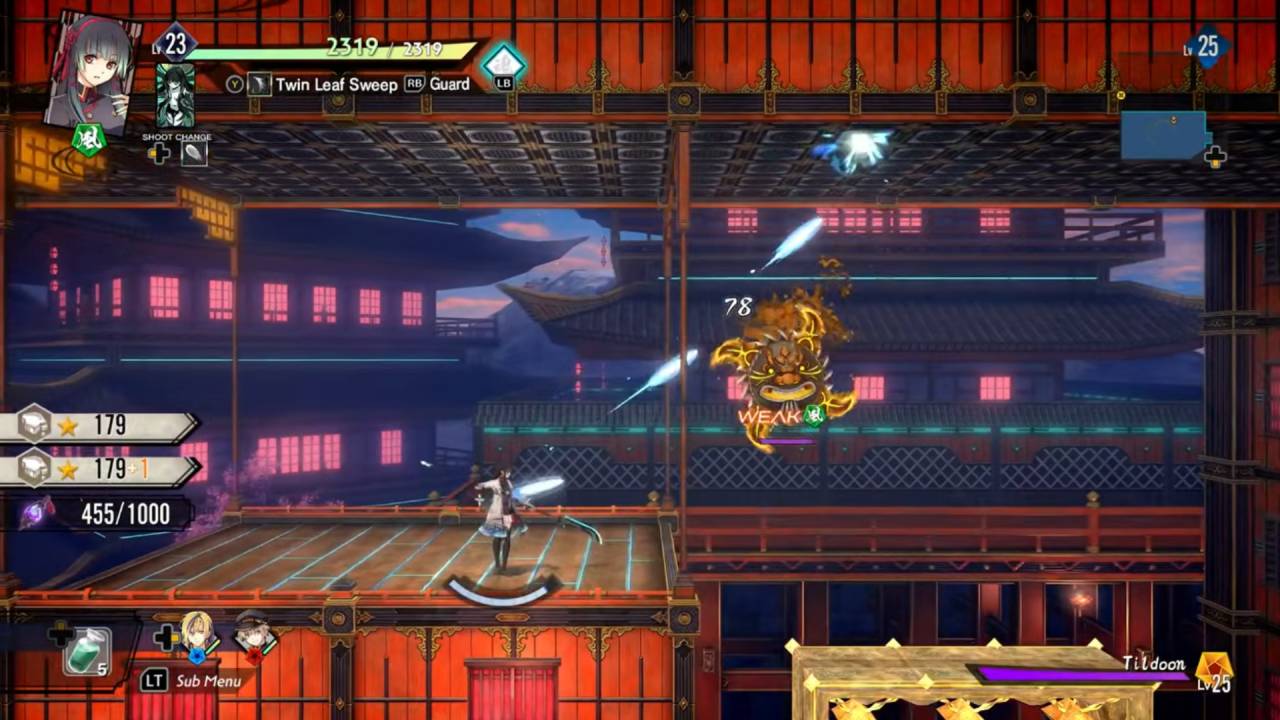
Getting these counters correctly is always fun and quickly becomes one of the game's most rewarding aspects. Because Kyoto Xanadu's Soul Skill system is accessible, perfect timing doesn't seem harsh like in other action games.
You can also use a special gauge to temporarily lengthen parry time windows, allowing less proficient players to compete without being punished for little mistakes. If you're skilled with this game's mechanics, you can ignore the aid and rely on accurate inputs, while beginners can use it to learn opposing assault patterns.
Another pleasant surprise is how well the game transitions between exploration and significant encounters.
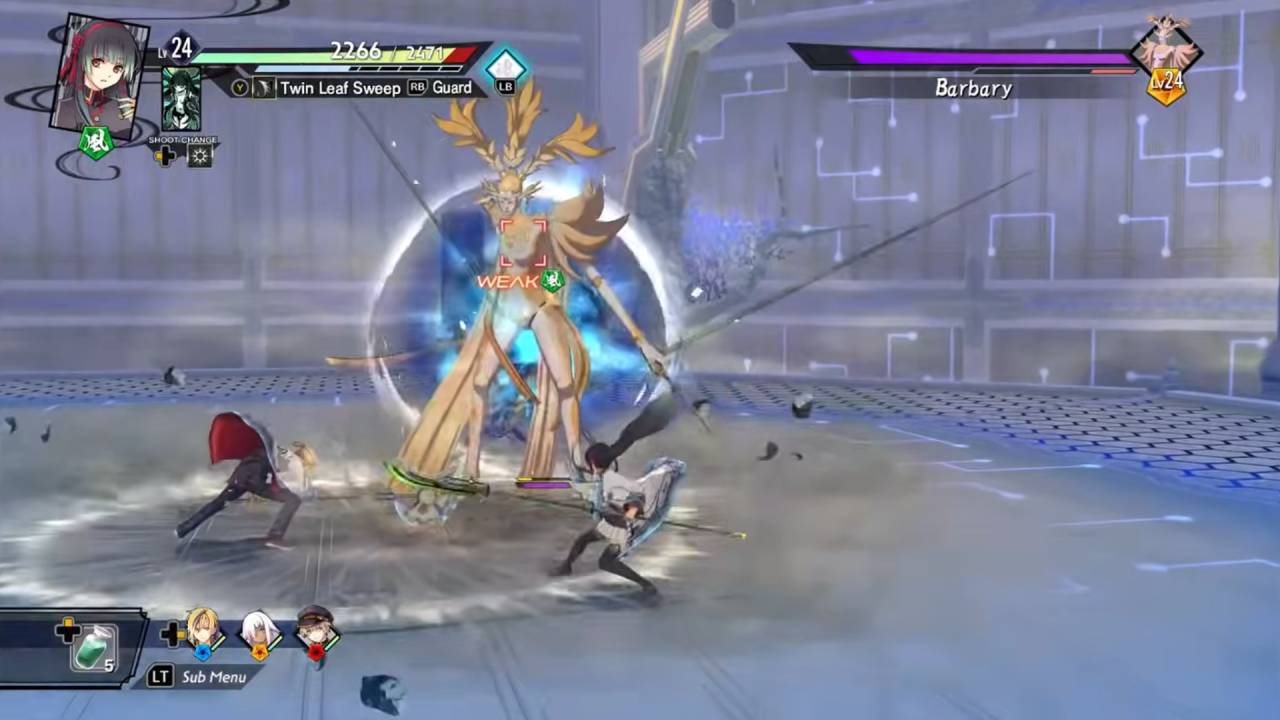
You can easily transition from 2D exploration to 3D battle arenas as you navigate the labyrinth via special gates. The transitions create a gameplay rhythm rather than combining two game styles. Exciting boss bouts that use the game's three-dimensional combat system break up long platforming and exploring.
The 3D fights have also added mechanics not available when exploring. Soul Axle temporarily increases a character's combat abilities and allows perfect defensive move timing to launch powerful instant counterattacks that deal massive damage. When the Secret Arc gauge is full, it unleashes devastating finishing moves that hurt all adversaries. Boss bouts conclude well without making them feel inconsequential.
The Guardian aids combat. Each party member has a Guardian with elemental powers to aid in exploration and combat. Fire destroys environmental obstacles, wind speeds up movement, ice freezes water, creating passageways, and ranged powers activate remote devices.
Each character has Guardian powers; players should replace party members often rather than sticking with a favorite throughout the mission. Puzzle design is philosophically similar. Kyoto Xanadu isn't a harder puzzle game, but its environmental impediments enhance exploration.
Interesting dungeons don't slow the tempo. There are secret tunnels, elemental switches, destructible walls, moving platforms, and traversal. Metroidvania fans will love returning to older regions with the new ability to uncover inaccessible objects.
Illusion Element is a fascinating addition. Fighting creatures, cleaning corruption, and interacting with the maze help you earn Illusion Elements. These resources are in a special container, but it costs money. Overfilling the container breaks it, causing Illusion Element Poisoning. The player's max health, health regeneration, item use, and combat efficiency are reduced until they land.
It's a clever risk vs. reward technique that constantly makes you question whether to go deeper into the dungeon or turn around and bank some important resources.
Character development is equal. Fighting earns experience points that level your character. Explore for resources to upgrade your Soul Devices. The skill trees provide you with new attacks and traversal boosts, so you always feel like you're progressing. Fortunately, Kyoto Xanadu's early chapters don't require grinding.
Completing story objectives, optional encounters, and exploring usually gives you enough experience to handle the game's complexity. Only the speed of school-life passages is debatable. Kyoto Xanadu, like Persona, spends time between dungeon expeditions talking, dating, and living.
These quieter moments complete the ensemble and unlock battle bonuses, but if you're action-focused, you may find the extended discussion periods tedious. Luckily, superb character writing and lively interactions keep these parts interesting.
Falcom's Kyoto Xanadu display is stunning. The game reflects the team's ten years of technology development. Character models are expressive, surroundings are vibrant, and anime-style artwork and in-game models blend better than before. Kyoto Xanadu's visuals are more coherent than those of Falcom's earlier products, where portrait art and 3D models clashed.
Alternative Kyoto provides a new backdrop. Ancient shrines, historic streets, lively shopping areas, and modern schools coexist in the city, a rarity in current JRPGs. While the game is mostly side-scrolling, each stage is complex and full of environmental storytelling that invites you to look around rather than just go on.
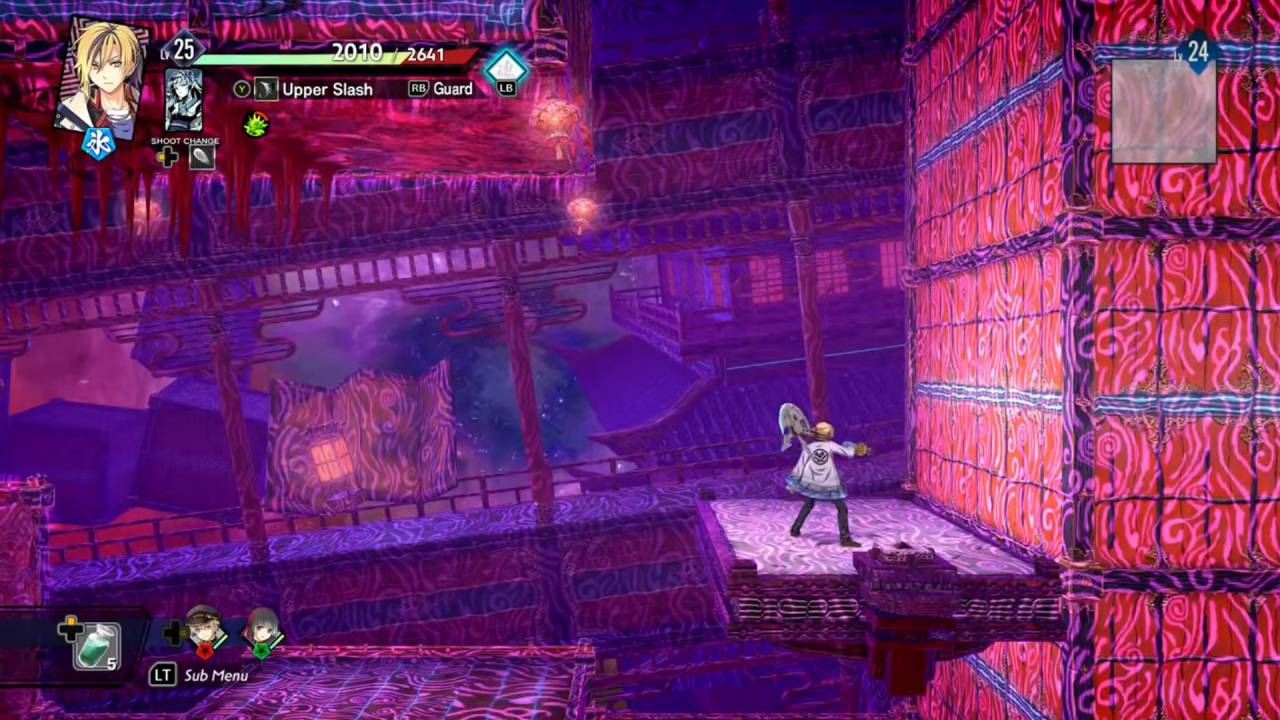
Dungeons don't feel repetitive due to varied structure, supernatural effects, and smart lighting. In 3D fighting arenas, bosses can display larger attack animations and theatrical special effects that would be difficult in conventional exploration. Animations need special consideration. Character movement is responsive, attacks chain effectively, and special powers have bright, non-overbearing impacts.
Falcom shows growing confidence in modern animation in practically every encounter.
Switch 2 performs well, too. Adventure and battle are equally exciting, and controls remain responsive in graphically complex boss encounters. Kyoto Xanadu may not have the graphics of the biggest AAA RPGs, but it proves how good art may be more important than technical skill.
Falcom excels at music, and Kyoto Xanadu is no exception. From dramatic fight themes to laid-back school-life tracks, the music enhances everything. A remarkable event occurs after Soul Skill activation. This mechanic empowers the player and dynamically adjusts the background music to incorporate vocal recordings that rapidly increase the fight's intensity.
A small touch converts outstanding meetings into thrilling ones. The soundtrack matches the game's changing tone. Powerful rock and orchestral tunes lead dungeon exploration and boss fights, while calm piano and acoustic tracks accompany school life and informal chats.
Character themes deepen personalities, making party members stand out. The voice acting is equally great, giving the cast life and realism. Kyoto Xanadu's weapon, skill, and ambient sound effects always reflect its gameplay.
By not copying Persona or Tokyo Xanadu, Kyoto Xanadu. Falcom instead boldly blends old and new mechanics to create something nostalgic and pleasantly original. The mix of 2D exploration and 3D fighting may seem odd at first, but after a few hours, it becomes clear that the system is well-designed.
The game is recommended to action RPG lovers for its compelling protagonist, great supporting cast, fun battle system, and rewarding exploration. School-life features are a nice break between dungeon excursions, and navigation abilities keep exploring fresh. Not all experiments are perfect.
The first hours are rich in world-specific vocabulary, dialogue might drag, and combat customization may be too simple in some advancement systems. Even with these flaws, Falcom's latest offering is one of its most confident.
Kyoto Xanadu secures the franchise's future, whether you're a Falcom veteran or newcomer. Despite being a sequel to Tokyo Xanadu, it stands proudly as an action RPG and a solid springboard for the series' next direction.
Contributor, NoobFeed
Verdict
Kyoto Xanadu successfully modernizes Falcom's urban fantasy RPG formula with satisfying combat, memorable characters, and rewarding exploration, making it an excellent entry point despite a few pacing issues.
88
Related News
No Data.