
Duskfade Review
PC
A colorful throwback that brings classic 3d platforming back with modern visuals and a surprisingly emotional story.
Reviewed by Maisie Scott on Aug 17, 2026
Duskfade feels like the kind of game that could have arrived during the golden age of 3D platformers, when games like Jak and Daxter, Ratchet & Clank, Sly Cooper, Spyro, Tak, and Kao the Kangaroo were filling shelves with colorful worlds and straightforward adventures.
That style of game has become much less common over the years, especially outside of Nintendo's releases, as much of the AAA industry has moved toward realistic visuals and more mature experiences. Duskfade comes from Weird Beluga, a small Spanish studio made up of just 13 people, and its approach is clearly rooted in an appreciation for that older generation.
That becomes clear as soon as you start exploring its world.
Duskfade combines traditional 3D platforming with a clock-punk setting, light hack-and-slash combat, collectibles, and several abilities that gradually expand what you can do. It looks modern, but its design philosophy feels deliberately old-school.
You are encouraged to run around colorful environments, search for hidden paths, collect items, and simply enjoy moving from one place to another. It does not try to compete with the biggest modern platformers through sheer scale.
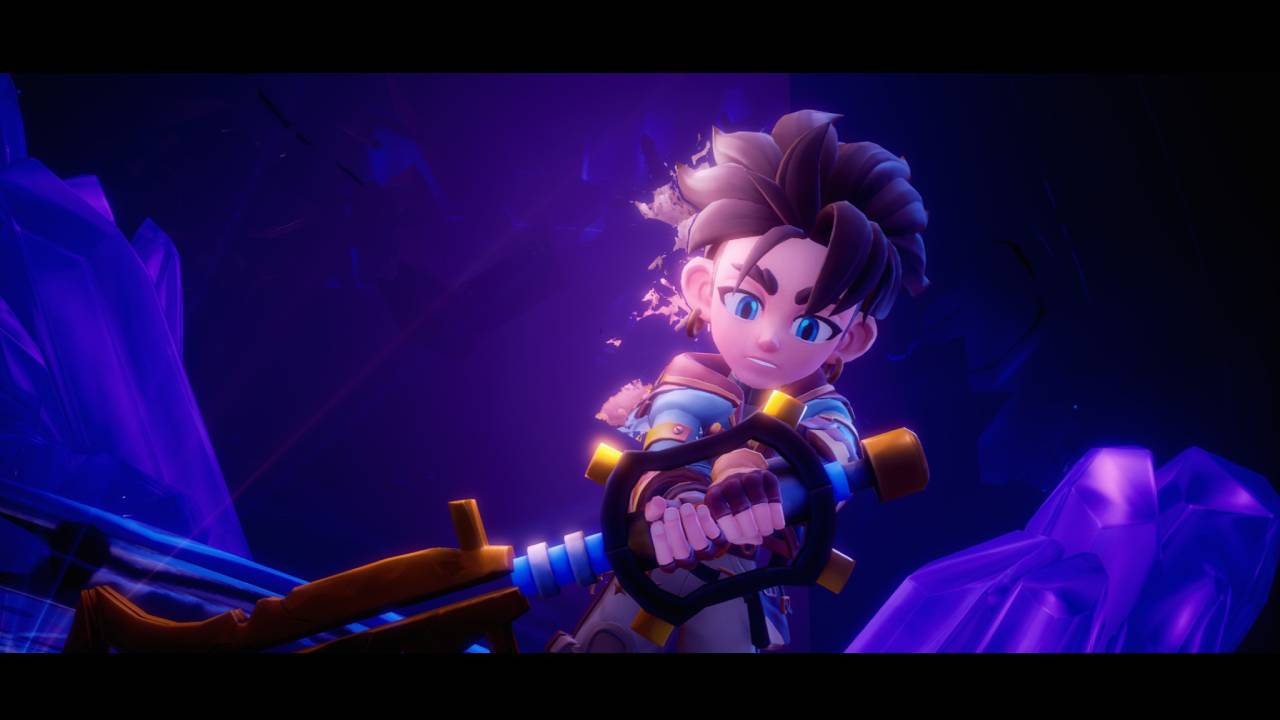
You play as Zerion, a young boy living in Ticktown, whose life changes after his grandfather's death. Zerion and his sister Ayra are dealing with the loss in different ways, Ayra becoming more and more consumed with an experiment she believes could change their future.
Inside the clock tower, Zerion meets Cuckoo, a mechanical bird who becomes his companion. Cuckoo initially has a loud personality that can make him seem irritating, but the relationship between the two develops as the adventure continues. The situation also becomes much larger than rescuing Ayra.
Darkness spreads across the world, nightmare creatures known as Inkys begin appearing, and the balance of time is threatened. Zerion and Cuckoo travel across Tearfeld, visiting four major biomes while trying to destroy the chains holding the mysterious clock tower in place and uncovering what happened to the legendary master clockmakers.
The story is more compelling because it doesn’t use the colorful setting as an excuse to keep everything happy.
That once-impressive technology had been left behind, along with ancient machines, abandoned buildings, rifts in time, and crumbling architecture that showed this civilization had once held something important it could no longer defend.
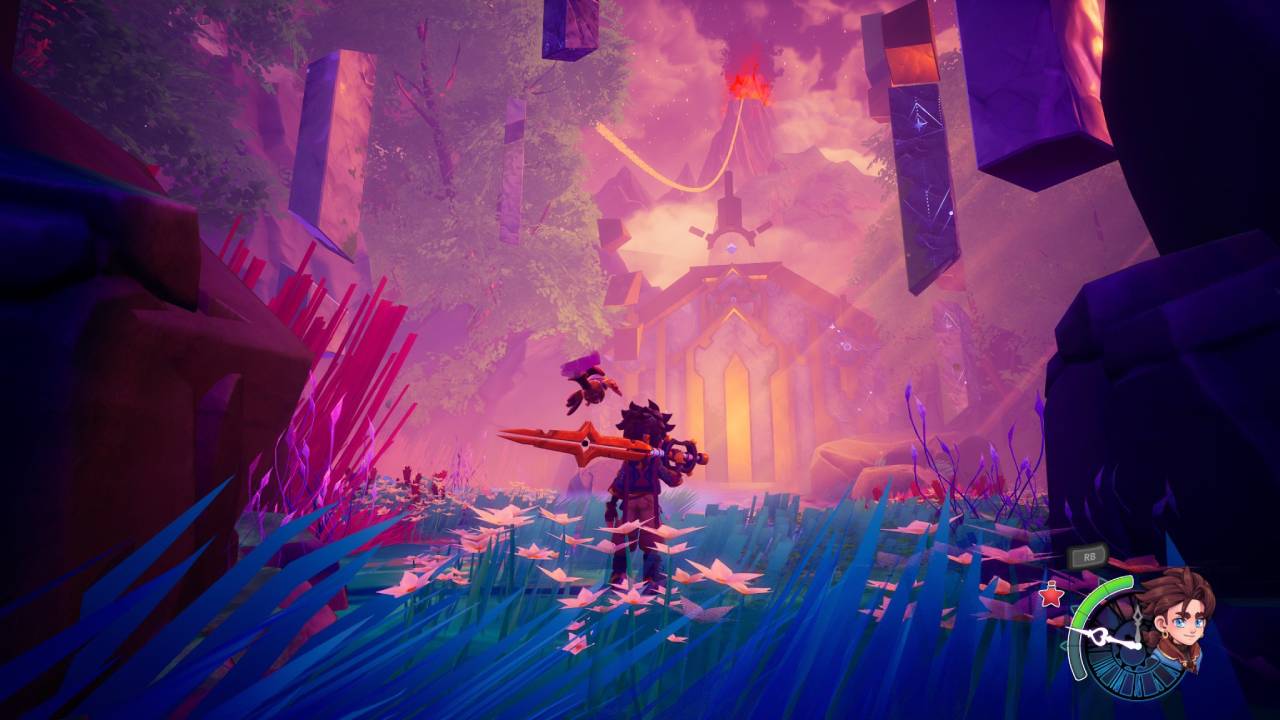
Instead of just following the main path, you can explore and discover more of that history. Echoes and conversations about the environment reveal glimpses of past events that shaped the world. Optional conversations with Cuckoo and other characters provide more information about the people and places you encounter.
The story is not perfect, and some of its ideas are familiar, while certain explanations lean heavily on the main antagonist, but it becomes more compelling as the different pieces start to connect. For a game that looks like a simple platformer at first, Duskfade has more depth than it seems.
The platforming is still the main reason you will want to keep moving forward. Zerion can double jump, long jump, wall jump, grab ledges, dodge through the air, grind along rails, and glide, while later abilities introduce tools such as a grappling hook.
The controls feel responsive, and Zerion's movement has enough momentum to make traveling through each environment enjoyable. The jumping has a slight floatiness to it, but that works reasonably well with the level design. The important thing is that getting from one platform to another is usually enjoyable.
That movement becomes more useful as you start discovering how the levels are structured.
Most stages are fairly linear, but larger sections can open into areas with branching paths. This gives you opportunities to search for hidden locations and return to previously visited areas once you have acquired new abilities.
Some collectibles and secrets remain out of reach during your first visit, which gives Duskfade a light Metroidvania-style structure without turning it into a full Metroidvania. You are still playing a traditional platformer, but the game gives you enough reasons to remember places you could not access earlier.
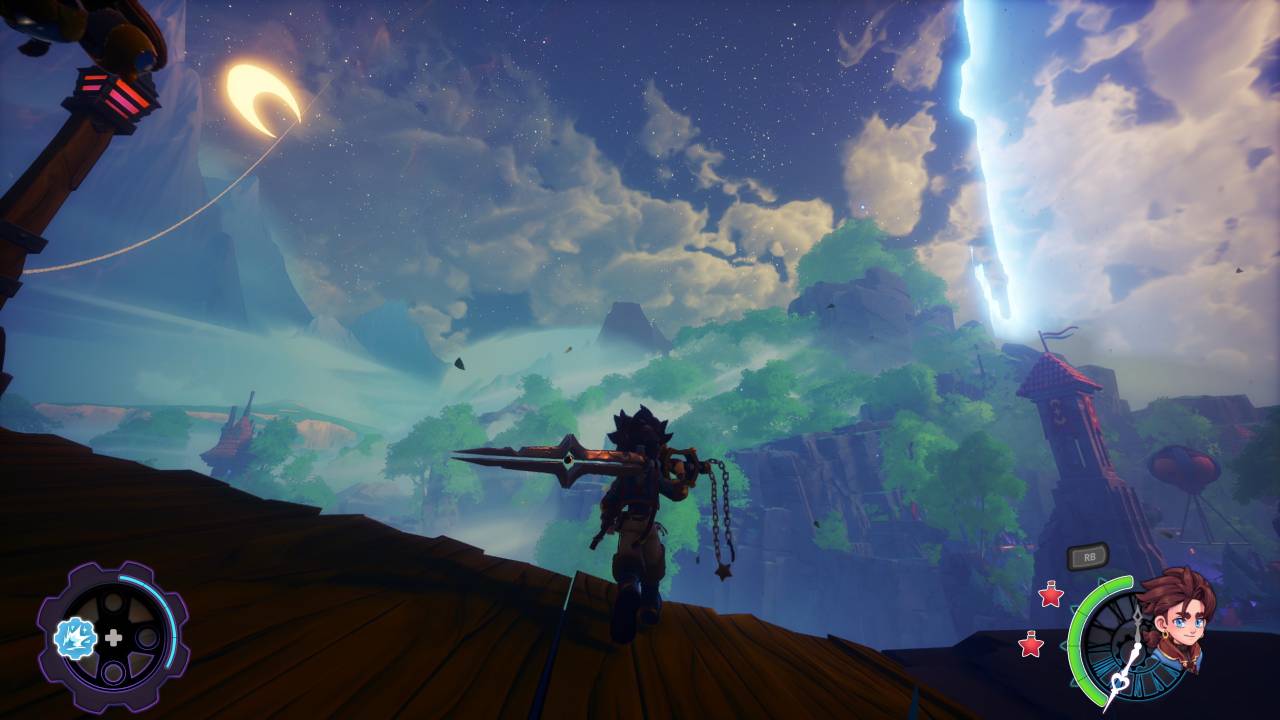
The four major biomes are connected through a central hub, which is another clear nod toward classic platformers. Instead of selecting isolated levels from a menu, you move through connected spaces that lead into multiple stages.
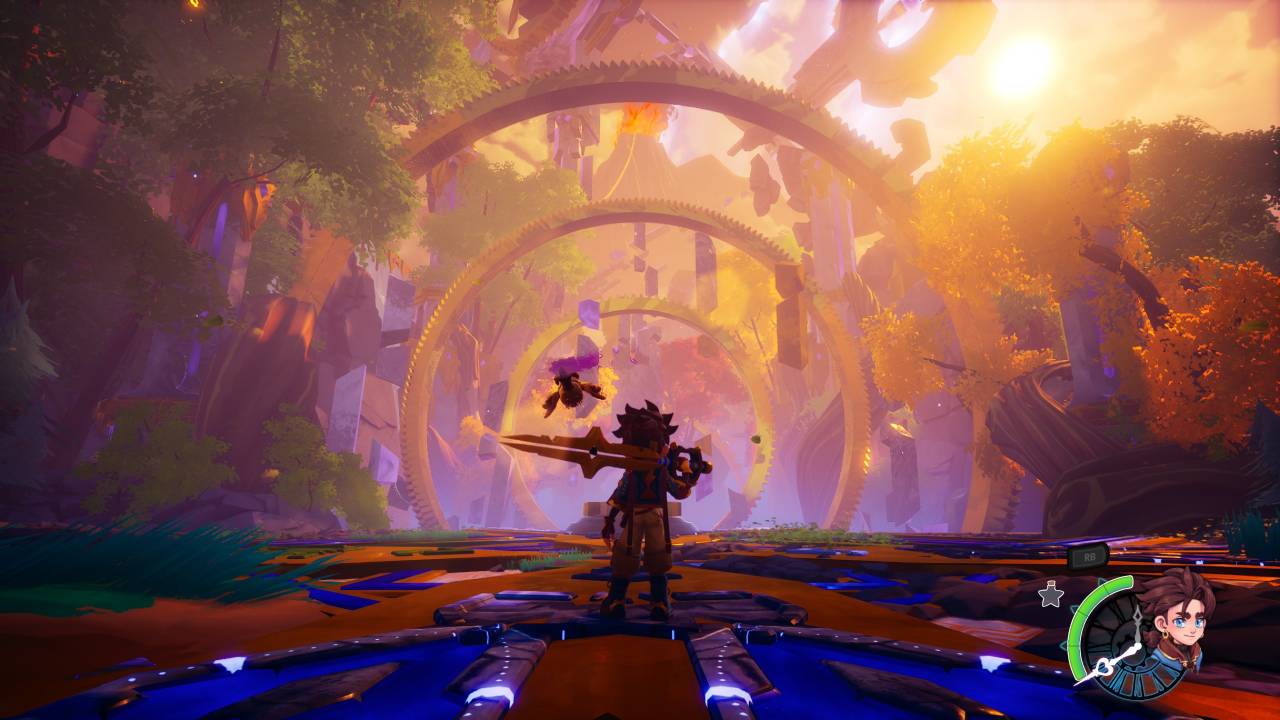
Each biome also tries to offer enough environmental variety to avoid feeling like you are walking through the same area for hours. You can move through ruined villages, forests, beaches, floating islands, ancient libraries, mines, canyons, volcanoes, underwater areas, gothic structures, and enormous clockwork locations.
Collectibles are everywhere, and they provide an exploration of another purpose. Upgrade gears can be spent on abilities, antique coins unlock collectible cards, music boxes contain rhythm-based mini-games, and kittens can be caught to unlock costumes. Dye flasks allow you to change the color of outfits, while rainbow ingots can alter the appearance of Zerion's sword.
Clockwork hearts increase your health, temporal cores increase ability energy, and star shards act as the main currency. There is enough scattered around each level to keep completion-focused players busy for a long time.
The problem is that not every collectible feels equally worthwhile.
Some upgrades require a substantial amount of currency, while cosmetic rewards offer little practical value. That can make parts of the collectathon feel like something you are doing simply because the game placed an item there rather than because the reward meaningfully improves your adventure.
Combat adds another layer to the platforming. At its simplest, you use Zerion's sword to attack enemies, dodge their attacks, and keep moving. As you progress, though, you unlock a larger set of options, including light and heavy attacks, ground and aerial combos, special abilities, counters, perfect dodges, and a lock-on system.
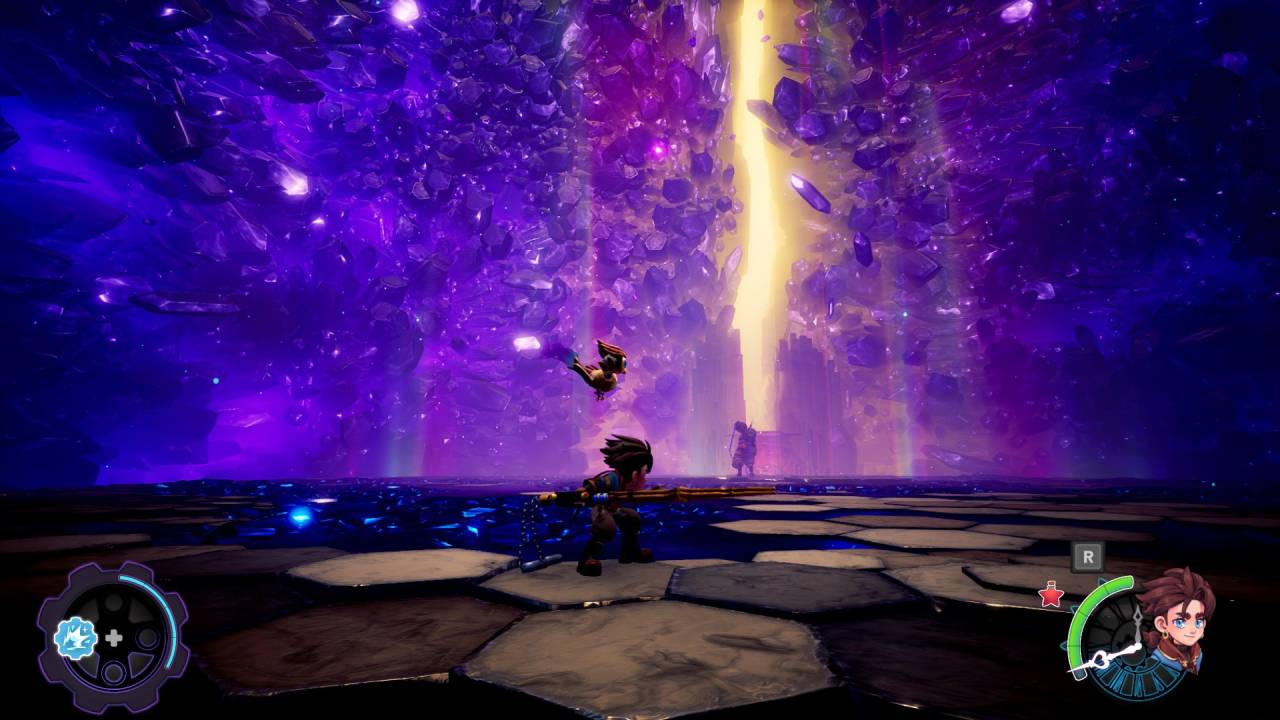
Bosses ask you to watch their attack patterns, avoid damage at the right moment, and wait for an opening instead of simply attacking whenever you are close enough. They also combine combat with platforming and recently unlocked tools, so the encounters are not simply long fights against enemies with oversized health bars.
Each biome contains two major bosses, with one appearing around the middle and another serving as the region's final challenge. Their mechanics and attacks are tied to their environment or to their relationship with Despair, the game's main villain.
These encounters are among the most powerful parts of the combat, as they demand more attention than regular enemies. You need to recognize the attacks, time your movement, and use what you have learned instead of just spamming the same sword attack.
Regular enemies don't always pose the same level of challenge.
With a good dodge-follow-up attack, you can quickly remove groups, so you don't always need to use some of the deeper combat options. If you want to experiment, you can counter, perfect dodge, and use different abilities, but the game does not consistently force you to understand every part of the system.
The hardest difficulty, Master Clock Maker, improves the experience quite a bit by making enemy attacks more important to recognize without making the entire game an exhausting challenge. Bosses. Especially the last one. It can take some serious focus at that level.
"Progression" is more exploration-based than traditional XP grinding. Instead of just killing enemies multiple times to gain experience levels, you collect different resources that improve your health, abilities, gear, and cosmetics.
Upgrade gears can unlock abilities, clockwork hearts increase health, temporal cores expand ability energy, and star shards provide the main currency. This approach means your motivation to search through levels comes from finding something useful rather than watching a conventional experience bar slowly fill.
That system works well with the game's collectathon structure because returning to an area can reveal something you could not reach earlier. At the same time, the currency requirements and weaker cosmetic rewards can make progression feel uneven. You may spend considerable time collecting items only to discover that some of them have limited practical value.
The puzzle side is lighter than the combat and platforming, but exploration itself often asks you to work out how to reach certain places.
You need to combine movement abilities, environmental tools, and careful observation to find hidden areas and collectibles. The game does not appear interested in turning every stage into a traditional puzzle room. Instead, it places small problems throughout the world and lets you solve them as part of the platforming loop.
That approach fits Duskfade because the game is more interested in keeping you moving than stopping you for long stretches. The most satisfying moments often come from noticing a previously inaccessible path and realizing that a new ability lets you reach it.
Visually, Duskfade has a clear identity. Its clock-punk aesthetic combines machinery and fantasy instead of going for photorealism or the anime-inspired look that has become common in many modern Unreal Engine games.
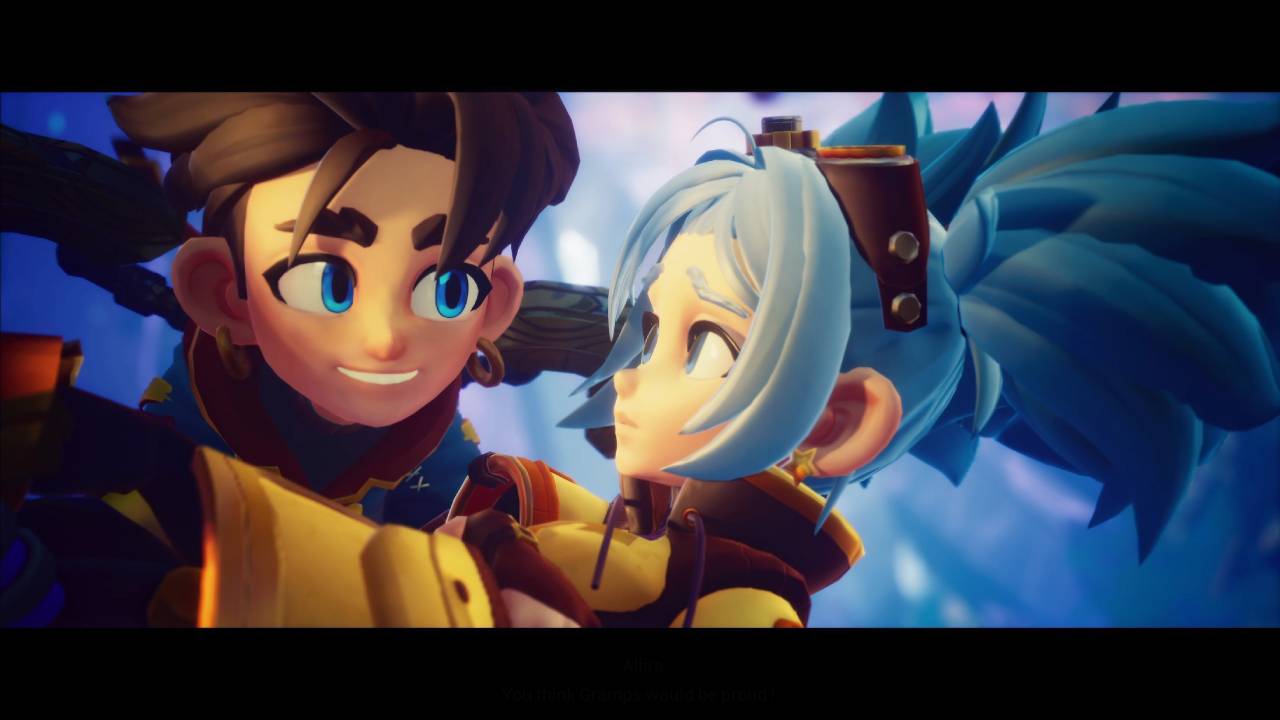
The characters are expressive, the environments are colorful, and Zerion and Cuckoo have enough visual personality to fit the animated style. The game often looks like a modern interpretation of a classic PlayStation-era platformer rather than a game trying to imitate current AAA realism.
The variety of environments also keeps the presentation from becoming stale. Forests, mountains, villages, libraries, islands, ruins, mines, volcanoes, and clockwork structures all have their own visual identity, while transitional areas help make the world feel connected.
There are also recognizable influences from other games, with Kingdom Hearts appearing to have influenced parts of the interface and character design, while Jak and Daxter, Ratchet & Clank, and Astro Bot are stronger reference points for movement and platforming.
The presentation does have some weaker areas.
The voice acting is serviceable but can sound more like a children’s animated show than a big production, which isn’t necessarily a problem given the game's tone but can make some emotional moments less effective. Some pre-rendered cutscenes are also capped at 30 frames per second, which makes them noticeably less smooth than the main gameplay.
Duskfade's biggest issue may ultimately be pacing. The main story can take around eight to ten hours for some players, while spending more time on optional content and collectibles can push the experience much further. Other play styles can stretch the adventure toward 15 or even 17 hours.
The game could also have used more demanding late-game content. Challenge rifts offer platforming and combat trials, but there are not enough moments that force you to combine everything you have learned. A few more stages tailored around the full set of abilities and tools would have made for a better final test.
.jpg)
Even with those issues, Duskfade gets the most important thing right: it is fun to play. You can run through colorful areas, jump on platforms, grind on rails, swing off of grapples, search for hidden paths, fight enemies, and collect items without having to think about complex systems all the time.
The nostalgic appeal also goes beyond its visuals. Duskfade captures the feeling of discovering an adventure without expecting you to already know how every system works. You can start with a simple objective and gradually become more invested in the characters, locations, collectibles, and theworld's strange history.
There are still some weaknesses to consider.
Combat can be repetitive, some collectibles feel like busywork, progression is not always as rewarding as it could be, and the later parts of the game could have pushed the platforming further. Zerion himself can also feel less distinctive than Cuckoo, who develops into a more memorable personality as the story progresses.
What remains is a game that feels sincere about the era it is trying to celebrate. Duskfade does not simply copy an older platformer and call it a day. It borrows the straightforward movement and collectathon structure of classic 3D adventures, adds modern visuals, gives its world a clock-punk identity, and builds a story around family, grief, and nostalgia.
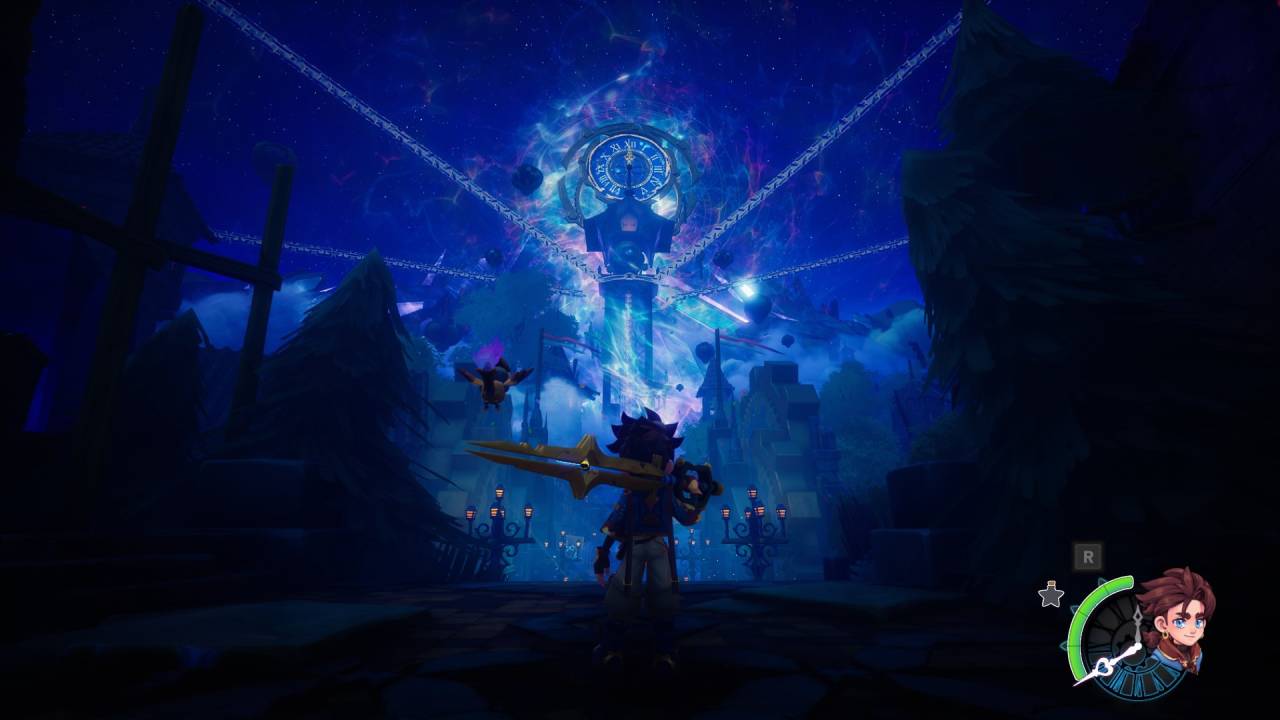
If you’re into classic 3D platforming, Duskfade is a nice trip back to a style that’s become increasingly rare. You have colorful environments, interconnected biomes, hidden collectibles, simple progression, expressive characters, platforming abilities, and a story that gets darker than it appears.
Ultimately, Duskfade succeeds because it knows what kind of game it wants to be. It doesn’t try to reinvent 3D platformers or compete with big AAA productions. It takes the most enjoyable parts of the genre and builds a modern adventure around them. It’s not a perfect outcome, but it’s accessible, fun, and packed with the kind of personality that made classic platformers special.
Editor, NoobFeed
Verdict
Duskfade is a fun, heartfelt throwback to classic 3D platformers, featuring smooth movement, colorful worlds, collectibles, combat, and an emotional story. The adventure is easy to enjoy, but its repetitive combat and uneven progression hamper it.
81
Related News
No Data.