
Forsaken Realms: Vahrin's Call Review
PC
An old-school mercenary story wrapped in a colorful new Coat.
Reviewed by Maisie Scott on Jul 29, 2026
Indie persistence is what has led Forsaken Realms: Vahrin's Call to release, from a small team of seven developers working on the project at Titan Roc for more than a decade. Naturally, those who followed its infancy release noted that they were looking to produce a game reminiscent of the classic Mid-2000s RPGs based on the Elder Scrolls/Fable line.
Titan Roc made no decision to use Unreal Engine 4 over UE5 when building the game, which meant there were no technical problems, slowdowns, or crashes on day one. A big aspect of what's really great about Forsaken Realms: Vahrin's Call, in the context of today's world, is the extent to which they went out of their way to scope it out.
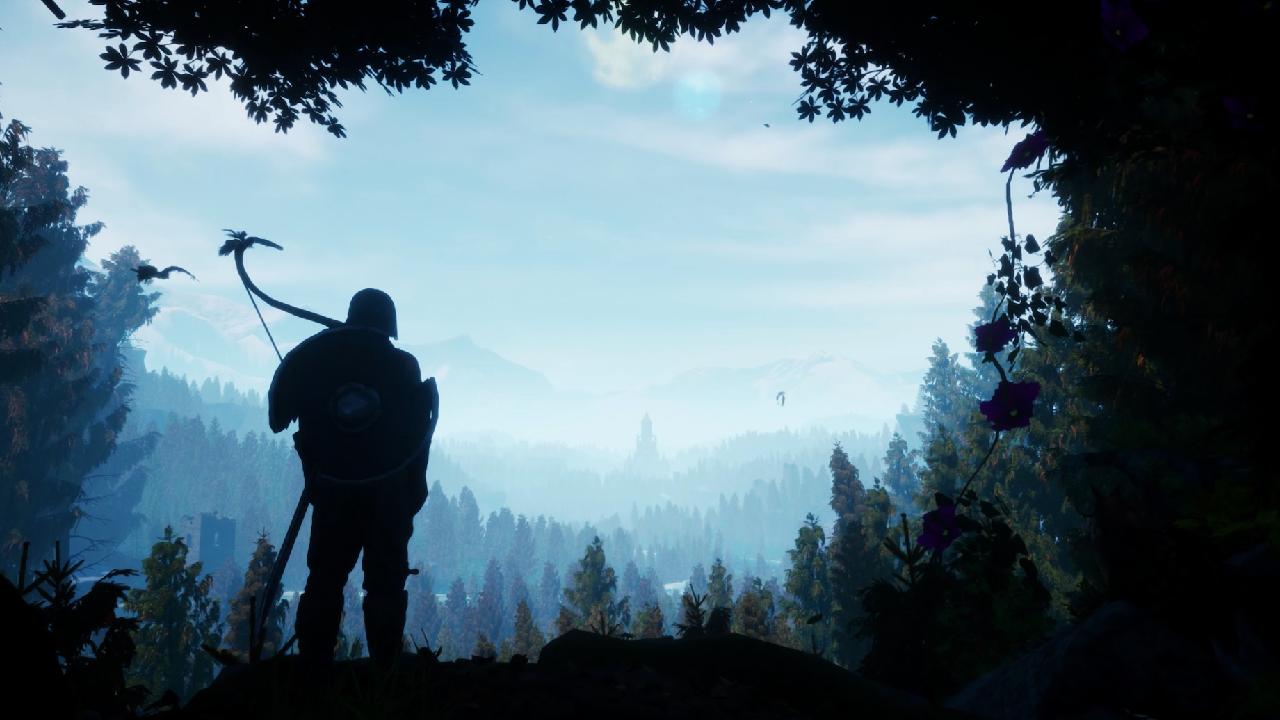
Instead of playing for 100 hours and completing a lot of filler missions while filling the world out, the designers created a concentrated RPG.
You will most likely hit credits on the main media during about twenty hours of play, but if you take the time to finish off every dungeon and side objective, it will be easy to get close to the thirty-hour mark. Better still: After the end of the game's story mode, the world remains open for you to explore, try out new equipment, and finish any remaining missions with the player build you had the time to optimize.
It also helps that Forsaken Realms: Vahrin's Call launched at a fairly reasonable price point for what it offers. You're not paying full triple-A pricing for a game built by a seven-person team, and once you factor in how much content is packed into a twenty-to-thirty hour run, the value proposition ends up feeling fair rather than inflated.
That matters more than it might sound, because a smaller studio charging a modest price naturally earns a bit of goodwill before you even press start, and Forsaken Realms: Vahrin's Call uses that goodwill wisely by front-loading a lot of its systems early rather than drip-feeding them over dozens of hours.
The focus of the story is incredibly straightforward, and drops you right into the boots of a traveling mercenary who arrives at Vahrin with schemes to take contracts and build your reputation. But not for you; you show up just in time to watch the whole area go up in flames.
The Khraiax are an underground insectoid race that has erupted from the depths of the planet, smashing through local defenses and fracturing protective factions within the city.
Order has fallen apart, and former defensive units such as the Snatchers have stopped even pretending to protect the weak, instead taking up banditry roles to prey on other survivors. In those opening hours, you will hack-and-slash your way past the bands of rogue scavengers and towering beasts that are enshrouded in a classic dark-fantasy origin story with laser-focus on what it wants to be, with you primarily establishing a foothold in Vahrin.
Where the narrative falls a bit flat is in how it's delivered. You won't get any dialogue choices here; every conversation and cutscene plays out automatically, with no branching paths and no real consequences tied to how you approach quests. You can skip a side quest entirely, and it'll simply sit there waiting for you, unaffected by your choice to ignore it.
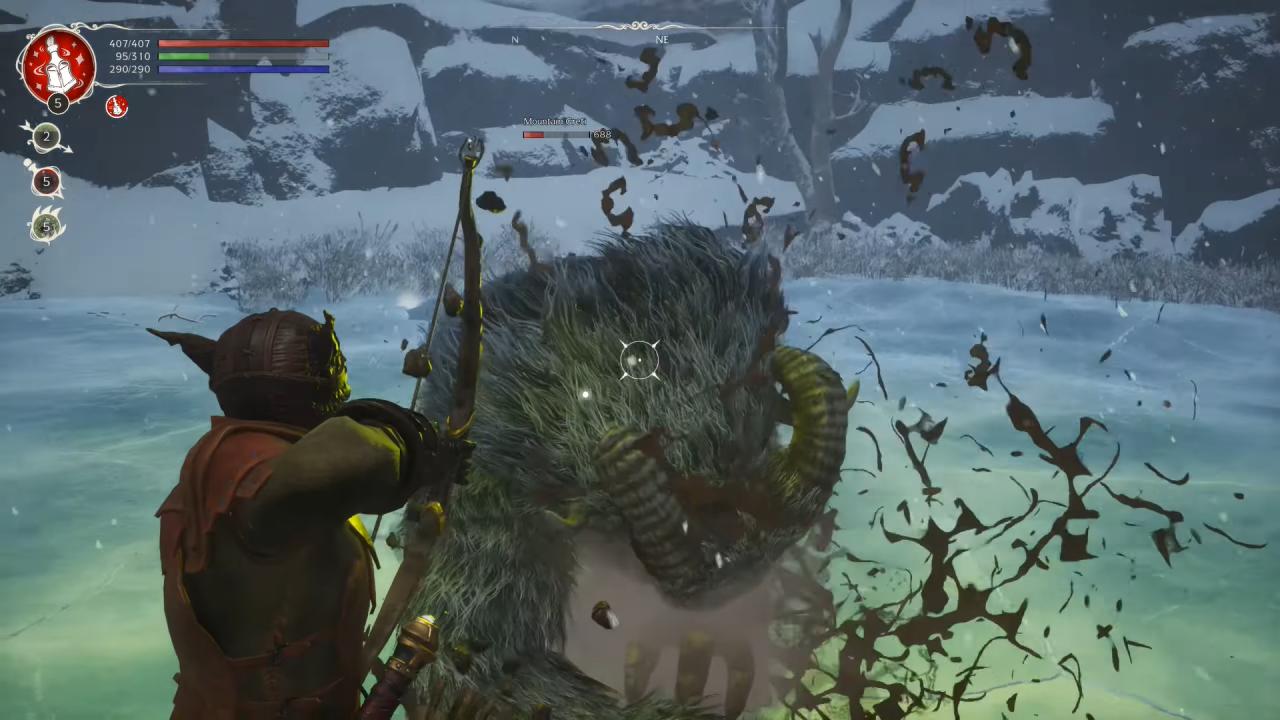
None of the characters stay with you, and overall the story is only average. The game has good amounts of background in the form of notes about history and important people in the Vahrin Kingdom, but the scope is local only despite the fact that the setting suggests the existence of other kingdoms that suffer from the same insects and undead problems.
It's a missed opportunity more than a dealbreaker, and by the time you're several hours in, you'll likely find yourself caring more about the side quests than the main plotline anyway, since a handful of them manage to be genuinely funny or surprising in ways the central story never quite reaches.
At its heart, Forsaken Realms: Vahrin's Call earns its keep as a game in the way it approaches character progression, relying heavily on free-form, classless mechanics.
Instead of starting you with a rigid character archetype and locking you in from the beginning, skills develop based on what you actually use in battle. Swing a big two-handed weapon, and your two-hander level goes up; block hits with a shield and your armor usage levels up.
It consists of an organic leveling system operating through melee weapons, dual-wielding, archery, trap-crafting, alchemy, and four branches of elemental magic related to fire, ice, earth, and alteration. As a cherry on the cake, Titan Roc has a totally free, no-penalty respec option at any time at all, meaning you can reload your build completely by simply finding something fun to try out in that awesome late-game gear.
Skills themselves don't come from a simple points-and-levels system alone; you need to physically track down skill books scattered across the world before certain abilities even become available to unlock, and even then, you'll need your weapon skill high enough before you can actually slot them in.
Progression goes hand-in-hand with exploration, so you're always getting pulled away from the beaten track; the good loot and skills can only be found in chests, hidden vaults, and secret areas. Plus there's the running gag about the gnomes' heads scattered throughout all zones who laugh at you when you find them.
Everything you find respawns except for chests.
Materials for crafting and upgrading are never truly finite, and that keeps the loop of exploring, fighting, and coming back to upgrade your gear feeling rewarding rather than tedious.
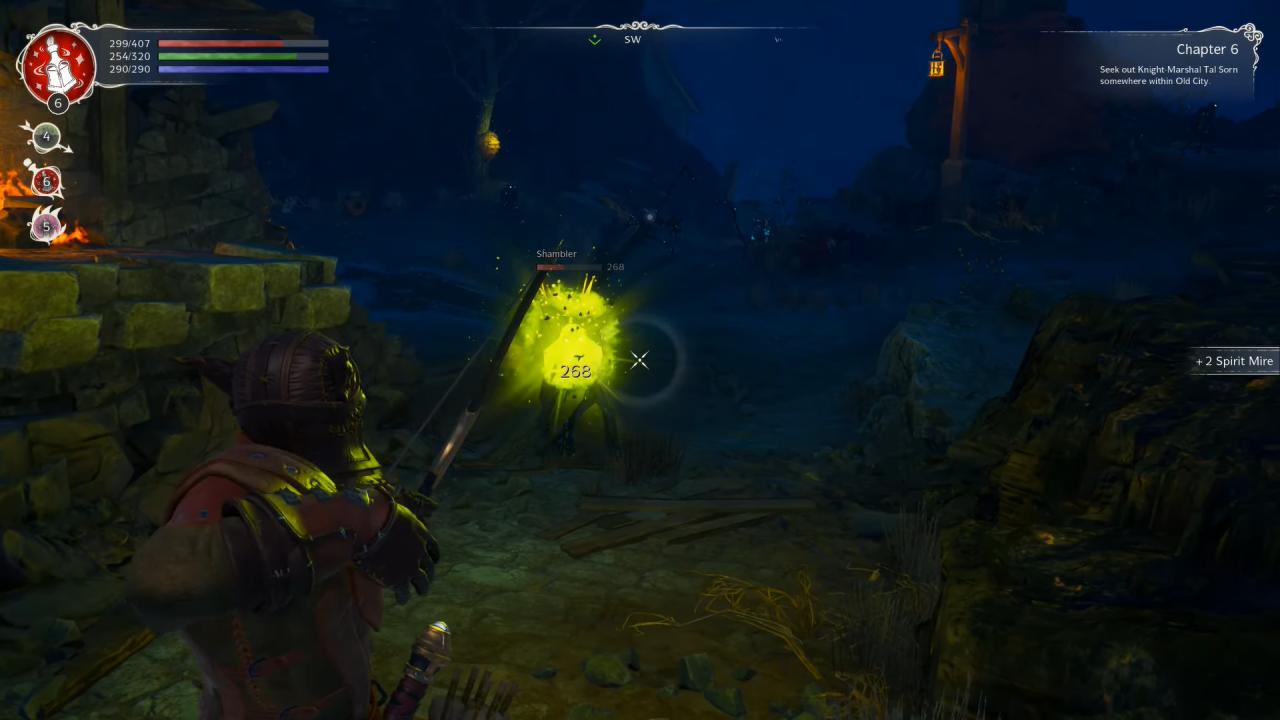
Combat in Forsaken Realms: Vahrin's Call runs on primary and secondary attacks for whatever weapon you've equipped, with secondary attacks tied to techniques you unlock as a given weapon skill levels up.
Stamina only drains from defensive actions like blocking, dodging, and sprinting, along with certain special attacks, while your regular swings cost nothing, which keeps the offensive side of things feeling fast rather than resource-starved. You can mix elemental effects into your build too, enchant a weapon with ice to slow enemies down, set them on fire for damage over time, or lean into alteration magic for buffs and eventually healing.
Traps and thrown potions add another layer, letting you poison the ground before enemies even reach you or debuff them from range before diving in with melee. The amount of viable combinations is honestly a little absurd once you start mixing systems together, and switching between them mid-fight is where the combat starts to feel genuinely satisfying rather than just functional.
All that mechanical depth is definitely accompanied by its fair share of jank in the combat department. Melee attacks, especially those with hefty two-handers, can feel a bit floaty and unwieldy, making timing seem clunky during chaotic battles. The interface also falters in combat; changing out spells, potions, and abilities on the weapon wheel mid-battle is very rough when you're trying to squeeze a healing potion at gunpoint.
The same inconsistency exists with enemy AI too, as sometimes bandits or beasts will stop and stand there while you blast them from range.
Then there is dying, which respawns you at the last shrine you activated but resets every enemy in the zone to full health, meaning late-game backtracking suddenly becomes a tedious slog due to one tiny error. Boss fights fare a lot better; you spawn basically at the door of their arena if you die, and the bosses themselves are stars, with unique, telegraphed attack patterns that can only be learned.
The general difficulty curve is somewhat uneven, beginning surprisingly easy throughout the opening acts before crashing in the final chapter, which practically forces commitment to gear upgrades. XP and leveling tie into all of this more than you'd expect. Character level caps out at 80, and individual skills cap at level 16, with skill points coming from leveling up your character overall.
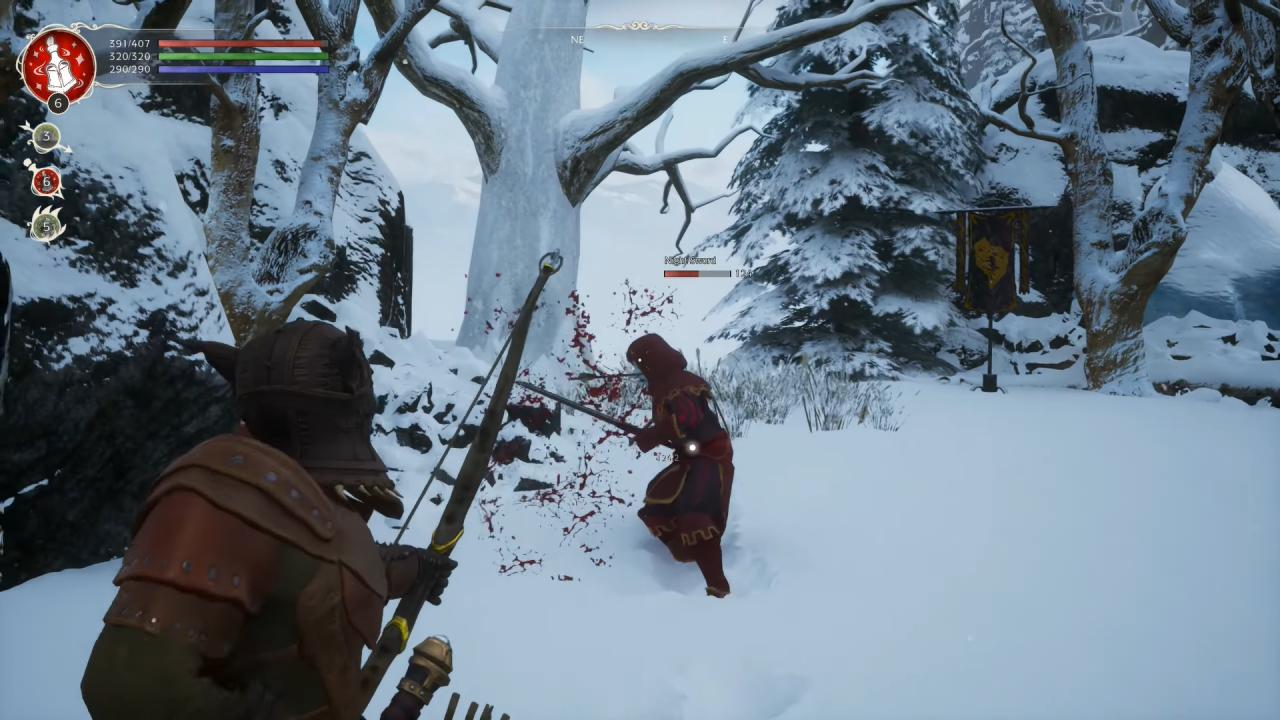
This is where alchemy comes into play: XP-boosting potions give you the opportunity to build up your leveling speed to the point that you can reach your limit before the end of the game. This is a guarantee even if you don’t try to manipulate anything.
It's not a dealbreaker, but it does mean the difficulty curve in Forsaken Realms: Vahrin's Call skews easier the longer you play, provided you're using every system the game hands you. Visually, Forsaken Realms: Vahrin's Call leans into a stylized, colorful high-fantasy look rather than chasing photorealism, and that choice works in its favor.
The world is lush, full of dense vegetation and detailed environments that hold up well even if the overall fidelity reads as a generation or two behind current releases.
Dungeons and interiors get appropriately dark, pushing you to rely on your lantern, which adds a nice bit of atmosphere to otherwise straightforward dungeon crawling. Armor design stands out as one of the stronger visual elements, with new set pieces feeling genuinely exciting to discover as you progress.
Character faces are the clear weak point; they look noticeably rougher than everything else on screen, though important story characters are at least distinct enough to recognize easily. Character customization gives you plenty of sliders to work with, even if the hairstyle options for male characters leave something to be desired.
Performance itself holds up reasonably well on most setups, though you may run into a few frame drops in areas with heavier vegetation density, and if you're playing on something like a Steam Deck, expect small UI text and some stuttering on lower settings, even with controller support working fine.
Sound design in Forsaken Realms: Vahrin's Call sits in a similar spot to the visuals, perfectly serviceable without being a standout feature. Voice acting and ambient sound come across fine without any glaring issues, though some of the basic melee hit sounds could use more weight behind them.
Special abilities and weapon techniques land with noticeably better sound design than regular attacks.
You'll notice the difference between a basic swing and a charged special the moment you start using them. None of it pulls you out of the experience, but nothing about the audio side leaves a lasting impression either, which tracks with a smaller team working within a limited budget.
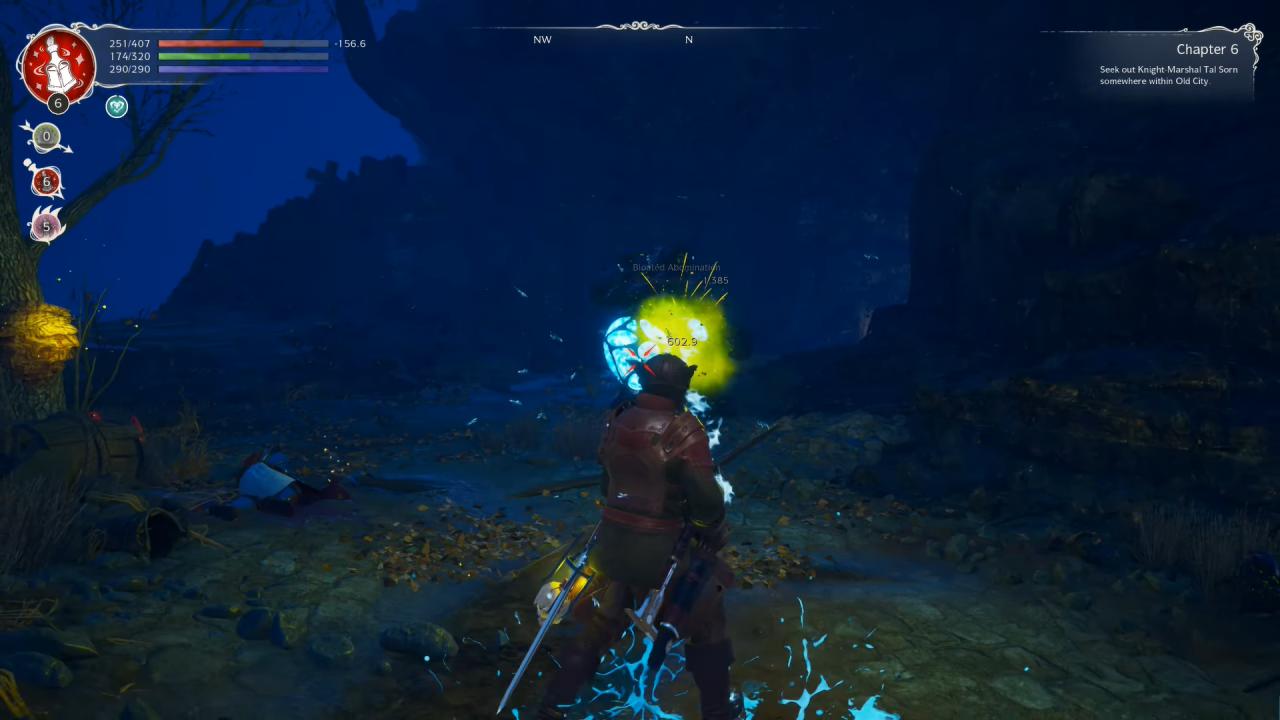
Taken as a whole, Forsaken Realms: Vahrin's Call succeeds far more on the strength of its gameplay than its story. The narrative is linear, predictable, and light on memorable moments, but the classless progression system, the genuine freedom to build your character however you want, and the sheer amount of exploration-driven content make up for a lot of that shortfall.
Combat has real depth once you start combining elemental effects, traps, and weapon techniques, even if melee can feel a little stiff and the AI doesn't always cooperate. The enemy respawn system after death is probably the biggest annoyance you'll run into on a mechanical level, and the story never quite reaches the ambition its worldbuilding hints at early on.
Still, for a team of seven people working on this for over five years, Forsaken Realms: Vahrin's Call comes together as a surprisingly complete package, one that rewards the kind of player who likes picking apart every corner of a map and experimenting with builds rather than rushing straight through the main quest.
Editor, NoobFeed
Verdict
A charming, rough-edged, classless RPG with flexible builds, rewarding exploration, and satisfying combat. The story stays predictable, but Forsaken Realms: Vahrin's Call still delivers a genuinely fun, old-school adventure worth your time.
76
Related News
No Data.