
Moss: The Forgotten Relic Review
Xbox Series X|S
Polyarc's beloved adventure game leaves virtual reality behind, proving that Quill's heartfelt journey remains just as enchanting on traditional screens.
Reviewed by Mahi Araf on Jul 22, 2026
Polyarc’s Moss for PlayStation VR launched in 2018, and it immediately felt unlike most virtual reality experiences. In an era when many VR games were short demos, third-party shooters or interactive exhibits, Moss showed that virtual reality could deliver a comprehensive adventure with unique characters, meaningful storytelling, satisfying puzzles and refined gameplay.
MOSS VR rapidly became one of the highest-rated exclusives in VR, racking up well over 160 award nominations and wins, and cementing Quill, its little mouse protagonist, as one of gaming's most adorable protagonists. Its success gave rise to Moss: Book II in 2022, which expanded almost every aspect of the original while continuing Quill’s adventure without sacrificing the intimate relationship between you and the main character Quill.
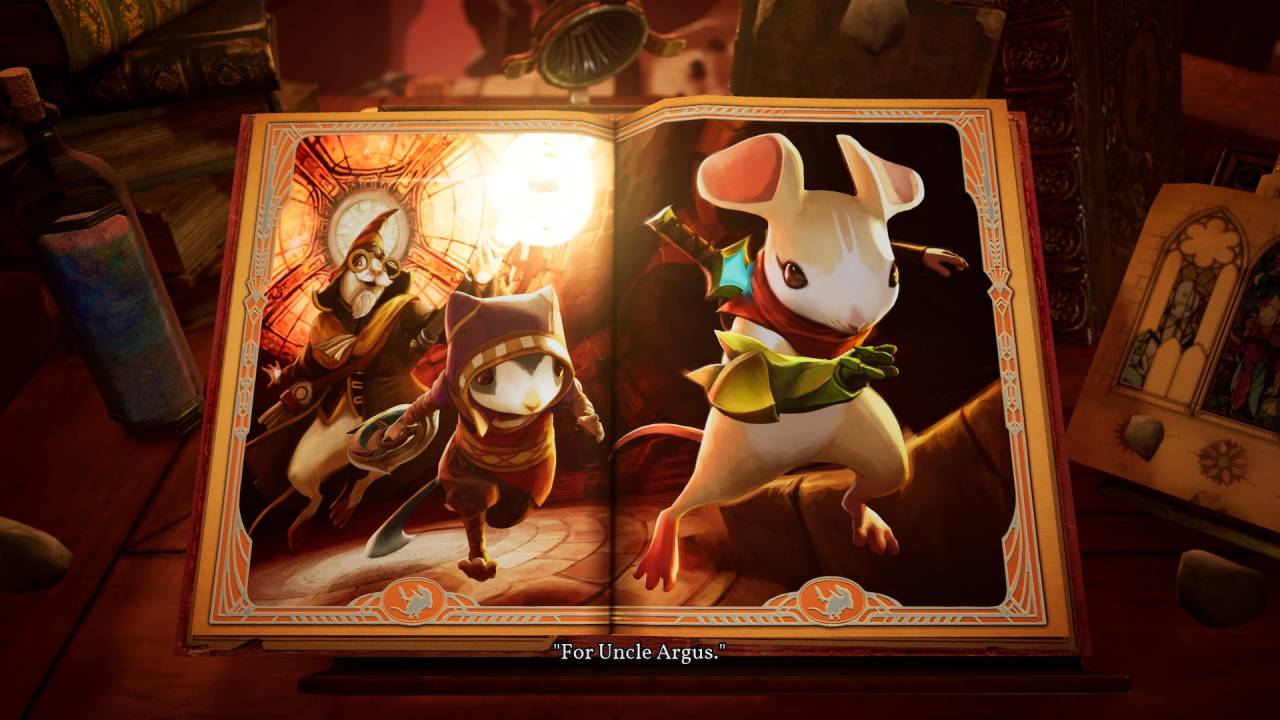
Despite the acclaim, both games remained locked behind expensive VR hardware, so many fans never got to experience them.
That changes at last in Moss: The Forgotten Relic. Rather than creating a brand-new sequel from scratch, Polyarc joined forces with Blackbird Interactive to combine Moss and Moss: Book II into a single, cohesive experience optimized for standard displays. The Twilight Garden DLC is also included, making this the definitive edition of Quill’s adventure. Moss: The Forgotten Relic was recently released on PS5, Xbox, and PC.
But it's not as simple as just swapping motion controls for a controller — a game built around virtual reality doesn't just get "ported" to a controller. The developers completely overhauled several major systems, including a brand new Smart Follow camera, more cinematic cutscenes, improved visuals, accessibility features such as a combat skip option, and controller schemes that retain the unique relationship between Quill and you.
There are obviously unavoidable compromises when transferring a VR experience to TV or monitor, but Moss: The Forgotten Relic succeeds in keeping the characteristics that made the originals so famous. The story follows Quill, a brave young mouse armed with nothing more than a sword, a steely determination, and an enormous sense of responsibility.
Her adventure begins with the search for her missing uncle, Argus. Still, it quickly expands into a far wider mission involving the mysterious King's Glass, an ancient castle filled with frightening power and beings bent on destroying the fragile peace of the mouse kingdom. Moss doesn’t spin an epic fantasy of giant armies and sprawling kingdoms.
He tells an intimate fairy tale. It’s never about political intrigue or world-ending calamities, but rather one modest hero overcoming unimaginable circumstances. Old ruins are overgrown with vines and Moss; the woods swallow up abandoned castles, and slowly but surely, nature reclaims what mankind made. The atmosphere is one of calm melancholy, more like flipping the pages of an illustrated storybook than diving into another fantasy action game.
The game's framing is a great strength of the series. Instead of just controlling Quill, you become the Reader, an unseen figure who is literally reading the magical book where Quill's adventure is written. As you progress through Moss: The Forgotten Relic, the narrator will turn pages between chapters. Quill knows you're there, and often looks right at you to congratulate you on wins, ask for help, or just give you a high-five.
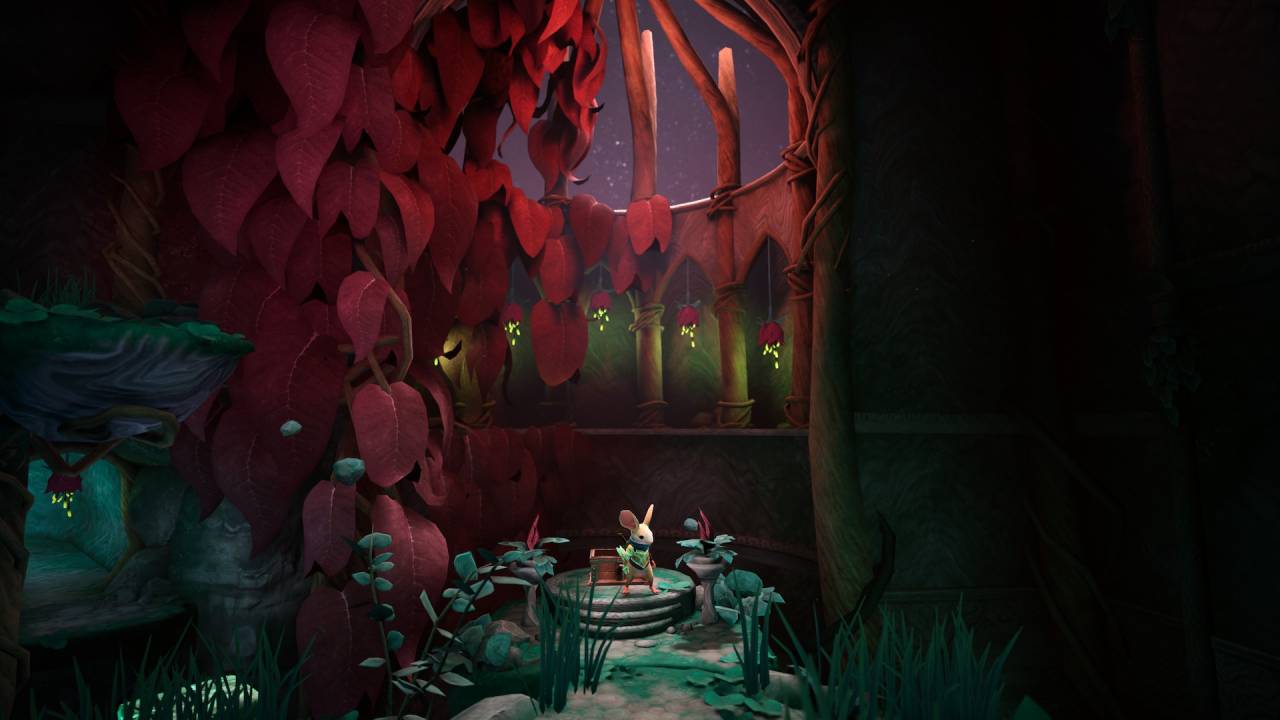
That link provides an emotional connection rarely seen in platformers.
Remarkably, Quill never speaks a word. All emotions are expressed in body language, facial expressions, gestures, and subtle animation. A nervous glance as you step into danger, an excited cheer when you solve a puzzle, or a grateful smile after receiving help from you speaks volumes more than words ever could.
You can't help but get invested in her journey, because Moss: The Forgotten Relic is constantly reminding you that you're not just controlling her, you're with her. It's also much better paced to have both original games packaged as one long adventure.
Previously, Moss terminated it fairly abruptly before you had to purchase and start Book II. In this case, the transition feels seamless, allowing the entire plot to unfold as a single coherent fantasy game. The distinctive aspect of Moss is its dual-character gameplay.
At first glance, it would appear that Quill is the only character you can control. She runs and jumps, dodges and climbs, swings her sword, and explores beautifully crafted environments. But she’s only half Moss: The Forgotten Relic. And the other half's yours. You can use the right stick or the touchscreen in handheld mode on supported systems to control a glowing magical cursor that you can use to physically interact with the environment.
You can move heavy blocks, flip switches, manipulate platforms, freeze foes, collect objects, heal Quill, control specific creatures, and build bridges to places that she can’t get by herself. It's nearly like playing two characters simultaneously. Some have compared it to playing the co-op games all by yourself, and it is a shockingly good analogy.
You are constantly toggling between navigating Quill through danger and changing the world, frequently doing both at the same time in more challenging puzzles. This control system can seem clunky at first. Years of gaming have conditioned gamers to think that the right stick is for the camera, not a second playable entity. Those opening chapters can be a bit uncomfortable during that adjustment period.
Luckily, the learning curve is not steep.
Once you get the controls, moving your focus between Quill and you is really enjoyable. They never feel like two separate systems that finally combine into a single, smooth mode of control unlike anything else in the genre. Maybe the most impressive accomplishment is how effectively this concept works when you remove the VR from the equation.
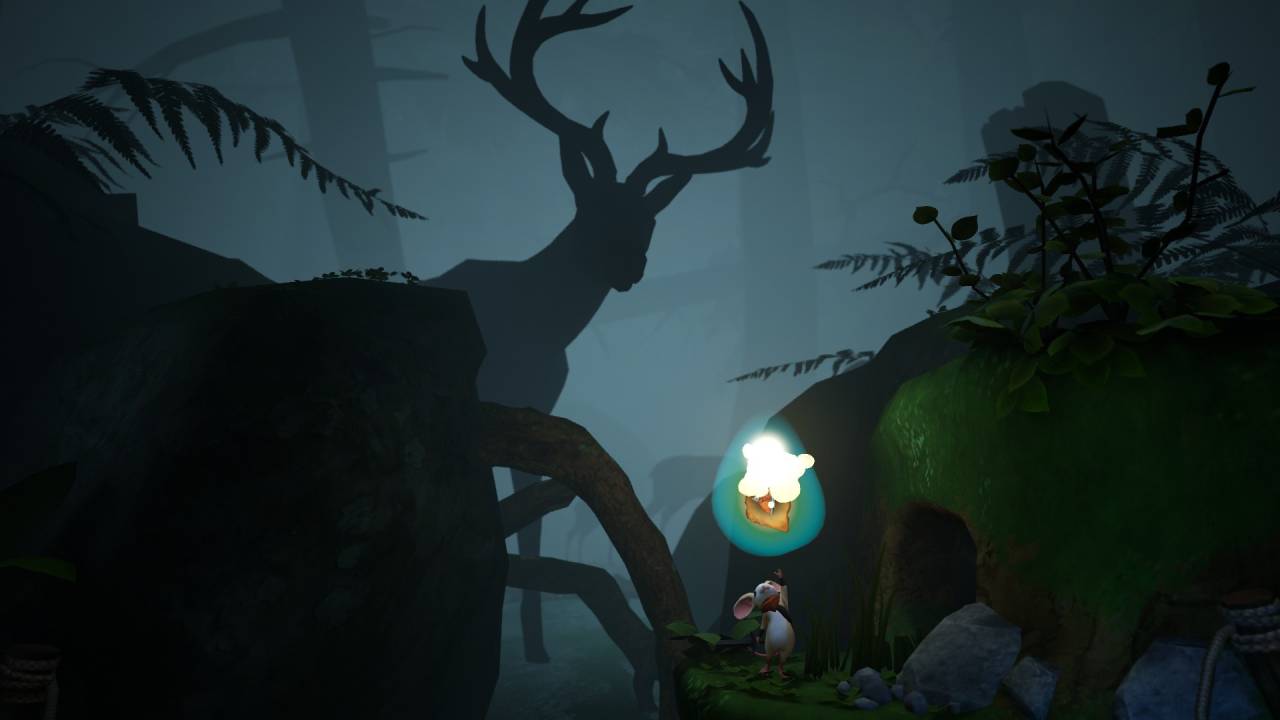
Originally, gamers literally interacted with the environment by using motion controllers. Of course, you do miss part of the immediacy of that physical engagement on a standard controller. Still, the core gameplay is fun because the puzzle design was always about working together with Quill.
There’s no question that the core of the experience is solving puzzles. Every chapter consists of interconnected rooms resembling intricately detailed miniature dioramas. Each scenario adds novel interactions while building progressively on mechanics acquired earlier.
You'll drag blocks into place, connect vines to build bridges, flip switches from a distance, manipulate machinery, freeze enemies in mid-attack, guide friendly bugs onto pressure plates, and eventually use Quill's increasing abilities along with your own to solve more and more inventive challenges.
Quill’s magical hammer is one of the cleverest additions later in the trip. Once charged, it generates a spectral version in another part of the environment that you can activate remotely. That leads to puzzles in which you need to work together with Quill on opposite sides of a room, reflecting Moss: The Forgotten Relic's core design concept.
The puzzles don't get brutally difficult all that often, and that’s by design. They emphasize observation, sequencing, and spatial reasoning, rather than burdening you with complexity. Solutions tend to seem reasonable, thus making progress always rewarding and never frustrating. That said, one issue recurs throughout the collection—and it’s a consequence of the shift away from VR.
In the first editions, you could easily bend around corners or physically peer behind items when visibility was restricted. The camera is fully programmed with the new Smart Follow technology on standard screens. It does a great job of framing scenes, but sometimes has issues with areas meant to let your head roam freely.
Sometimes important pathways are hidden by foreground objects, it’s hard to judge platform distances, or puzzle solutions are hidden because the camera simply refuses to give a better angle.
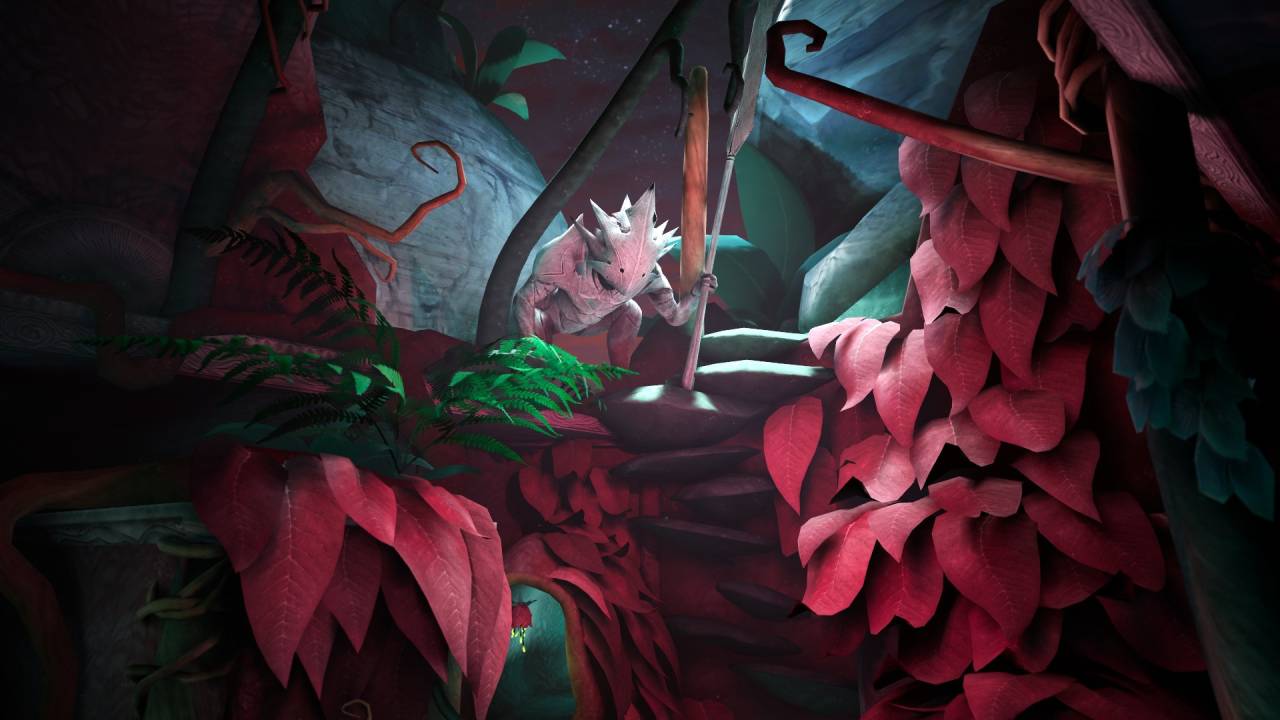
Some rooms are even momentarily disorienting, since the fixed perspective makes previously visited areas unrecognizable. The camera doesn't spoil the experience, but it does remind you that these worlds were initially designed with virtual reality in mind. A little manual camera control, or optional gyro-based camera tweaks on consoles like the Switch 2, would have eliminated a lot of these difficulties.
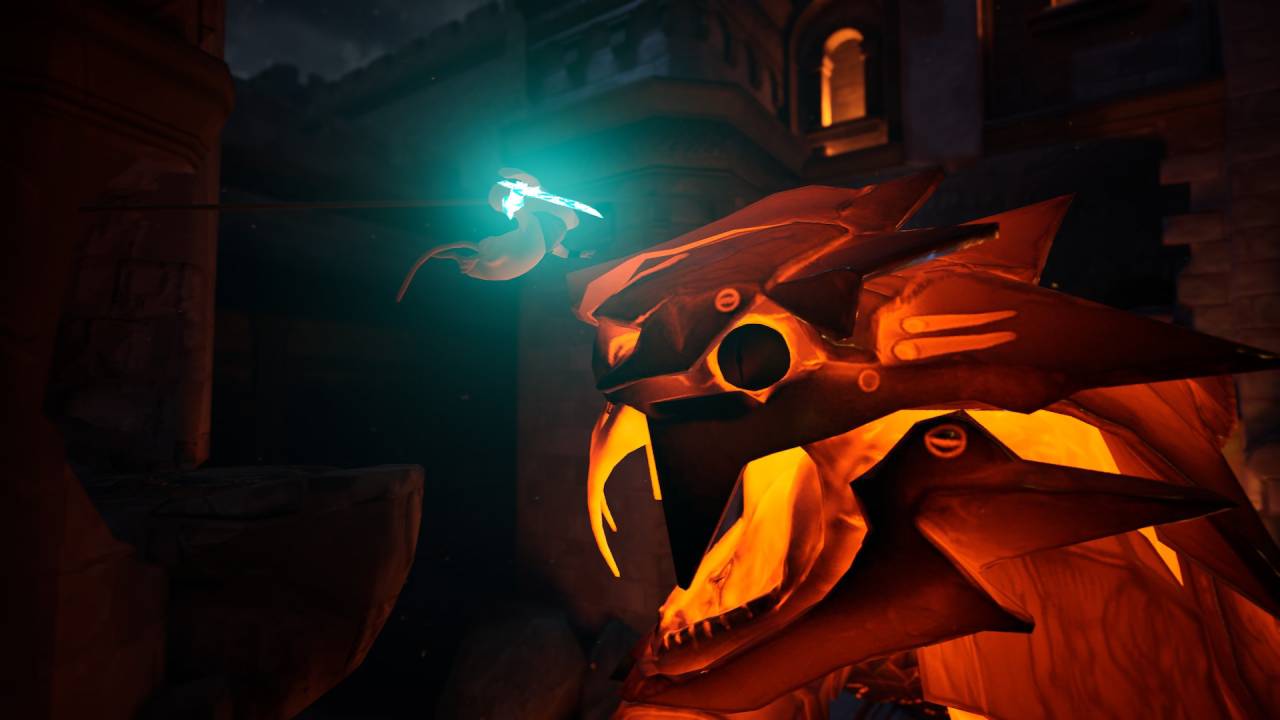
Combat is a secondary feature of the adventure, not the main attraction. Quill begins with a basic sword, then gradually unlocks extra abilities, including ranged attacks and the hammer mechanics already noted. Enemies include spiders, bugs, armored animals, snakes, and magical foes, many of which require a blend of Quill's attacks.
The chance to control some insects for a time or fire projectiles at other targets provides a welcome change of pace to fights, keeping combat from becoming completely stale. But the pace is rather basic compared to Moss: The Forgotten Relic's challenges and story.
Fans coming out of the grueling battles like Hollow Knight, Prince of Persia: The Lost Crown, or even more current Zelda games might find these confrontations a little too simple. Polyarc understands this very well, so the collection even has an optional Skip Combat accessibility feature if you want to experience the story and puzzles without interruption.
That one addition says a lot about the developers' priorities. Combat is there to complement the journey, not define it. Moss doesn’t have traditional XP or leveling as RPGs do. Instead, you advance by gaining new powers, interacting with the environment, and learning to handle the gameplay difficulty curve.
With each mechanic you unlock, puzzles become increasingly complex, while combat encounters will demand more and more inventive use of your growing toolbox. The lack of grinding keeps the tempo continually focused on exploration and storytelling rather than repeating progression mechanisms.
Years after their initial release, Moss and Moss: Book II still stand as two of the most visually distinct adventure games around, and much of that charm remains in Moss: The Forgotten Relic. Polyarc chooses a handcrafted storybook style over photorealism, and each setting feels like a little diorama painstakingly set on a table.
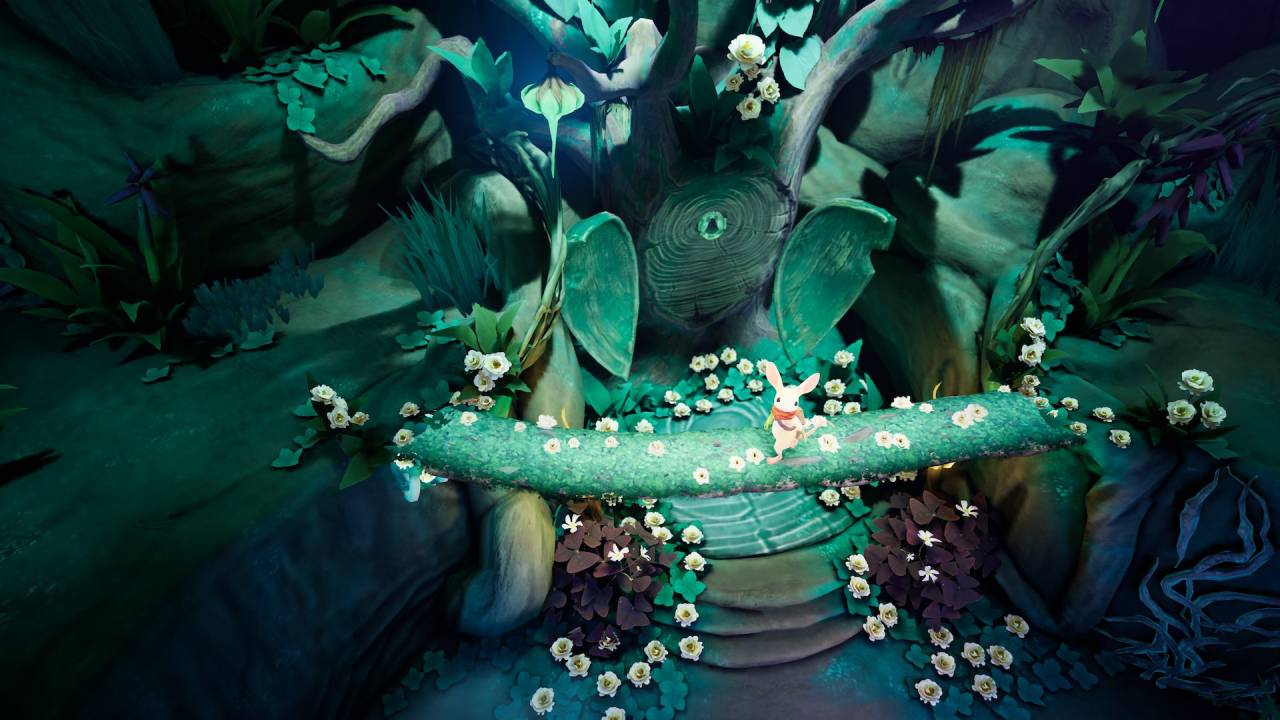
Every place is full of detail. Nature has long since taken ancient castles, their stone walls crumbling under creeping ivy, their lost walkways carpeted with Moss and gigantic tree roots winding through abandoned buildings. Each biome has a personality of its own, from tranquil wooded glades and overgrown ruins to dark tunnels and forbidding castle interiors.
Moving between these zones is like flipping through the pages of a gorgeous illustrated fantasy tale, with each chapter featuring a new visual identity that still fits the game’s overall art direction. Lighting also plays a major role in setting atmosphere.
The dense forests are bathed in warm sunlight, the torchlit hallways cast long shadows on the stone floors, and magical effects bring vibrant colors to otherwise gloomy surroundings. None of these effects are too flashy, but they combine to create a world that feels alive even though it’s miniature.
But the true visual star is Quill herself.
Quill utters not one line of dialogue, and yet the animation is surprisingly emotive. She warily looks about unknown places, joyously celebrates after solving puzzles, responds fearfully when danger approaches, and eagerly reaches out for a high five after overcoming difficult difficulties. Her every movement feels lovingly designed, and she’s one of the most lovable heroines in modern gaming.
The bond between Quill and you is one of Moss: The Forgotten Relic's strongest qualities, even without VR. Every time she pauses to acknowledge you, whether she's staring right at the screen, gesturing toward secret passages, or offering a reassuring gesture, it reinforces the illusion that you are an active participant in her story, not just a person holding a controller.
Of course, there are costs of abandoning virtual reality. In VR, you could lean into your environment, check out tiny details from different angles, and really get a feel for the incredible sense of scale. You stood over Quill towering above miniature castles, like a guardian watching over her adventure. That view also improved exploration, allowing you to look behind walls, around corners, or under structures to find secrets and goodies.
That feeling of physical presence is necessarily decreased on a conventional display. The new Smart Follow camera does a pretty good job of framing each room, but it still can't fully replace the freedom of movement that VR used to provide. Some camera angles hide critical passageways, and some views can be challenging for judging platform distances.
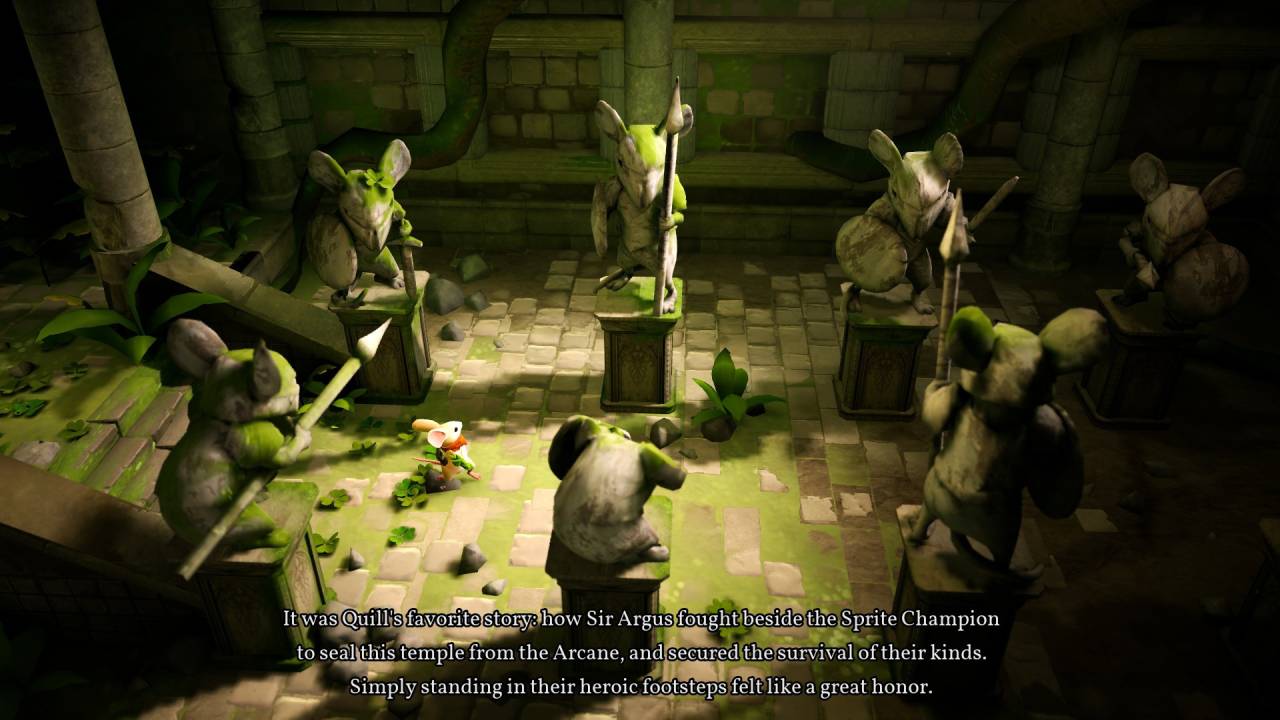
You can no longer explore the environment from all angles, making hidden collectibles a bit harder to spot. Those compromises aside, the artistic direction is great.” If anything, The Forgotten Relic is a testament to the excellence of the original graphic design. The environments are nonetheless stunning enough that losing VR immersion is never a detraction from the care put into any scene.
The technical performance of the game is equally impressive. On contemporary systems, Moss: The Forgotten Relic offers excellent graphics, reliable performance, and surprisingly quick loading times. Specifically, the Nintendo Switch 2 version maintains a steady 60 frames per second in both docked and handheld modes, making it a great platform for gaming on the go.
Due to the bite-sized nature of many puzzle rooms, the game is perfectly suited for shorter gaming sessions without sacrificing immersion. If Quill is the emotional heart of Moss, then the soundtrack is surely its soul. Composer Jason Graves provides another score that fits the fairy-tale atmosphere of the game perfectly.
The game avoids big orchestral pieces in favor of soft melodies, emotional orchestration, and subtle motifs that quietly unfold alongside Quill’s journey.
It naturally flows from tranquil exploration to tense encounters to emotional plot moments without ever overpowering you. The emotional sections in the game are further elevated by Malukah's vocals, which bring a surreal air to critical moments that lingers long after the credits roll.
The soundtrack always enhances the sensation that you are living a storybook and not just going through another action-adventure game. The narration of the game is also important. Instead of long language exchanges, Moss tells its tale with an omniscient narrator who physically turns the pages of the magic book between chapters.
The presentation here is wonderful, encapsulating the core notion as you while preserving the essence of a classic children's fantasy story. The narrator's steady tone lends each chapter a timeless aura, so even simple situations seem to carry weight.
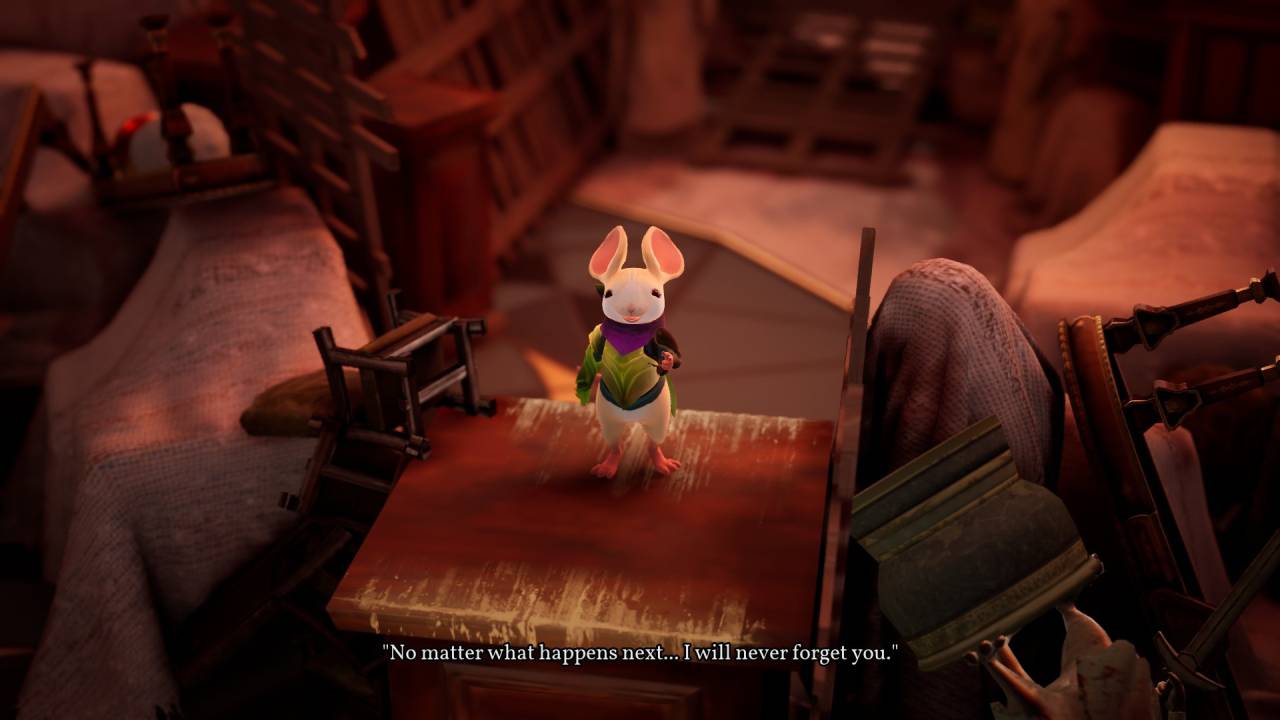
Quill herself never speaks, but hardly needs to. She squeaks, gesticulates, breathes, and animates her expressions to convey an incredible spectrum of emotions without uttering a single word. The sound design, from the subtle swish of grass under her feet to the gratifying clang of sword strikes to the soft chime of magical interactions, always reminds you that Quill is not a silent protagonist, but a living character, along with the meticulously designed sound effects.
Environmental audio gets a nod, too. Birds chirp in the distance, insects buzz through the overgrown ruins, waterfalls echo inside forgotten caverns, and subtle ambient sounds breathe life into every corner of the world. These subtleties rarely call for attention on their own, but together they build worlds that feel rich and authentic.
The end product is a piece of audio that matches the game's visuals flawlessly. All elements of music, narration, and ambient sound combine to create a mood that is at once comforting, melancholic, and magical. Moss: The Forgotten Relic is something special in today's gaming world. It’s not a remake or a completely new sequel.
It’s a considerate preservation effort that delivers one of virtual reality’s finest exclusives to a far wider audience while honoring the features that made it remarkable in the first place. This shift away from VR is not perfect. Certainly, some environments reveal their design ambitions through strange camera angles, occasional sight issues, and the loss of tactile immersion that only a headset can deliver.
Some puzzles are a little less intuitive, exploration sometimes suffers because you cannot lean into corners, and combat never matures into the deepest part of Moss: The Forgotten Relic. But none of these faults detract from what Moss does so wonderfully. Quill is still one of gaming's most lovable protagonists, conveying personality and emotion through nothing but extraordinary animation.
The bond between you and Quill remains as special as ever, giving the adventure an intimacy not often seen in platformers.
The puzzle design gradually introduces new principles without feeling overwhelming, and the wonderfully handcrafted locations, evocative soundtrack, and elegant storybook presentation all come together for a timeless experience. Moss, Moss: Book II, and the Twilight Garden DLC are packaged together as a single, cohesive experience, turning what were once two separate releases into one cohesive journey.
Quill’s story also flows naturally from start to finish, rather than ending abruptly between games, making this easily the best way for newcomers to experience the series. Accessibility additions like the optional battle skip function further extend Moss: The Forgotten Relic's appeal, giving those more interested in exploration, puzzles, or storytelling a chance to experience the adventure without undue frustration.
But those coming back from the VR originals should moderate anticipation. The upgraded visuals, the Smart Follow camera, new cutscenes, and quality-of-life changes are all great, but this is really the same story, not a brand new chapter.
If you missed Moss (because you never put on a VR headset – or maybe just couldn’t get comfortable with VR owing to motion sickness), The Forgotten Relic finally breaks down the largest barrier that kept this incredible journey behind lock and key for years. Outside of a headset, it may lose a little of its original magic, but what’s left is still one of the best puzzle-platforming adventures of the past decade.
But more importantly, Quill's path shows that real greatness in game design isn't about the hardware it was made for. Even beyond virtual reality, her narrative continues to enchant, inspire, and remind you that sometimes the smallest heroes make the biggest impressions.
Senior Editor, NoobFeed
Verdict
Moss: The Forgotten Relic successfully brings one of VR's finest adventures to everyone, preserving its emotional storytelling, ingenious puzzles, and irresistible charm despite camera compromises and the unavoidable loss of VR immersion.
89
Related News
No Data.