
Never Grave: The Witch and The Curse Review
Xbox Series X|S
Never Grave: The Witch and The Curse is a metroidvania, roguelike, and village builder all in one that somehow pulls it off.
Reviewed by Asura Kagawa on Mar 14, 2026
When you first hear about Never Grave: The Witch and The Curse, it might strike you as a curious mix of genres that shouldn't quite work together. Developed by Frontside 180, the game leans heavily on inspirations from beloved titles like Hollow Knight for its art and Metroidvania structure and Dead Cells for its roguelike loop and even throws in a bit of city-building reminiscent of Rune Factory.
Even though it might look like a bit of a mishmash that could easily fall apart, there's something about how these elements work together that makes Never Grave: The Witch and The Curse worth diving into. It might seem odd to play as a hat that is sentient and can take over creatures and build a village from scratch, but that's exactly the kind of experimenting that only indie games do best.
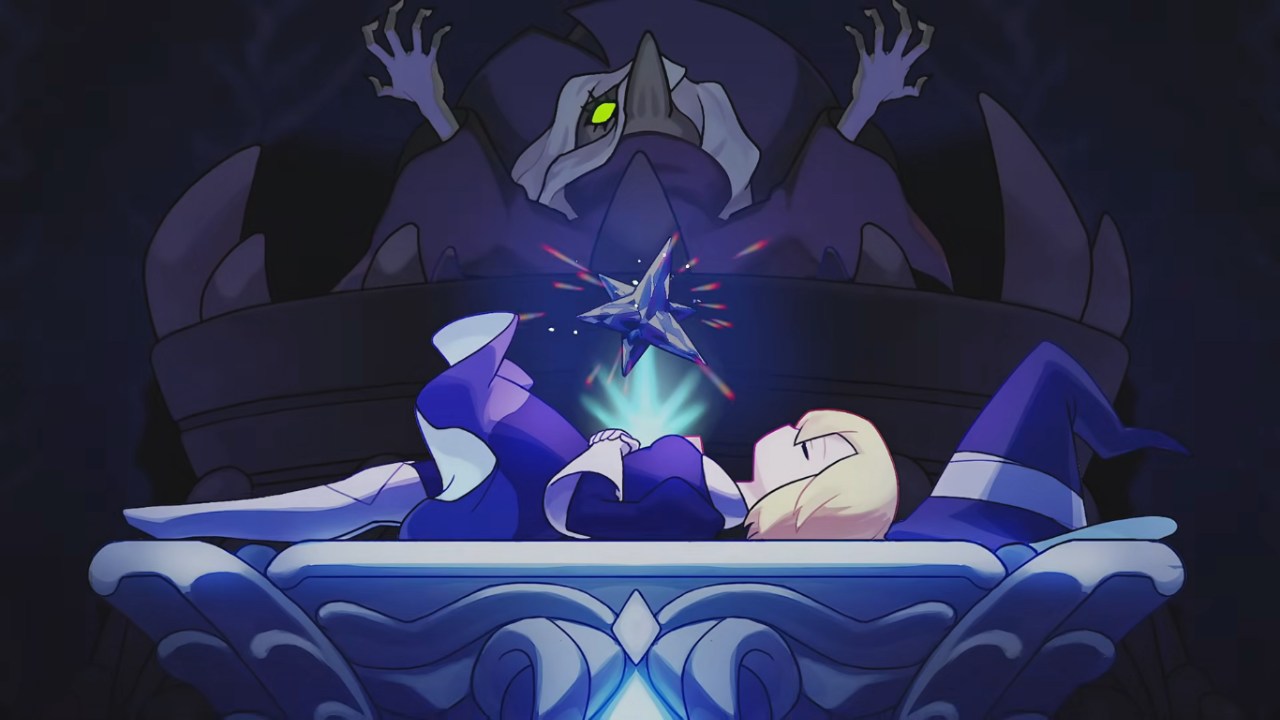
The story starts off in classic minimalistic fashion. You're thrown into the world after a magical experiment goes awry, and suddenly, you, or I should say, more appropriately, the hat, are ejected from a tower by a mysterious witch-like figure. At first, it's not entirely clear if you are the girl, the hat, or if a soul transfer has occurred.
The narrative doesn't spell it out, which might be a little confusing if you're expecting a deep, guided story.
The intro does set the tone, though: mysterious, magical, and a little bit dark. You quickly meet your first challenge, a boss that's far too strong for you at this stage, and after dying, you find yourself in a ruined village church. This is your new hub, the one place that survived the calamity, where you're tasked with rebuilding and gradually uncovering what happened.
If you're hoping for a story-heavy experience, Never Grave: The Witch and The Curse may not be the game for you. The narrative is sparse, and the pacing slows because you're spending most of your time in procedurally generated dungeons. By the time you finish the initial area, the details of the intro might already feel distant.
That said, the story works well enough as a framework for the gameplay loop, giving you context for why you're exploring dungeons, collecting materials, and reconstructing a village. There are hints of lore scattered throughout, some interesting characters to encounter, and a few surprises, but the main draw here is clearly the mechanics rather than the tale itself.
Gameplay in Never Grave: The Witch and The Curse is where the game starts to shine, though it's a mixed bag in some respects.
The game divides into two main parts: action-oriented dungeon segments and downtime in the village. The dungeon segments follow a traditional 2D Metroidvania template, featuring labyrinthine maps, platforming, checkpoints, and occasional puzzles. Every run is a roguelike-esque, with loot, enemies, and rewards that change every time.
When you die, you go back to the village hub. You lose some progress, but you keep your meta-progression upgrades. One of the best mechanics in this game is possession. You can wear the hat and take over defeated monsters, each with its own attack patterns and ranges.
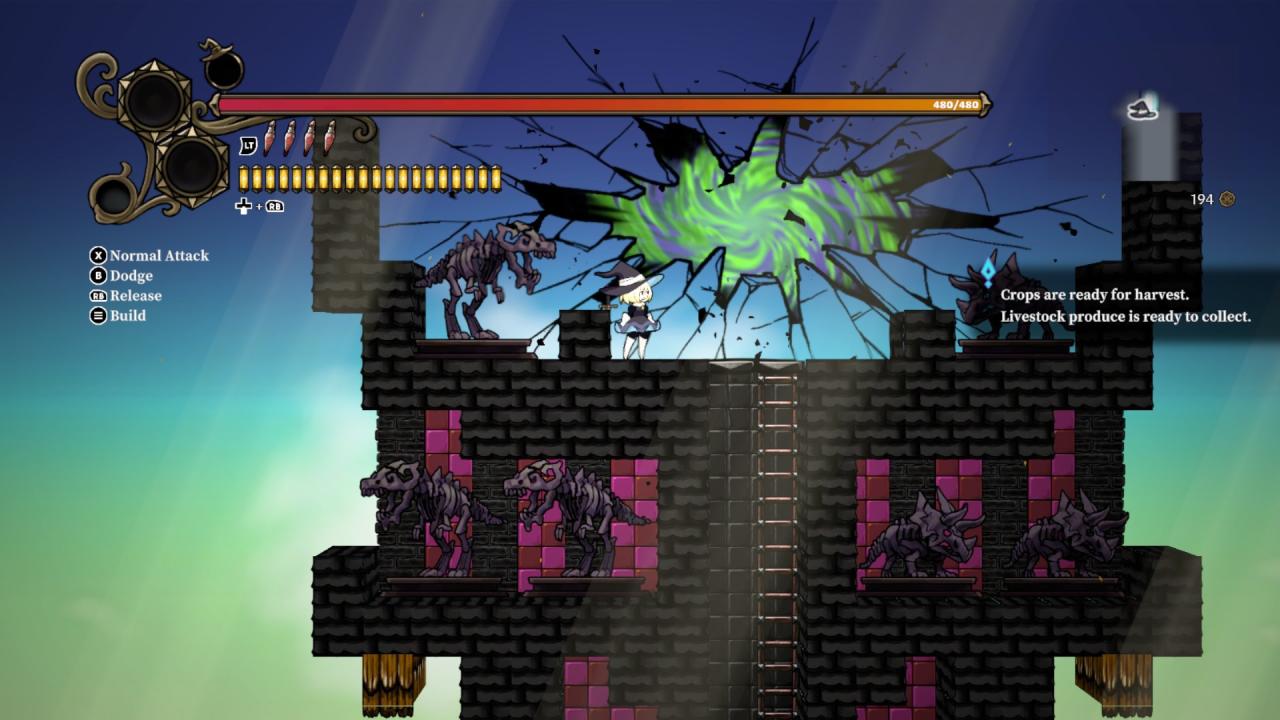
This is not just a gimmick; it is a useful tool for planning. Possessing a creature can give you more health because if your current host dies, you turn back into your hat form and can rejoin your main body with the same amount of health.
It's also good for exploring because you can get to places or face challenges in different ways depending on which body you control. This structure makes the game more flexible than Dead Cells, which has simple combat.
But the fighting itself is pretty regular. You'll slash, roll, dodge, and use a few spells or tools, but the basic gameplay isn't as intense as Hollow Knight's or as atmospheric as Animal Well's. Legendary perks can make a big difference in fights, but most basic abilities don't seem to do much in terms of effectiveness.
Still, the basics are solid, and the possession mechanic adds enough variety to keep battles from feeling too routine.
Boss fights are the real challenges that need you to recognize patterns, time things right, and sometimes try things out before you get it right. You can change the difficulty level of the game while you're playing, which makes it easy for casual players to pick up and play, but still gives a lot of punishment to those who want it.
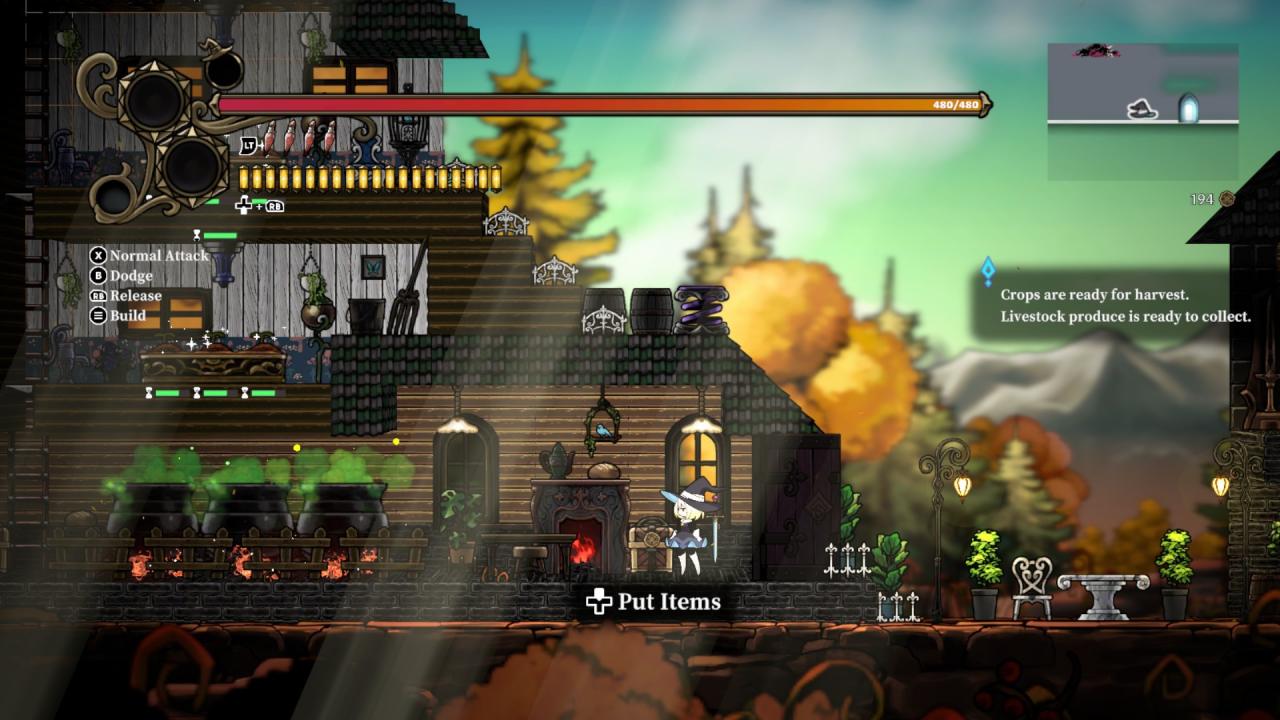
The village system also makes the loop more fun in a way you might not expect. You can use materials you find in dungeons to fix up buildings, unlock skill trees, make tools, and even cook meals that will help you on your next run. It's a good way to reward people for getting involved and exploring, and it really does help you fight better.
Farming, raising animals, and making resources are more than just cosmetic activities to do; they feed directly into how well you perform in the dungeons. This is a fun addition for players who like building cities or crafting. This city-building-esque mechanic makes Never Grave: The Witch and The Curse stand out from traditional Metroidvanias.
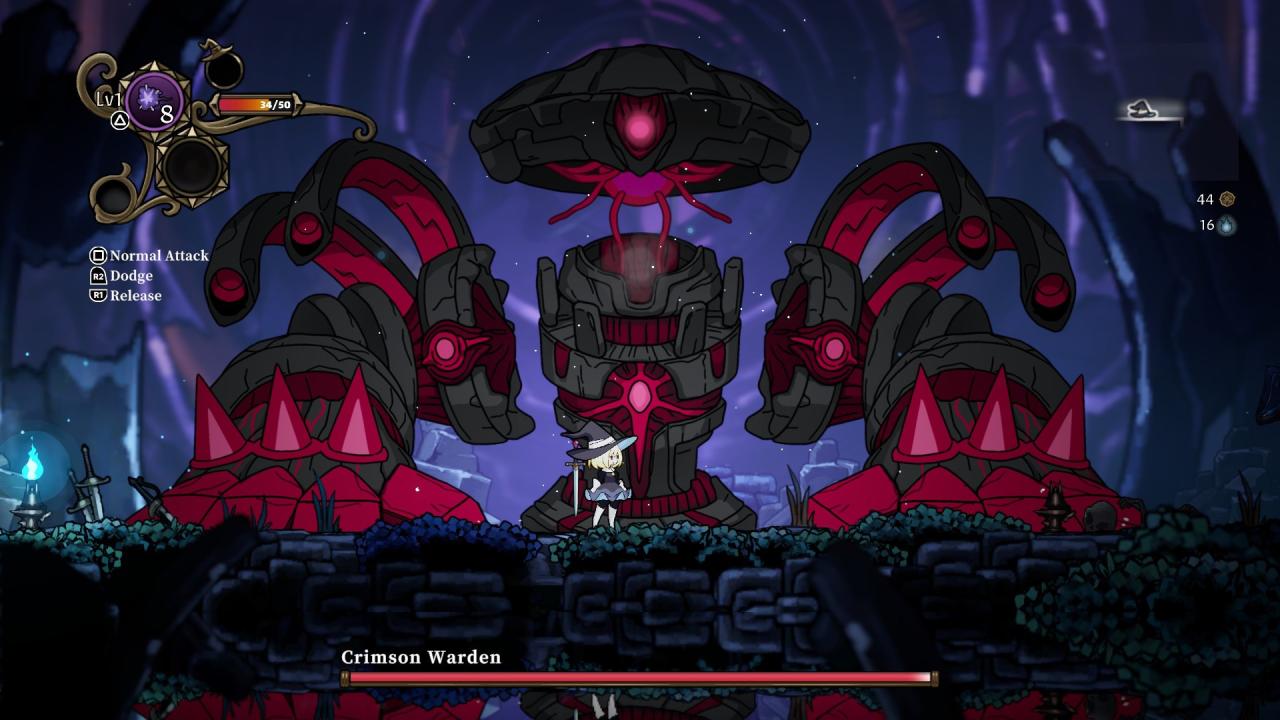
You can only move forward in the game if you do well in dungeons and build up your village.
You can get new spells, tools, and abilities by unlocking blueprints and building things. You can also get meta-upgrades that stick with you between runs, making each run a little easier while still being difficult enough to give you a sense of accomplishment. Collecting coins, grimoires, and blessings throughout the dungeons improves your abilities, while the hub village allows you to invest in long-term growth.
Even though dungeon runs can sometimes feel repetitive, the back-and-forth between short-term and long-term progress creates a satisfying feedback loop. Procedurally generated areas are new enough to keep things interesting, but you will have to revisit rooms more than once, which can feel like a waste of time.
Possession also works well with puzzles. There aren't any really hard logic puzzles, but you can often solve environmental problems like getting to ledges, flipping switches, or crossing gaps by switching bodies. For example, having a dog or other pet might let you into a secret area or help you get past a platforming challenge. It's a smart twist on the usual Metroidvania exploration formula that makes you want to try new things and interact with the world in new ways.
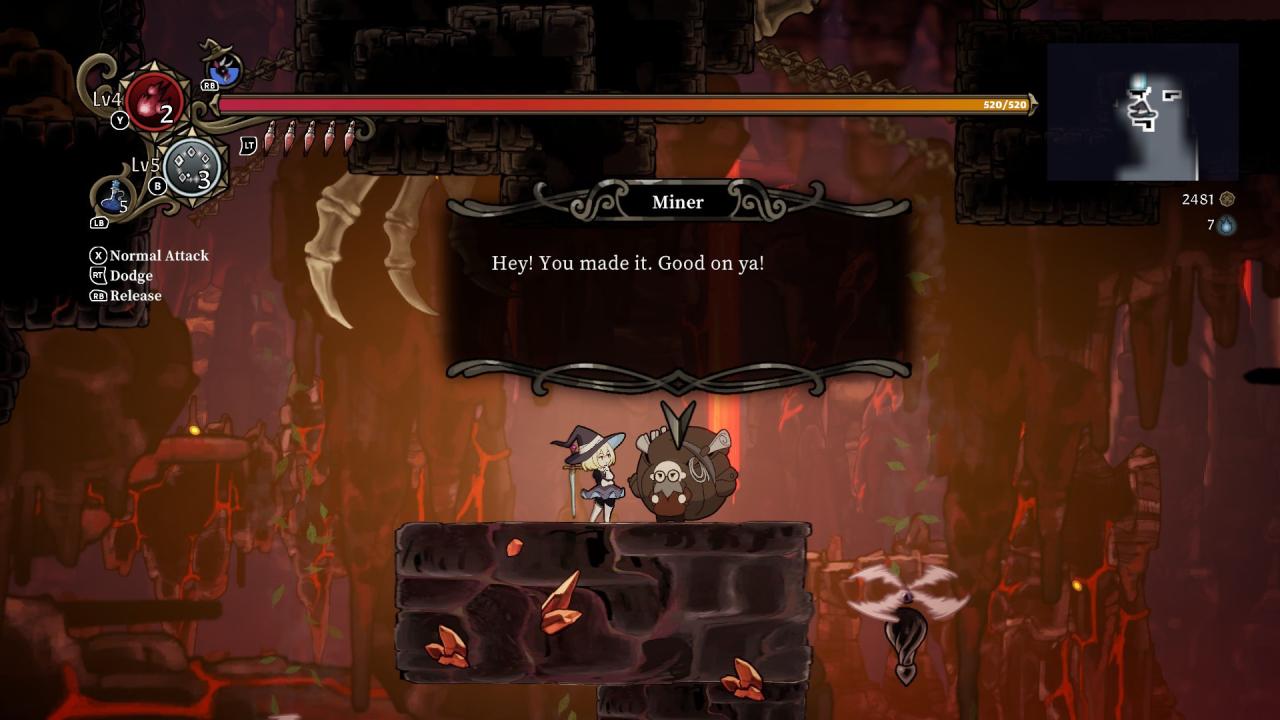
The graphics in the game are mostly muted and anime-like, like in Hollow Knight, but they have their own appeal.
The enemies have different designs, but you might notice that they come back after a while. The settings are nice, and the animations are smooth, but they're nothing that hasn’t been done before by other games. You can move around without missing any action because the menus and HUD elements are easy to understand.
Overall, it's a cool presentation that really shows off the game's unique style. Audio is okay, but it's not very memorable. The music is nice, with calming village tracks and more intense dungeon scores, but it doesn't stick with you.
There aren't many character sounds, and the world can feel a little empty because there's no dialogue or voice acting. Some environmental sounds, like birds chirping or enemy effects, add to the charm, but the gameplay is what makes the experience great, not the music.
On Xbox Series X, the game runs smoothly, and it works well and consistently, even when there are many effects on-screen or when the battles are really hectic. The procedural generation and exploration-heavy design don't put too much stress on your PS5, which makes for a great console experience.
The graphics aren't anything to brag about, but the combination of smooth performance and a clean look makes it easy to play for long periods without getting bored. Never Grave: The Witch and the Curse lets up to four people play together, which can be done through a mirror in the hub village. Multiplayer is surprisingly fun.
You can see a lot of witches working together, bringing each other back to life, and trying out different combinations of items. It would have been nice to have a full lobby browser, but the basic system works well enough and adds another level of charm to the game's unique hybrid design.
Never Grave: The Witch and the Curse is a game that is better than the sum of its parts.
The story isn't very deep, the combat isn't very interesting either, and some of its procedural elements are repetitive. However, the possession mechanic, the village-building, and a carefully balanced roguelike system give it the personality an indie game needs to stay alive.
The mix of Metroidvania-style dungeon crawling and city-building mechanics could have easily broken down, but instead, it creates an experience that rewards patience and a willingness to tap into your creativity.
You might be disappointed if you expect the game to be a typical Metroidvania. If you can get past the quirks of the game and spend time building up your village between dungeon runs, there's a lot to like here. The game is also a good deal at about $17. It gives you a polished experience with mechanics that are surprisingly smart and a style that is all its own, if you care for authenticity.
It's not perfect, but it's creative and has a few surprises that make each run fun. In short, Never Grave: The Witch and the Curse is a good mix of things that are familiar and things that are new. It gets the basics of Metroidvania and roguelike design right, adds some really original ideas, and wraps it all up in a visually and mechanically appealing package.
If you're willing to try something new, you might really get into your next run and be excited to see what new skills, items, or village upgrades you can get. The charm comes from how it mixes different genres into a fun, functional experience that makes you want to play more, even though the story is meant to be mild and the combat system is simple.
Staff Writer, NoobFeed
Verdict
Never Grave: The Witch and The Curse is a good mix of Metroidvania and roguelike elements, with creative mechanics for possession and village building. It's fun and unique, but the combat is simple, and the story isn't noteworthy.
62
Related News
No Data.