
Akatori Review
PC
A gorgeous, momentum-driven adventure that gets its fundamentals right but never quite reaches the depth expected from the genre.
Reviewed by Nusrat Choity on Aug 05, 2026
Metroidvania games have become almost impossible to ignore, with new releases constantly competing for attention through bigger maps, complicated upgrade systems, elaborate combat and increasingly ambitious worlds. Akatori takes a different route.
Developed by the young studio Contrast Games after roughly five years of development, it is a deliberately streamlined take on the genre that focuses less on enormous maps and complicated progression and more on movement, atmosphere and accessibility. That approach makes Akatori an interesting proposition.
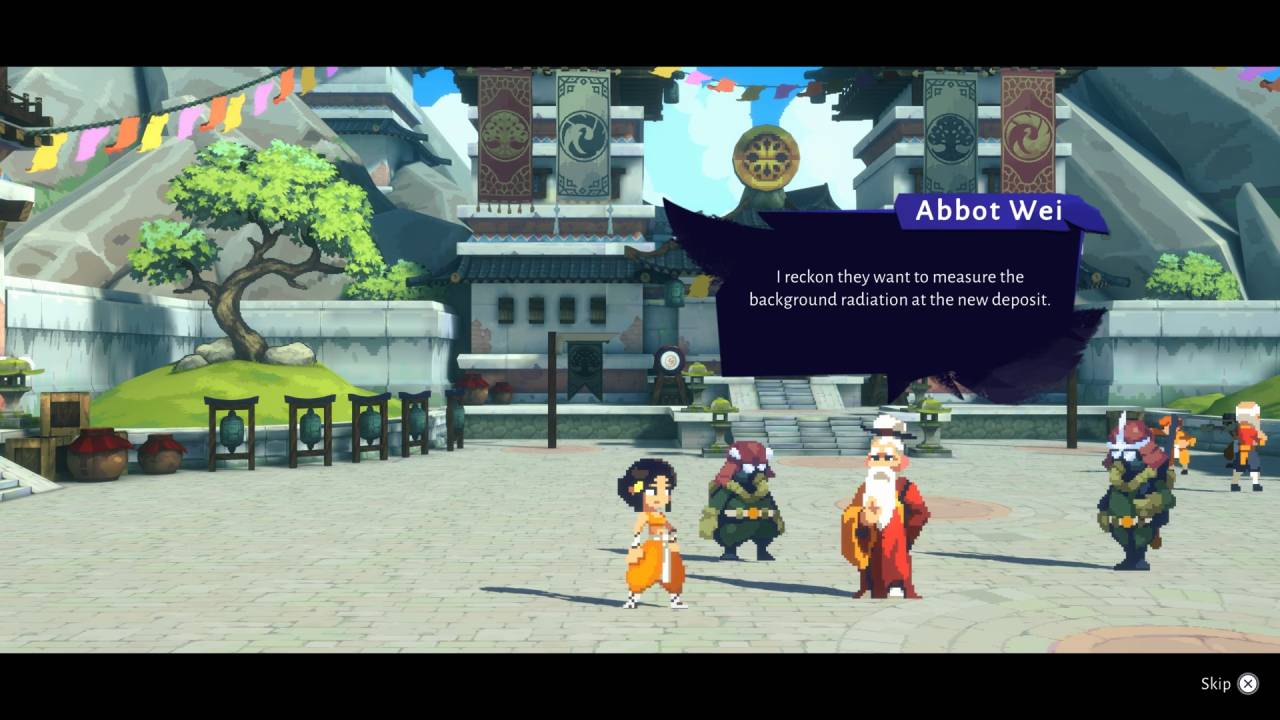
It has almost everything associated with a Metroidvania: interconnected areas, abilities that open previously inaccessible paths, hidden collectibles, merchants, bosses and exploration. However, it never tries to become another sprawling adventure where you spend hours wondering which wall can be broken or where a previously locked door was located.
Akatori is closer to a "Metroidvania-lite," blending the genre's exploration structure with the immediacy of a 2D action platformer. The result is a game that knows exactly what it wants to emphasize. It is not the deepest Metroidvania around, but one particularly clever idea holds everything together: Mako's magical staff is her weapon, movement tool, and key to interacting with the world.
Akatori follows Mako, a young monk raised at the Firebird Temple. Mysterious Amber Storms lay waste to her world, corrupting living things and distorting the natural environment. The storms are particularly interesting because the amber they leave behind is not simply a dangerous substance. Those crystals became the foundation of civilization, meaning the very force threatening the world also enabled much of its development.
Mako is on a mission to stop the storms with a magical staff that holds inside it a mysterious red bird named Akatori. The bird is more than a gun, more than a dumb friend. It has its own personality, opinions and secrets, creating a relationship that becomes one of the more enjoyable parts of the adventure.
The central story isn't especially unpredictable. Themes involving self-discovery, resilience, growing up and uncovering one's purpose are familiar territory, and the supporting cast rarely reaches the same level of personality as the two leads. Still, Mako and Akatori have an entertaining dynamic. Their conversations and occasional disagreements add charm to the journey, even when the broader narrative feels like it is simply moving you from one area to the next.
The world itself sometimes tells more of the story than the plot.
Five distinct regions introduce different environments, histories and visual identities, ranging from medieval Asian-inspired locations and floating bamboo islands to caves, catacombs and surreal dimensions. Buddhist-inspired imagery and environmental details help give the setting an identity that separates it from many fantasy Metroidvanias.
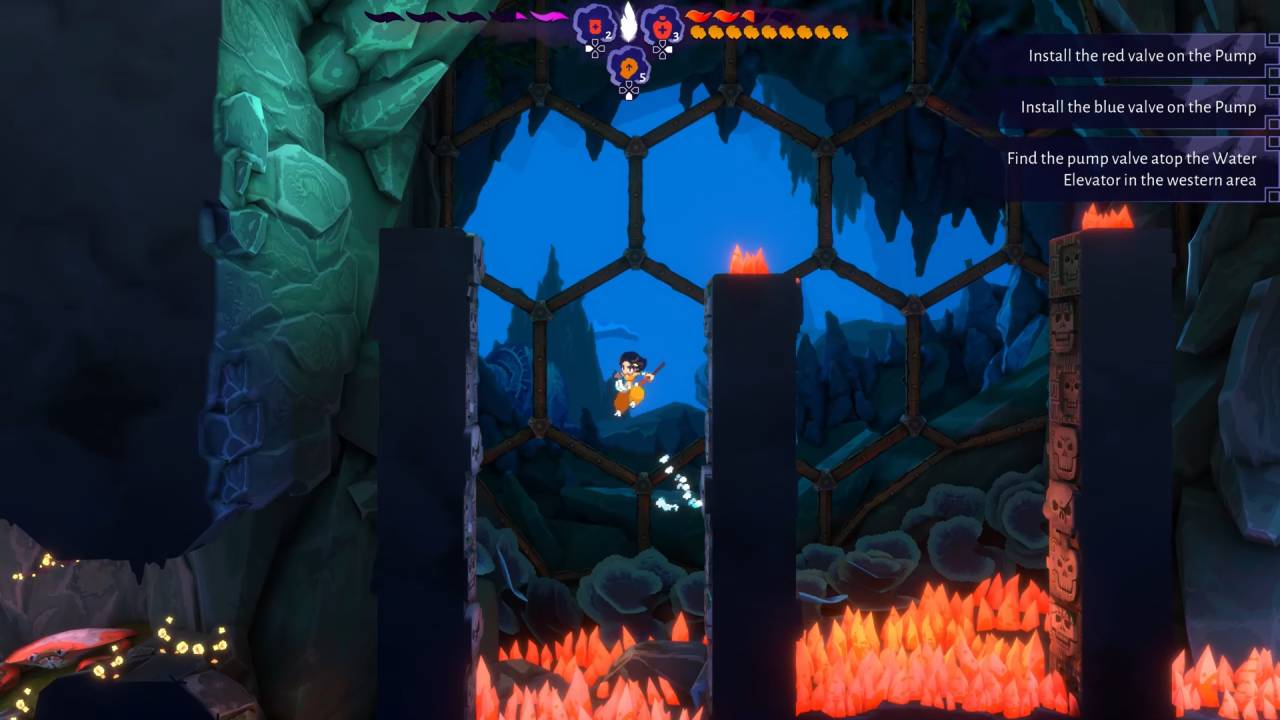
There is no voice acting, so the narrative depends entirely on text and character interactions. That isn't necessarily a problem, but it does mean the writing has to carry more weight. Unfortunately, the story is generally more functional than memorable.
The smartest design decision in Akatori is the magical staff. Rather than separating combat and traversal into completely different systems, the game makes the staff central to almost everything Mako does.
You use it to attack enemies, throw it as a projectile, interact with mechanisms, open certain doors, reach ledges and improve your mobility. As the adventure progresses, Mako gains abilities that make movement increasingly flexible. Wall climbing, wall jumping, gliding, double jumps, dashes and interactions with environmental objects allow you to move through the world with surprising speed.
The game's momentum-focused design is where Akatori feels at its best.
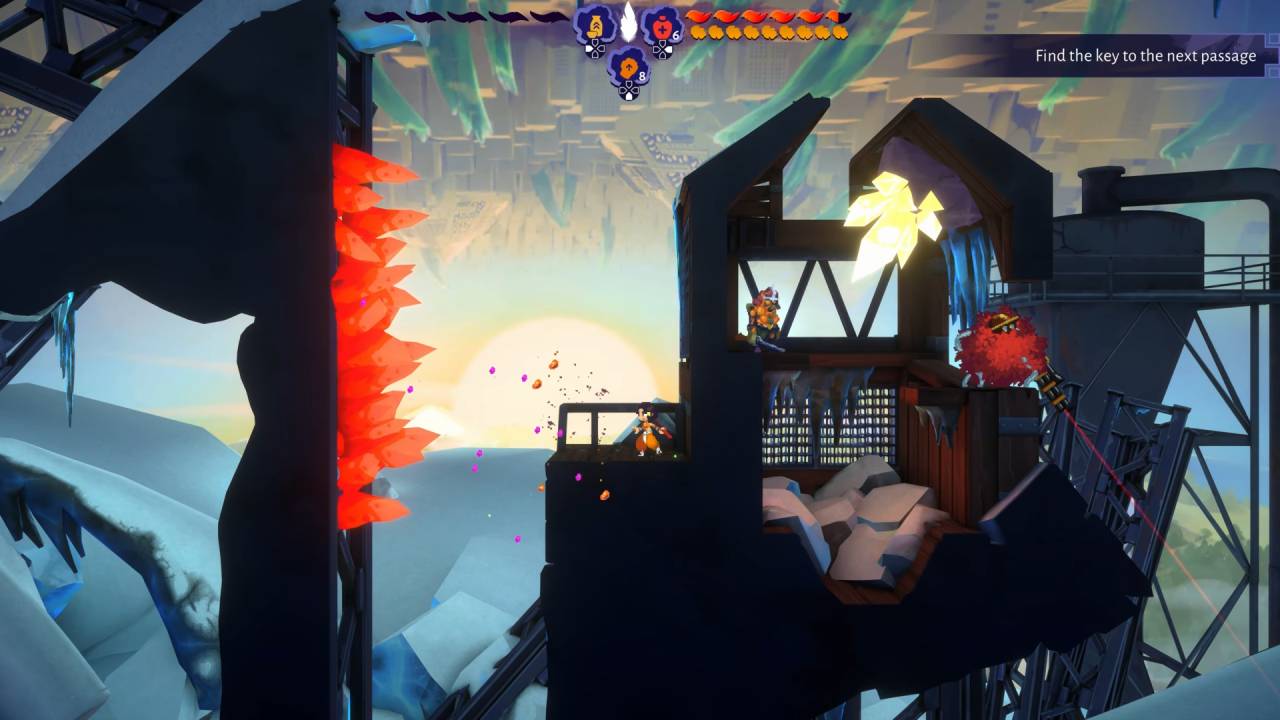
Bamboo stems can act like giant slingshots, letting Mako stretch them and launch herself across large gaps. Air and water currents can also become part of traversal, while ledges and walls can be chained together to maintain momentum. Once several abilities are unlocked, movement starts feeling almost like its own reward.
You can jump, throw the staff, bounce away, glide and redirect yourself without constantly stopping. This gives the platforming a satisfying sense of flow that is arguably stronger than the game's combat. The level design also makes good use of verticality. Areas aren't simply wide horizontal corridors. You frequently move upward, downward and across large spaces, with your abilities encouraging experimentation.
Swimming sections are less successful. They introduce limited-breath sequences that interrupt the otherwise smooth movement, and some chase sections can become frustrating because they require memorization rather than pure reaction.
The map itself deserves praise. It is clean and readable and doesn't bury you under dozens of unnecessary icons. You can understand where you've been and where you might need to return without constantly consulting an overloaded interface. At the same time, this simplicity reveals one of the game's major limitations: there simply isn't that much to uncover.
Akatori has secrets and 20 hidden cats to collect, but exploration rarely becomes the complicated puzzle of routes and locked paths found in deeper Metroidvanias. Backtracking is limited, and progression is generally straightforward.
Combat is functional rather than exceptional. Mako can attack with her staff, perform aerial attacks, throw the weapon, use charged strikes, launch enemies and dodge incoming attacks. Some abilities consume stamina, adding a little resource management to encounters. The problem is that the basic combat system doesn't evolve enough.
There are different attacks and some useful abilities, but there isn't a particularly deep combo structure encouraging experimentation. Switching between certain attacks can change the animation without fundamentally changing how you approach a fight.
Regular enemies don't help much either. Enemy variety is limited, with some creatures firing projectiles, others charging directly toward Mako and a few having delayed attacks that can catch you off guard. Some encounters feel less like carefully designed challenges and more like obstacles placed between the interesting parts of the game.
Bosses are considerably better.
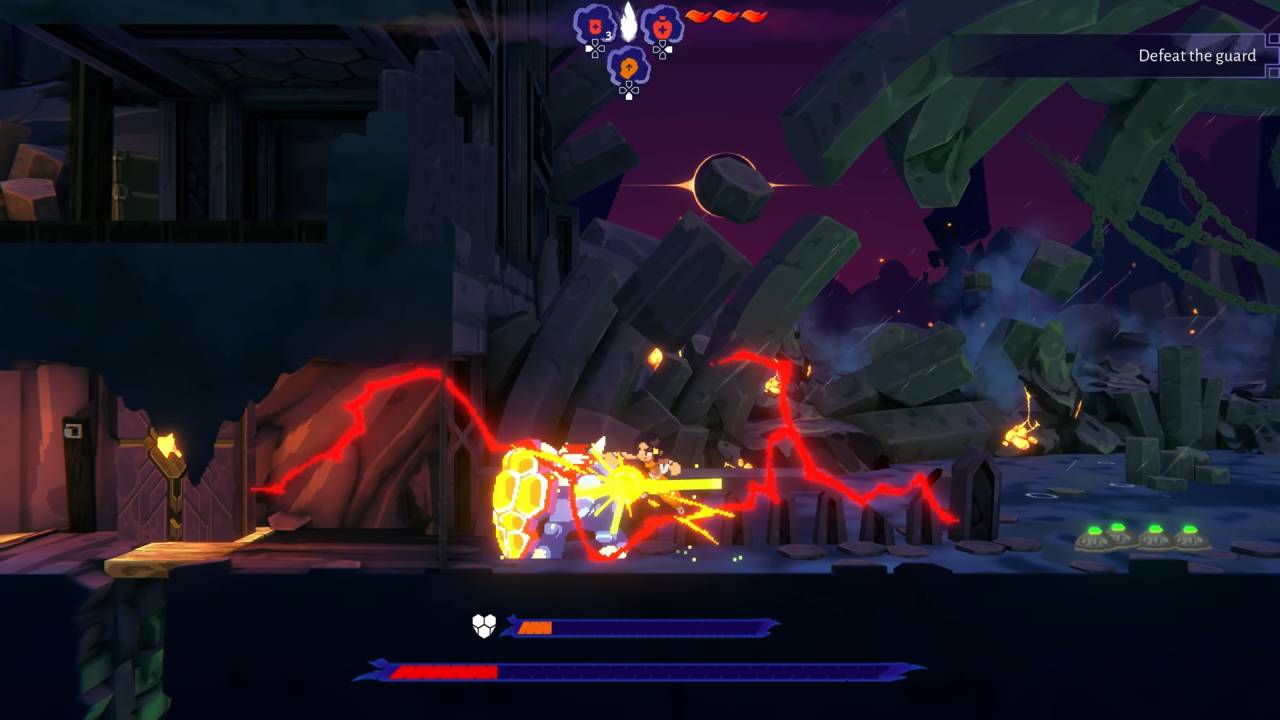
Boss encounters make stronger use of Akatori's platforming mechanics, forcing you to move, dodge and position yourself while learning attack patterns. Some fights feature multiple phases, while others experiment with rhythm-based challenges or unusual sequences. These encounters show the developers had more creativity than the regular enemy design sometimes suggests.
Difficulty is one of Akatori's more complicated issues. Four difficulty settings are available, but the choice is locked for the playthrough. That can be frustrating because the normal difficulty can deliver surprisingly heavy damage. Regular enemies can remove huge portions of your health, while chase sequences and bosses may require several attempts to understand. The generous checkpoint placement helps.
Death doesn't create a huge setback, although you lose accumulated Chaos.
Chaos is Akatori's unusual progression mechanic. A purple meter fills as you play, and accumulated Chaos can be used at bells scattered around the world to unlock new abilities. However, resting resets your Chaos, and using a bell sends you into an arena where every enemy must be defeated before receiving the reward.
Interesting system on paper, but the arena battles are often an unnecessary interruption. Exploration and movement have a natural rhythm, while these forced combat sections can feel like the game is deliberately breaking that momentum. Currency collected from enemies can also be spent at merchants on healing potions and other consumables. It provides a simple reason to engage with enemies, although it doesn't create a particularly sophisticated progression system.
The puzzles are even simpler. Expect mechanisms, switches and environmental interactions rather than elaborate multi-stage brainteasers. They are mostly there to break up the action rather than challenge you intellectually.
Visually, Akatori is easily one of its strongest elements.
The game combines hand-drawn 2D pixel-art characters with fully 3D environments, producing a distinctive 2.5D appearance. The style has a nostalgic 32-bit flavor without looking like an outdated recreation of that era. The five worlds are particularly impressive. Vegetation moves naturally, caves glow with atmospheric lighting, bamboo structures create dramatic silhouettes and surreal environments provide plenty of visual variety.
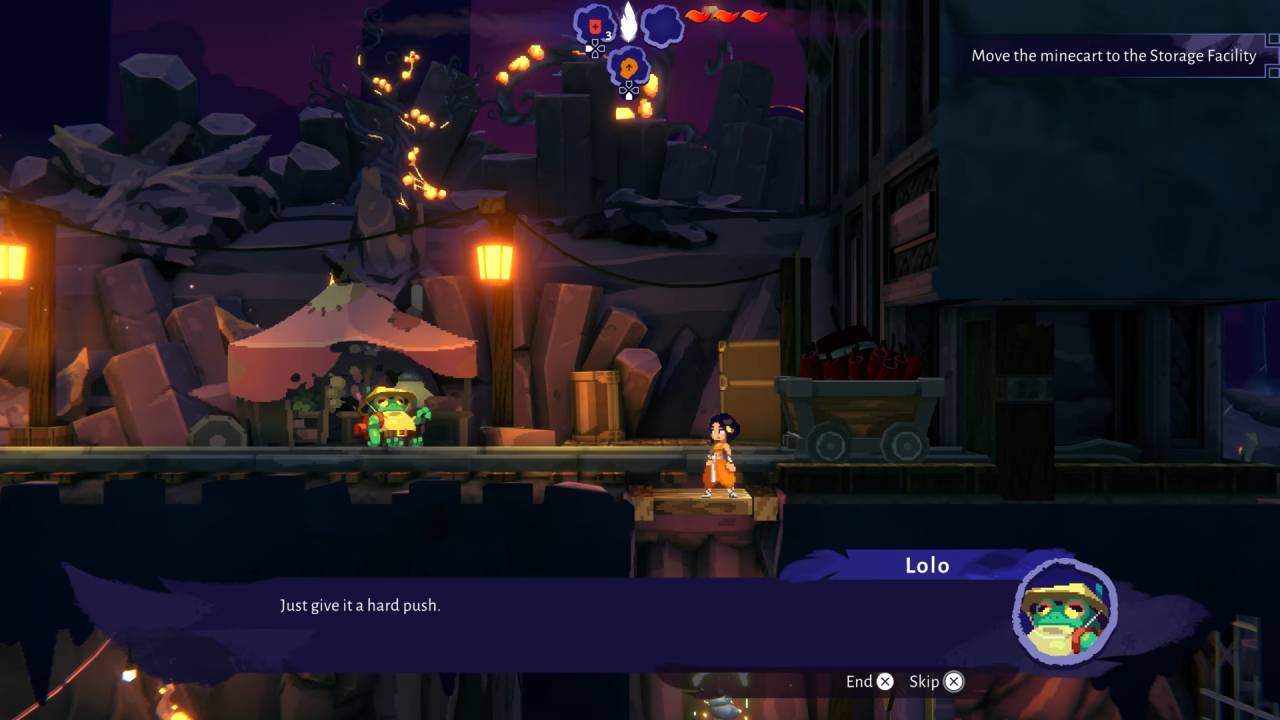
The Asian-inspired architecture and cultural motifs also give the game a personality that isn't simply copied from generic fantasy settings. Character animation is expressive enough to make Mako feel alive, while the environments often look much more expensive than the game's relatively modest scope might suggest. Performance is generally strong on PC, too.
The game runs well on lower-end hardware, but Steam Deck performance is a bit more mixed, with noticeable frame-rate drops when traveling between areas.
The audio design complements the visual atmosphere without stealing the show. Mako's movement sounds, environmental echoes and the ringing of bells give different locations an appropriate sense of place. The soundtrack has an understated Eastern influence and adapts to the situation, shifting between calmer exploration and more intense moments. It works well during gameplay, even if few tracks remain unforgettable after the game ends.
The lack of voice acting is more noticeable because the story relies heavily on dialogue, but the written interactions between Mako and Akatori are strong enough to keep the main relationship entertaining.
Akatori is a fun game because it’s not trying to be everything for everyone. It takes the Metroidvania formula, strips away much of its complexity and puts movement at the center of the experience. That decision works remarkably well. Traversal is smooth, responsive and often genuinely fun simply for the sake of moving around. The magical staff gives the game a clear identity, while the combination of platforming and combat creates a satisfying sense of continuity.
Unfortunately, the same streamlined philosophy that makes Akatori accessible also prevents it from reaching the depth genre veterans may expect. The map isn't particularly complicated, backtracking is limited, puzzles are basic, enemy variety is low and regular combat doesn't have enough mechanical depth.
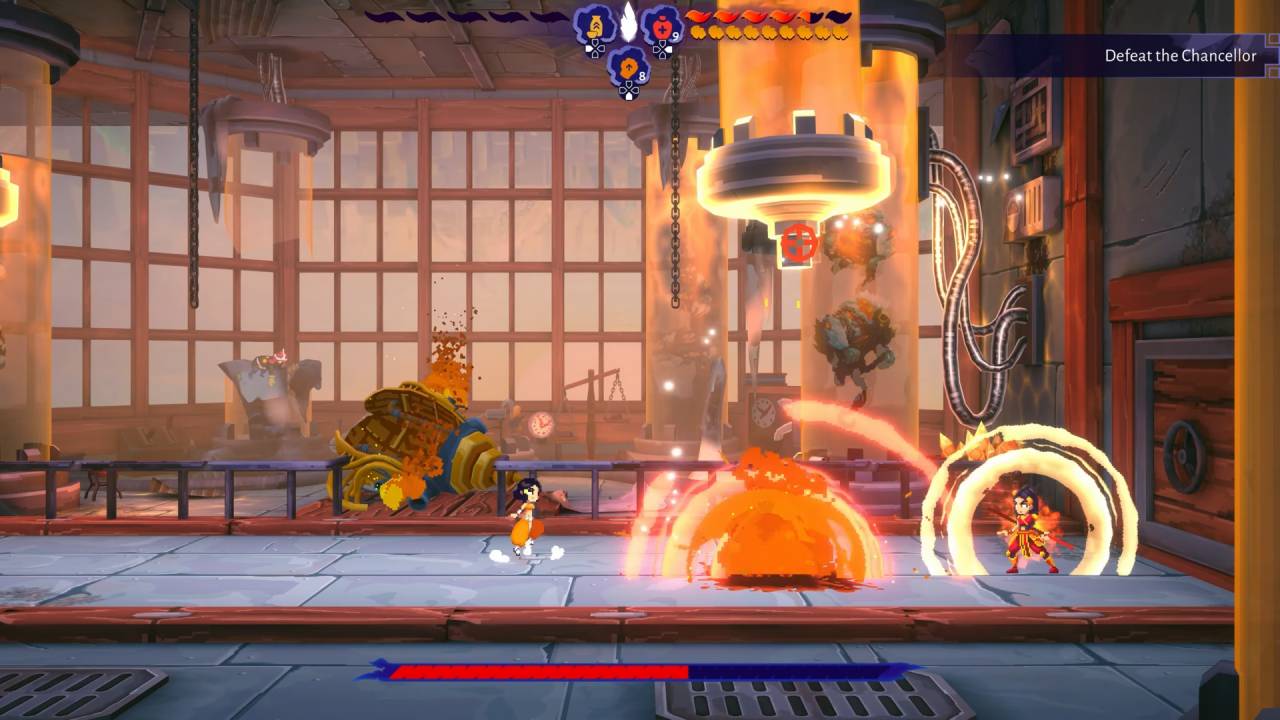
The Chaos system is another mixed idea. Unlocking abilities through Chaos gives progression some personality, but being forced into arena battles and losing accumulated Chaos when resting can feel more irritating than rewarding.
The difficulty also needs consideration. Akatori isn’t necessarily brutally unfair, but normal difficulty can hit surprisingly hard and there are some sequences that will take multiple attempts to learn. More experienced players may appreciate the challenge, while casual players could find the sudden damage spikes frustrating.
Still, there is plenty to appreciate here. The world is beautiful, the map is clean, the boss battles are more inventive than standard encounters, the characters have charm, and the platforming is the real star.
Akatori may not become a defining Metroidvania, but it doesn't need to. It is a compact, stylish and enjoyable adventure with a clever central mechanic and enough personality to justify its place in a crowded genre. For anyone who values movement and atmosphere more than enormous maps and complicated progression, this adventure is worth taking.
Contributor, NoobFeed
Verdict
Stunning visuals, smooth momentum-based movement, and creative bosses make Akatori a treat of a Metroidvania-lite. Absence of exploration, simple combat and punishing difficulty stop it from being great, but the ride is still stylish and fun.
80
Related News
No Data.