
RISC-V Explained: The Open-Source Architecture Challenging ARM
RISC-V challenges ARM's licensing model by offering an open instruction set that allows companies to develop processors without royalty payments.
Hardware by Shinji Okazaki on Nov 14, 2026
The processor industry has relied on proprietary instruction sets for decades, with companies paying licensing fees and royalties to use established architectures. However, RISC-V is changing that model by offering an open instruction set that anyone can use, modify, and develop without paying licensing fees. Linux has supported the architecture for years, and low-cost RISC-V boards can already run it.
With growing industry support and investment, RISC-V is becoming a concern for ARM, which has identified the open-source architecture as a potential risk to its business. Every chip speaks a language called an instruction set. It acts as the contract between software and silicon. Intel and AMD own x86, and almost no one else can build it. ARM uses a different model, licensing its designs to other companies.
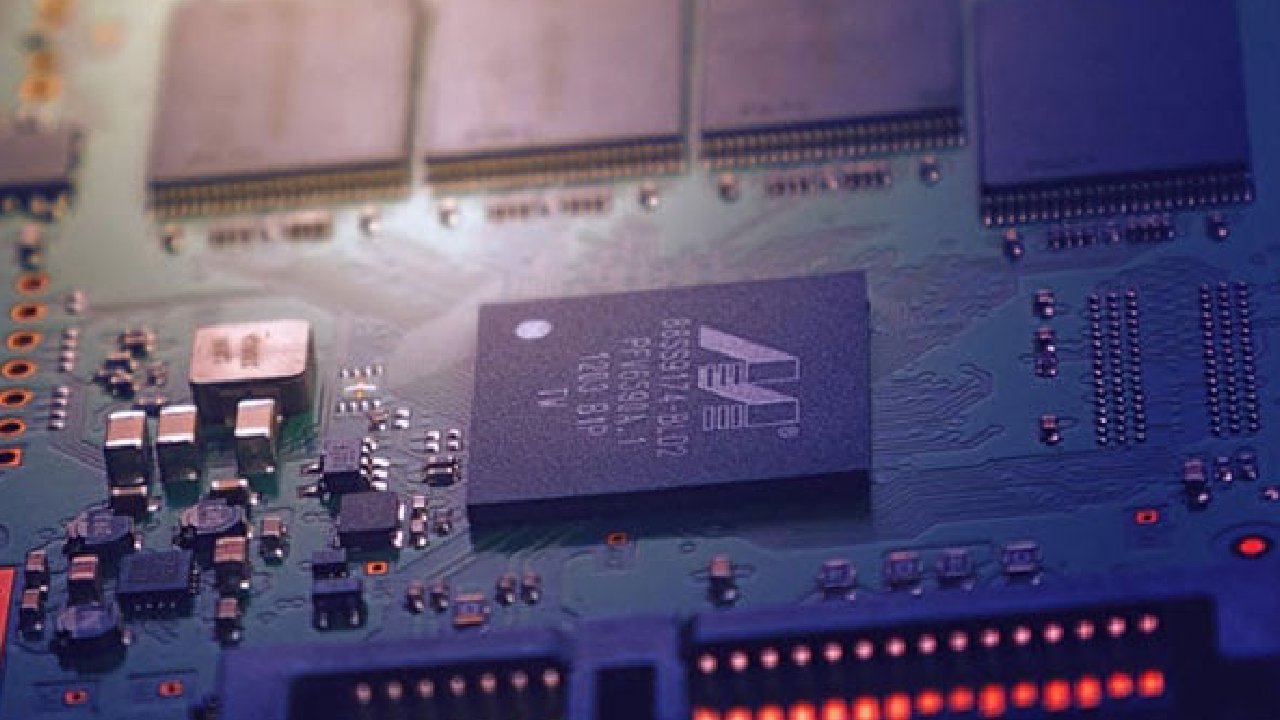
ARM Collects Licensing Fees and Royalties From Chip Manufacturers
You pay millions upfront for a core design or for the right to design your own, as Apple does. Then, you pay a royalty on every chip you ship. Analysts estimate that the royalty is around 1–2% of the chip's price. ARM doesn't publish its rates, but even a small percentage adds up at that scale. ARM-based chips ship in the tens of billions every year, with more than 300 billion shipped in total.
A small percentage across that many chips creates a steady revenue stream. Nobody sees a line on the box that says ARM tax, but the cost is included in almost every phone and router, even your thermostat. For most of these products, there was never an alternative. However, what happens when the instruction set itself is free?
In 2010, at UC Berkeley, Krste Asanović and David Patterson needed a clean instruction set for teaching and research. Patterson had helped invent the original RISC concept in the early '80s. They couldn't use X86 or ARM without licenses, so they built their own architecture as a 3-month summer project.
Then, they made a different decision. They released it under a permissive license, allowing anyone to build or modify it without permission or payment. It was called RISC-V. A foundation was formed in 2015, and in 2020, it moved to Switzerland partly to stay outside the reach of US export rules. The result was a free instruction set managed by an independent foundation.
RISC-V Removes Licensing Costs
A free instruction set doesn't mean a free chip. Designing a processor core still costs money, but RISC-V creates a market where companies can choose between different designs and suppliers. You can use open cores from Berkeley or Alibaba's chip unit, T-Head, which opened its designs in 2021. Alternatively, you can license a commercial core from companies such as SiFive or Andes and pit them against each other.
The monopoly on the contract disappears, but the development work remains. We can already see this change in microcontrollers, where royalties make up a noticeable portion of a 50-cent component. Espressif, the maker of ESP32 Wi-Fi chips, introduced its first RISC-V chip, the C3, in 2020. Western Digital also said it was moving its drive controllers to RISC-V.
Nvidia uses RISC-V cores inside its GPUs for management, estimating it uses roughly a billion of them every year. You may already own several RISC-V chips without knowing it. RISC-V has received Linux kernel support for years, and Debian treats it as an official architecture. A $9 board can run a real Linux kernel, while a $60 board can run Debian with a real package manager.
RISC-V has also entered the discussion around processor independence.
In 2019, Huawei was sanctioned. Suddenly, an instruction set that doesn't depend on a US or British license was no longer just a hobby project. It became a matter of strategy. A national research institute developed Xiangshan, an open processor design aimed at desktop-class performance. In 2025, Reuters reported, citing people briefed on the matter, that the government was drafting its first national guidance to promote RISC-V.
Whether or not the guidance was released in that form, the direction is clear. The country that couldn't buy ARM's best designs is developing an architecture that doesn't require ARM's permission. In its annual report to investors, ARM warns that customers may choose to use the free, open-source architecture instead of its products.
The company also points to a joint venture announced in August 2023 by some of its customers and competitors to promote RISC-V. It's called Quintorris and is backed by Qualcomm, Bosch, Infineon, NXP, and Nordic Semiconductor. The group is starting with the automotive industry. Meanwhile, Qualcomm has spent years in court with ARM over licensing, and that dispute isn't over.
FAQ
Q. What is RISC-V?
A. RISC-V is an open-source instruction set architecture developed at UC Berkeley in 2010. It allows companies to design and manufacture processors without paying instruction set licensing fees or royalties.
Q. Why is RISC-V a threat to ARM?
A. RISC-V offers a royalty-free alternative to ARM's licensing model. Companies can develop processors using the open instruction set without paying ARM licensing fees, potentially reducing ARM's revenue from chip manufacturers.
Q. Can RISC-V run Linux and Android?
A. Yes. RISC-V supports the Linux kernel, and Debian recognizes it as an official architecture. Android 16 has also been demonstrated running on modern RISC-V processors, although mass-market devices are not yet available.
Q. What are the main challenges facing RISC-V adoption?
A. Software compatibility, processor performance, and fragmentation remain the main challenges. Applications and drivers need to support the architecture, while different vendor extensions could create compatibility problems.
Editor, NoobFeed
Gaming Hardware Updates
No Data.