
AMD Siren Halo APU Leak Reveals Dedicated GDDR7 Memory With Zen 6 and RDNA 5
AMD's next-generation Siren Halo APU could redefine integrated graphics with Zen 6 processing, RDNA 5 architecture, and dedicated GDDR7 memory.
Hardware by Tanvir Kabbo on Nov 13, 2026
AMD has spent the last few years challenging the traditional boundaries between integrated and discrete graphics. Its Strix Halo platform demonstrated that an APU could deliver serious gaming performance by combining powerful Zen 5 CPU cores with a large RDNA 3.5 GPU and up to 128GB of unified LPDDR5X memory.
The rumored Gorgon Halo refresh is expected to extend that approach before AMD moves toward its next architectural generation. However, the newly reported Siren Halo could represent a much bigger departure. According to hardware leaker Gotou_3rd, AMD is exploring an APU design that combines Zen 6, RDNA 5, and dedicated GDDR7 memory alongside conventional LPDDR system memory.

If accurate, this would fundamentally change how AMD approaches high-performance integrated graphics. Rather than continuously pushing shared system memory to its limits, AMD could give its graphics engine a separate, substantially faster memory resource. That approach could bring powerful graphics performance to laptops and compact computers without requiring a conventional discrete graphics card.
Dedicated GDDR7 and LPDDR6 Could Break the Bandwidth Wall
Memory bandwidth has always been one of the biggest limitations facing integrated GPUs. Traditional APUs share system memory between the CPU and GPU, so both units compete for the same bandwidth. Increasing GPU performance therefore requires increasingly sophisticated memory controllers, wider interfaces, and faster memory modules.
Strix Halo already pushed this concept considerably further with its 256-bit LPDDR5X interface, delivering up to 256GB/s of memory bandwidth. Earlier Medusa Halo rumors also suggested a transition toward LPDDR6, potentially increasing available bandwidth significantly.
Siren Halo is rumored to use a different approach: dedicated GDDR7 memory for the graphics engine, but LPDDR memory for the CPU and OS. This is particularly fascinating as GDDR7 is built for the bandwidth needs of today's graphics processors.
Separating graphics memory from system memory could reduce contention between CPU and GPU workloads and give RDNA 5 a much faster dedicated memory resource. This could lead to more consistent performance, higher graphics throughput, and better performance in bandwidth-intensive gaming applications.
But real advantages will be dependent on GDDR7 capacity, memory bus width, operating speeds, cache design, and power consumption. Dedicated RAM does not mean desktop-class graphics performance.
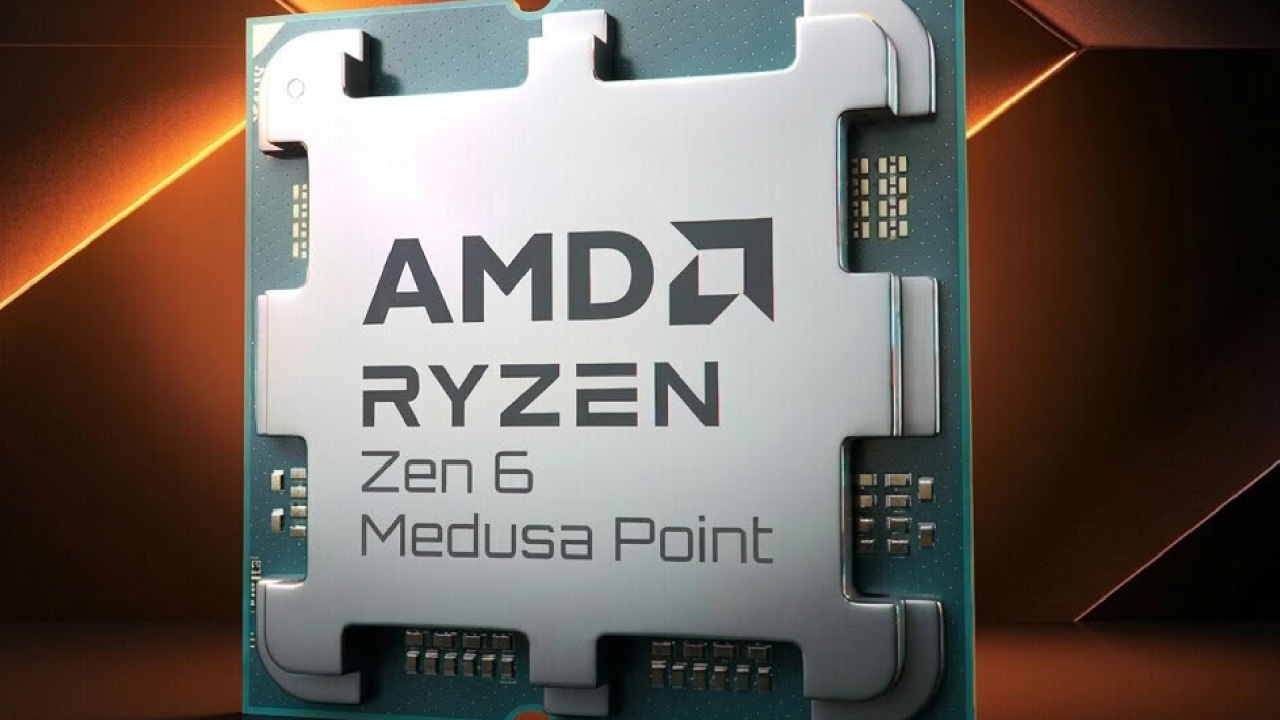
Medusa Halo to Siren Halo: AMD's Roadmap Takes an Unexpected Turn
Another key aspect of this leak is the stated codename change. AMD's long-rumored Medusa Halo was supposed to follow Strix Halo, having Zen 6 CPU cores and RDNA 5 graphics. But the latest roadmap information shows AMD may be rethinking its product schedule.
Under the alleged naming scheme, Siren Point would be a Medusa update, while Siren Halo would be the more ambitious flagship platform. This suggests AMD may be separating its general mobile refresh effort from its high-performance Halo development.
The graphics architecture is particularly interesting because of its rumored connection to Microsoft's next-generation Xbox, reportedly codenamed Magnus. Earlier leaks have associated Magnus with Zen 6 processing, an RDNA 5 graphics chip based on the AT2 design, up to 68 compute units, and GDDR7 memory.
If Siren Halo uses related graphics silicon, AMD could potentially reuse architectural development across console and PC platforms. This approach would help amortize R&D costs while letting AMD build its graphics ecosystem around shared technologies. However, architectural similarities do not necessarily mean identical chips or configurations.
The Local AI Memory Dilemma
Gaming is arguably the clearest beneficiary of dedicated GDDR7, but local AI computing introduces a more complicated equation. Strix Halo's unified memory architecture is excellent for running large local language models because the CPU and GPU can access a common memory pool. This flexibility means applications can use large amounts of system memory without being limited by traditional graphics card VRAM.
Siren Halo's suggested split-memory design could make that advantage harder to realize. If system memory is LPDDR and the graphics engine is GDDR7, apps may need to do extra memory management when working with large AI models.
These restrictions can be alleviated via dynamic resource allocation, efficient data transfers, and software memory management. But AMD will need to ensure its new architecture doesn't sacrifice the flexibility that made Strix Halo especially intriguing to AI fans.
FAQ
Q. What is AMD's Siren Halo APU?
A. AMD's Siren Halo is a rumored next-generation flagship APU expected to combine Zen 6 CPU cores, RDNA 5 graphics, and dedicated GDDR7 memory alongside LPDDR system memory.
Q. Will AMD Siren Halo feature dedicated GDDR7 VRAM?
A. According to recent leaks, Siren Halo could feature a dedicated GDDR7 memory pool for its integrated GPU, potentially reducing the bandwidth limitations associated with traditional shared-memory APUs.
Q. What is the difference between Medusa Halo and Siren Halo?
A. Recent roadmap reports suggest AMD is shifting from the previously rumored Medusa Halo flagship to Siren Halo, while Siren Point could serve as a Medusa-related refresh.
Q. Will AMD Siren Halo be suitable for local AI workloads?
A. Siren Halo could offer strong AI processing capabilities through its Zen 6 CPU and RDNA 5 GPU. However, its reported split LPDDR and GDDR7 memory architecture could introduce limitations compared with Strix Halo's unified memory pool when running large local language models.
Senior Editor, NoobFeed
Gaming Hardware Updates
No Data.