
Intel Diamond Rapids Leak Reveals 256-Core Xeon and 18A-P Architecture
Intel's next-generation Diamond Rapids architecture combines massive core counts, advanced 18A-P manufacturing, and unprecedented cache capacity for enterprise computing.
Hardware by Masaru Hoshino on Nov 12, 2026
One of the key changes for Diamond Rapids is the use of the Intel 18A-P technology for its computational chiplets. The improved manufacturing technology is based on Intel's 18A foundation and aims at improved power efficiency and performance for demanding server applications.
For Intel, Diamond Rapids is more than just another Xeon generation. This is a significant chance to show that we can use our advanced manufacturing skills to support enterprise products at scale. The shift from 18A to 18A-P is also a technology stepping stone to the company's long-term 14A goals.

But the processor isn't built entirely on one node. Its architecture combines 18A-P compute chiplets with Intel 3-based fabric hubs and Intel 3-T base tiles, letting different components use manufacturing technologies suited to their needs.
UCIe-S Replaces the Traditional Packaging Approach
Intel is also introducing a substantial packaging change. Diamond Rapids uses Foveros Direct 3D hybrid bonding to connect compute chiplets with their respective base tiles, while UCIe-S provides high-speed communication between the larger building blocks. This modular solution supplants the earlier use of EMIB-style connections for this particular package architecture. It also offers more flexibility in scaling Intel's chip designs.
The platform also has major I/O upgrades such as 16-channel DDR5 memory, PCIe Gen6 connectivity, and CXL 3.0 capability. Diamond Rapids reportedly includes 128 PCIe Gen6 lanes, which could make it especially appealing for servers that need to connect many accelerators, fast storage devices, and other expansion hardware.
The larger memory subsystem is just as important. Sixteen memory channels provide the bandwidth foundation necessary to keep hundreds of processing cores supplied with data, addressing one of the biggest potential limitations of extremely high-core-count processors.
The Hyper-Threading Question: Why Intel Is Dropping SMT
Perhaps the most controversial architectural decision is the reported removal of Hyper-Threading. Diamond Rapids is supposed to be a Simultaneous Multithreading (SMT) free zone, although it will only have the performance-oriented Panther Cove P-cores. This means each physical core runs one software thread, rather than exposing two logical threads to the operating system. This means a processor with 256 physical cores has 256 hardware threads.
Intel's move could signal a desire to optimize for consistent per-core performance, reduce resource contention, and make processor behavior more straightforward under heavy enterprise workloads. With substantially more physical cores available, Intel may also be prioritizing additional execution resources over extracting more concurrency from existing cores.
Nevertheless, removing SMT is not automatically beneficial. Certain virtualization, database, and heavily multithreaded workloads can benefit considerably from additional logical threads. Intel will have to prove that its higher physical core count offsets this constraint in real-world workloads.
The corporation is said to be preparing to bring back SMT with the next Coral Rapids generation, scheduled around 2028. Diamond Rapids is probably a step in a larger architectural change, not a complete loss of simultaneous multithreading.
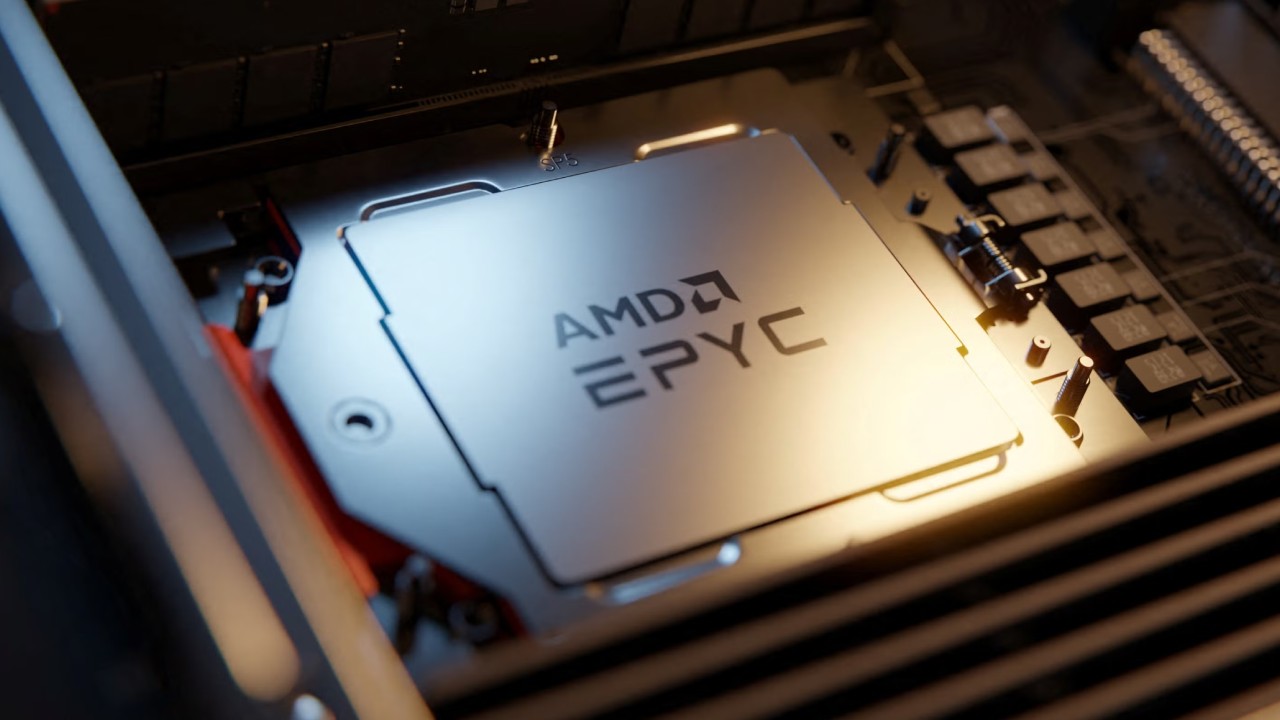
Can Diamond Rapids Challenge AMD Venice?
Intel's Diamond Rapids may be one of the company's most ambitious server CPU introductions in years, but its success will hinge on more than dazzling specs. Intel's reported 192-core launch configuration and possible 256-core flagship illustrate how aggressively Intel is pursuing compute density, while its large cache and expanded memory subsystem address crucial enterprise requirements.
However, AMD won't stand still. Its upcoming EPYC Venice family is expected to challenge Intel with equally ambitious core counts and its next-generation Zen architecture. A potential 256-core Diamond Rapids configuration would put Intel directly into that competitive territory.
The mid-2027 volume launch target also makes execution particularly important. Intel must deliver competitive performance per watt, consistent memory latency, strong manufacturing yields, and reliable platform availability. Enterprise customers will not migrate infrastructure simply because a processor has more cores or a larger cache.
Ultimately, Diamond Rapids represents a major opportunity for Intel to demonstrate the capabilities of 18A-P and its advanced packaging ecosystem. If the company can actually turn these architectural advances into real performance and efficiency increases, AMD's Venice chips might have a serious competitor. Intel has laid out an ambitious plan for now, but the real battle will play out in third-party benchmarks and deployment economics.
FAQ
Q. How many cores will Intel Diamond Rapids feature?
A. Intel Diamond Rapids is expected to launch with up to 192 Panther Cove P-cores, while a future flagship configuration could feature as many as 256 cores across 16 compute chiplets.
Q. Which manufacturing process does Intel Diamond Rapids use?
A. Diamond Rapids uses Intel's 18A-P process node for its compute chiplets, representing an important step in Intel's advanced manufacturing roadmap.
Q. How much L3 cache will the 256-core Diamond Rapids processor feature?
A. The rumored 256-core configuration is expected to feature 1.28 GB of L3 cache distributed across four base tiles.
Q. Will Intel Diamond Rapids support Hyper-Threading?
A. No. Reports indicate that Intel will remove Hyper-Threading from Diamond Rapids, meaning each physical core will handle one hardware thread. The feature could return with the subsequent Coral Rapids generation.
Editor, NoobFeed
Gaming Hardware Updates
No Data.