
128GB Unified Memory vs. VRAM: Which Is Better for AI?
Unified memory offers significantly greater capacity for demanding AI workloads, but dedicated VRAM maintains advantages in bandwidth and processing performance.
Hardware by Tanvir Kabbo on Nov 10, 2026
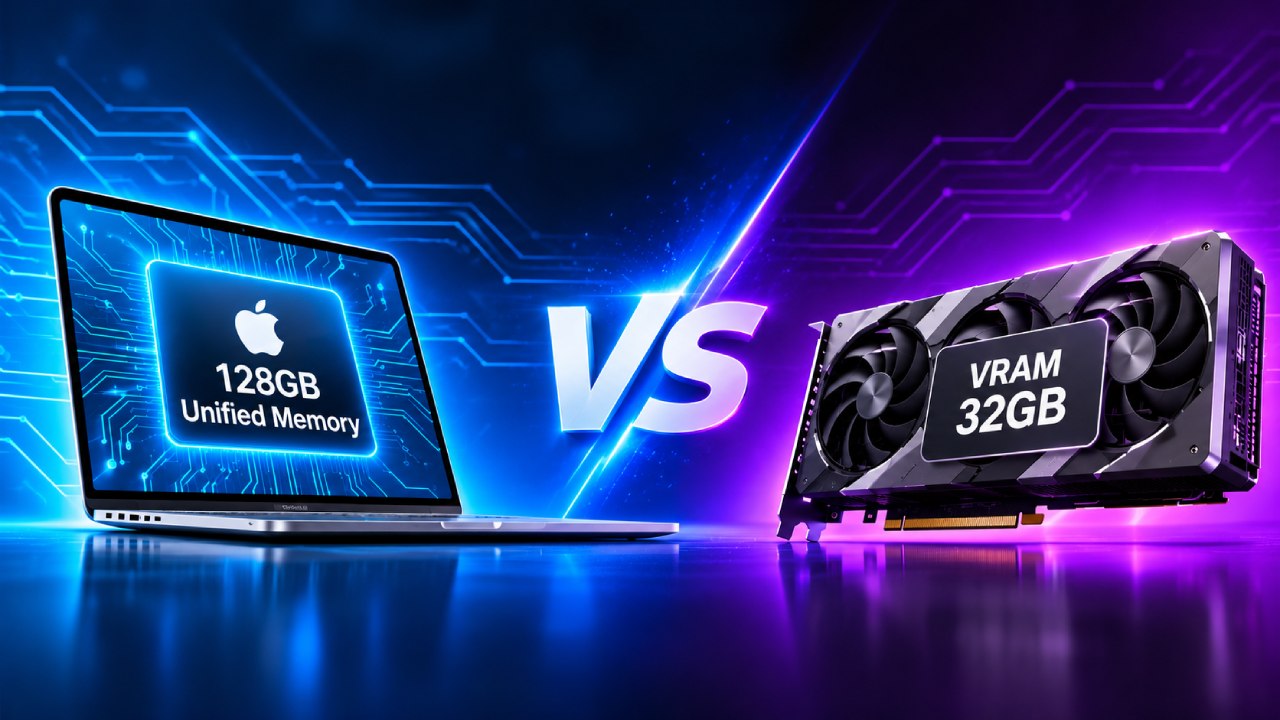
Unified memory is increasingly significant, as modern computer workloads, especially local AI, require more memory than standard consumer graphics cards can deliver. With PCs now offering up to 128GB of unified memory, many users wonder whether this architecture could replace specialized GPU memory. The answer is partly yes, but memory capacity and graphics performance are two completely distinct things.
Understanding Traditional PC Memory
On a typical desktop PC, the CPU and GPU each have their own memory pool. The CPU might have 64GB or 128GB of system RAM while the graphics card could have 16GB, 24GB or 32GB of dedicated VRAM. When the GPU needs data stored in system RAM, it normally flows across PCI Express. This works well as long as everything fits in VRAM. But when workloads outstrip the graphics card, you run into trouble.
For example, running a local language model requiring 50GB on a 24GB graphics card means some data must remain in system RAM. Constant transfers between the CPU and GPU can dramatically reduce performance. Having 128GB of system RAM does not magically turn it into 128GB of VRAM.
How Unified Memory Changes Everything
Apple silicon takes a different approach. Instead of maintaining completely separate physical memory pools, the CPU, GPU, Neural Engine, and other components share the same memory. Consequently, a computer with 128GB of unified memory allows its GPU to access a much larger memory pool without constantly copying data between separate RAM and VRAM.
From a model-capacity perspective, calling it 128GB of GPU-accessible memory isn't entirely wrong. However, the memory is shared. macOS, applications, background processes, and the CPU all require their portion. Therefore, the GPU cannot use the entire 128GB exclusively.
Memory Capacity Does Not Guarantee Performance
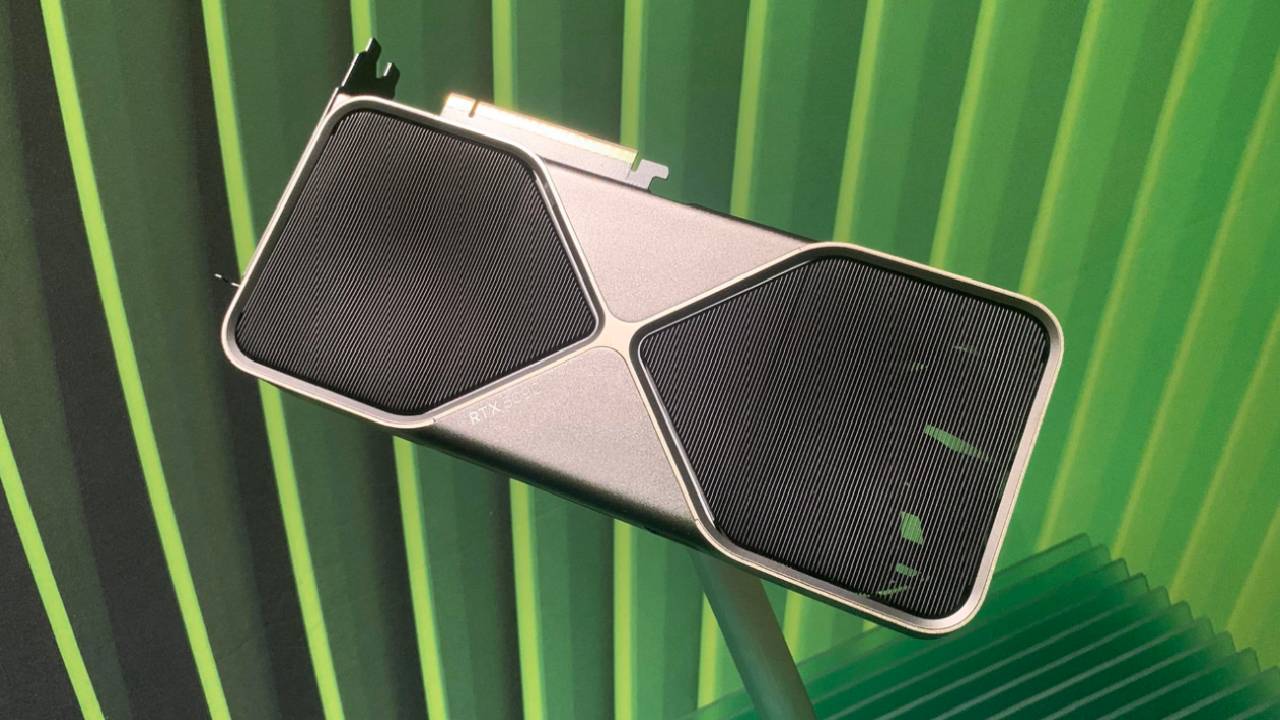
The bigger difference is memory bandwidth. An RTX 5090, for example, features 32GB of GDDR7 memory and approximately 1.8TB/s of memory bandwidth. Apple silicon systems can offer hundreds of gigabytes per second, but that does not automatically match high-end discrete GPU memory performance.
GPU compute also matters. Think of memory as a warehouse and GPU compute as the workers processing what's inside. A larger warehouse provides more storage capacity, but fewer or slower workers cannot process orders as quickly.
That explains why a computer with 128GB of unified memory can load models that an RTX 5090 cannot fit entirely into its 32GB of VRAM. At the same time, the Nvidia GPU can still process smaller models significantly faster.
Why Unified Memory Matters for Local AI
Consider a quantized language model that requires about 45GB, including runtime overhead. A 32GB graphics card cannot accommodate the entire workload in VRAM. You may need CPU offloading, additional GPUs, or more aggressive quantization.
If you have a Mac with 128GB of unified memory, it might fit the whole model into its shared memory pool, which will run more smoothly. But if the model needs only 20GB, the RTX 5090 can keep everything in its dedicated VRAM. It has a significant performance advantage because of its greater bandwidth, tensor processing power, and CUDA ecosystem.
Software Compatibility and AI Training
Unified memory also eliminates needless data copying between CPU and GPU, potentially improving efficiency and power consumption. Benefits can be significant for video editing and machine learning programs tuned for Apple Silicon. But software compatibility still matters. CUDA is king in many professional GPU applications. Apple uses others like Metal and MLX.
Considerations also differ for AI inference and training. Large unified memory helps a lot for inference, since fitting the entire model is often the first hurdle. Training requires more memory for gradients, optimizer states, activations, and temporary buffers. It doesn't just immediately compare a PC with 128GB of unified memory to a professional accelerator with 128GB of HBM.
The same is true for gaming and 3D rendering. More memory means you don't have capacity constraints, but it doesn't add any more GPU cores or make ray tracing faster.
Is 128GB of Unified Memory Equivalent to VRAM?
No, not literally. A better description is a 128GB shared, high-bandwidth memory pool that the GPU can access directly. If your biggest problem is fitting large AI models into 24GB or 32GB of VRAM, unified memory can be an excellent solution. However, if you prioritize maximum tokens per second, training performance, gaming, rendering, or CUDA compatibility, a high-end Nvidia GPU is generally the stronger choice.
Ultimately, memory capacity determines what a machine can hold, while memory bandwidth and GPU compute determine how quickly it can work.
FAQ
Q. Does 128GB of unified memory equal 128GB of dedicated VRAM?
A. No. Unified memory provides a shared memory pool that the CPU and GPU can access, but it does not offer the same dedicated bandwidth or performance as a high-end graphics card's VRAM.
Q. Can 128GB of unified memory run large AI models?
A. Yes. A computer with 128GB of unified memory can load large local language models that exceed the VRAM capacity of many consumer graphics cards, making it useful for local AI inference.
Q. Is 128GB of unified memory better than an RTX 5090?
A. It depends on the workload. Unified memory offers greater capacity for large AI models, while the RTX 5090 generally provides higher GPU performance, dedicated VRAM bandwidth, and broader CUDA support.
Q. Can unified memory replace dedicated VRAM for gaming?
A. No. Although unified memory can provide additional memory capacity, gaming performance still depends on GPU compute power, memory bandwidth, ray tracing hardware, drivers, and software optimization.
Senior Editor, NoobFeed
Gaming Hardware Updates
No Data.