
Samsung 8nm LPU+ Could Bring Better Efficiency to Nintendo Switch 2
Samsung's upcoming 8nm LPU+ process sparks speculation about improved power efficiency and a potential Nintendo Switch 2 Lite revision.
Hardware by Tanvir Kabbo on Nov 09, 2026
Samsung's upcoming 8nm manufacturing process has sparked speculation about a potential Nintendo Switch 2 hardware revision. The new 8nm LPU+ technology is said to deliver gains in performance, power consumption, and logic area compared with its predecessor. But questions remain about whether Nintendo will leverage this innovation for an updated Switch 2, especially a hypothetical Lite version.
Samsung's 8nm LPU+ Process Raises Switch 2 Questions
Samsung is reportedly preparing an updated 8nm-class manufacturing process called 8nm LPU+. The company claims the new process can deliver up to 12% higher performance or 15% lower power consumption while reducing logic area by 8% compared with the previous 8nm LPU process.
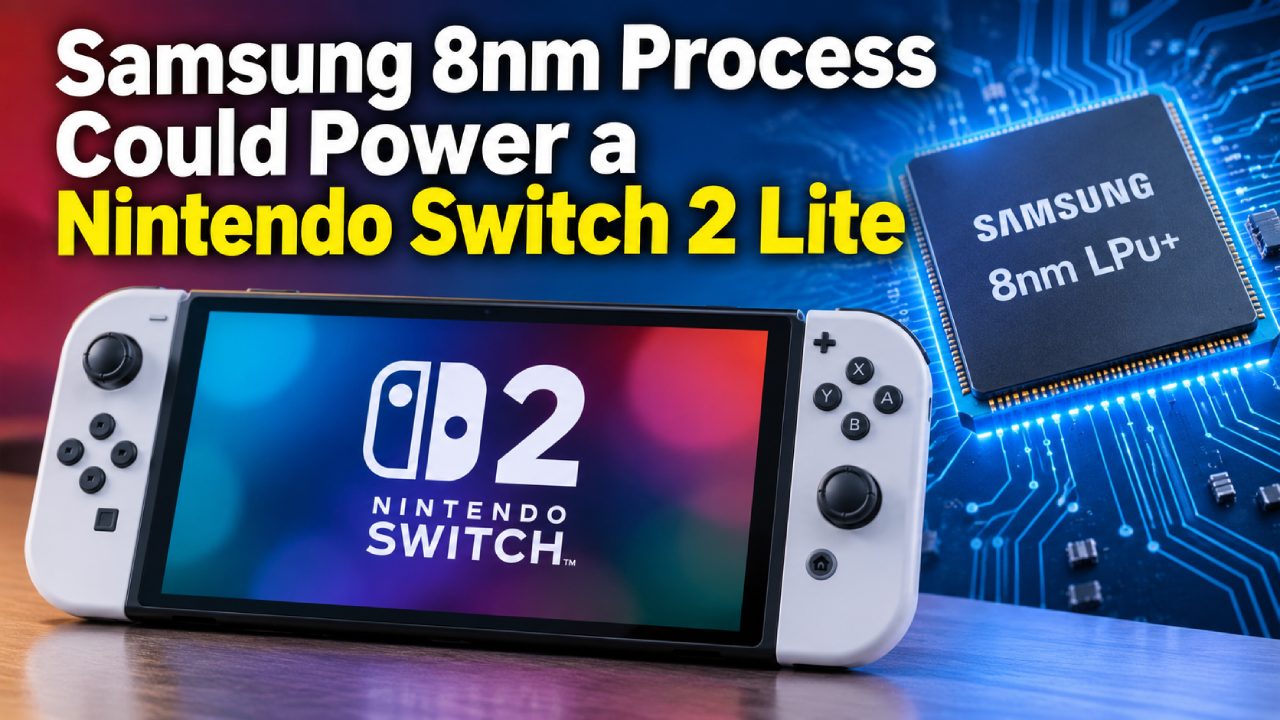
These figures represent different operating targets, meaning the performance improvement and power reduction are alternatives rather than gains that can necessarily be achieved simultaneously.
The interesting question is whether this technology could be used for a potential Switch 2 Lite or a smaller version of Nintendo's existing T239 processor. However, no specific rumor suggests that Nintendo is preparing a Switch 2 Lite. Much of the conjecture is based on upcoming manufacturing technology at Samsung.
Another important technological issue remains. The Switch 2's T239 CPU employs a blend of Samsung's 8nm and 10nm feature sizes. The key question is whether the current chip design could move to 8nm LPU+ without major engineering adjustments.
This matters because the transfer to manufacturing may be much easier if the existing design rules are compatible with the modern method. For example, several customers migrated from TSMC's 7nm process to its 6nm process, as the design standards remained virtually the same, allowing existing chip designs to be modified without significant engineering costs.
If such compatibility isn't found, upgrading the T239 to 8nm LPU+ will require further development work. A more current 5nm process could bring greater improvement.
Switch 2 Could Benefit From Better Power Efficiency
The potential benefits become clearer when looking at the original Nintendo Switch. During its mid-generation refresh, the system's processor moved from 20nm to 16nm manufacturing. This move significantly improved power efficiency, cutting total system power consumption by almost half in docked mode.
That's compared to Samsung's estimated 15% power saving with their 8nm LPU+ process, which is quite small. That would undoubtedly boost mobile gaming and battery life, but it may not be the huge upgrade you would expect from a major hardware change.
Another, more modern manufacturing approach could offer larger efficiency gains, but manufacturing costs and compatibility would also factor into Nintendo's decision.

A Better Switch 2 Display Could Be More Important
Besides processing upgrades, another area where a refreshed Switch 2 may make a notable impact is its screen. The current system's screen has received criticism for motion blur and ghosting. Even newer hardware editions, including the Zelda-themed Switch 2 model, don't appear to offer a significant improvement in panel quality.
Based on available observations, the newer model appears to use the same display panel as the original system, or something very similar. For many users, a better display could be a more meaningful upgrade than a relatively small improvement in processor efficiency. A potential Switch 2 OLED model would therefore be an appealing direction for a future hardware revision.
New Switch 2 Models Introduce Replaceable Batteries
Another interesting development involves newer Switch 2 hardware revisions. Recent teardown footage of a newer European model shows a more convenient battery-replacement design.
The updated system reportedly requires only nine screws to remove the rear cover, compared with more than 30 screws in the earlier design. The battery sits in a small cradle, making it easier to remove and reinstall. This is a nice step forward for long-term ownership and repairability, and future Switch 2 versions may potentially do the same.
Ultimately, Samsung's 8nm LPU+ process is interesting, but whether or not it ends up in a hypothetical Switch 2 Lite is anyone's guess. Nintendo has not announced that it is developing such a product or that it wants to adopt this production technology. For now, a more efficient processor and a better OLED screen would be more important additions for a future edition of the Switch 2.
FAQ
Q. What is Samsung's 8nm LPU+ manufacturing process?
A. Samsung's 8nm LPU+ is an updated 8nm-class manufacturing process that reportedly offers up to 12% higher performance or 15% lower power consumption with an 8% smaller logic area compared with the previous 8nm LPU process.
Q. Could Samsung's 8nm LPU+ process be used in a Nintendo Switch 2 Lite?
A. It is a possibility, but there is currently no confirmed evidence that Nintendo is developing a Switch 2 Lite or planning to use Samsung's 8nm LPU+ process for its processor.
Q. What processor does the Nintendo Switch 2 use?
A. The Nintendo Switch 2 uses NVIDIA's custom T239 processor, manufactured using Samsung's 8nm and 10nm-class technologies.
Q. Could a future Nintendo Switch 2 revision offer better battery life?
A. Yes. A more efficient manufacturing process could reduce power consumption and extend battery life. However, the actual improvement would depend on the processor design and other hardware components.
Senior Editor, NoobFeed
Gaming Hardware Updates
No Data.