
AMD Zen 6 Could Deliver 50% More Cores and Cache With Medusa
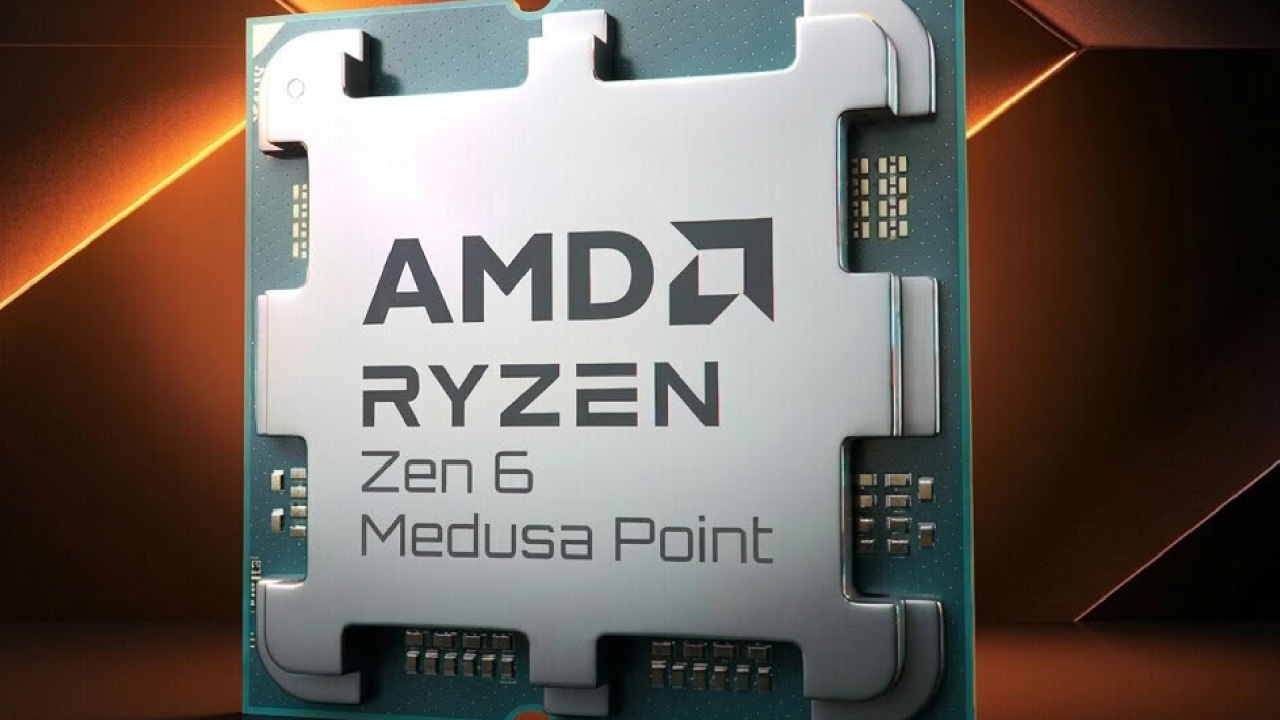
AMD's next-generation Zen 6 architecture could deliver substantial performance improvements through higher core counts, increased cache capacity, and faster clock speeds.
Hardware by Tanvir Kabbo on Nov 08, 2026
AMD Zen 6 Benchmarks Reveal Major Performance Gains: AMD's new Zen 6 architecture looks set to deliver a solid performance bump for gamers and productivity users. The next generation of Ryzen processors could deliver a significant upgrade with more cores, more L3 cache, quicker memory support, and architectural improvements. AMD has yet to officially confirm most specs, but leaks and early benchmark results are painting a clearer picture ahead of the scheduled CES 2027 announcement.
AMD Zen 6 Could Feature 50% More Cores and Cache
Multiple leaks point to a 50% jump in core count with AMD Zen 6, with the top-end desktop version supposedly offering 24 cores. AMD is also slated to double the L3 cache size, along with quicker memory support and additional instructions.

These enhancements could make Zen 6 especially intriguing for gaming and heavy workloads. More cores could deliver better performance in productivity apps, while the extra cache should boost gaming performance. Timing is particularly noteworthy, given Intel's new Nova Lake chips are garnering quite a bit of attention. AMD could also share further architectural details during CES in January 2027.
AMD Medusa Geekbench 7 Benchmarks Emerge
A few Geekbench 7 scores of AMD's Medusa CPUs have appeared online lately. We have a few of them dated November 5. However, these are mobile processors, not desktop variants. One benchmark shows approximately 3,100 points in single-core testing and 18,300 points in multi-core testing. Another result records 3,329 points in single-core performance and 16,555 points in multi-core testing.
The differences are not particularly surprising because these processors are engineering samples. Clock speeds, power settings, and operating conditions are not necessarily indicative of final products. Some of the listings also show cache and memory configuration details, although Geekbench may not be reading all specifications properly.
Engineering Samples Could Be Limiting Performance
One crucial point is that some of the engineering samples are apparently fused; thus, they can't go above ~5.2 GHz or 5.3GHz. This doesn't mean retail processors will face the same limitation; these constraints may apply only to testing samples for now.
Comparing their results against existing Ryzen processors is also complicated. The Ryzen 7 9850X3D reportedly scores around 3,100 points in single-core testing, while the Ryzen 9 9950X achieves approximately 3,070 points.
However, mobile processors operate within considerably smaller power envelopes, potentially around 30W to 40W, compared with desktop processors that can consume well over 100W. Geekbench 7 also has workloads that will benefit from newer instruction sets. So, use caution when making direct comparisons between different designs.
Medusa 2 and Medusa 3 Reveal Different Configurations
More benchmark entries also detail AMD's Medusa 2 and Medusa 3 setups. The entries indicate different core configurations and L2 cache sizes of around 6MB and 8MB. Performance findings show single-core scores of nearly 2,900 points versus 1,700 points, while multi-core results reach about 8,300 points and 5,000 points, respectively.
These differences suggest the processors aren't running under the same conditions. Engineering samples, clock configurations, and lack of software support can affect results.
Zen 6 Could Be a Major Gaming Upgrade
Current estimates suggest Zen 6 could offer around 10-12% higher IPC. Lightly threaded workloads could potentially hit 6.2GHz to 6.3GHz. In particular, the extra L3 cache and lower latency could benefit gaming. Another fascinating avenue is distributing workloads across many CCDs, letting customers assign one CCD to gaming and another to demanding productivity programs.
Also attractive could be the projected 12-core, 24-thread setup. That would be a major step up over the eight-core, 16-thread setup used in processors like the Ryzen 7 9800X3D.
AMD Zen 7 Could Prioritize Larger Cores
Early rumors suggest Zen 7 may bump the maximum core count to 32, up from Zen 6's projected 24 cores. AMD is also said to be looking to expand AVX10 and ACE instruction capabilities. But larger individual cores may need more silicon area, which could limit clock-speed gains. So Zen 7 could be more about architectural changes and single-threaded performance.
These expectations remain unverified. But Zen 6 is looking more promising, and CES 2027 should give a clearer view of AMD's next-generation Ryzen portfolio. This uncertainty in the AI business may also affect future memory pricing and hardware availability, making the next couple of years especially fascinating for PC manufacturers.
FAQ
Q. How many cores will AMD Zen 6 processors feature?
A. AMD Zen 6's highest-end desktop processor is expected to feature up to 24 cores, representing a 50% increase over the previous generation's maximum configuration.
Q. How much IPC improvement is expected from AMD Zen 6?
A. Current leaks suggest AMD Zen 6 could deliver approximately 10–12% higher IPC compared with Zen 5, although final performance figures remain unconfirmed.
Q. What are the expected performance results of AMD Zen 6 in Geekbench 7?
A. Early Medusa engineering sample results show approximately 3,100–3,329 points in single-core testing and up to 18,300 points in multi-core testing. These results are preliminary and do not represent final retail performance.
Q. When is AMD expected to reveal more details about Zen 6?
A. AMD is expected to share more information about its next-generation Zen 6 architecture at CES 2027 in January, although an official announcement has not yet been confirmed.
Senior Editor, NoobFeed
Gaming Hardware Updates
No Data.