
NVIDIA RTX 5080 Gets 221x FPS Boost With New DirectX Raytracing Technology
Microsoft's latest DirectX innovation dramatically improves ray-tracing efficiency, delivering unprecedented performance gains and substantial memory savings on NVIDIA's RTX 5080.
Hardware by Tanvir Kabbo on Nov 08, 2026
Making path tracing practical for mainstream gaming has always been one of the biggest challenges facing GPU manufacturers. While modern graphics cards can produce increasingly realistic lighting, reflections, and shadows, the underlying computational requirements remain enormous.
Microsoft could now be addressing one of the most expensive parts of this process with its new D3D12 Ray Tracing Clustered Geometry technology. In a benchmark, NVIDIA's GeForce RTX 5080 achieved an extraordinary 310 FPS compared with just 1.4 FPS using traditional acceleration structure rebuilding. That represents an incredible 221x performance increase, alongside substantial reductions in VRAM consumption.
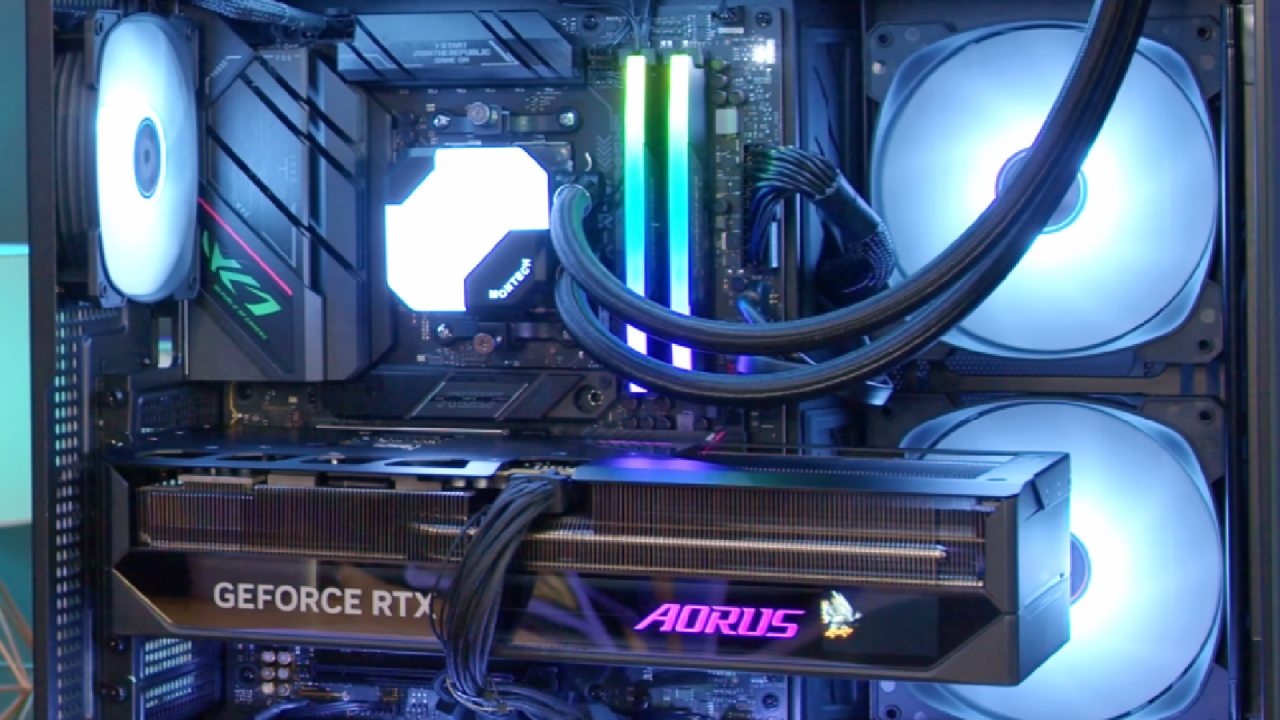
Although the results come from a specialized technical demonstration rather than an actual game, the implications for future ray-tracing workloads are difficult to ignore.
NVIDIA RTX 5080 Delivers a 221x FPS Increase
The most impressive result comes from Microsoft's D3D12 Ray tracing Clustered Geometry sample. With conventional Bottom-Level Acceleration Structure (BLAS) rebuilding, the RTX 5080 reportedly managed only 1.4 FPS. Enabling Clustered Geometry pushed performance to an astonishing 310 FPS.
This disparity points to a major bottleneck in current ray tracing. To speed up ray intersection with scene geometry, GPUs use Bounding Volume Hierarchy (BVH) structures. Instead of testing each triangle, the GPU uses these structures to find potentially relevant primitives more efficiently.
However, the cost of building and maintaining these acceleration structures grows with how often geometry changes. Animated actors, moving objects, and procedurally generated environments may require repeated BLAS updates or rebuilds, wasting valuable GPU resources.
For highly detailed scenes, traditional reconstruction approaches can be very inefficient. Microsoft's Clustered Geometry technique tries to eliminate this overhead by changing how geometry is organized and how acceleration structures are managed.
The reported improvement is enormous, with rebuilding times becoming up to 720x faster. This suggests that a considerable portion of the performance previously spent maintaining ray-tracing structures could potentially be redirected toward actual rendering.
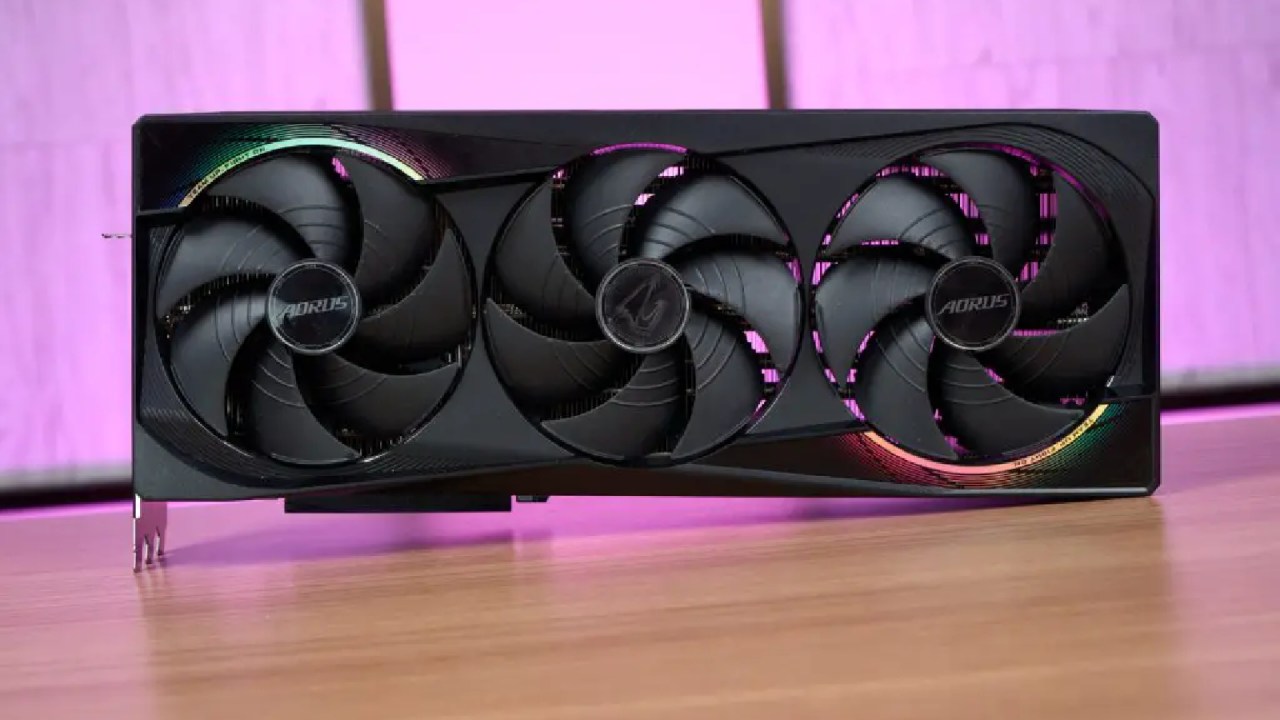
DirectX Technology Reduces RTX 5080 VRAM Usage by 94.3%
Frame rates are only part of the story. Microsoft's demonstration also shows substantial improvements in memory efficiency, which matters as modern games increasingly demand more VRAM. Traditional BLAS rebuilding reportedly consumed 4,716MB of acceleration structure memory on the RTX 5080. With Clustered Geometry enabled, that requirement dropped to just 267MB.
That translates into 94.3% lower memory consumption, freeing approximately 4.45GB in the tested workload. RTX 5080 is especially fascinating because it comes with a beefy 16GB of GDDR7 memory. Its memory bandwidth is great, but capacity still limits it in demanding games with high-resolution textures, realistic environments, and significant ray-tracing effects.
Path tracing adds load because it requires a lot of scene information and acceleration structures. The memory burden of BVH management can be reduced, leaving more resources for textures, geometry, and other rendering needs.
That doesn't mean all games will suddenly use 4.45GB less VRAM. Actual savings will depend on the scene's complexity and implementation. Still, it shows how API-level changes could let older 16GB graphics cards handle more demanding rendering workloads.
RTX 5080 vs. RX 9070 XT: NVIDIA Takes a 3.4x Lead
Microsoft's solution also helps AMD's Radeon RX 9070 XT, which apparently achieves 91 FPS in the same Clustered Geometry task. But it's a massive lead for NVIDIA. That 310 FPS score for the RTX 5080 puts it about 3.4x ahead of AMD's performance in this particular demo. That is a remarkable difference, especially since both graphics cards see significant gains with the new approach.
That said, this benchmark should not be considered definitive evidence of NVIDIA's overall architectural superiority in ray tracing. It separates rebuilding acceleration structures, rather than measuring full gaming performance. Varied workloads, drivers, and GPU architectures can provide very varied outcomes.
FAQ
Q. How much FPS does the NVIDIA RTX 5080 gain with DirectX Raytracing Clustered Geometry?
A. The NVIDIA RTX 5080 jumps from 1.4 FPS to 310 FPS, delivering an approximately 221x performance increase in Microsoft's Clustered Geometry benchmark.
Q. How much VRAM does DirectX Clustered Geometry save on the RTX 5080?
A. VRAM consumption for acceleration structures drops from 4,716MB to just 267MB, representing a massive 94.3% reduction in memory usage.
Q. How does the NVIDIA RTX 5080 compare to the AMD RX 9070 XT in this benchmark?
A. The RTX 5080 achieves 310 FPS, while the RX 9070 XT reaches 91 FPS, giving NVIDIA's graphics card approximately a 3.4x performance advantage.
Q. Will DirectX Raytracing Clustered Geometry deliver 221x higher FPS in actual games?
A. No. The 221x improvement comes from a synthetic benchmark isolating acceleration structure rebuilding. Actual gaming performance gains will depend on implementation, rendering workloads, and game engine support.
Senior Editor, NoobFeed
Gaming Hardware Updates
No Data.