
NVIDIA Celebrates 20 Years of GeForce 8800 GTX and G80 Architecture
NVIDIA celebrates two decades of the GeForce 8800 GTX, a groundbreaking graphics card that transformed PC gaming and GPU technology.
Hardware by Tanvir Kabbo on Nov 14, 2026
NVIDIA is celebrating the 20th anniversary of the GeForce 8800 GTX, one of the most influential graphics cards in PC gaming history. Based on the renowned G80 architecture, the GPU introduced essential technologies such as unified shaders, DirectX 10 support, and CUDA. The 8800 GTX offered an impressive feature set and delivered major performance gains over previous generations, making it a landmark device in the advancement of consumer graphics hardware.
GeForce 8800 GTX Introduced Major GPU Advancements
The GeForce 8800 GTX was a watershed moment for NVIDIA, introducing innovations that would grow in importance in the GPU industry. It was NVIDIA's first DirectX 10-compatible graphics card and also introduced CUDA support, a technology that would eventually become enormously influential beyond traditional gaming workloads.
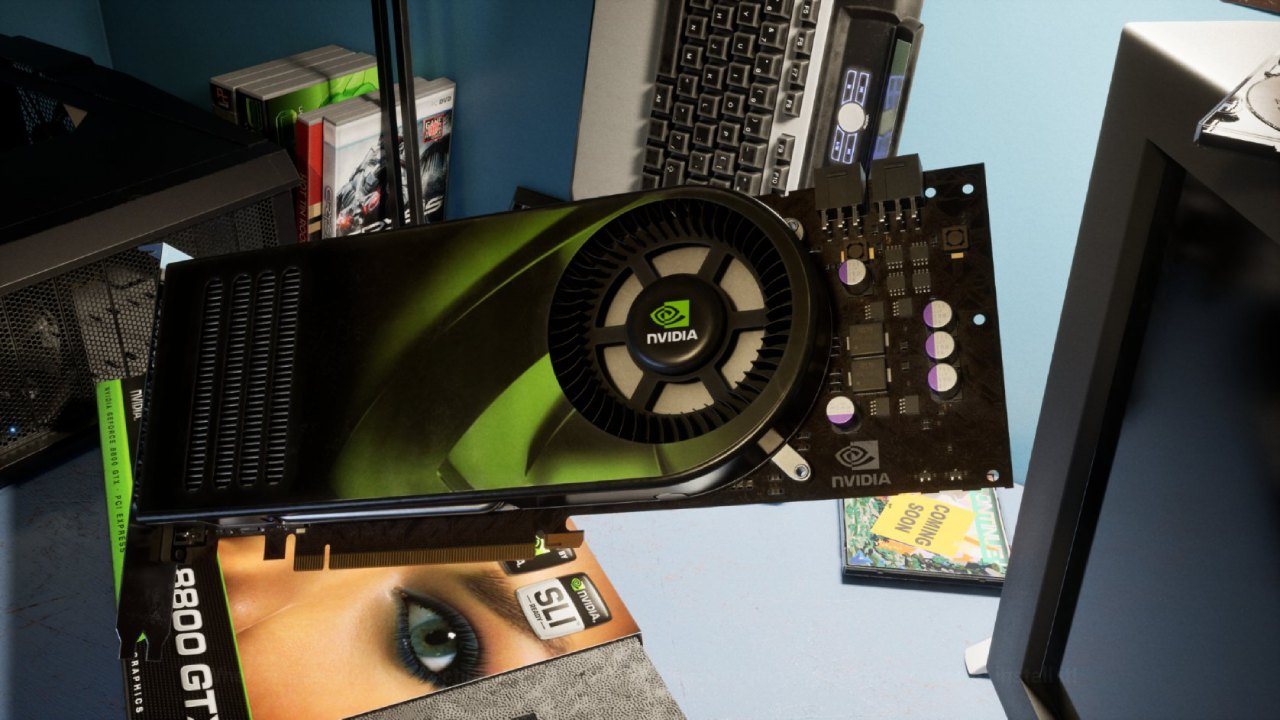
The G80 architecture also brought unified shaders to PC graphics, although Microsoft's Xbox 360 had already introduced the technology a year earlier. Still, it was a major step forward for desktop graphics, and NVIDIA's implementation married architectural advances with significant performance gains.
While DirectX 10 didn't produce the seismic shift many had hoped for, CUDA became one of NVIDIA's most essential technologies, extending into artificial intelligence and rapid computing.
The 8800 GT Made G80 More Accessible
The 8800 GTX was an amazing graphics card, but the architecture likely peaked with the GeForce 8800 GT, released a year later. The 8800 GT benefited from a die shrink and offered a more refined implementation of the architecture. More importantly, it launched at approximately $350, considerably below the 8800 GTX's original $600 price. This made G80-generation performance more accessible to PC gamers.
The architecture was so successful that NVIDIA continued reusing it in subsequent products. Take, for example, the GeForce 9800 GT, which effectively had the same core characteristics as the 8800 GT. The original design lasted a good while.
NVIDIA's Anniversary Demo Celebrates PC Gaming Culture
To celebrate the occasion, NVIDIA has released a path-tracing demo that pays homage to both the GeForce 8800 GTX and the PC gaming culture of 2006-2007.
The demo, developed by Weta FX artist Dylan Brown, recreates a classic PC desktop, complete with familiar hardware and peripherals. It has a 4:3 CRT monitor, vintage speakers, a gaming keyboard, CDs, posters, and conventional IDE-driven hard drives.
The amount of detail is what makes the demo so cool for anybody who played on PC in that generation. It even references Crysis, although the sequence primarily shows the game's introductory movie rather than actual gameplay.
A playable Crysis-inspired sequence would have been an interesting addition, but recreating that experience would have required considerably more work. The demonstration itself uses Unreal Engine rather than CryEngine.
Modern GPUs Highlight Two Decades of Progress
The demonstration also showcases how far graphics technology has progressed. This was taken on an NVIDIA GeForce RTX 5070 Ti at 4K, high settings with 90% resolution scaling using DLSS Performance mode.
The graphics are excellent, even with the challenging route-tracking tech. But as graphics card prices keep rising, even once-reasonable GPUs are becoming pricey, making hardware decisions for testing and benchmarking challenging.
The original 8800 GTX also highlights how dramatically GPU performance has improved. During the G80 era, new graphics cards could deliver approximately twice the performance of products released just one or two years earlier. Today, generational improvements are generally more modest, often falling around 20–30%, depending on the product.
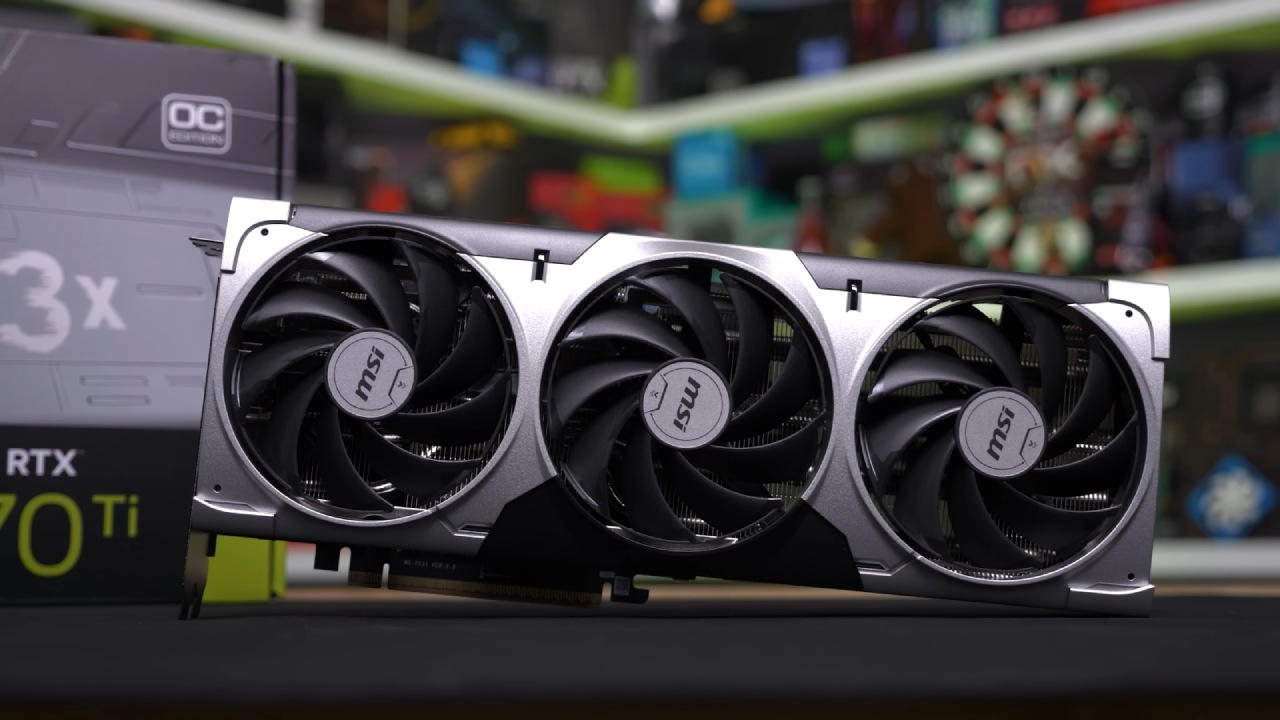
From 150W Graphics Cards to Today's Massive Designs
The 8800 GTX also looks surprisingly modest compared with modern flagship GPUs. Despite being a dual-slot card, it used a relatively small blower cooler that didn't cover its entire length. High-end graphics cards consumed approximately 100–150W during that period. Modern flagship GPUs can reach 400–600W, requiring significantly larger cooling systems with multiple fans and extensive heatsinks.
The card also arrived around the PlayStation 3's launch, whose NVIDIA RSX graphics processor was based on technology closer to the GeForce 7800 GT rather than the newer 8800 GTX.
Revisiting the Legendary 8800 GTX
NVIDIA's anniversary celebration offers an opportunity to revisit one of the most influential graphics cards ever released. It would be fascinating to benchmark the original 8800 GTX with today's methodologies and see how it holds up and what its technology constraints are.
Two decades later, the G80 architecture remains a defining milestone in NVIDIA's history. It introduced CUDA, unified shaders, and DirectX 10 compatibility, defining future generations of graphics hardware, and its amazing performance set a new benchmark for PC gaming.
FAQ
Q. When was the NVIDIA GeForce 8800 GTX released?
A. The NVIDIA GeForce 8800 GTX launched in 2006, powered by the groundbreaking G80 architecture.
Q. What made the GeForce 8800 GTX special?
A. The GeForce 8800 GTX introduced NVIDIA's first DirectX 10-compatible GPU and CUDA support, alongside unified shaders and significant performance improvements.
Q. What was the difference between the GeForce 8800 GTX and 8800 GT?
A. The 8800 GT arrived a year later with a refined, smaller-process implementation of the G80 architecture and a considerably lower launch price than the 8800 GTX.
Q. What does NVIDIA's 20th anniversary demonstration showcase?
A. The path-tracing demonstration recreates a nostalgic 2006–2007 PC gaming environment, featuring classic hardware, CRT monitors, gaming accessories, and references to Crysis.
Senior Editor, NoobFeed
Gaming Hardware Updates
No Data.