
Big Walk Review
PC
A relaxed co-op adventure where exploration, puzzles, and friendship make every journey memorable.
Reviewed by Elme Dhee on Aug 07, 2026
Big Walk is immediately refreshin.g. It doesn't build its whole experience on frantic challenges or ridiculous situations just for the laughs. Instead, it builds an open-world environment where friends can just be together. The comedy is still there, but it comes naturally from what players do and say.
That makes the online co-op feel less like a feature and more like the foundation of the entire experience. The island is filled with things to discover, puzzles to solve, and places worth wandering toward, but the game rarely feels desperate to keep you busy.
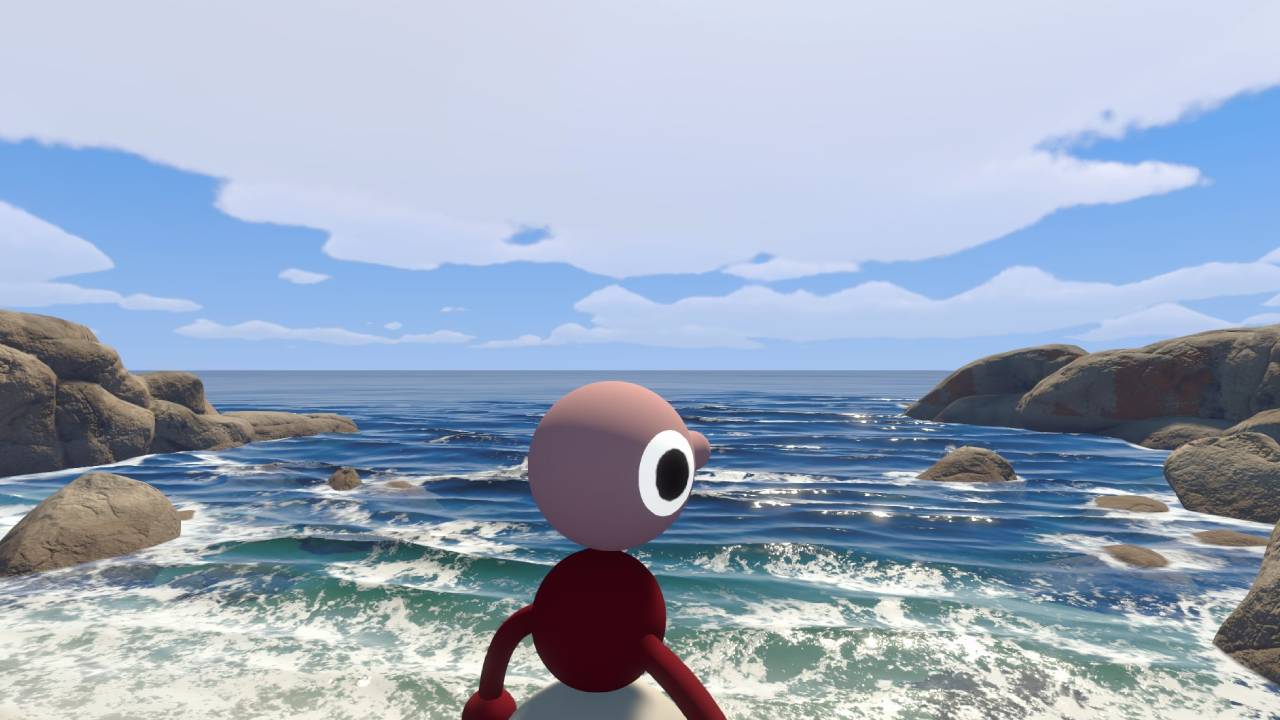
Instead, it gives you room to explore at your own pace. A slow tram ride, an unexpected climb up a mountain, or a completely pointless detour can become just as memorable as completing an important objective. Big Walk understands that sometimes the best co-op moments happen when nobody is following a plan.
Its puzzles turn communication into the most important tool you have.
The puzzles are where Big Walk's co-op design becomes especially clever. Rather than relying on complicated controls or demanding mechanical precision, many challenges require players to communicate information to one another.
One early puzzle, for example, involves transporting a device through a maze before it disappears. The challenge is less about moving quickly and more about deciding where everyone should stand and when to pass it between players.
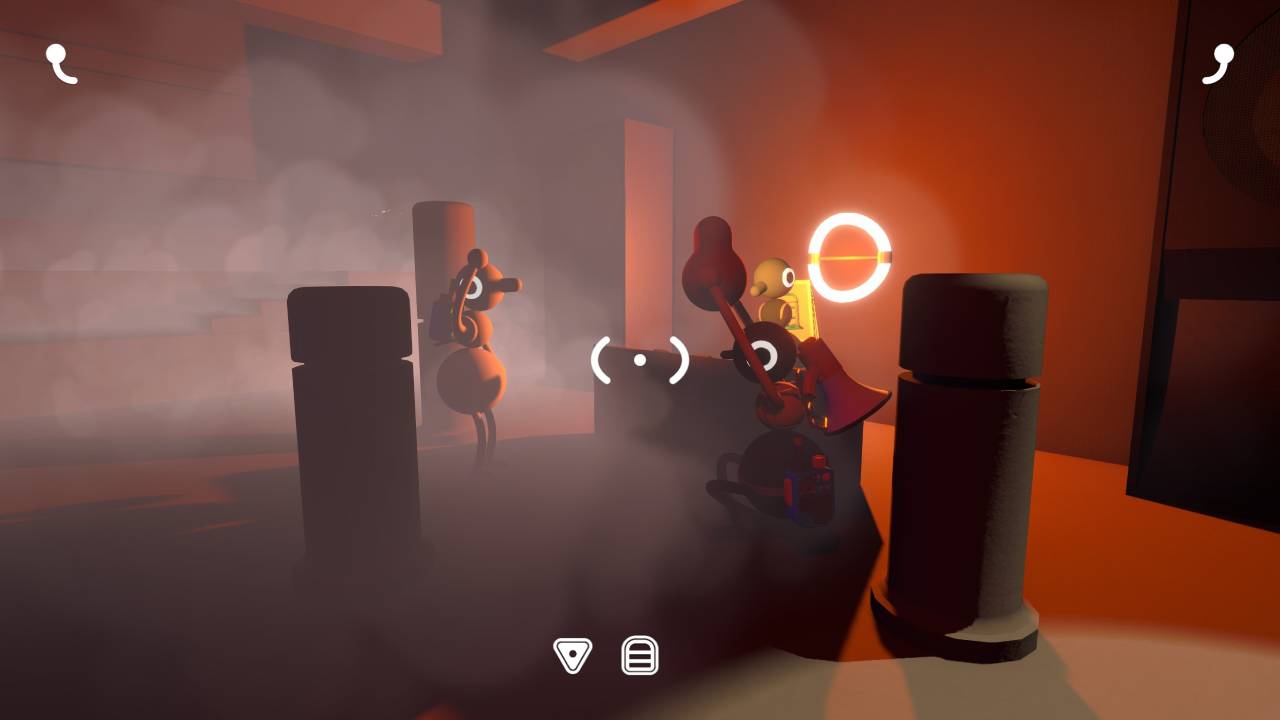
That design becomes even more interesting because of the proximity chat system. Players can only hear one another clearly when they are close, while walls and other large objects can interfere with communication.
A simple puzzle can therefore become a miniature exercise in teamwork, forcing players to relay information through one another. It feels surprisingly natural, because the limitation is not simply restricting communication; it is actively shaping how the group solves problems.
The game gradually makes communication harder without making its puzzles frustrating.
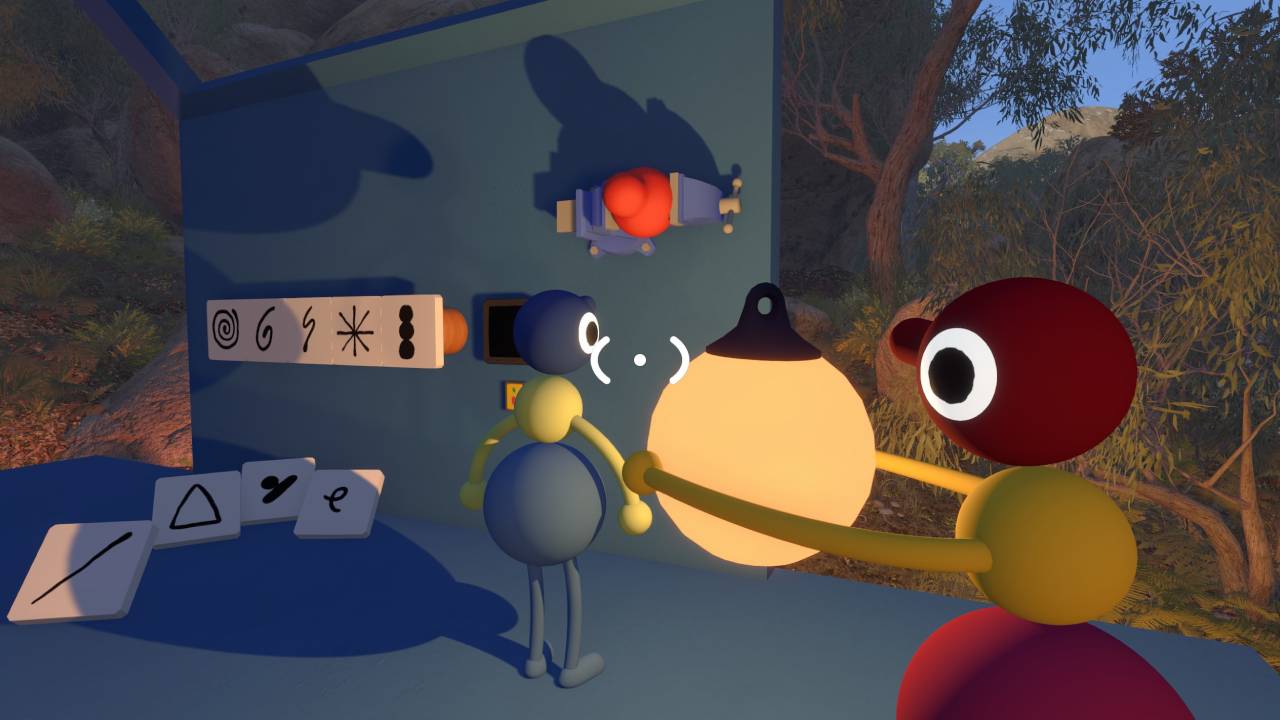
Early challenges introduce players to describing straightforward symbols and identifying them from another player's explanation. The further you go, the more abstract those symbols get, and simple descriptions are much harder to agree on.
Eventually the game starts to move beyond visual information altogether, asking players to communicate sounds and other less tangible details. This is a natural progression that constantly challenges a group's knowledge of one another. This is where the mystery element is particularly effective.
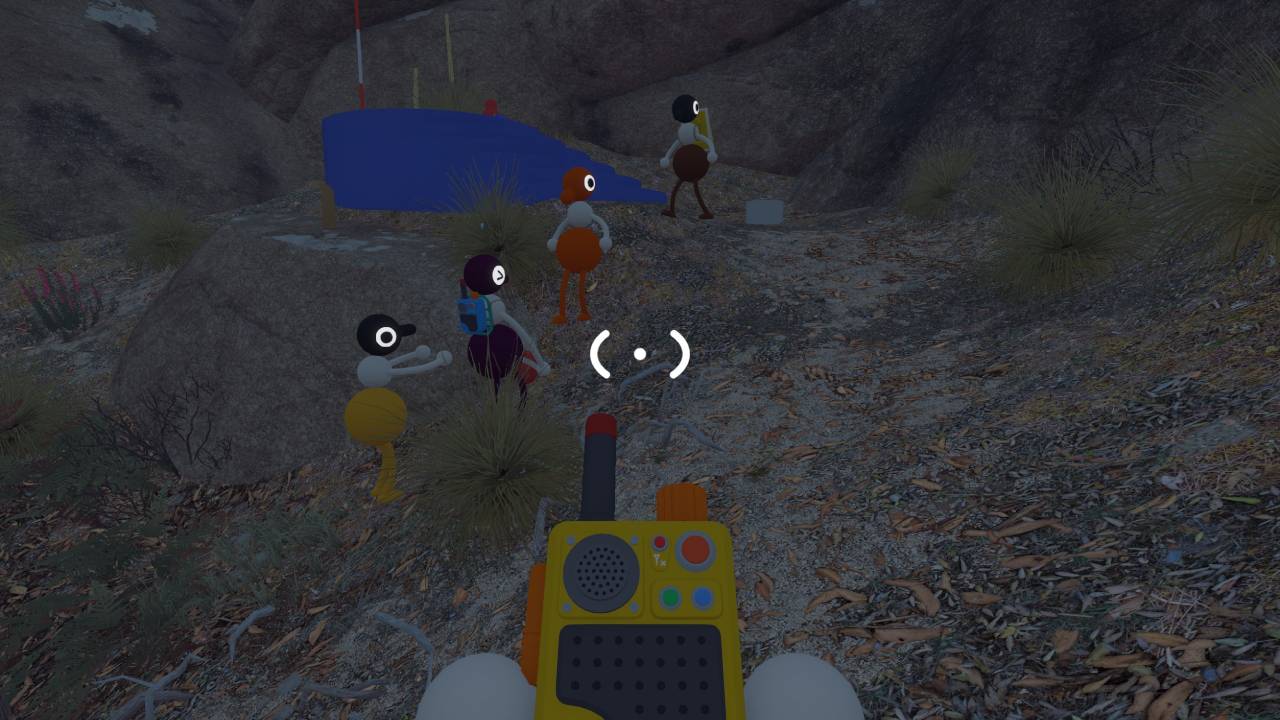
Big Walk does not simply hand you instructions and ask you to execute them. You encounter something unusual in the environment, investigate it, exchange theories, and gradually figure out what the game expects.
Because different players interpret what they see or hear differently, solving a puzzle often requires understanding another person's perspective rather than simply finding the objectively obvious answer.
Its communication tools become surprisingly important as the challenges grow.
Players also have a simple gesture system that allows them to point forward, upward, or sideways with either arm. At first, these gestures feel like another small interaction in a game already full of them. Eventually, however, they become a natural part of communication, especially during situations where speaking clearly is difficult or where a puzzle deliberately limits how players can communicate.
Other tools can also change how groups approach problems. Walkie-talkies can make it easier to pass on information; limited inventory space forces players to decide who should be carrying certain objects.
Some puzzles even prevent items from being used altogether. The result is a sandbox-like structure where the solution might be set in stone, but the way your group gets to it can be very different. That freedom gives each successful solution a sense of shared ownership.
Exploring the island is just as important as solving its puzzles.
Although Big Walk is built around puzzles, exploration is what gives the game its atmosphere. The island is large, and attractions are intentionally spread out rather than clustered together. You might spot something interesting in the distance and decide to walk over out of curiosity.
There's no constant flow of demanding objectives, so wandering feels like an activity rather than wasted time. The environment itself is heavily inspired by Australian bushland, and the details help sell it as a believable place.
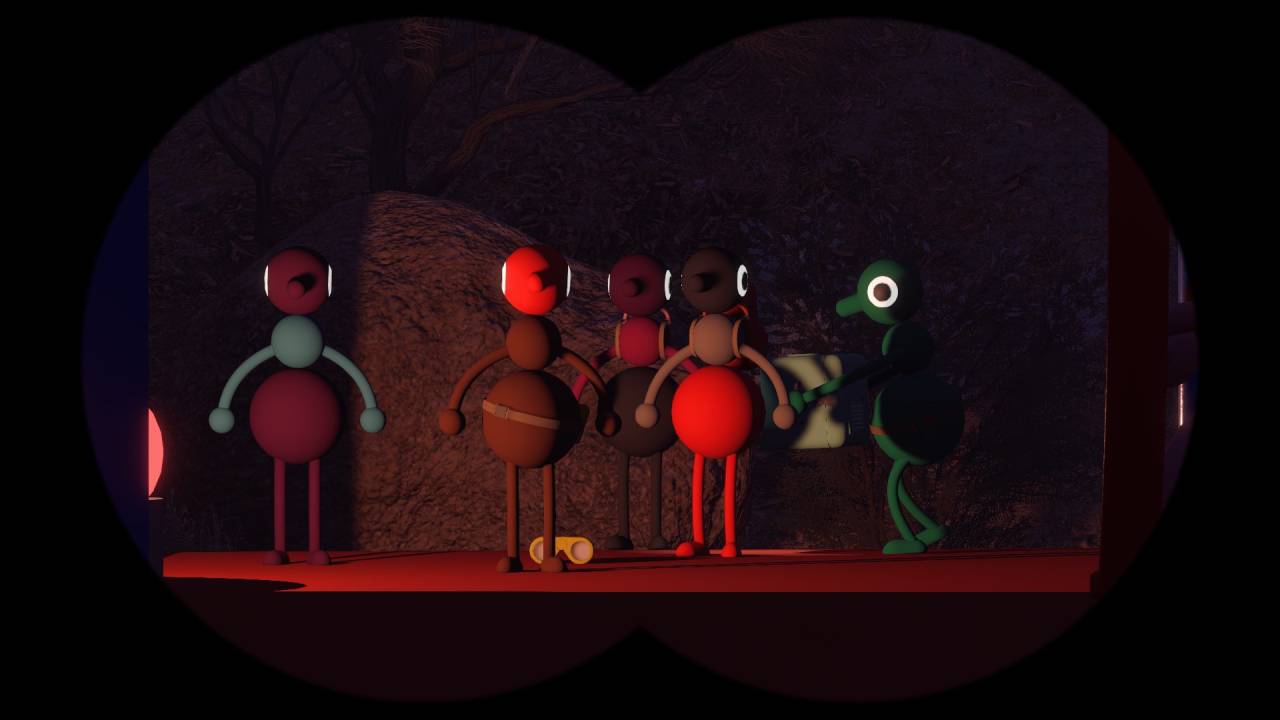
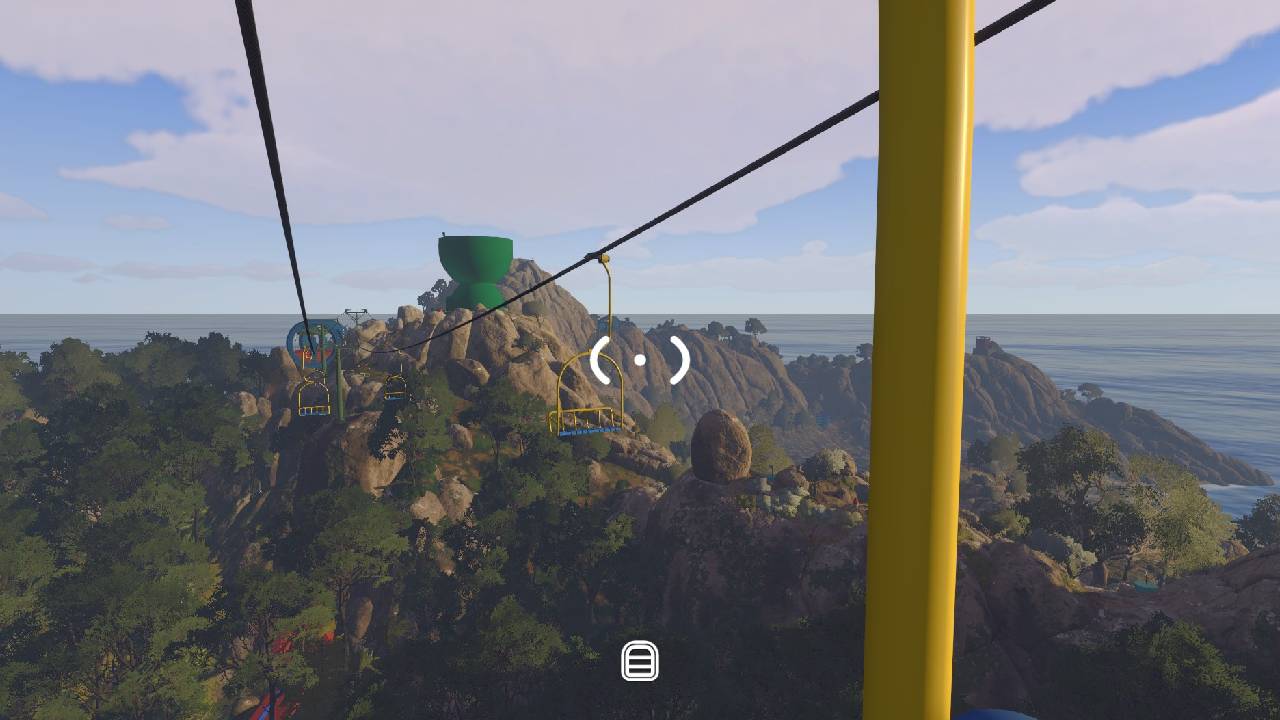
The sound of footsteps on sand, insects buzzing in the night, and sunlight stretching across the ocean give the island a quiet sense of life. Even traveling between places can be part of the experience. The slow tram rides, in particular, create stretches where players can talk, joke around, and enjoy being together.
The island creates room for comedy that never feels forced.
Big Walk's big strength is that the comedy is born organically out of the freedom it offers players. There's no need for constant jokes or scripted punchlines, because the funniest moments usually come from friends messing around.
A carefully planned expedition can suddenly become an unnecessary mountain climb, a strange detour, or an argument over which direction everyone should take. The sandbox design gives players enough freedom to create those moments themselves.
That also makes exploration feel genuinely social. Your group might begin with a specific destination in mind, only to become distracted by something interesting along the way. The game encourages that kind of spontaneity rather than treating it as wasted time.
Even when nothing important is happening mechanically, players are still making memories together. In that sense, the open-world structure works less like a traditional map and more like a shared playground.
The game understands that the spaces between objectives can matter just as much.
One of the most deliberate choices in Big Walk is its use of space. Locations are spread apart, the tram moves slowly, and certain puzzles require players to separate into smaller groups. None of this feels accidental. Those quieter stretches give everyone time to talk, joke around, compare ideas, or enjoy the scenery.
The game is confident enough to let its world breathe instead of filling every second with activity. That approach also makes the journey itself meaningful. There is no fast travel system, and sessions begin from the original tutorial area, meaning players repeatedly become more familiar with the island as they progress.
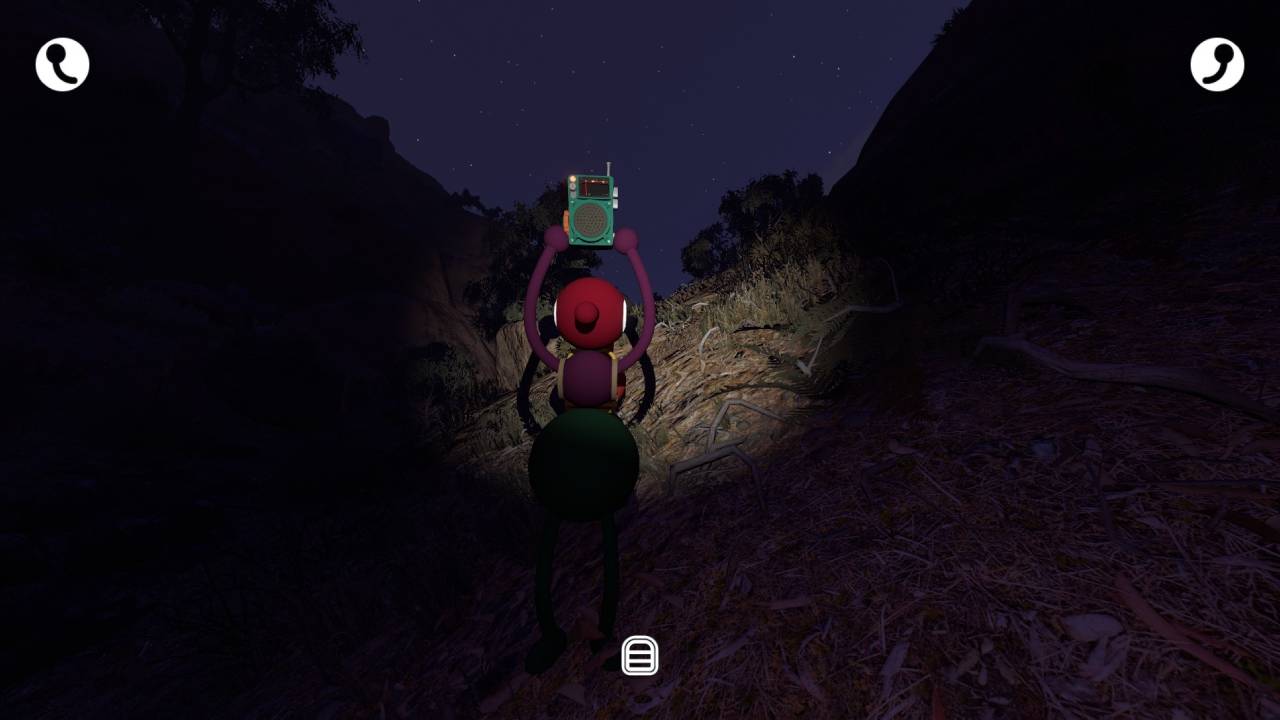
What could easily have been an inconvenience instead reinforces the game's emphasis on exploration. Eventually, landmarks and routes start feeling familiar, and traveling through the island becomes part of the shared experience rather than something players desperately want to skip.
Supporting larger groups makes the island feel more like a social space.
Although the puzzles can accommodate up to four players mechanically, Big Walk supports groups of up to twelve. That distinction is important because the game is not exclusively about completing challenges. A larger group can explore together, split off temporarily, or occupy the same world while different people pursue different activities.
Not everyone needs to participate in every puzzle for the session to remain enjoyable. Smaller groups (roughly four to six players) may work better, for the best trade-off between communication and puzzle design.
Larger groups can become chaotic, but that chaos is not necessarily a flaw. The game leaves enough room for people to take turns, substitute for one another, or watch while someone else tackles a challenge. It treats co-op as a social experience, not a rigid four-person team assignment.
The progression is surprisingly substantial for a game built around wandering.
It would be easy to assume that Big Walk is a short three-to-six-hour experience, especially given its relaxed presentation and lack of conventional pressure. In practice, the journey can take considerably longer, with the reviewer's group spending around twelve hours reaching the end.
There is a clear form of progression and an eventual conclusion, but the game deliberately avoids explaining too much about how everything fits together. That restraint benefits the experience because discovery is one of the game's biggest rewards.
Revealing exactly how progression works would take away part of the mystery, so the game lets players gradually understand its structure through exploration. The same philosophy applies to many of its puzzles. Rather than telling you what matters, Big Walk places something unusual in front of you and trusts your group to investigate it.
The lack of matchmaking gives the experience a very specific audience.
For all of its strengths, Big Walk is not designed to accommodate everyone. There is no matchmaking, meaning you need to bring your own group if you want to experience its online co-op properly. That is a significant limitation for anyone who does not already have friends interested in playing.
The proximity chat system can also be divisive, particularly for players who prefer more conventional communication methods. Its slower pace will likewise be an acquired taste. Big Walk does not constantly throw action or rewards at you, and some players may find the amount of walking between activities excessive.
The game expects you to appreciate the journey itself, not merely tolerate it while waiting for the next puzzle. For players who enjoy exploration and social sandbox experiences, that patience can pay off. For everyone else, it may become the game's biggest obstacle.
The island's atmosphere makes even the most mundane trips feel rewarding. For all the emphasis on comedy and co-op, Big Walk has an unexpectedly calming side. Its environments are colorful without becoming overwhelming, and the changing weather and time of day give familiar locations a different character.
Walking through the island at night can feel completely different from visiting the same area during the day, especially when the group is simply wandering without a particular objective in mind.
That atmosphere also fits the game's mystery. The island is full of reasons to wonder what might be around the next corner, be it another puzzle, an unusual location, or something that looks totally unrelated to your current objective. Big Walk rarely feels like it's trying to impress you with spectacle alone.
Rather, it builds curiosity and leaves it up to players where that curiosity leads. It's a sandbox design, so players have a lot of freedom to make their own fun. Big Walk is at its best when players treat the island like a sandbox, not a checklist. You can focus on puzzles and progression, spend time exploring, or mess around with friends.
That flexibility is important because the game doesn't always give you a strong reason to do something. Sometimes the reason is simply that everyone wants to see what happens, and the freedom to follow that impulse is part of its appeal. There is also something refreshing about a game that does not constantly reward you for moving forward.
Not every detour needs to provide experience, currency, or a new piece of equipment. Sometimes you can climb somewhere pointless, discover a strange object, or spend several minutes traveling together without accomplishing anything in another game; that might feel like wasted time. Here, it is often the entire point.
Its slower pace will either become the game's greatest strength or its biggest weakness.
The same design philosophy that makes Big Walk relaxing can also make it frustrating. There are long stretches where very little happens, and traveling between locations can take time. Players looking for constant action, dense objectives, or a conventional open-world progression system may struggle to understand what the game expects them to enjoy.
It requires a willingness to slow down and appreciate the experience rather than rushing toward the next reward. For the right group, however, that pace becomes part of the charm. The absence of pressure allows conversations to develop naturally, jokes to happen without interruption, and discoveries to feel more personal.
Big Walk is less concerned with keeping you entertained every second than with giving you a place where entertainment can happen naturally. That is a risky approach, but when it works, it produces some genuinely memorable co-op moments.
Big Walk succeeds because it makes spending time together the real objective.
Ultimately, Big Walk is not really about reaching a destination. Its puzzles, exploration, comedy, and open-world design all exist to support the same central idea: giving friends a strange, peaceful place to spend time together.
The game is at its best when players stop worrying about efficiency and follow whatever catches their attention. That makes the online co-op feel unusually genuine. It is not going to appeal to everyone.
The lack of matchmaking, deliberately slow movement, occasional empty stretches, and reliance on having the right group can make it a difficult recommendation for solo players or anyone seeking a traditional open-world adventure.
But with a few friends who are willing to wander, experiment, and laugh at their own mistakes, those weaknesses become far less important. Big Walk ultimately understands something many co-op games forget: the best memories do not always come from winning.
Sometimes they come from getting completely lost, arguing over a ridiculous puzzle, taking a tram across the island, or discovering something none of you were looking for. It is a relaxed, mysterious, and genuinely funny sandbox that gives its players enough freedom to create their own stories—and that makes the walk itself worth taking,
Editor, NoobFeed
Verdict
Big Walk is a charming co-op adventure that turns exploration and simple puzzles into memorable moments with friends. Its slow pace and lack of matchmaking may limit its appeal, but the experience shines with the right group.
81
Related News
No Data.