
Intel Wildcat Lake Honor X14 vs. MacBook Neo: The $600 Laptop Battle Over 16GB RAM and Storage
Intel’s Wildcat Lake platform targets Apple’s budget premium dominance with stronger memory and storage configurations.
Hardware by Masaru Hoshino on May 18, 2026
The entry-level premium laptop segment has rarely been this aggressive. Apple's recent move with the $599 MacBook Neo has effectively redrawn expectations for what a "budget premium" machine should look like, pairing a sleek aluminum chassis with its A18 Pro-derived silicon in a tightly optimized package.
But that shift has also exposed Apple's familiar constraint: trade-offs in memory and storage that feel increasingly restrictive in a modern computing environment. Now Intel's Wildcat Lake platform enters the conversation through the Honor X14, a Windows thin-and-light that feels purpose-built to challenge Apple's value narrative head-on.
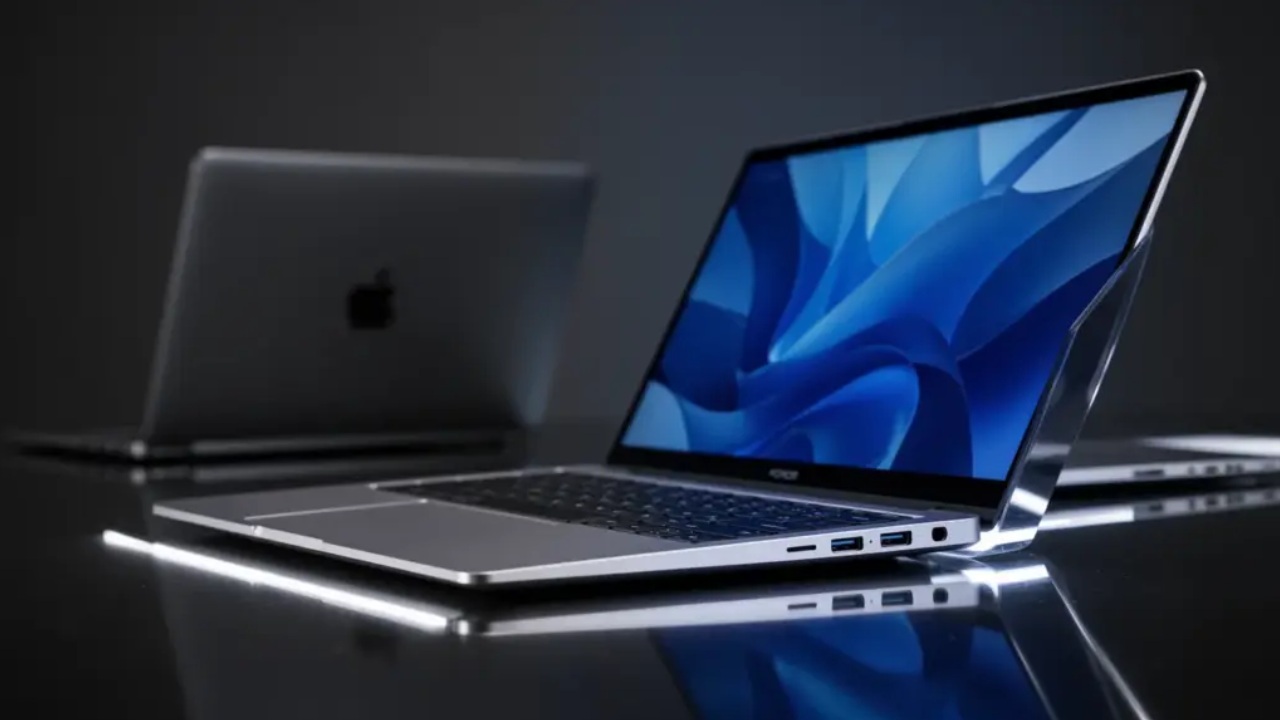
Powered by the Core 5 320, part of Intel's Core Series 3 architecture, the Honor X14 isn't trying to out-design Apple's ecosystem—it's trying to out-spec it where it matters most to everyday users. At roughly the same price bracket, this becomes less of a spec comparison and more of a philosophical split: controlled efficiency versus raw practicality.
Spec Showdown: Memory and Storage Where Windows Wins Hard
The most immediate difference between the Honor X14 and Apple's MacBook Neo is not subtle—it's structural. The Honor X14 ships with 16GB LPDDR5X-7467 MT/s RAM and a 512GB SSD, both of which double the baseline configuration offered by Apple's $599 machine. In 2026, the MacBook Neo's starting point of 8GB of unified memory and 256GB of storage seems quite small for users who want to run multiple apps at once.
For students, developers, and general productivity users, this difference is not theoretical. Modern workflows—browser-heavy research, lightweight coding environments, cloud syncing, and even casual creative workloads—now routinely exceed 8GB memory pressure. The Honor X14's decision to standardize 16GB effectively eliminates that bottleneck before it begins.
Under the hood, the Core 5 320 (6 cores, up to 4.6 GHz, 35W TDP, 2 Xe3 GPU cores) is not positioned as an efficiency-first chip like Apple's silicon. Instead, it leans into balanced performance, giving Windows users predictable headroom for multitasking and light GPU-accelerated workloads without immediately hitting thermal or memory ceilings. Storage is equally important here. A 512GB SSD may sound incremental, but in real-world usage, it changes the device's lifespan.
With modern applications ballooning in size and Windows itself demanding more breathing room than macOS, the Honor X14 effectively doubles the usable runway before external storage becomes necessary. In short, Intel's Wildcat Lake strategy through Honor is simple: remove friction from entry-level computing, even if it means compromising elsewhere.
Display Compromise: Where Apple Still Holds the Premium Feel
The trade-off becomes obvious once you move beyond internal specifications. The LCD panel in the Honor X14 is a 300 nits, 1920x1200, 60Hz display, typically a low-end component. The vibrancy, contrast depth, and outdoor usability it offers are lacking in higher-end displays, while giving up productivity, whose value is considered satisfactory.
On the other hand, Apple's MacBook Neo does not deviate from its pursuit of perfection but packs a 500-nit, Retina-class panel with a 2408x1506 resolution to deliver far better clarity, brightness, and color rendering. This is where Apple's ecosystem philosophy shows itself again. Even at the entry level, the display is treated as a primary interface experience rather than a cost-saving lever. It enhances media consumption, reading comfort, and long-term usability in varied lighting conditions.
Honor's decision here is clearly strategic. To hit a realistic ~$599 price point while offering 16GB RAM and a 512GB SSD, something had to give. The display became that sacrifice. The downgrade is apparent but not bothersome to those who use the device mostly indoors or for productivity rather than fidelity. Apple still has an edge for those who prefer high-end quality.
.jpg)
Battery and Port Reality: Practical Windows Flexibility
Its durability and flexibility will be welcomed by the Honor X14 owners. It's a 60Wh battery, which beats the MacBook Neo's 36.5Wh. Combined with Intel's 35W-class efficiency tuning, this positions the device as a potentially longer-lasting machine under mixed workloads, especially in Windows environments where background processes tend to be more varied and less tightly controlled than macOS.
Equally important is connectivity. With the inclusion of a wider range of ports, the Honor X14 further solidifies its status as a convenient, plug-and-play device for students and other users who still use USB-A peripherals, external displays, and legacy storage devices (no dongles).
This is a subtle but important distinction. Apple's minimalist port strategy continues to push users toward adapters and hubs, while Honor is leaning into usability without accessories.
Is RAM and Storage Enough to Beat the Apple Experience?
The Honor X14, built around Intel's Core i5 320, is not trying to be a premium lifestyle device. It is a calculated response to Apple's aggressive entry into the $599 tier, and it succeeds in one very specific way: it restores practicality to the budget laptop conversation.
If your priority is long-term usability, multitasking headroom, and storage flexibility, the combination of 16GB LPDDR5X memory and a 512GB SSD makes the Honor X14 objectively more forgiving than Apple's MacBook Neo. It feels less constrained from day one and more adaptable to how Windows users actually work.
However, Apple's advantage in display quality and overall refinement still matters. The MacBook Neo offers a better visual experience than the Honor X14, is much more comfortable for reading, and feels nicer for those who value media consumption, reading comfort, and a premium experience.
In the end, it is all a matter of philosophy. MacBook Neo is a stitched-together high-end experience, with intentional restrictions. The Honor X14 is a utility-first machine that prioritizes headroom and flexibility over polish.
For most Windows users at the $600 price point, the extra RAM and storage are not just upgrades—they are insurance against rapid obsolescence.
Editor, NoobFeed
Gaming Hardware Updates
No Data.