
Intel Arc G3 Extreme vs. Ryzen Z1 and Z2 Extreme: Full Benchmark Comparison
The Intel Arc G3 Extreme posts a 33% average CPU uplift over the Ryzen Z1 Extreme across combined benchmarks.
Hardware by Nahe Yan on Jul 25, 2026
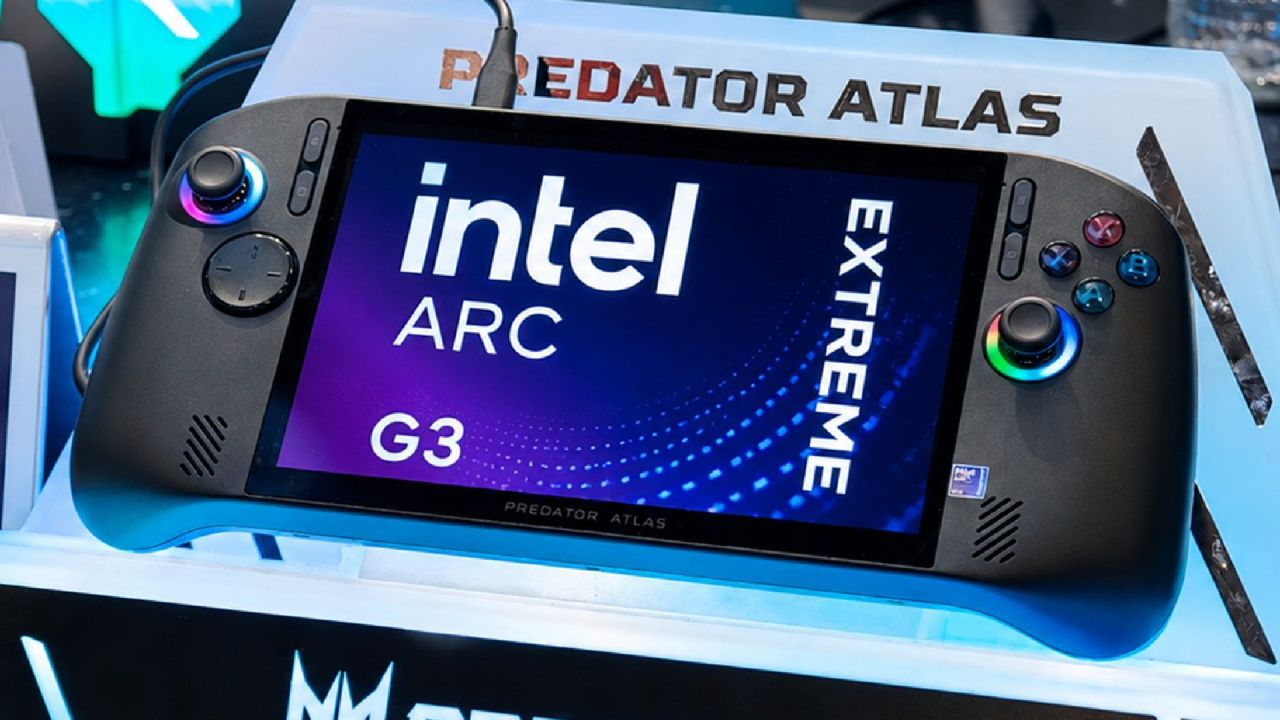
Handheld gaming PCs have grown into a crowded segment, with a new Intel chip now stepping into a space that AMD has largely defined on its own. Intel Arc G3 Extreme arrives as Intel's answer to AMD's Ryzen Z1 Extreme and Ryzen Z2 Extreme, two chips that have powered most of the popular handhelds on the market. Comparing all three across CPU work, iGPU output, and real game performance shows where the new silicon stands.
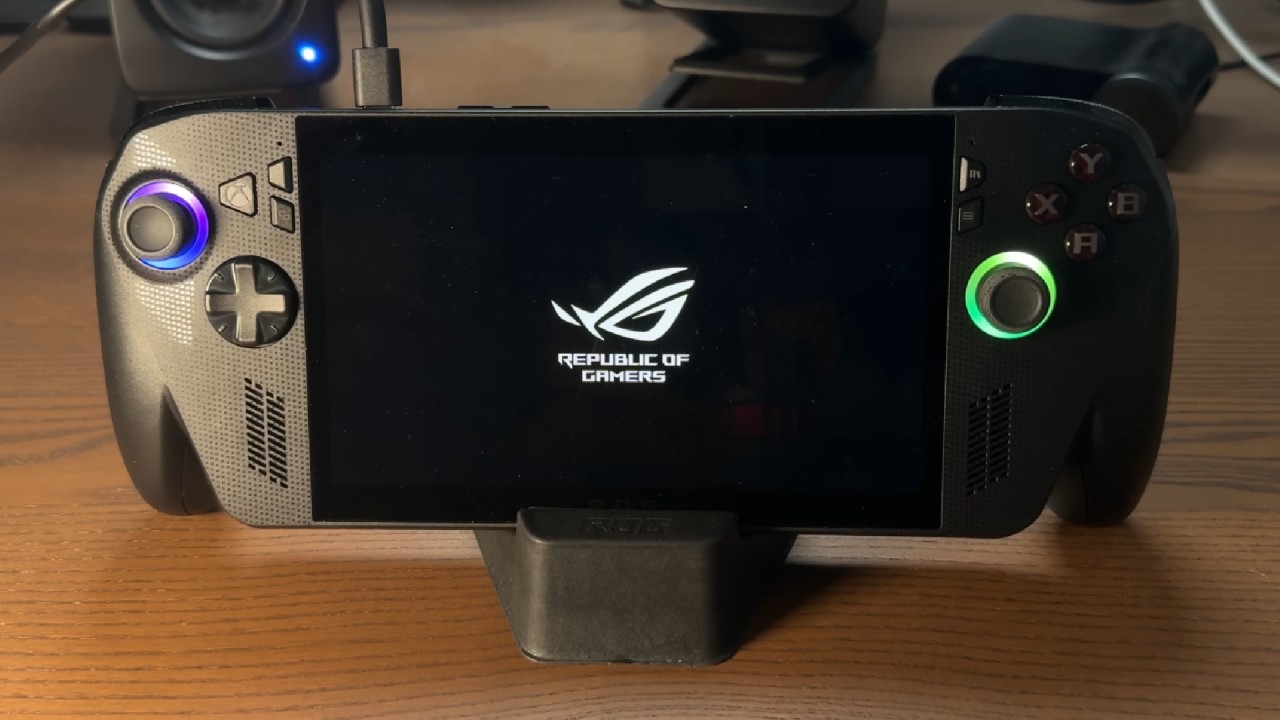
For testing, the MSI Claw 8 EX AI+ was used for the Arc G3 Extreme, the ROG Ally X was used for the Ryzen Z1 Extreme, and the Legion Go 2 was used for the Ryzen Z2 Extreme. The comparisons were only of CPU and GPU performance at 17W TDP and 25W TDP, which are both normal power levels for gaming on a battery.
The Hardware Behind Each Chip
Each of these chips can push output beyond 30W to 35W for stronger performance, though that comes at the cost of battery life. Arc G3 Extreme carries 14 cores and 14 threads, split across two performance cores reaching 4.7GHz, eight efficiency cores reaching 3.4GHz, and four low-power efficiency cores reaching 3.1GHz, a layout that differs from either AMD chip.
Its iGPU is the Arc B390, built with 12 Xe3 cores and clocking up to 2300MHz, paired with 32GB of LPDDR5X memory running at 8533 megatransfers per second. Ryzen Z2 Extreme packs eight cores and 16 threads across two core types, Zen 5 cores reaching 5GHz and Zen 5c cores reaching 3.3GHz, alongside a 16 compute unit RDNA 3.5 iGPU clocking up to 2900MHz and 24GB of RAM at 8000 megatransfers per second.
Ryzen Z1 Extreme, the oldest chip in this comparison and still a solid choice for a handheld, runs eight cores and 16 threads at a 3.3GHz base clock with every core able to boost to 5.1GHz, paired with a 12 compute unit RDNA 3 iGPU clocking up to 2900MHz and 24GB of RAM at 7500 megatransfers per second.
CPU Performance in Geekbench 6
In Geekbench 6, the Arc G3 Extreme got a score of 2799 for a single core and a score of 10762 for multiple cores at 17W. When you turned the power up to 25W, those numbers went up to 2802 single-core and 12672 multi-core. 3DMark Steel Nomad, tested only at 25W given its demands, produced a score of 1212 on the Arc G3 Extreme, well clear of both AMD chips, a pattern that lines up with past results showing Intel's iGPUs pulling ahead of AMD in synthetic testing.
Arc G3 Extreme is about 55% faster than the Ryzen Z1 Extreme and about 59% faster than the Ryzen Z2 Extreme when running a single core at 17W. This difference is because the Z2 Extreme's Zen 5c cores are running at slower speeds, while the Z1 Extreme can push all eight cores to 5.1GHz.
3DMark Time Spy results tell a similar story on the graphics side. Arc G3 Extreme scored 4423 at 17W and 6025 at 25W. At 17W, that puts it ahead of the Ryzen Z1 Extreme by around 74% and ahead of the Ryzen Z2 Extreme by around 51%; at 25W, the lead grows to roughly 99.7% over the Z1 Extreme and 67.9% over the Z2 Extreme.
In-Game Results Across Several Titles
Each device ran the latest drivers, the latest version of Windows, and the same version of every game tested to keep results fair. Horizon Zero Dawn Remastered at 1080p low settings, tested only at 25W since the AMD chips struggled to reach a playable frame rate even with upscaling, produced 45FPS on the Arc G3 Extreme against 30FPS on the Z1 Extreme and 31FPS on the Z2 Extreme, uplifts of around 50% and 45%.
Shadow of the Tomb Raider, an older title that shows a smaller gap than newer releases, gave the Z2 Extreme a slight edge at 25W with 64FPS against 63FPS for the Arc G3 Extreme and 59FPS for the Z1 Extreme, though the Arc G3 Extreme moved back ahead at 17W with 46FPS against 44FPS for the Z2 Extreme and a tie with the Z1 Extreme.
Black Myth Wukong at 1080p with upscaling and low settings gave the Arc G3 Extreme 74FPS at 25W against 44FPS for the Z1 Extreme and 50FPS for the Z2 Extreme, and at 17W produced 53FPS against 42FPS and 33FPS respectively. Forza Horizon 6 at 1080p, high settings, with no upscaling, tested only at 25W, gave the Arc G3 Extreme 44FPS, compared to 32FPS for the Z1 Extreme and 35FPS for the Z2 Extreme.
Real games back up what the synthetic benchmarks suggested.
Arc G3 Extreme has a CPU lead of about 33% over the Ryzen Z1 Extreme and 26% over the Ryzen Z2 Extreme when all benchmarks are taken into account. This includes both single-core and multi-core results.
The average lead over the Z1 Extreme grows to about 50%, and the average lead over the Z2 Extreme grows to 38%. This is a big jump by any measure. B390 iGPU continues to work well at lower wattages, whether it's in this chip or one of Intel's Panther Lake processors.
This is important for portable gaming PCs that are designed to last a long time on a single charge. Right now, the major problem is the price. If more handhelds built with this chipset had lower prices, more people would probably buy them once they saw the performance gains.
Editor, NoobFeed
Gaming Hardware Updates
No Data.