
AMD RX 9050 May Launch With More Cores Than RX 9060 to Challenge RTX 5050
The rumored RX 9050 combines 2048 cores with reduced frequencies to create an unusually balanced low-cost RDNA 4 card.
Hardware by Tanvir Kabbo on May 18, 2026
The entry-level GPU market is getting crazier and crazier, and the rumored AMD Radeon RX 9050 could be the weirdest RDNA 4 product leak ever! Where NVIDIA is driving the NVIDIA GeForce RTX 5050 to the budget end of the gaming market at the $289 price point, AMD seems poised to respond with a GPU that is completely upending the traditional product-stack idea.
The rumored AMD Radeon RX 9050 is not just a stripped-down version of its more expensive counterpart, the Radeon RX 9000. The newly leaked details about AMD's RDNA 4 cards indicate that the rumored AMD Radeon RX 9050 isn't just a lower-end version of the Radeon RX 9000.
.jpg)
Instead, AMD could be working on an SKU aggressively tuned to the Navi 44 XT die, which would make for one of the oddest spec skips in Radeon history. It's a big question for budget-constrained watchers of the GPU market: is AMD really going to release a budget-friendly card that is more complete than the one above?
Navi 44 XT Paradox Makes RX 9050 Extremely Unusual
The most surprising aspect of the rumored RX 9050 is its die configuration. According to reports, the card is based on Navi 44 XT silicon, featuring 2048 cores across 32 Compute Units. This immediately creates a strange contradiction within AMD's own lineup, as the standard AMD Radeon RX 9060 XT is based on the weaker Navi 44 XL chipset, which has only 1792 cores and 28 CUs.
On paper, that would mean that the lower-tier RX 9050 would have more shader resources than the RX 9060 above it. This sort of segmentation typically occurs only when manufacturers ruthlessly split chips by price, thermal specification, or power target. That is the plan that AMD seems to be executing here.
AMD is not disabling additional cores; they're claiming they're significantly reducing clock speeds. The RX 9050 is said to have a game clock of 1,920 MHz and a turbo clock of up to 2,600 MHz, which is far lower than the AMD Radeon RX 9060 XT 8GB, which has a turbo clock of up to 3,130 MHz.
The whole idea of that downclocking changes the way the card ought to be interpreted. The RX 9060 XT 8GB is a high-end card that comes with thick silicon on the chip, but the RX 9050 could be a power-limited version of the RX 9060.
While it may be the move toward manufacturing efficiency, AMD could be doing it by reusing the fuller Navi 44 XT dies and regulating overall performance via frequency tuning. From a gamer's perspective, this leak is particularly interesting, given that AMD is taking the normal GPU segmentation concept and turning it on its head.
AMD’s RTX 5050 Counterattack Looks Increasingly Aggressive
The rumored RX 9050 also shows how seriously AMD seems to be taking the battle in the lower tier of the graphics card arena with NVIDIA. Rather than just dropping the vanilla OEM RX 9060 into the retail marketplace, AMD reportedly plans to launch an entirely new SKU aimed at the NVIDIA GeForce RTX 5050.
That decision matters. The RTX 5050 is in a highly sensitive price range where most consumers are looking for raw raster capabilities and high VRAM capacity, rather than high-end features like ray tracing. It's fair to say this user base is much more interested in price-to-performance ratios, particularly at 1080p.
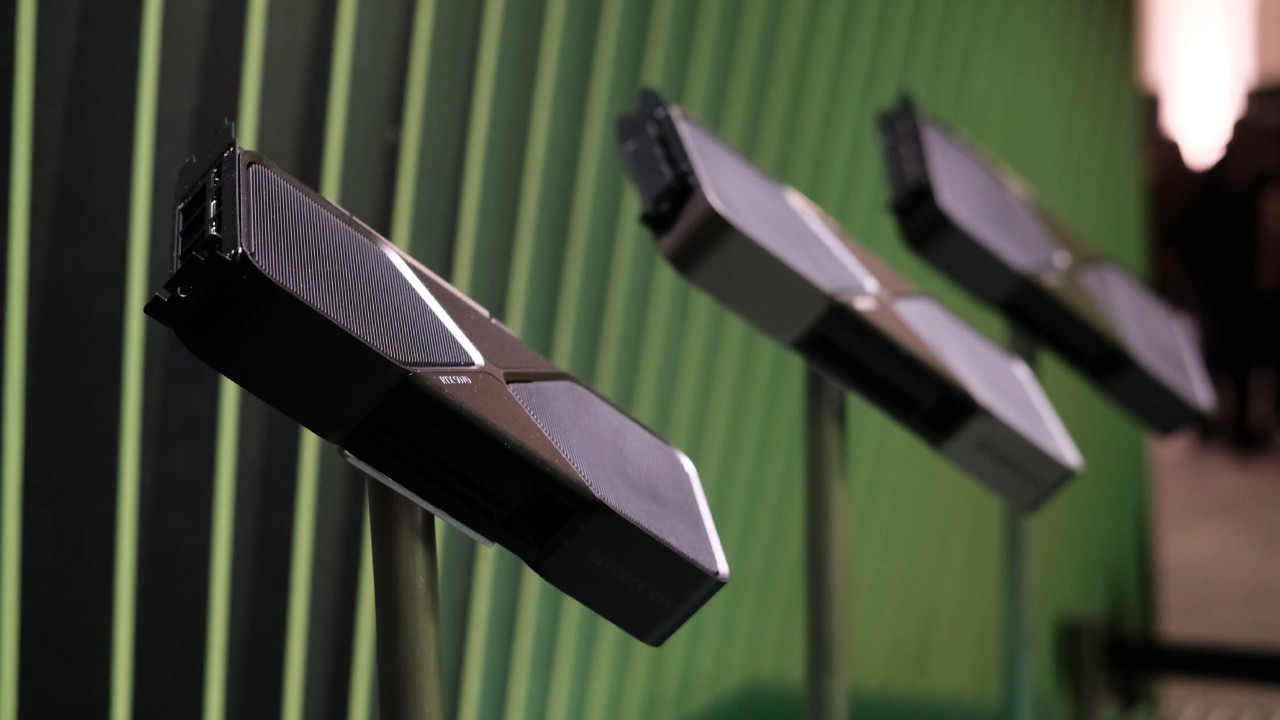
That's the jibe the RX 9050 has been getting from the rumors anyway. The card is supposed to have 8GB of GDDR6 memory clocked at 18Gbps, a 128-bit memory bus, and a full PCIe 5.0 x16 port. The card is said to have DisplayPort 2.1a and HDMI 2.1b connectivity, making it very current for such a budget card.
The PCIe setup is significant because AMD's low-end GPUs don't have to deal with one of the major criticisms these cards have faced in recent years: limited PCIe lanes. The RX 9050's all-x16 link makes it particularly appealing to budget AM4 and older Intel platform users, as opposed to GPUs with x8 or x4 interfaces that may have performance issues on non-x16 link-based platforms.
AMD's approach is becoming more aggressive by the day; rather than a traditional product rollout, it's a market snatching in the midst of NVIDIA's least profitable period.
Computex 2026 Could Clarify AMD's Confusing RDNA 4 Stack
Computex 2026 is just a few weeks away in Taipei, and with AMD not doing a traditional live keynote presentation, AIB partners are now expected to be on show with some early RX 9050 designs. All of this implies that AMD is preparing for a less frenzied campaign and giving board partners time to build a following throughout the hype cycle.
If you are a budget builder, then you might be better off being patient at this moment. If true, these leaks are a clear indicator that the RX 9050 will be one of the most aggressively priced entry-level Radeon cards AMD has released in years.
This strange co-mingling of 2048 cores, Navi 44 XT die, modern display outputs, and significantly lower clocks results in a GPU built to make the value proposition of the RTX 5050 look like crap.
The rumored RX 9050 is definitely a lot more compelling than a common entry-level graphics card refresh.
AMD seems willing to give up clock-speed glory in favor of better silicon utilization and, maybe, better retail pricing. That trade-off is probably more significant to hardcore budget players than boost frequencies on the HD. At the same time, if AMD charges a high price for the RX 9050 while still offering good gaming performance thanks to RDNA 4, the company might finally have a viable product in the increasingly significant sub-$300 GPU segment.
For now, though, RX 9050 is one of the most unique and fascinating GPU leaks of the present generation, and until it's officially confirmed by Computex 2026, it will stay that way.
Senior Editor, NoobFeed
Gaming Hardware Updates
No Data.