
DDR5 RAM Prices Are Finally Dropping and What It Means for Gaming PC Builds
DDR5 memory prices show early signs of decline as AI infrastructure demand continues reshaping global DRAM supply chains.
Hardware by Tanvir Kabbo on Mar 10, 2026
The last few months have naturally seen a lot of discussion about DDR5 memory prices. The cost of memory chips used in DRAM, SSDs, and, most recently, graphics cards has had a devastating impact on people trying to build gaming PCs right now.
Prices have shot up significantly. However, recent reports and discussions across the tech space have started pointing toward something unexpected: memory prices may finally be falling.
.jpg)
The question now is whether this signals the beginning of the end for one of the shortest yet most frustrating crises in PC building history, or if the situation is more complicated than it appears.
A Familiar Pattern of Hardware Shortages
Over the years, the PC building market has gone through a lot of problems. In 2017, the first big wave of crypto-mining sent Ethereum prices through the roof. For almost a year, graphics cards like the AMD RX 480 and RX 580 were very lucrative. The shortage finally went away, but it came again between late 2018 and early 2019, when the pattern mostly repeated itself.
Toward the end of 2020 and into early 2021, the market faced perhaps the most severe shortage of all. A combination of lockdowns, GPU mining, scalping, and the transition to new GPU architectures created one of the longest and most painful GPU supply crises ever. The launch of NVIDIA’s 30-series and AMD’s 6000-series intensified the problem even further.
The industry went toward DDR5 memory later, when it switched to new CPU platforms with Intel's 12th-generation and AMD's Ryzen 7000 processors. Early adopters had to pay very high costs right once because there wasn't much DDR5 available, which made it much more expensive than DDR4.
Now, in early 2026, a similar situation has emerged again, but this time the crisis centers almost entirely around memory.
Early Signs of Price Relief
Recent market data shows that prices across the memory market are beginning to stabilize. Some individual DDR5 kits have even started dropping in price, offering a small but noticeable sign of relief.
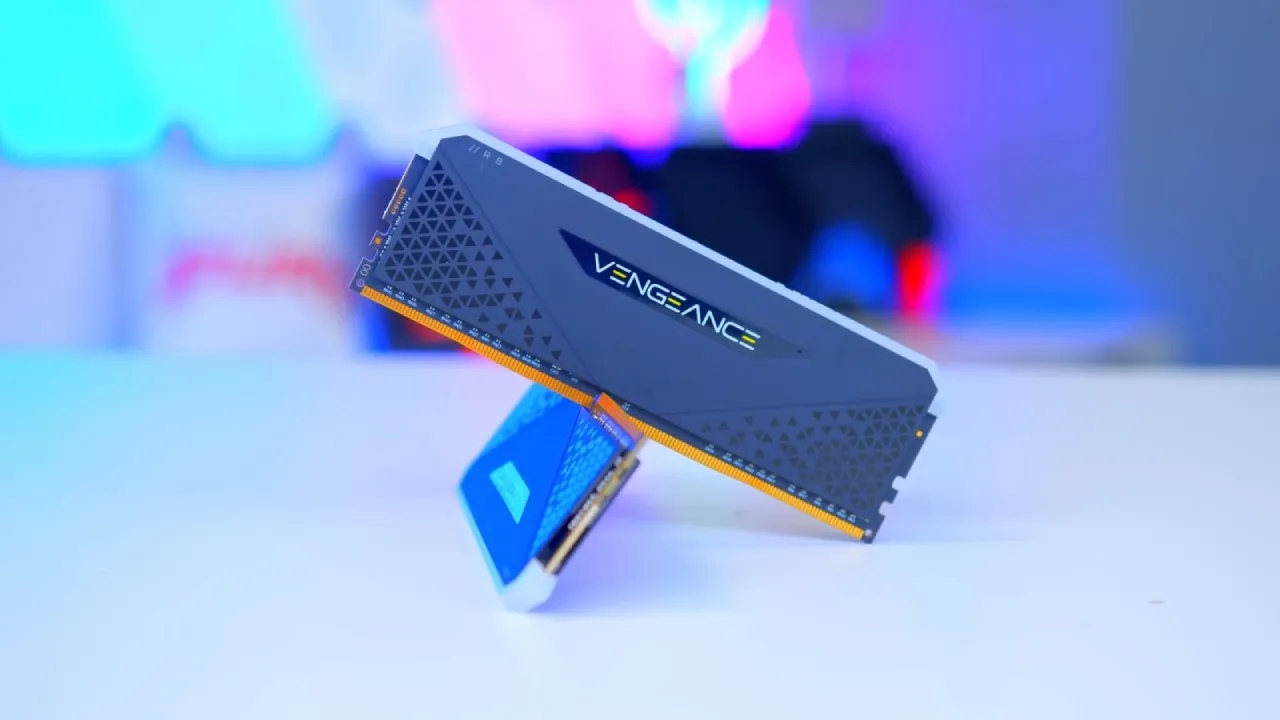
For instance, the price of the Kingston Fury Beast DDR5 kit, which runs at about 6000 MT/s and has a latency of about CL36, has risen significantly recently. The kit's price peaked at almost £400 a few weeks ago, but has since dropped and stabilized around £360–£370.
More recently, the price briefly fell to £280 across multiple reputable retailers, bringing it below £300 for the first time in months.
Even at £280, or roughly $400 in equivalent markets, the memory still cannot be considered cheap. However, the reduction does represent meaningful progress compared with where prices stood just weeks earlier.
Managing Higher Costs in High-End Builds
In higher-end PC builds, absorbing the increased memory cost is sometimes more manageable than expected. A typical £2000–£2500 gaming PC build still has enough flexibility to accommodate slightly higher memory prices.
If we slightly adjust other components, savings can often be found elsewhere. Dropping the PC case to a slightly lower tier or choosing a cooler from a more affordable brand, such as Montech or Thermalright, rather than premium, aesthetic-focused brands like Corsair or NZXT, can free up budget without sacrificing much performance.
Ideally, those compromises should not be necessary. However, they do show that within higher-end systems, the increased DDR5 cost can still be managed.
Budget Builds Face the Real Challenge
The real difficulty appears in more price-conscious builds. In lower-budget systems, every component already operates within tight cost limits. Rising prices for SSDs and GPUs compound the problem, leaving very little room to offset the cost of expensive memory.
In those scenarios, DDR5 price increases become much harder to absorb.
The Real Cause Behind the Memory Shortage
Unlike previous GPU shortages, the current memory crisis is not driven primarily by consumer demand for specific products. Instead, the shortage exists much deeper in the supply chain.
The problem lies with the memory ICs that power DDR5 kits and with the manufacturing capacity of the fabs that produce those chips. Demand for memory manufacturing capacity has grown dramatically, and supply is struggling to keep up.
Much of that demand now comes from high-bandwidth memory used in AI hardware.
AI Is Consuming Massive Memory Resources
The world's largest memory manufacturers—Samsung, SK Hynix, and Micron—supply the chips used by most consumer memory brands. Companies producing memory kits for gaming PCs rely almost entirely on these three suppliers.
However, those suppliers are currently prioritizing HBM memory used in AI GPUs. AI accelerators require enormous memory bandwidth, and HBM delivers exactly that. As a result, more manufacturing capacity is being redirected toward HBM production instead of DDR5.
The situation is very different from past GPU shortages. Back then, manufacturers simply needed to increase production and resolve supply chain bottlenecks. Today, the limitation exists at the fabrication level itself.
AI Demand Shows No Sign of Disappearing
Some discussions suggest that an AI bubble could eventually collapse, releasing pressure on the memory supply. However, a complete collapse appears unlikely.
Large technology companies are heavily invested in the AI race, spending enormous sums on infrastructure. Major partnerships and licensing agreements continue to expand AI integration across products and services. The scale of investment across the industry suggests that AI demand will remain strong for the foreseeable future.
Even if some smaller AI startups struggle financially, the broader ecosystem is supported by extremely profitable companies with decades of stability.
A Slowdown May Be Enough to Help DDR5
The good news is that the AI market does not need to collapse to ease DDR5 shortages. A small slowdown or correction in AI hardware demand could already provide relief.
The amount of money currently flowing into AI infrastructure is enormous. If even a small portion of those investments slows or shifts direction, memory manufacturers could redirect more production capacity back toward consumer DRAM.
Industry insiders have noted that sudden changes in AI hyperscaler purchasing decisions could rapidly release pressure on consumer DRAM supply.
Expanding Production Capacity
Another important factor is that the major memory manufacturers are already expanding production capacity. Samsung, SKHynix, and Micron are building additional facilities and scaling their HBM production lines.
At the moment, demand for HBM far exceeds supply, which is why DDR5 production has taken a back seat. Once manufacturing capacity increases enough to better match AI demand, DDR5 production should again receive more attention.
That shift could eventually stabilize supply and bring prices closer to normal levels.
Emerging Competition From China
Another interesting development involves the rise of new memory manufacturers. China has been aggressively building its domestic memory industry.
Two companies, CXMT and YMTC, have been rapidly expanding their capabilities. They have already announced plans to significantly increase production capacity over the next few years and have begun showcasing competitive DDR5 technology.
Reports from industry events indicate that CXMT has already demonstrated homegrown DDR58000 kits that match the performance of existing DDR5 products from established manufacturers.
What makes these companies particularly interesting is their current focus. Rather than concentrating heavily on HBM for AI hardware, they are largely prioritizing NAND flash and standard DRAM products. That focus could ultimately benefit gamers and PC builders by increasing the availability of consumer memory.
A Crisis That Will Eventually End
The current situation is frustrating for everyone involved in the PC hardware ecosystem. Gamers feel pressured to either pay inflated prices or postpone their builds entirely. Hardware brands producing cases, coolers, motherboards, and power supplies depend heavily on system builders and enthusiasts continuing to assemble PCs. Retailers and system integrators also struggle when rising component prices discourage purchases.
Despite the frustration, history shows that hardware shortages are always temporary. Previous crises involving GPUs and other components eventually resolved themselves once supply caught up with demand.
Memory manufacturers are already working behind the scenes to expand production and adapt to the changing landscape. The current shortage will eventually ease, though it may take longer than some optimistic predictions suggest.
For now, patience may still be required before DDR5 pricing returns to levels many PC builders hope to see.
Also, check our other hardware articles:
- AMD Ryzen 9 9950X3D Review: Setting The Standard For 2025 Gaming CPU
- Amazon Luna 2025 Review: Is Prime Gaming's Cloud Service Your Go-To For Casual Fun?
- AMD RX 9070 XT Review: AMD's RDNA 4 Champion for 1440p Gaming
- GeForce Now Ultimate: Ditching Your Gaming PC For Cloud RTX 4080 Power?
- NVIDIA GeForce RTX 5080 Review (2025): Still A 4K Gaming Powerhouse?
- Intel Core Ultra 9 285K Review And Performance Breakdown (2025)
- AMD Ryzen 7 9800X3D Review: 3D V-Cache Goes God Mode with Stunning Gaming Performance
- Intel Core Ultra 9 285K vs AMD Ryzen 7 9800X3D: In-Depth Gaming Performance and Benchmark Comparison
- NVIDIA GeForce RTX 5080 Super Performance In Cyberpunk 2077: Path Tracing & DLSS 4.0 Tested
- AMD Radeon RX 9070 XT In Cyberpunk 2077: Ray Tracing & FSR 4.0 Tested
- Intel Arc B580 Review: The $250 GPU Revolutionizing 1440p Gaming
- Intel Arc B570 Vs. B580: Value, Specs, And Real-World Gaming Performance
- RTX 5090 Laptop Vs. M4 Max MacBook Pro: Ultimate Raw Performance Vs. Battery Endurance
- Intel Arc b580 Vs. RTX 4060: Game Performance And Value Analysis
- RTX5090 Hell Is Us Demo 4K Ultra Benchmark: DLSS Vs. Native Performance Guide
- NVIDIA RTX 5070 Review: Mid-Range Muscle or Marketing Hype?
- Nintendo Switch 2 Review: Handheld Performance, Features & Value Breakdown
- RTX 5070 Ti Review: Performance, Thermals & Power Efficiency Tested
- Samsung Odyssey OLED G81SF Review 2025: Ultimate 32-Inch QD-OLED Gaming Monitor
- AMD RX 9070 Performance Review: Thermals, Clocks, and Real-World FPS
- AMD Ryzen 5 7600 Review: Best Budget Gaming CPU of 2025?
- AMD Radeon RX 7800 XT Review: RDNA 3 Power For Midrange Gaming
- Asus ROG RTX 5090 Astral OC Vs. Founders Edition: The 4K Gaming Benchmark
Senior Editor, NoobFeed
Gaming Hardware Updates
No Data.