
Best Entry-Level GPUs 2025: RTX 5060 vs. RX 9060 XT vs. Arc B580
Overview of RTX 5060, RX 9060XT, and Arc B580 Graphics Cards and Their Mainstream Appeal.
Hardware by Tanisha Aria on Dec 14, 2025
Intel has joined the fight at the entry-level graphics card level with the Arc B580, joining AMD and Nvidia as they bring their latest tools to the space.
Three businesses are now in the most important market for PC players. There is an easy question: which card for your PC is the best choice? RX 9060 XT, RTX 5060, or Arc B580?
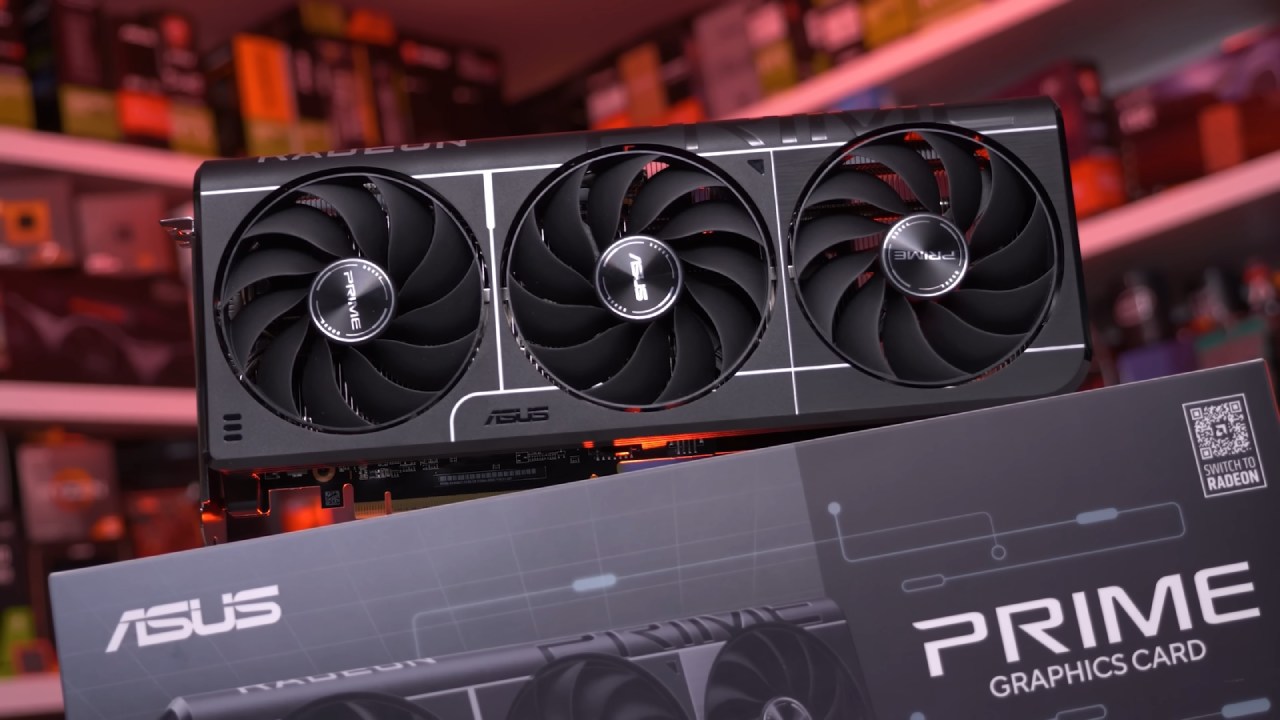
Contenders and Evaluation Criteria
The RX 9060 XT has been released, making both GeForce and Radeon new rivals in the mainstream segment. This is where most gamers spend their money. Before the launch of the Arc B580, Intel was the first company to enter this new wave of GPUs. This part is mostly about the most popular setting, Full HD.
There are three main factors considered to find a winner. First is performance, which tells us how much game power these cards can give.
The second factor is price, which shows how much people really have to pay and hurts them the most. Third is technology. The speed on the screen is important, but extra features can make a big difference, especially when the performance and price are closely matched.
Performance Overview
We begin with performance. We are only giving a broad outline here because the full written analysis has all the specific benchmarks.
AMD has a clear edge in several games, often by about 20%, including Call of Duty Black Ops 6, Red Dead Redemption 2, Resident Evil 4, and Baldur's Gate 3. The RX 9060 XT is still ahead in other games, but the difference is smaller; for instance, it has a 15% lead in F1 2024.
Radeon and GeForce give almost the same results in some games, like Cyberpunk 2077 and Stalker 2. This is important because, in the past, AMD had significant trouble with Cyberpunk.
At the same time, Nvidia usually did very well with it. Just getting to this level already feels like a win for AMD. In Counter-Strike 2, on the other hand, the RTX 5060 is clearly better, opening up a 30% lead.
Intel's Arc B580 shows inconsistent positioning in the tests. In CS2, it's about the same as Radeon. In Red Dead Redemption 2, this one outperforms the RTX 5060 and is about 13% behind the RX 9060 XT.
In Resident Evil, it works better than the RTX 5060 but not quite as well as the Radeon. A lot of the time, it ends up in the middle of Radeon and GeForce or ties with the slower of the two.
Intel's biggest issue seems to occur in games where speed slows down significantly. In Stalker 2, it is 25% behind the competition, and in Cyberpunk 2077, it is about 20% behind. The gap grows to about 30% with harder games, like Call of Duty and Black Myth: Wukong.
In those situations, it's not just behind the winner; it's also behind the second-place card and performs almost as well as the RX 9060XT in some cases.
The RX 9060XT8GB averaged 127 frames per second (fps) across the nine games tested. The RTX 5060 is next with 119 fps, and the Arc B580 is last with 98 fps. In that way, the Intel is about the same as the RTX 4060 from the previous version.
PCIe3.0 and Older Systems
We need to add important background information to these outcomes. The tests were run on an expensive computer with a Ryzen 9800X3D processor, an X870E chipset, and fast DDR5 memory.
This is an example of the best possible outcome, which isn't how people usually use entry-level GPUs. We tried the PCIe 3.0-only cards again because they were more in line with how things really are.
This is important because entry-level cards with 8GB of VRAM can lag due to insufficient memory. In these situations, communication between the GPU and the rest of the system is very important, and many people still use older platforms. Many systems in use today can only support PCIe 3.0 because of the base or the CPU.
In many games, there was almost no difference before and after moving to PCIe 3.0. But it was clear when this wasn't the case. The RTX 5060 lost about 40% of its performance in Resident Evil when limited to PCIe 3.0.
The RX 9060 XT dropped even more, dropping about 60%. The Arc B57010GB and B58012GB, on the other hand, maintained much of their speed because they had more VRAM.
Radeon once again took a big hit of about 40% in Stalker 2, but GeForce kept its PCIe 5.0 speed. Nvidia's memory compression and speed clearly help when a lot of VRAM is needed. The RTX 5060 still worked well with PCIe 3.0, but you should be careful when using it with older computers.
We also saw during live tests that the RTX 5060 does not perform as well on PCIe 3.0 systems, but results improved right away when switching to PCIe 4.0. Frame creation wasn't even used in these tests. While frame generation can make a big difference in speed, it consumes a lot of extra VRAM, which can actually worsen performance in situations where memory is limited. This makes bigger VRAM settings, like the RX 9060 XT16GB, look better for long-term use.
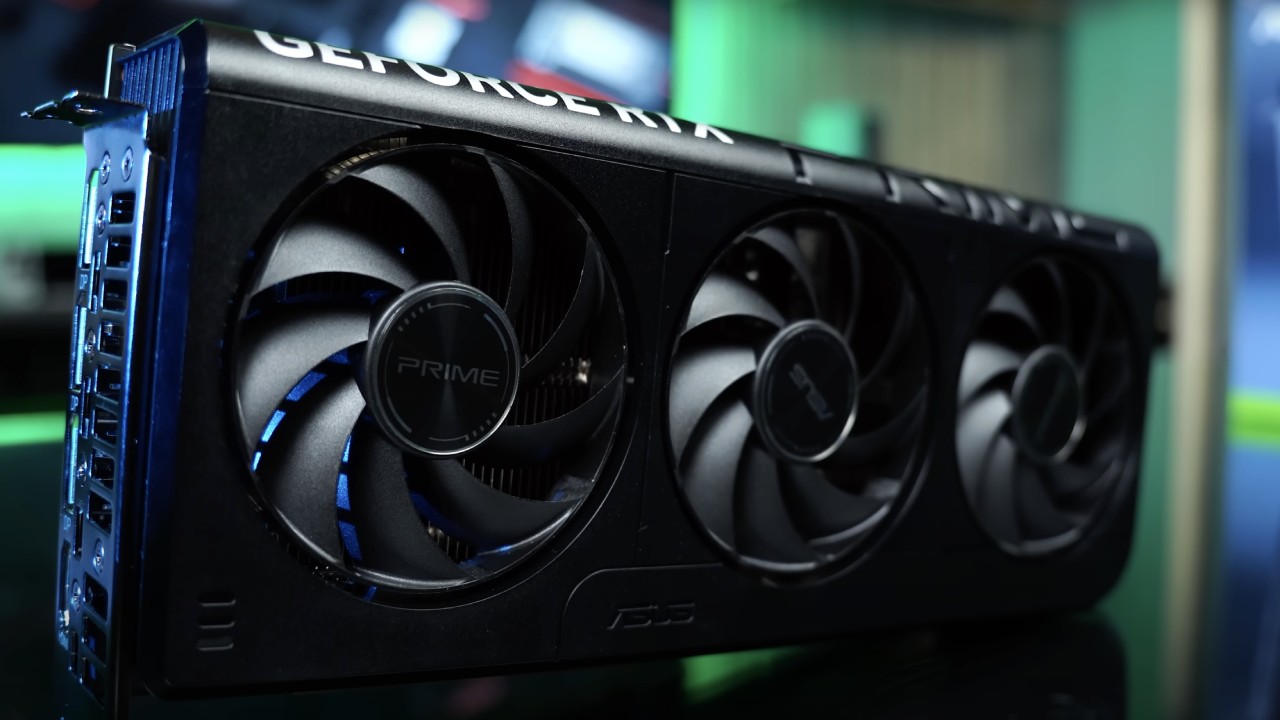
Pricing and Value
In terms of price, the RX 9060 XT and RTX 5060 cost almost the same, but the Arc B580 is typically a little less expensive. We got these prices by averaging the lowest available prices for the models from major stores over the last 30 days. As a result, actual store prices may vary depending on the board design.
To look at value differently, we focus on performance per cost, which means figuring out how much each frame costs on average across the nine games we tried.
In this measurement, the RX 9060 XT has a very slim advantage: it is R$1 cheaper per frame than the RTX 5060, and it offers a little better speed at the same price. The RTX 5060 also does well here, tying with the RTX 4060, which is still one of the best-balanced cards in this group.
Even so, the RTX 4060 and similar cards aren't great for playing the newest, most demanding games at high quality in Full HD. They are a better fit for lighter games or scenes with fewer options. While the average speed is still close to 100 fps, new games with better graphics will push these GPUs to their limits.
Technology and Features
Intel and AMD are clearly behind Nvidia in other technologies. Nvidia was the first to do AI upscaling with DLSS. Intel then followed with XeSS, and AMD just recently launched FSR4.
Nvidia was the first to use AI for frame creation, and now AMD and Intel offer similar options. Nvidia is the only company that can do multi-frame generation, a trait that neither of its competitors has been able to copy.
Memory reduction is another big benefit for Nvidia. This turned out to be an important feature during testing, as it allowed GeForce cards to maintain higher speeds under VRAM pressure.
When changing from Full HD to Quad HD, performance ratings often changed completely. Nvidia maintained higher performance, but AMD struggled due to limited VRAM. Even though both cards are still limited to 8GB of VRAM, the RTX 5060 gets an advantage from GDDR7 memory in situations where speed is important.
Intel's plan to just add more memory works, but it hurts profit margins, which is something that usually only happens to companies with weaker competition.
When it comes to ecosystem stability, Nvidia is still in the lead. Still, AMD and Intel have been catching up as more games support their technologies and they become more efficient.
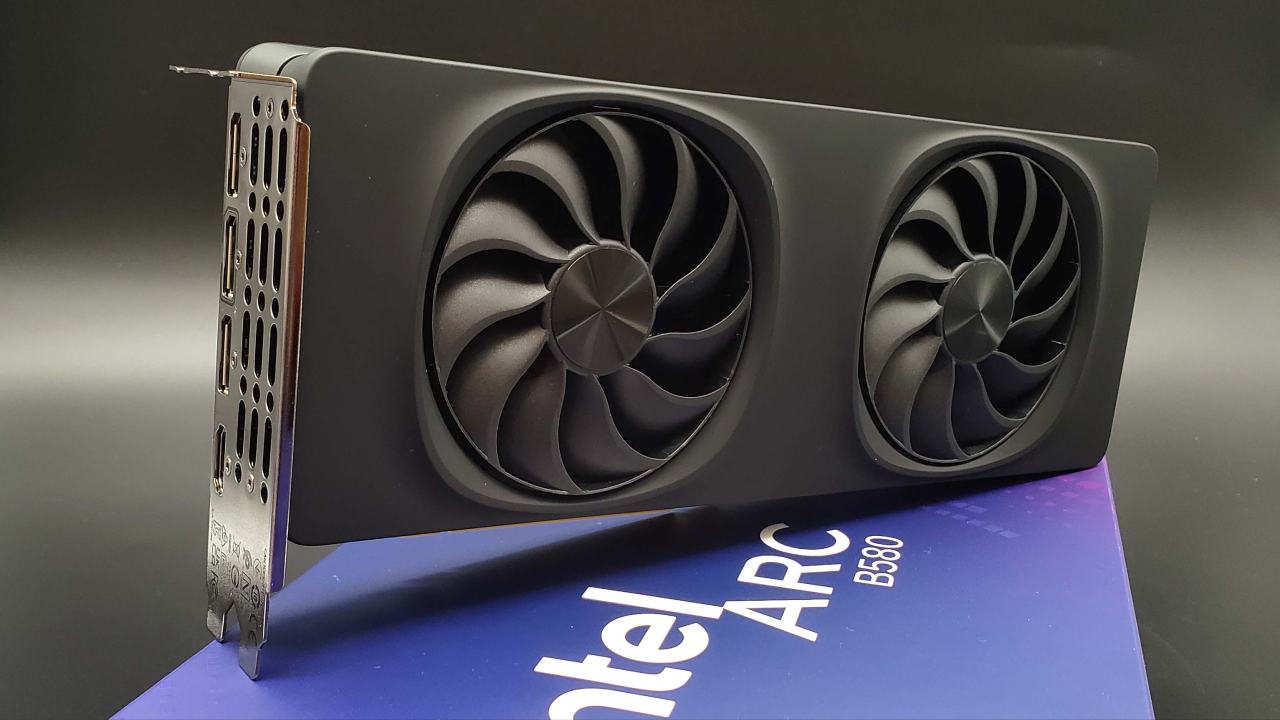
Final Thought
If we had to pick one, none of these base types would be the best choice. It makes more sense to spend a little more on the RX 9060XT16GB.
The price hike is pretty small, and the extra VRAM extends the product's lifespan. Even though it might not be the best value in Full HD, it handles higher images much better and keeps performance over time.
Even though they have the same GPU speed, the RX 9060 XT16GB does much better at 4K than the 8GB version. In some cases, just adding more memory can increase the framerate by about 12fps. Even though this isn't primarily designed for high resolutions, the extra space will help ensure your investment lasts.
If you can't increase the budget and plan to stick to Full HD with easier games, then the choice is much closer. When it comes to basic speed, AMD is a little better. Nvidia, on the other hand, is more stable under VRAM pressure and has a more mature feature ecosystem.
In this case, we would choose the RTX 5060 because it is more reliable, supports multi-frame generation, and handles memory-heavy cases better.
Intel's Arc B580 is still hard to recommend at its current price. It's a level below in terms of speed, and its software ecosystem and drivers are still under development.
It could be very interesting with lower prices, but right now, it misses the point. But the battle is getting tougher, and the next generations may have a different story to tell.
Also, check our other hardware articles:
- AMD Ryzen 9 9950X3D Review: Setting The Standard For 2025 Gaming CPU
- Amazon Luna 2025 Review: Is Prime Gaming's Cloud Service Your Go-To For Casual Fun?
- AMD RX 9070 XT Review: AMD's RDNA 4 Champion for 1440p Gaming
- GeForce Now Ultimate: Ditching Your Gaming PC For Cloud RTX 4080 Power?
- NVIDIA GeForce RTX 5080 Review (2025): Still A 4K Gaming Powerhouse?
- Intel Core Ultra 9 285K Review And Performance Breakdown (2025)
- AMD Ryzen 7 9800X3D Review: 3D V-Cache Goes God Mode with Stunning Gaming Performance
- Intel Core Ultra 9 285K vs AMD Ryzen 7 9800X3D: In-Depth Gaming Performance and Benchmark Comparison
- NVIDIA GeForce RTX 5080 Super Performance In Cyberpunk 2077: Path Tracing & DLSS 4.0 Tested
- AMD Radeon RX 9070 XT In Cyberpunk 2077: Ray Tracing & FSR 4.0 Tested
- Intel Arc B580 Review: The $250 GPU Revolutionizing 1440p Gaming
- Intel Arc B570 Vs. B580: Value, Specs, And Real-World Gaming Performance
- RTX 5090 Laptop Vs. M4 Max MacBook Pro: Ultimate Raw Performance Vs. Battery Endurance
- Intel Arc b580 Vs. RTX 4060: Game Performance And Value Analysis
- RTX5090 Hell Is Us Demo 4K Ultra Benchmark: DLSS Vs. Native Performance Guide
- NVIDIA RTX 5070 Review: Mid-Range Muscle or Marketing Hype?
- Nintendo Switch 2 Review: Handheld Performance, Features & Value Breakdown
- RTX 5070 Ti Review: Performance, Thermals & Power Efficiency Tested
- Samsung Odyssey OLED G81SF Review 2025: Ultimate 32-Inch QD-OLED Gaming Monitor
- AMD RX 9070 Performance Review: Thermals, Clocks, and Real-World FPS
- AMD Ryzen 5 7600 Review: Best Budget Gaming CPU of 2025?
- AMD Radeon RX 7800 XT Review: RDNA 3 Power For Midrange Gaming
- Asus ROG RTX 5090 Astral OC Vs. Founders Edition: The 4K Gaming Benchmark
Contributor, NoobFeed
Gaming Hardware Updates
No Data.